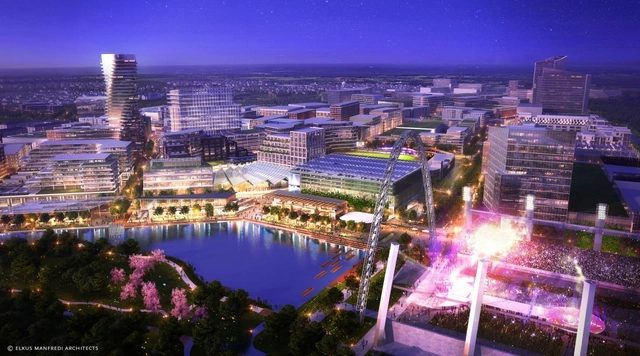
“Smart cities” are the latest urban phenomenon popping up across the globe. Among the newest being realized will be Union Point, a masterplan with a commitment to innovation located just south of Boston, USA.
What is a “smart city?” It is a city in which embeds multiple data collection technologies within the city in hopes of providing a supportive and competitive advantage to the city’s residents and business. Officials then use this data to make their cities safer, healthier, and more efficient. Cities are not geniuses quite yet, but the “smart city” is rethinking the way cities are run.
An investment firm run by Microsoft founder Bill Gates has paid $80 million for 25,000 acres of Arizona desert to serve as the site of a new “smart city.” To be known as Belmont, the city will be made up of 80,000 residences, as well offices, retail spaces and civic amenities such as schools and police stations. The city will serve as a test ground for the latest in logistical and infrastructural technologies.
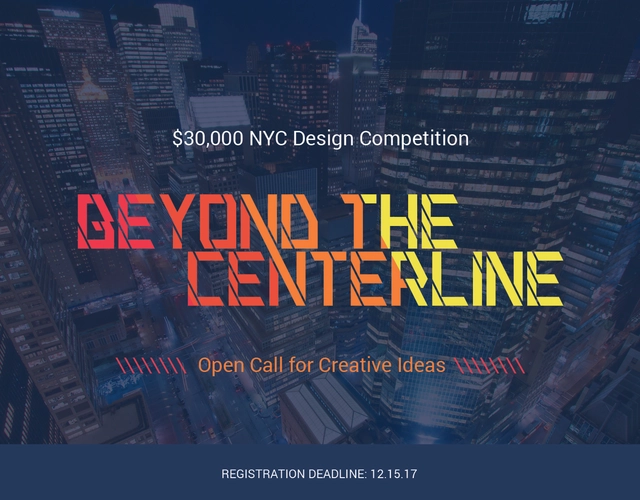
Park Avenue, one of the world’s premiere thoroughfares, is traditionally known for its tall buildings that are home to Fortune 500 companies. The medians of Park Avenue, or the “centerlines,” are traditionally characterized by plantings and periodic sculpture installations. Park Avenue medians represent a traditional element of New York City but also provide an opportunity for reinvention. Other areas of New York City, such as the High Line, have successfully transformed into an exciting destination for city dwellers and visitors alike.
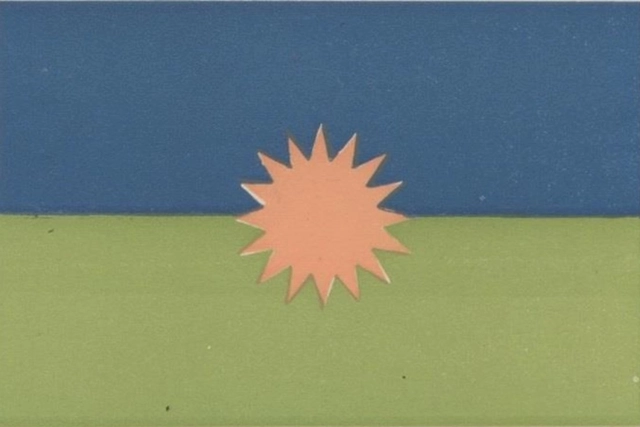
Reprodução do manifesto original do símbolo do urbanismo. . Image via Della Paolera, C. M. (1934). El símbolo del urbanismo. Buenos Aires: Dirección del Plan de Urbanización, Municipalidad de la Ciudad de Buenos Aires
Today, November 8, we celebrate World Urbanism Day. Created in 1949 by Carlos Maria della Paolera, a professor at the University of Buenos Aires, the day was meant to increase professional and public interest in planning, both locally and internationally. Paolera is also responsible for designing the symbol of World Urbanism Day, representing the trilogy of natural elements essential to life: the sun (in yellow), vegetation (in green) and air (in blue), referring to the balance between the natural environment and humans. Currently, the event is celebrated in thirty countries on four continents.
The New York Power Authority and the New York State Canal Corporation launched a competition seeking ideas to shape the future of the New York State Canal System, a 524-mile network composed of the Erie Canal, the Oswego Canal, the Cayuga-Seneca Canal, and the Champlain Canal. Selected ideas will be awarded a total of $2.5 million toward their implementation.
LA DISTANCIA FÍSICA REPERCUTE EN EL CONTACTO SOCIAL. Si muchos integrantes de nuestra familia viven cerca, se les ve mucho más seguido que si lo hicieran a 20 o 30 kilómetros. Entonces, por supuesto, si las circunstancias permiten que la familia o varios miembros de ella puedan vivir cerca, se tendrá una red más densa que si se encuentran diseminados.. Image Cortesía de Revista City Manager
Jah Gehl is recognized as a follower of Jane Jacobs, the “grandmother” of urbanism and humanist planning. He has been a professor at the Danish Real Academy of Fine Arts in Copenhagen and visiting professor in Canada, the United States, New Zealand, Mexico, Australia, Belgium, Germany, Poland, and Norway. In 2000, he created his own consultancy along with Helle Søholt, Gehl Architects, in Denmark, where he completed diverse urban projects from around the world using data and strategic analysis.
The below text comes from an interview with the Danish architect, theorist and world leader in urban development, and promoter, following Jane Jacobs, of the human scale in the design of public spaces.
https://www.archdaily.com/877602/jan-gehl-in-the-last-50-years-architects-have-forgotten-what-a-good-human-scale-isRodrigo Alonso
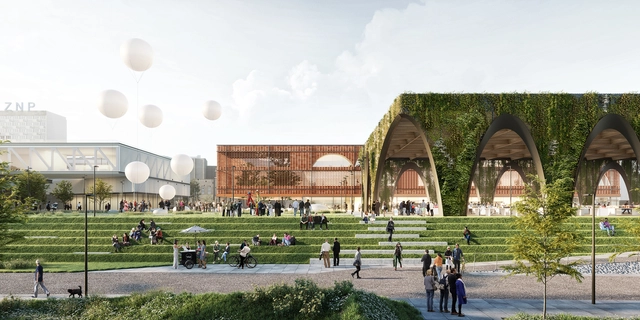
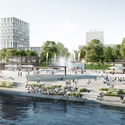
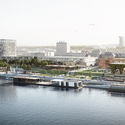
In Warsaw, Poland architecture firm WXCA wins the masterplan proposal for a stretch of riverfront along the Vistula River. The Vistula River Boulevards are among the most frequented public spaces in the city, and gaining popularity as entertainment and cultural offerings become available. WXCA’s winning design for Kahla Square aims to resolve the disconnect between the river banks and to provide amenities to support waterfront activities.
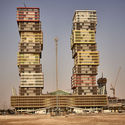
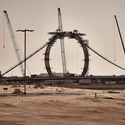
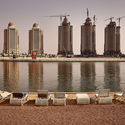
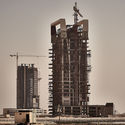
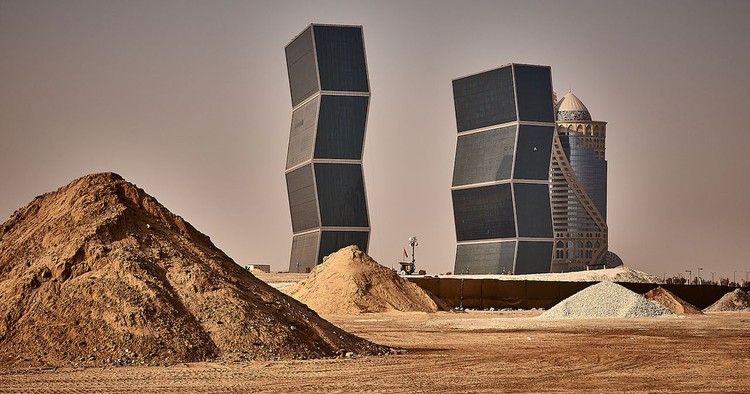
The history of the Qatar Peninsula—or Catara, as first labeled on an ancient map drawn by the Greco-Roman polymath Claudius Ptolemaeus—dates back to the Paleolithic Age. By the 1930s, the tiny Gulf state was struggling to maintain its position as the center of the pearl trade, but soon after, in the 1940s, it found itself at the forefront of economic growth and progress after the discovery of its vast oil reserves. Today, Qatar is the world’s richest country per capita; its capital Doha an ever-growing crop of shiny high-rises, with occasional buildings by the world's most sought-after architects thrown in for effect, its skyline flecked with tireless cranes, and its suburbs strewn with bulldozers, machinery, and endless mounds of displaced sand.
Seen in these photographs by Manuel Alvarez Diestro is a record of the country's impatient race towards an extravagant desert dream—but perhaps it can also be read as a subtle nod towards Qatar’s sheer determination to forge ahead, despite being steeped in controversies and crises during recent years.
Featured work of Fellows past and present (clockwise from top left): Kress Fellow Tim Frank (2015), Blinder Awardee Rebecca Ward (2014), and Fitch Fellow Paul Kapp (2017).
Since 1989, the James Marston Fitch Charitable Foundation has been in the vanguard of historic preservation practice and theory. The mission of the Fitch Foundation is to support professionals in the field of historic preservation, and to achieve this we provide mid-career grants to those working in preservation, landscape architecture, urban design, environmental planning, materials conservation, decorative arts, architectural design and history, and allied fields.
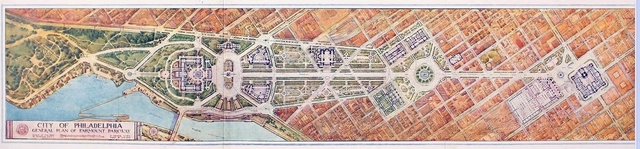
Design for Philadelphia's iconic Benjamin Franklin Parkway by Paul Crét and Jacques Gréber, 1917
The 2018 Better Philadelphia Challenge | $5,000 First Prize
This international urban design competition for university students is now open for registration. In celebration of the 100th anniversary of Philadelphia's iconic Benjamin Franklin Parkway, the Center / Architecture + Design seeks creative concepts for what a new 'Parkway' could be in a dense and developed 21st century city, connecting neighborhoods with nearby natural and cultural resources.
Last week I was in the middle of packing and came across a well-thumbed copy of The Death and Life of Great American Cities. I don’t remember when I read the book, but it was way more than twenty years ago (and predates my professional involvement with cities). As a very belated tribute to the anniversary of her 100th birthday, I decided to dip back into that remarkable book. Here’s ten takeaways from the godmother of the American city.
Join us in Ottawa to share your achievements and learn from others how we can best promote healthy, sustainable, equitable 10-minute neighborhoods. We shall discuss the best neighborhood models for encouraging walking, biking and public transit, high-density human scale mixed use, places to foster daily social life and community, opportunities for daily contact with nature, and equitable neighborhood planning.
Fairy Tales 2017 Competition Winner: Last Day / Mykhailo Ponomarenko. Image Courtesy of Blank Space
When you’re used to the grind of architecture school, breaks can hit you like rain on a warm day—cool at first, but terribly annoying soon enough. While the first few days breeze past as you catch-up on lost sleep and binge-watch Game of Thrones, you realize before long that you’re going insane with nothing to absorb all your new-found energy.
This is where architectural competitions come in handy. They provide a constructive outlet while being deeply engrossing, thus keeping you from hopelessly refreshing Youtube to see if Buzzfeed uploaded a new video. Also, the fact that you’re no longer constrained by the direction of your studio-leader or school program enables you to experiment creatively. With diverse international competitions running at any given time, you can take your pick, depending on your individual interests and the amount of time you want to devote. However, the sheer number of available competitions can be deeply confusing as well. Here we shortlist seven of the most prestigious annual architectural competitions open to students:
We invite you to submit applications for the 2nd International Conference “Modernistki. Violence in Architecture and Urban Space” that will take place in Kyiv on September 15-16, 2017.
The next time you're cursing the price of a city parking meter, think instead about the high cost of free, off-street parking in terms of the urban environment. Urbanists these days agree that cities are at their best when they are walkable—designed for people instead of cars—but the reasons for the car-centric design of cities in the US are complex. In this video, Will Chilton and Paul Mackie of Mobility Lab describe all the problems inherent with parking in US cities and how it got to be this way: namely, off-street parking requirements, or mandatory parking minimums.
Most people know that US cities are dominated by parking, with roughly 8 parking spots per car throughout the country, but this video will give you all the information you need to win any debate about the impacts of mandatory off-street parking. Describe with confidence why cities love mandatory minimums for developers, extoll the virtues of correctly-priced parking meters, and impress your friends and colleagues with your knowledge of the other ways you pay every day for "free" parking.
I really hope that this experiment will become a reference for many other architects, for many other urban planners, for many other public administrators and politicians, in order to implement, improve and multiplicate the realization of forest cities in China and all over the world.
In this video, Stefano Boeri explains the design of the just-announced Lizhou Forest City, which, when completed in 2020, will become the world’s first ground-up city constructed employing the firm’s signature Vertical Forest research.
Boeri explains the evolution of the concept from their first Vertical Forest project in Milan to the Lizhou development, which will accommodate up to 30,000 people in a master plan of environmentally efficient structures covered top-to-bottom in plants and trees, as well as the planning processes required to bring the project to fruition.
The following is a manifesto, in search of a movement... In it, I am proposing a theory of architecture based around a ruffneck, antisocial, hip-hop, rudeboy ethos. [1] – Kara Walker
In her companion publication to the 2014 group exhibition “Ruffneck Constructivists,” the show’s curator, Kara Walker, lays down a radical manifesto for urban intervention. Just months before Ferguson [2] and a year before Baltimore, [3] Walker proposes her theory through which installation artists (along with architects and designers by extension) can become “defiant shapers of environments.” [4] The invocation and juxtaposition of the terms hip-hop and architecture in the intro to her manifesto is particularly remarkable given the show’s exclusive assembly of visual and installation artists.
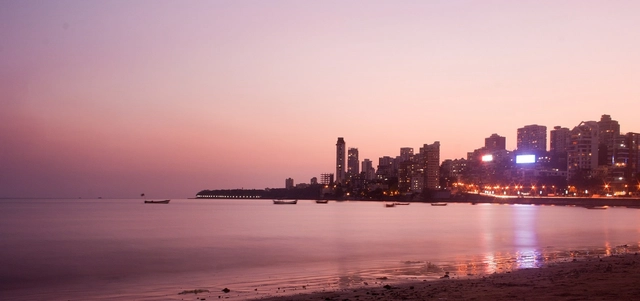
Mumbai Skyline. Image via Pixabay by user PDPics (public domain)
The Indian Government’s Smart City Mission, launched in 2015, envisions the development of one hundred “smart cities” by 2020 to address the country’s rapid urbanization; thirty cities were added to the official list last week, taking the current total of planned initiatives to ninety. The $7.5-billion mission entails the comprehensive development of core infrastructure—water and electricity supply, urban mobility, affordable housing, sanitation, health, and safety—while infusing technology-based “smart solutions” to drive economic growth and improve the citizens’ quality of life in cities.
In a country bogged down by bureaucratic corruption, the mission has been commended for its transparent and innovative use of a nation-wide “City Challenge” to award funding to the best proposals from local municipal bodies. Its utopian manifesto and on-ground implementation, however, are a cause of serious concern among urban planners and policy-makers today, who question if the very idea of the Indian smart city is inherently flawed.