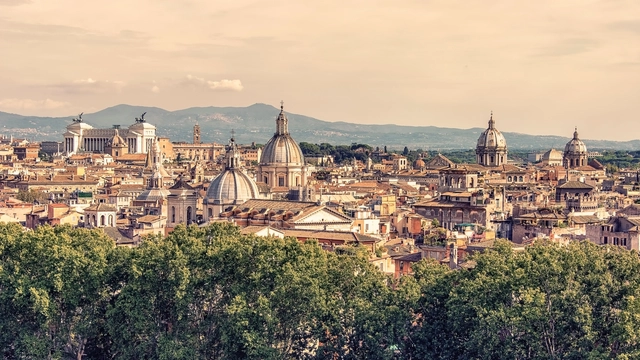
In line with the United Nations agenda of climate neutrality by 2050, the Rome City Council has announced the establishment of a Laboratory titled “Laboratorio Roma050 – il Futuro della Metropoli Mondo", a project proposed and led by Italian architect Stefano Boeri, which aims to draw up an ecological vision for Rome in 2050. The urban regeneration project consists of 12 young architects and urban planners under the age of 35, along with 4 renowned architects as mentors, who collectively have specific experience in terms of studies and research regarding the Italian capital.
The expression "a perfect storm" refers to an event (typically an unfortunate one) which is exacerbated due to a confluence of negative or unpredictable factors. It is widely used when describing meteorological phenomena, but can also be applied to other contexts, such as the economy. The analogy can also be used to describe the relationship between the climate crisis and the world's dependence on concrete. As demonstrated in the Chatham House report, while cement (an essential element for concrete manufacturing) is extremely detrimental to the greenhouse effect and climate crisis –representing about 8% of global CO2 emissions–, its global production is nevertheless expected to increase over the next 30 years. It is said that this increase will stem from the demand for rapid urbanization in regions such as Southeast Asia and sub-Saharan Africa. At the same time, the last IPCC report warned that we only have 11 years to reduce emissions and prevent irreversible damage due to climate change. In other words, the cement industry is facing a significant expansion at a time when emissions need to fall rapidly – a perfect storm.
Extreme natural events are becoming increasingly frequent all over the world. Numerous studies indicate that floods, storms, and sea-level rise could affect more than 800 million people worldwide, ultimately costing cities $1 trillion per year by the middle of the century. This suggests that urban survival depends on addressing urban vulnerability as a matter of urgency to protect the city and the population.
Over the past 60 years, architects and engineers have surrendered to industrial construction solutions, with buildings designed to be built faster and faster and at very low cost.
Over the past 60 years, architects and engineers have surrendered to industrial construction solutions, with buildings designed to be built faster and faster and at very low cost. As a more standardized and cheaper international approach to building emerged throughout the 20th century, many professionals abandoned the vernacular traditions of their ancestral cultures, which were developed over thousands of years, to fight the climatic extremes of different regions.
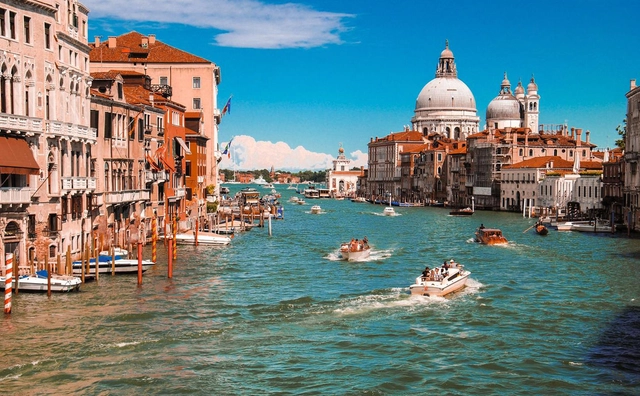
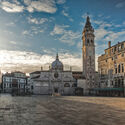
Following several initiatives to tackle the tourism and architectural heritage crisis, Venice authorities have announced that as of January 16th, 2023, visitors will have to book a visiting slot and an entrance fee to see the historic canal city. The newly proposed ticketing system, which is claimed to be the first of its kind in the world, hopes to control its "over-tourism" crisis, a challenge that has been affecting the lagoon's ecosystem, urban development, and local population.
Agriculture and the food industry seem to have little in common with architecture, but it is precisely the overlap of these three areas that interests Ghanaian-Filipino scientist and architect Mae-ling Lokko, founder of Willow Technologies based in Accra, Ghana. Working with recycling agricultural waste and biopolymer materials, Lokko searches for ways to transform the so-called agrowaste into building materials.
In the face of increasingly alarming predictions regarding the climate crisis, just increasing the efficiency of buildings is no longer enough. Zero energy buildings - or, better yet, energy positive buildings - make it possible to mitigate the negative impacts of the construction industry, which is responsible for 40% of all greenhouse gas emissions. These are buildings capable of producing more energy than they consume through the use of renewable sources. To reach this ambitious goal, it is necessary to follow three main steps:
Install a renewable power system to provide clean energy;
Include high efficiency systems, such as climatization equipment and low energy lighting.
Improve the construction envelope to conserve energy and reduce loads.
In the current scenario of a climate crisis, thinking about an architectural project without defining ecological guidelines has become practically unacceptable. One of the main emitters of carbon dioxide and other pollutants, the construction sector is increasingly looking for new ways and means that can make works more sustainable and, in some way, mitigate damage to the environment. Thinking about ecological materials can be one of the fundamental steps, but, which materials are these?
The “Reconstructing the Future for People and Planet” Conference, hosted by Bauhaus Earth and the Pontifical Academy of Sciences (PAS), has begun at the Casina Pio IV in the Vatican Gardens. The conference opened with a speech from Ursula von der Leyen, president of the European Commission. The extensive program brings together renowned scientists, architects, spatial planners, and policymakers to discuss the transformation of the built environment from a driver of climatic and societal crises into a force for regeneration.
In the history of architecture the concept of beauty has always been linked to different factors that represent, mainly, the values of society in a given period. The zeitgeist is certainly crucial to these definitions, so something that was once considered beautiful in the past is likely to be given another connotation nowadays. In this sense, aesthetic preferences in architecture seem to be linked to symbolic references implicit in the construction itself and in its relation with the world. They are preferences that express convictions, ideologies and positions, as well as moral, religious, political feelings and, of course, class status symbols.
MVRDV has revealed the design for its first project in South America. The Hills is a residential project located on the Guayas riverfront in Guayaquil, Ecuador, comprised of six residential towers displayed atop a mixed-use plinth, creating the image of a valley. The towers range in height from 92 to 143 meters, raising taller the further away they are from the riverfront. The whole composition is inspired by the local landscape that merges the natural and the urban environment.
Now that the effects of climate change are visible and indisputable, consumers are more environmentally conscious than ever. In fact, as a United Nations 2021 study suggests, 85% of them reveal that sustainability plays a key role when making their purchase decisions, motivating businesses and manufacturers to respond accordingly. This explains the rising demand for electric vehicles and products made of renewable or recyclable materials. However, architecture – and especially traditional housing – seems to be several steps behind compared to other industries. Although there are numerous efforts to move towards a greener built environment, the way most buildings are made today continues to be outdated, creating tremendous amounts of waste and significantly contributing to the global carbon footprint.
Forests cover about a third of the planet and play a fundamental role for life on Earth. According to Peter Wohlleben, author of the book “The Secret Life of Trees”, through fungal weaves, specimens of a forest can communicate with each other, exchange nutrients, help out the weakest plants, and organize survival strategies, which is essential for the healthy growth of individuals. The preservation of existing forests and the creation of new ones are essential for biodiversity and natural recovery, but also to meet the demand for wood. According to a report by the WWF (World Wide Fund for Nature), it is estimated that the amount of wood harvested in the world will triple by the year 2050, with the increase in population and income in developing countries. In addition, it is estimated that there will be an increased use of wood to manufacture biofuels, pharmaceuticals, plastics, cosmetics, consumer electronics and textiles. Searching for wood substitutes can be a smart path towards a sustainable future, especially if the alternatives are made using waste generated by other industries. Pyrus, for example, is an oil-free wood material produced sustainably with bacterial cellulose waste repurposed from the kombucha industry.
Since the early 2000s, it has been widely reported that the construction industry accounts for nearly 40% of the planet’s CO2 emissions. The role of interiors in that percentage has been historically underestimated, with common statistics suggesting that a project’s furniture, fixtures and equipment are only responsible for about 7 to 10% of its overall carbon footprint. However, new research notably indicates the contrary: in a building’s average life span, the carbon footprint of its interiors will equal – if not exceed – that of the structure and envelope. Interior design, to the surprise of many, has actually been doing great harm.
On March 31st, the Health and Nutrition Day is celebrated in Brazil, factors that are gaining more and more notoriety in the society in which we live. After more than two years living through the ups and downs of the Covid-19 pandemic and facing the evident need for a healthier, more active and community reality, it is important to reflect on how architecture and urbanism can become tools for accessing healthier daily lives.
As the climate crisis continues to present itself as a significant threat to the future of the ecosystem and built environment, this year's IPCC report, titled Climate Change 2022: Impacts, Adaptation, and Vulnerability, found that while adaptation efforts are being observed across all sectors, the progress being implemented so far is greatly uneven, as there are gaps between the actions taken and what is needed. On this year's Earth Day, we explore the progress being made by governments and architects to achieve net-zero operations within the next decades.
Torre Taikoo Green Ribbon / ARUP. Image Cortesia de Arup
Discussing carbon neutrality in architecture should not only be based on local materials and new technologies, since there are many aspects that impact the construction production chain. From design to construction, without losing sight of the context and economic system of our society, the construction industry is responsible for a considerable part of the energy consumed worldwide. In order to interfere in this reality, it is necessary to expand the fronts of action, questioning the place of construction in our society.























.jpg?1653955037&format=webp&width=640&height=580)

.jpg?1653955060 "Courtesy of MVRDV")


.jpg?1653955037)