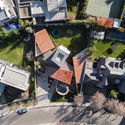
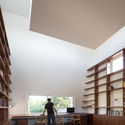
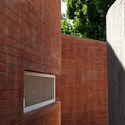
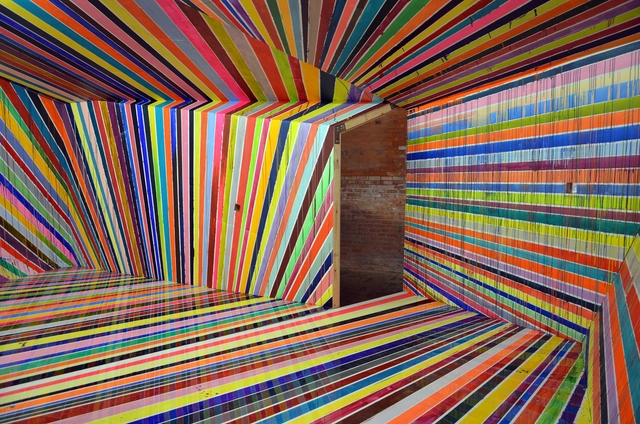
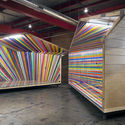
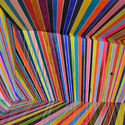
Sarovic_Plaut Arquitectos’ latest work, “The Grater,” was the Bazar ED 2017 entry pavilion. Last November, Bazar ED’s 13th annual fair united design, decoration and trends at Santiago’s Bicentennial Park.
The pavilion is the first thing people see when they enter the fair and the last thing they see as they leave, making it a particularly memorable space. The spatial atmosphere created by Sarovic_Plaut Arquitectos plays with light and wind to enhance visitors sensorial experience.
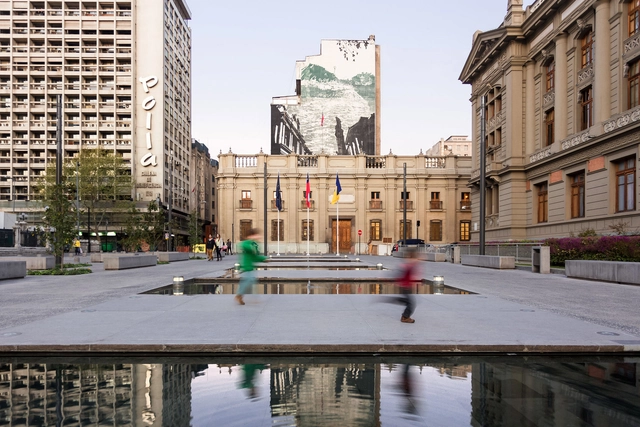
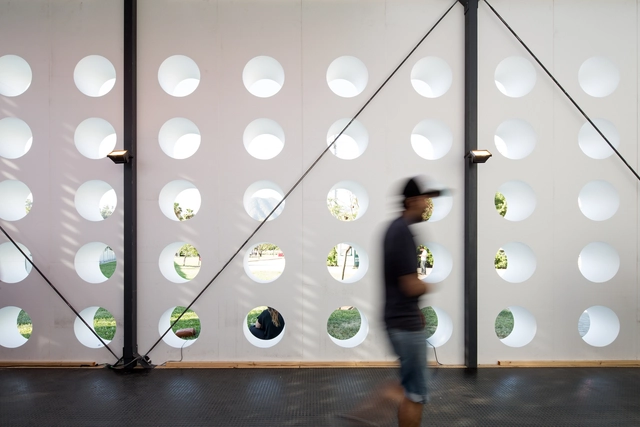
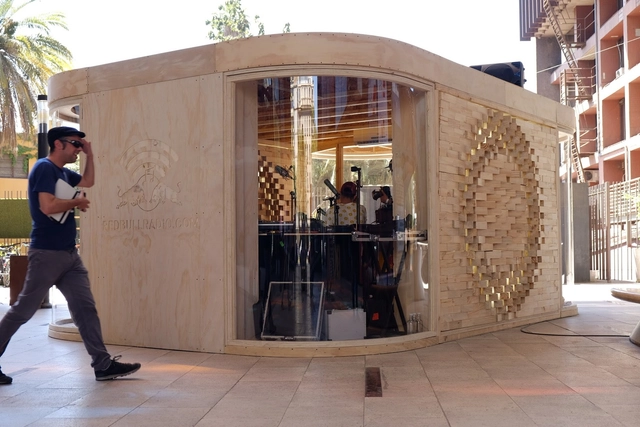
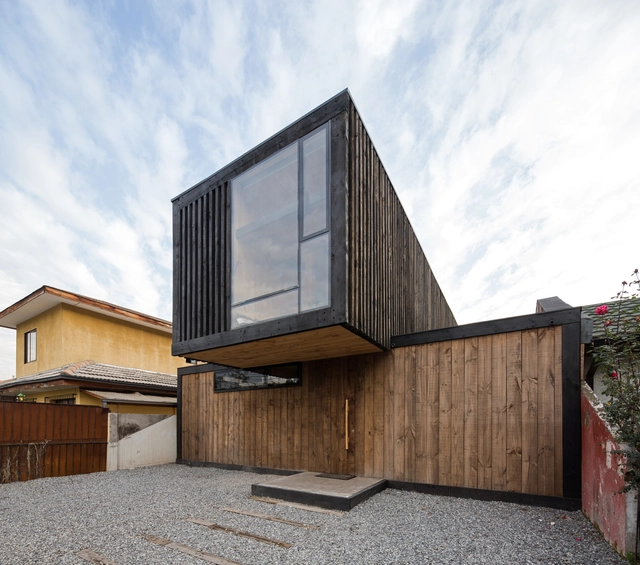
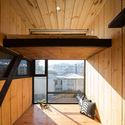
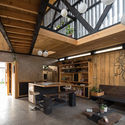
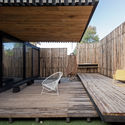
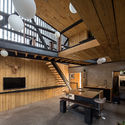
Chilean architect Verónica Arcos has been invited to design a modular wood studio that was installed in the central courtyard of the Gabriela Mistral Cultural Center. The show was part of the Red Bull Radio Pop Up Santiago, a radio event that broadcasts eight hours a day of live conversation, musical selections and live shows in the search to spread what is now known as Chilean musical identity.
ArchDaily is an evolving project of the Internet – an experiment in archiving, disseminating discourse and sharing content related to architecture and urbanism on a scale that was not possible as little as two decades ago.
Since our foundation in 2008, we have operated around a single mission: to bring knowledge, inspiration, and tools to the people who are, and will be, designing the urban centers which will accommodate our planet’s (exponentially rising) population.
Most importantly for us, we are continually connecting people from around the developed and developing world by building a platform which operates in four languages—Spanish, English, Portuguese and Mandarin Chinese—to ensure that these discussions are available to the widest possible global audience.
And in order to bring content to our half-a-million daily readers more efficiently, we're looking for a Content Coordinator to help guide and organize the team. Are you meticulous, exceptionally organized and passionate about architecture and the internet? This is the job for you.
https://www.archdaily.com/884623/job-opening-content-coordinator-at-archdailyAD Editorial Team
ArchDaily is looking for a motivated and highly-skilled architecture-lover to join our team in Santiago, Chile! We are happy to announce a new residency program aimed at identifying emerging talent in the field of online architecture publishing. Participants in the Residency program receive a monthly stipend so that they can temporarily relocate to Chile and work alongside our global team of content producers for a period of four to six months.
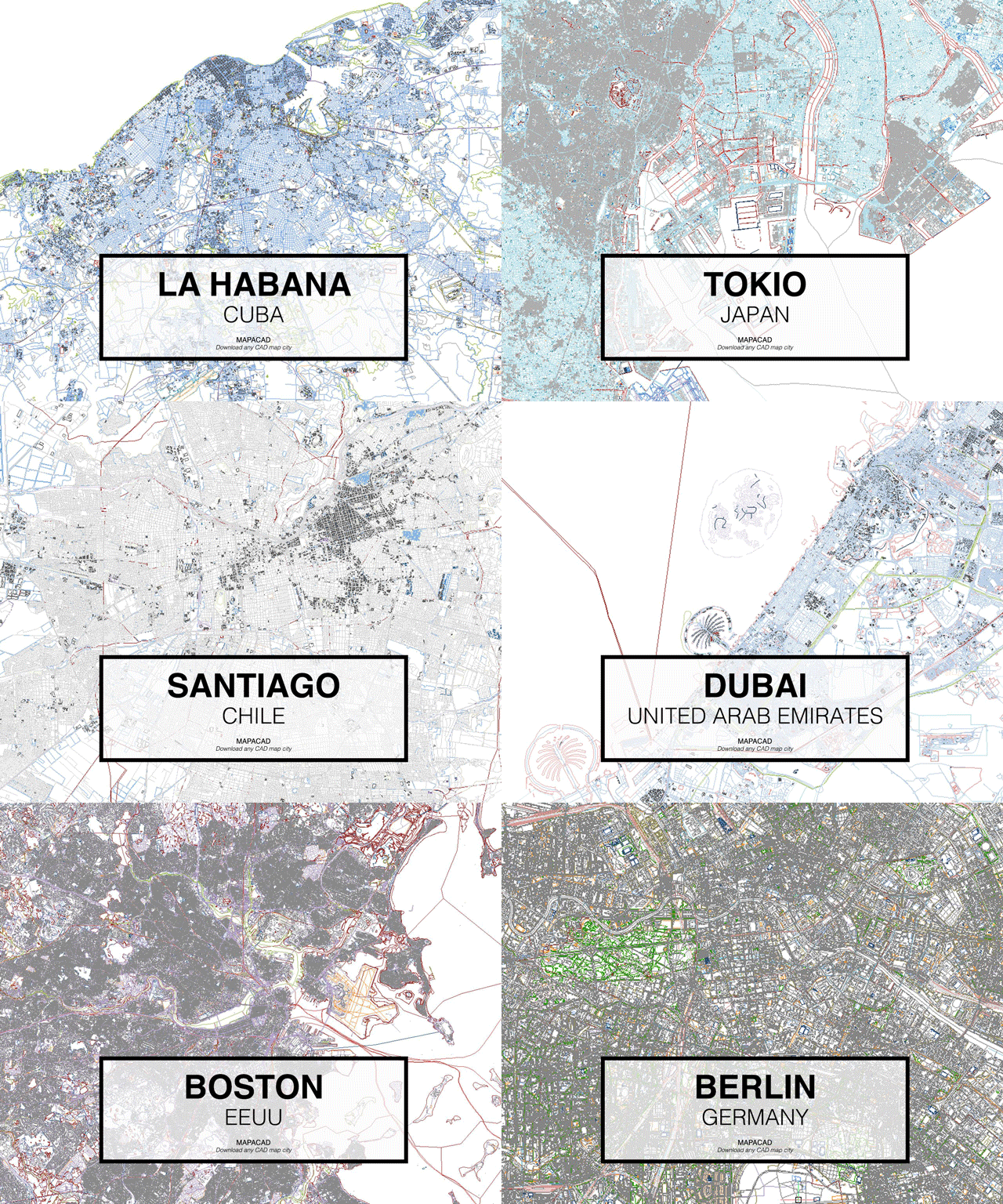
Mapacad is a website that offers downloads of .dwgs of dozens of cities. With 200 metropolises in their database, the founders have shared a set of their most-downloaded cities.
The files contain closed polyline layers for buildings, streets, highways, city limits, and geographical data--all ready for use in CAD programs like Autocad, Rhino, BricsCad and SketchUp.
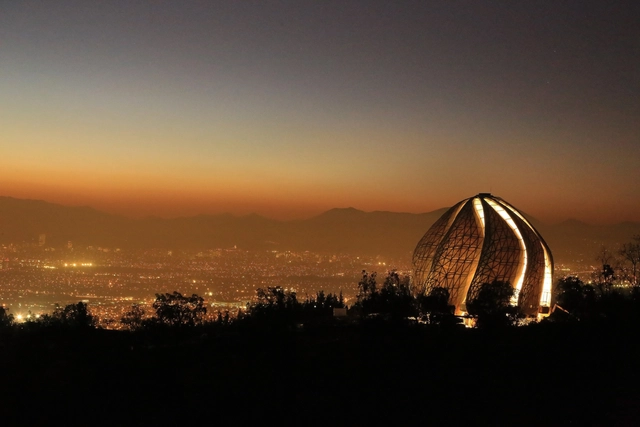
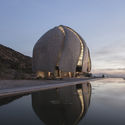
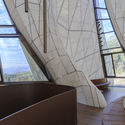
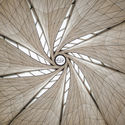
Located in the foothills of the Andes Mountains outside Santiago, Chile, the domed building was designed and built using computer modeling, measuring, and fabrication software, as well as custom glass, all of which culminated in nine monumental veils that frame an open worship space for up to 600 visitors. Completed in 2016, the project took 14 years to realize.
As the birthplace of our most recent Pritzker Prize winner, Alejandro Aravena, Santiago, Chile is full of iconic architecture. Because many of these buildings are situated in busy urban areas, their superior design is easy to miss. In an effort to encourage viewers to slow down and appreciate the volume, facades, context, and function of these urban landmarks, Benjamin Oportot and Alexandra Gray of San Sebastian University guided their 4th-year students in producing axonometric drawings of 11 buildings. The project centered on medium-sized office buildings built between 1989 and 2015, particularly focusing on their use of reinforced concrete.
https://www.archdaily.com/799875/11-stunning-axonometric-drawings-of-iconic-chilean-architecturePola Mora
In an exclusive half-hour interview with Alejandro Aravena, Monocle's Josh Fehnert questions the recent Pritzker Prize-laureate on Chilean architecture and urbanism, why he considers simple design as the key to alleviating the world's biggest woes, and the conception and ultimate result of his 15th International Architecture Exhibition – La Biennale di Venezia.
https://www.archdaily.com/791596/alejandro-aravena-on-design-venice-and-why-he-paused-his-career-to-open-a-barAD Editorial Team
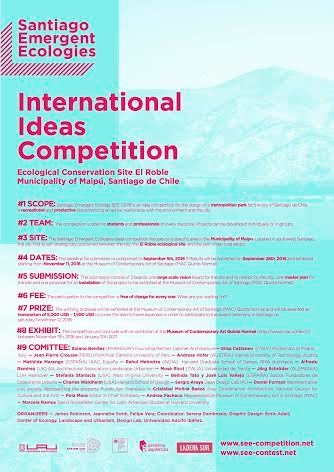
SEE (Santiago Emergent Ecologies) international ideas competition aims to articulate a series of concrete projects for the fringe comprised between the city of Santiago and the El Roble ecological conservation site (Sitio Proritario el Roble). The el Roble conservation site is one of the major reservoirs of biodiversity in Chile; its resources and ecosystemic relations have a direct impact on the environment and the quality of life in the Region of Santiago, and influence the potential economic development of the area.
Yesterday, and for the first time in La Biennale's history, the press tour included a stop in the Southern Hemisphere. From his home city of Santiago, Alejandro Aravena shared more details about the upcoming exhibition in Chile's presidential palace (La Moneda) alongside the president of the Biennale and the president of Chile.
The main information to emerge from the press conference was the presentation of the lone image that represents this year's Biennale and the announcement of the participants. In the video above, Aravena gracefully explains how Bruce Chatwin's image of German archaeologist Maria Reiche encapsulates "the Biennale as a whole."
Aravena stressed that he wanted the disclaimer for the exhibition to be the exact opposite of "Don't Try This At Home." He explained, "Given the complexity and variety of challenges that architecture has to respond to, 'Reporting from the Front' will be about listening to those that were able to gain some perspective and consequently are in the position to share some knowledge and experiences with those of us standing on the ground."
.jpg?1511980495&format=webp&width=640&height=580)
.jpg?1511979034&format=webp&width=640&height=580)

.jpg?1504693727&format=webp&width=640&height=580)

.jpg?1504693727)