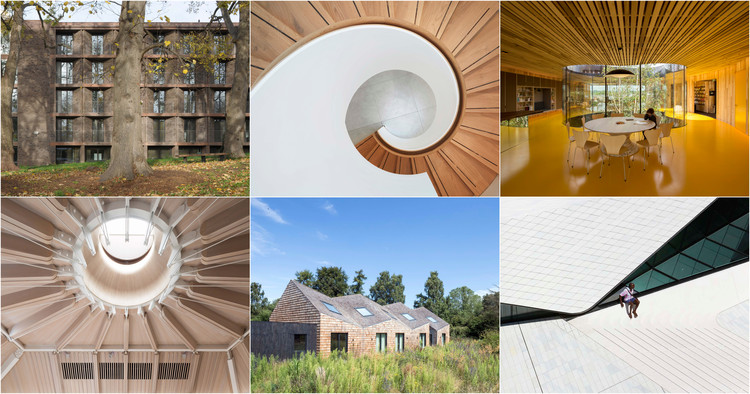
The Central Academy of Fine Arts (CAFA) in Beijing, China, has tapped award-winning Chinese architect Zhu Pei as its next dean of the School of Architecture. Zhu Pei founded his firm Studio Zhu-Pei in 2005 known for its cutting-edge integration of cultural roots and contemporary innovation in design. Zhu Pei has taught at Harvard GSD and Columbia University GSAPP, two of the leading graduate programs in the world.
In the current iteration of our digital age, Instagram is king in the social media. Boasting 1 billion (yes, with a "b") active monthly users, if you are a business and not on Instagram, you are missing out.
Given the visual nature of the platform, architects and designers have flocked to the platform, using it to market their work, promote new ideas, and even pull in commissions. Other aggregator accounts use the platform to find and foster new talent, creating an entirely digital architectural community that is open to all.
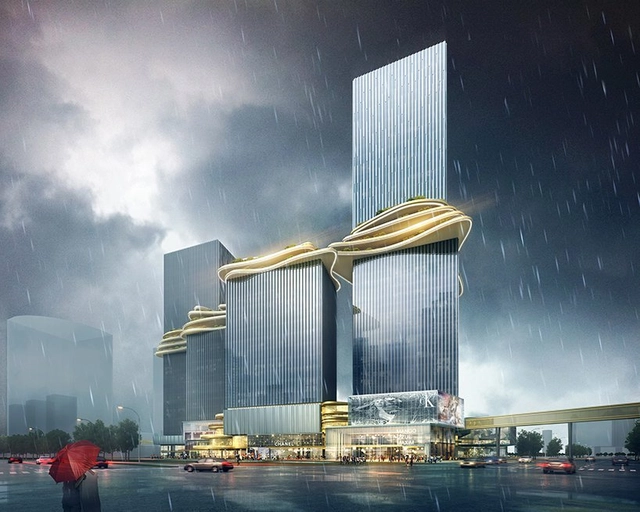
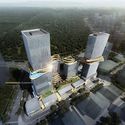
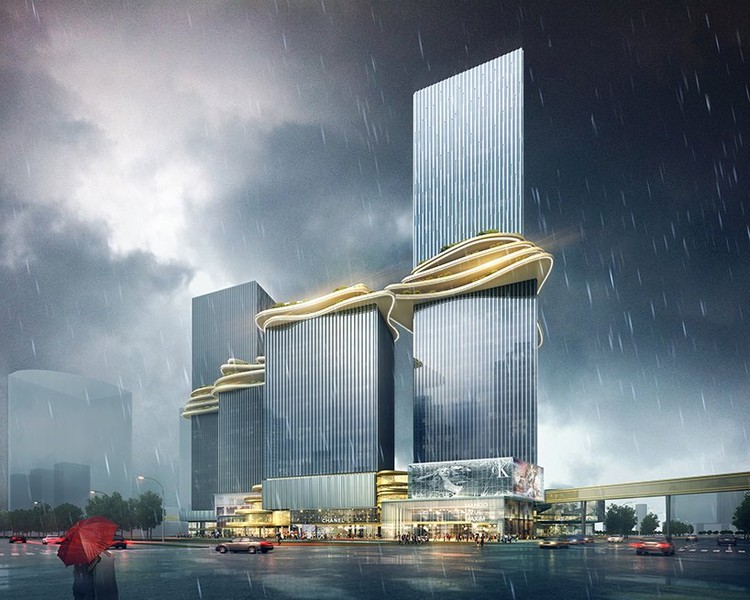
Punctuated by four towers of varying size, Aedas’ new design for a mixed-use scheme in Zhuhai, China, uses a looping, layered path to connect the individual structures with a ‘three-dimensional, vertical landscape’. Hoping to become the centerpiece of the city, the Hengqin CRCC Plaza uses strategic positioning and form to both maximize economic output and create a strong community core, where generous open space serves the surrounding workspaces.
It has been just over a week since the 7.0 magnitude earthquake destroyed 50,000 homes in North Lombok, a city just east of the island of Bali, Indonesia. Although much of the town is gone, the community has already rallied together to begin the long and arduous rebuilding process. With the rainy season approaching in less than two months, DOME Lombok is working to begin building earthbag domes and teaching their construction techniques to help the area rebuild.
Courtesy of Prof. Shiauyun Lu, Jhengru Li, Tzuman Tseng, Hsianghsiang Wang
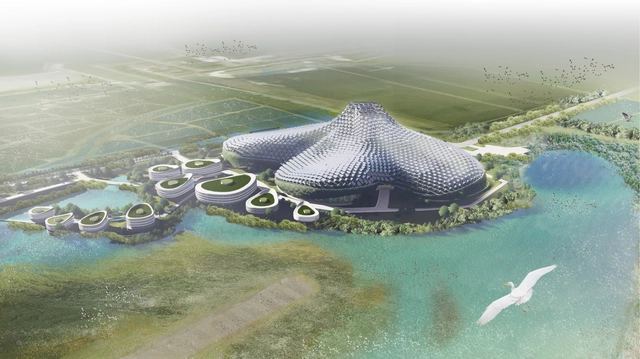
The island nation of Taiwan is a country that boasts both a high population density and a wide range of ecosystems. However, a large issue that the country is currently facing involves the energy production and consumption, and the negative impact it has on the environment. With the largest power plant slated to be shut down by 2023, a team from Taiwan has devised an architectural proposal for how to construct a plant that both generates enough electricity to serve the metropolitan area and reduce its negative impact on the air quality and surrounding wetlands.
World Architecture Festival has announced the winner of its inaugural Water Research Prize. First place was awarded to a team of students from Pontificia Catholic University of Peru (PUCP) who designed a water management system that "captures, stores, and treats rainwater and inserts it into pre-existing water networks."
There has been a lot of focus recently on community engagement in architecture. Some building by some architect is designed to be the next 'community hub,' but what does it take to deliver on the design intent?
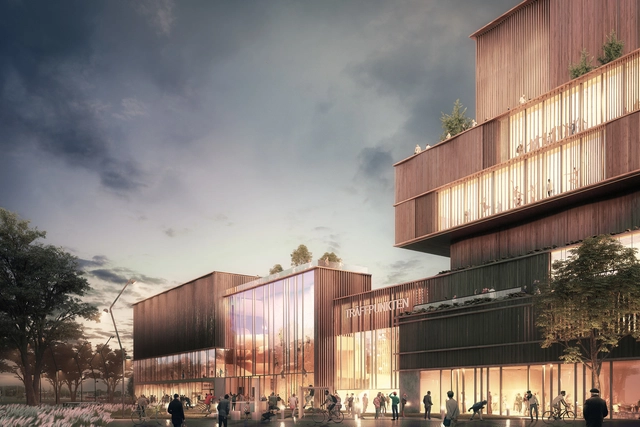
In order to promote a community atmosphere, a design must engage a large and variable audience, while also offering something unique. This new design from AIX Arkitekter intends to create a new multicultural center called "The "Meeting Point" in Täby, Sweden. The center combines unique sports and cultural activities, at the heart of an existing ecological infrastructure, to promote community opportunities and engagement.
"The Meeting Point" center utilizes both indoor and outdoor activities. This dynamic also translates throughout the design language of the building through transparency and landscape elements. The intersecting masses cause various activity spaces to overlap, promoting happenstance interactions between both people and program.
When you think of your favorite spot to grab a beer, what architectural features come to mind? Is it the swanky furniture, themed artwork, or the heavily designed cocktail menu? Today, the aesthetics of bars are now as much a draw as the drinks themselves. From movie set inspired spaces to rooftops that offer spectacular city views, we’ve compiled a list of nine bars and beer gardens that every architect needs to cross off their list.
The Hungarian artist László Moholy-Nagy was one of the most influential thinkers, designers and art educators of the first half of the twentieth century. His experimentation with light, space and form generated international attention. Among those impressed by Moholy-Nagy's work was Walter Gropius, German architect and founder of the Bauhaus School, who made Moholy-Nagy one of the youngest instructors in the history of the Bauhaus. In his time at the Bauhaus, Moholy-Nagy utilized multi-disciplinary art practices to revolutionize abstract artistic media.
Indigenous co-design—a more specific form of the general concept of co-design in which an architect collaborates with a stakeholder community—is a collaborative design process between architects and the Indigenous community as the client. The Royal Architectural Institute of Canada (RAIC) recently released a unique resource aimed at designers, clients, funders and policymakers looking for a guide in Indigenous co-design.
Four Case Studies Exemplifying Best Practices in Architectural Co-design and Building with First Nationsbuilds on the success of the RAIC International Indigenous Architecture and Design Symposium held in May 2017. The four case studies set out to explore best practices in Indigenous co-design in the context of three First Nations and one Inuit community in Canada, with one case study selected from each of the four asset classes: "schools, community and cultural centers, administration and business centers, and housing."
The fall of the Iron Curtain in 1991 came not only with political, economic, and social implications but also left behind a distinctive style of architecture. This architecture, under the Soviet regime, was a system that relied on quantifiable targets, such as the Five Year Plan. These quotas forced architects to evaluate building projects in terms of material and labor costs, number of units, volume of skilled and unskilled labor, and so forth. As a result, architecture across these regions became an industrial commodity, an outward flex of power and technological innovation, and a collective of architects executing a Stalinist vision.
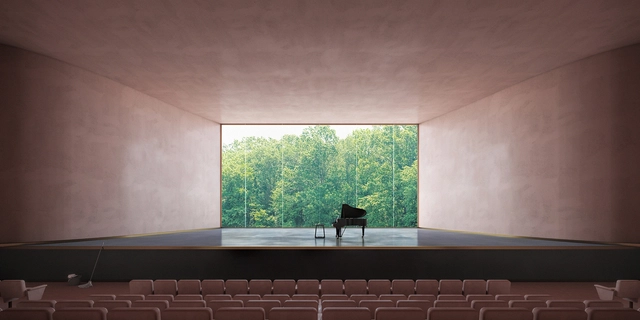
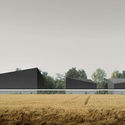
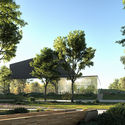
Located in a small village in Poland, this proposed music center honors the birthplace of famous Polish composer and pianist, Frédéric Chopin. Designed by ELEMENT as a part of an international competition, the Chopin Music Center captures the picturesque landscape of endless forests through "leisure and relaxation."
The Center integrates with the park through window views of Frédéric Chopin's birth house and the surrounding landscape. The proposed international music center utilizes a combination of natural materials and glazing to create a seamless connection with its site. The existing park can be reached by pathways and bridges near the building, prompting visitors to experience the outdoor area.
Late last month, Sketchfab launched an online store which will make it easier for designers to buy and sell 3D models. The platform’s 1.5 million creative professionals can monetize their work and customers who are working on a range of 3D projects will have the opportunity to purchase tens of thousands of high-quality 3D models and textures. The new launch also features a first-in-market, "Model Inspector."
Earlier this year, LEGO announced that they were beginning production on a new line of botanical-themed pieces made from sugarcane. This new line is just the start of the company's goal to only use sustainable materials in all major products and packaging by 2030. Here we will explore the process behind LEGO’s “going green” initiative, and the challenges they’ve faced in making more environmentally-friendly building blocks along the way.
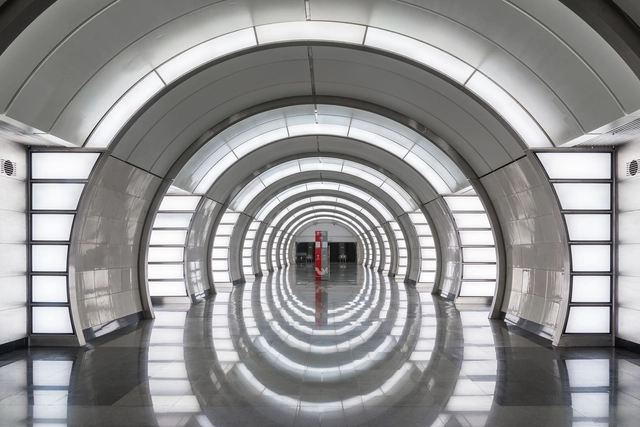
Beautifully integrating graphic design and architecture, the newest release from Blue Crow Media's transit series recognizes a selection of the most unique public transit stations in Moscow. Moscow Metro Architecture & Design, the second installment in the series, was curated by architectural historian Nikolai Vassiliev with photography by Alexei Narodizkii. It features the most unique and influential examples of architecture and decoration across what is widely considered to be "the most impressive network of stations in the world."
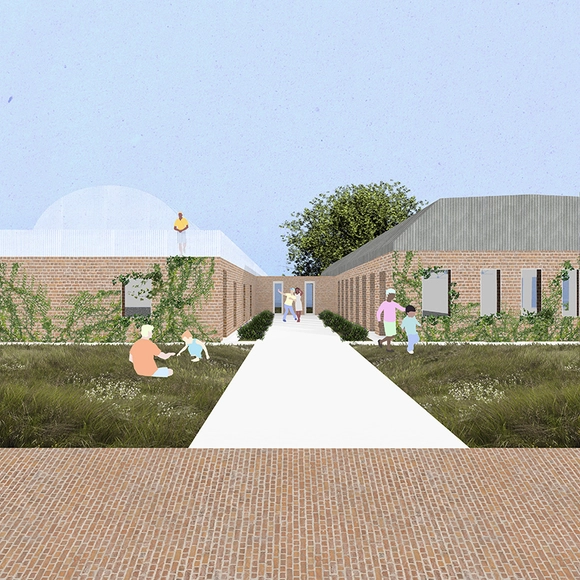
The entrance of the museum and conference space is lively with greenery and activity. The proposed design includes the addition of a rooftop greenhouse, as well as enlarging existing windows to brighten the interiors. Image Courtesy of Group Project
Group Project, a student group from MIT, is helping GrowingChange, a non-profit that works with previously incarcerated youth, to transform an old North Carolinaprison into an agricultural community center. GrowingChange looks to take advantage of the small, decommissioned prisons scattered throughout the state's landscape. They see these sites as "places where communities can work together to provide clinical support, education, and vocational training as a means to divert youth from the criminal justice" system.
Read on for more about how prison flipping intends to "counter a legacy of incarceration."
Are you in the market for a new set of minimalist earrings or a necklace inspired by the constructivist movement? You can now own all of this and more, with RIIA's line of minimalist-inspired jewelry. This Los Angeles-based jewelry designer is removing the overly decorative elements in jewelry and bringing to light the beauty of pure forms.















_Sarah_Blee.jpg?1530722704 "© Sarah Blee")
_Peter_Landers.jpg?1530722948 "© Peter Landers")
_Jack_Hobhouse.jpg?1530722837 "© Jack Hobhouse")
_Keith_Barnes.jpg?1530723141 "© Keith Barnes")