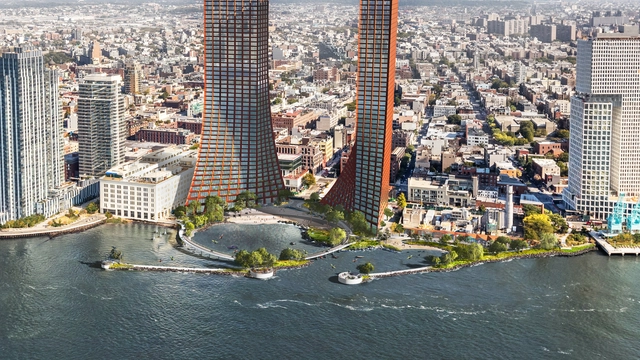
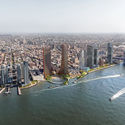
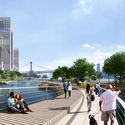
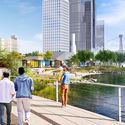
Two Trees Management Company, a New York-based real estate development firm, has presented a master plan for the Northern Brooklyn waterfront, a new approach to urban resiliency. Designed by BIG and Field Operations, the project puts in place a mixed-use development and a resilient park.
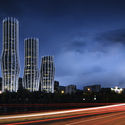
Lisi Green Town. Image Courtesy of Lisi Development
Architects and developers have always been on opposite ends of the construction world. While the first wanted to create dreamy spaces, the latter just wanted to cater to the basic needs. In these past few years, the world has witnessed significant changes, with the aggravation of climate-related issues, the evolution of technological solutions, and the newly acquired awareness and growth of the population.
While everything is transforming, building trends also evolved, mainly due to an alteration in people’s perceptions and priorities. However, one question remains unanswered: Could all these changes mean that the never-ending conflict between architects and developers reached some sort of common grounds? And could they finally be seeking one same goal, of a sustainable, resilient and inclusive future?
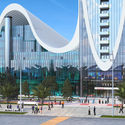
Sky Green, WOHA’s first project in Taichung, Taiwan has just been completed. Commissioned by the developer Golden Jade, with Feng Chia University as an advisor, the project is the first green and sustainable mixed-use development in the city.
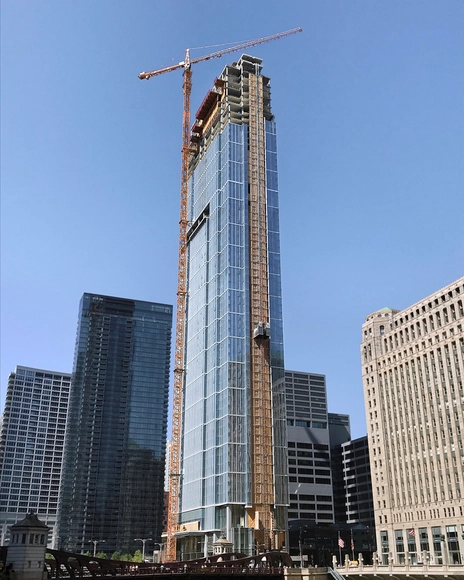
Wolf Point East Topped Out. Image Courtesy of Walsh Construction
Wolf Point East, a 665-foot residential tower, part of the last remaining development along the Chicago River, topped off and is near completion. Designed by Pelli Clarke Pelli Architects, and part of a master plan to redevelop the area, the east tower generates 700 rental units, 35,000 square feet of amenities, and 4,000 square feet of retail at street level.
Pixel, the latest project from Dutch firm MVRDV, is now under construction and is expected to be completed by the end of 2021. The community based mixed-used development is the first project in Abu Dhabi’s Makers District, an innovative and cosmopolitan new area, on the Reem Island.
JDS Architects have won the competition to design a new residential tower and mixed-use development in France. Located in Rennes, the project will include new buildings on the Blériot-Féval site to generate an inclusive neighborhood within the Eurorennes development. As the master plan's geographic centerpiece, the new Féval Tower will offer 188 new apartments to the city.
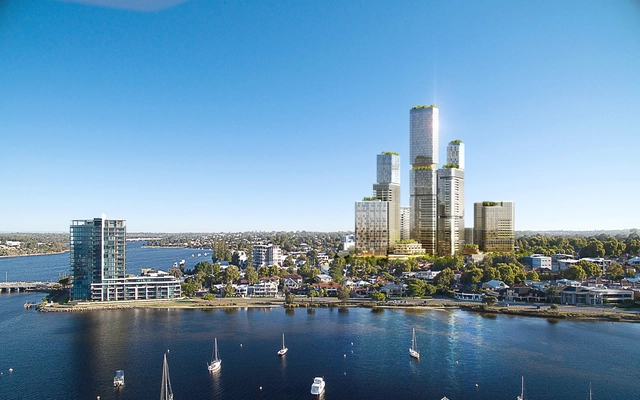
International design studio Woods Bagot has generated a masterplan for what they are calling, “the next generation of mixed-use developments for Perth.” The 17,469-square-meter island development, named Applecross Central, boasts three sides of storefront in the heart of the Canning Bridge Precinct, overlooking the Swan and Canning Rivers.
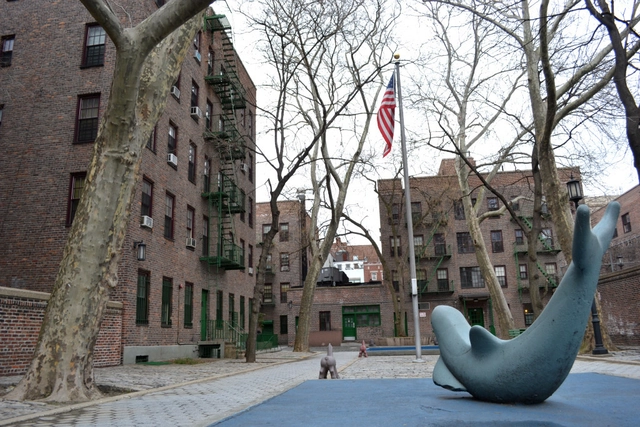
NYCHA, Public Housing. Courtesy of Flickr User agentvladimir. Licensed via Creative Commons
For the past four decades, as cities faced financial pressures, high-rise public housing met its decline. Cities throughout the country demolished public housing that was failing financially and socially, like Chicago's Cabrini-Green Housing Project whose demolition was completed in 2011, to make way for mixed use developments that encouraged economic and social diversity by way of the HOPE VI Program. This strategy resulted in the uprooting and relocation of former residents who faced uncertainty throughout the process.
The New York City Housing Authority (NYCHA) stands out among housing authorities in the United States due to its size - 179,000 units in 2,600 buildings across the city - and the fact that the buildings are relatively well maintained. NYCHA has avoided resorting to demolitions to deal with its issues, instead resorting to special police services that costs NYCHA a purported $70 million a year. Over the past decade NYCHA has been underfunded by approximately $750 million causing backlogs in necessary repairs.
To address the mounting costs of public housing, New York City's Mayor Bloomberg has proposed an infill strategy that would attract developers onto NYCHA land and create a new layer of commercial space and residential units in public housing developments. The goal over the next five years is to develop methods of preservation for the housing development and promote mixed-use and mixed-income developments to generate income for NYCHA.




.jpg?1576051979&format=webp&width=640&height=580)
.jpg?1576051840 "© Kuomin Lee")
.jpg?1576051957 "© Kuomin Lee")
.jpg?1576052609 "© Kuomin Lee")
.jpg?1576052676 "© Kuomin Lee")
.jpg?1576051979)



.jpg?1562688810)

.jpg?1562688790 "Féval Tower. Image © JDS Architects")
.jpg?1562688739 "Féval Tower. Image © JDS Architects")