Energy codes around the world get stricter every year, architects need to prepare for various challenges ahead. The first step is to understand the key metrics needed to conduct early-stage analyses and collaborate across various teams. With buildings responsible for 39% of total carbon emissions, the design practice is evolving to bake in data-driven energy efficiency. This change is leading architects to quickly become building performance experts and create spaces that are high performance and healthy for occupants.
https://www.archdaily.com/963003/sustainable-building-design-top-5-metrics-every-architect-should-knowSponsored Post
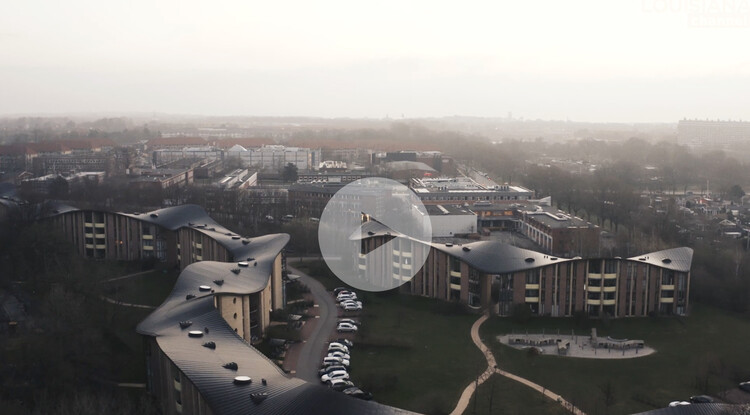
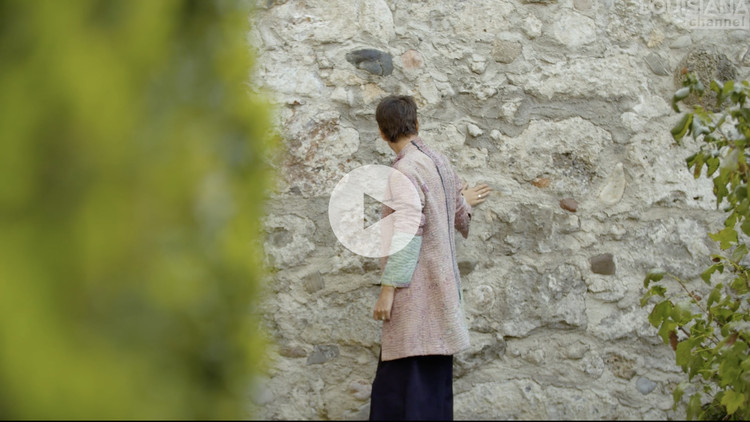
Talking to the Louisiana Channel, iconic Japanese architect Kengo Kuma discusses the many influences that have shaped his work - and also delves into the impact that the ongoing pandemic has had on the architectural field. In the interview, Kuma describes how influential his early upbringing was to his architectural career. Growing up in a small wooden house in the 1950s - originally built in 1942, would go on to guide his architectural perchance of using wood in his projects. Kuma also mentions Japanese architect Kenzu Tange as a key inspiration and cites Tange's Yoyogi National Gymnasium - constructed for the 1964 Summer Olympics in Tokyo - as a project that would influence him towards an architectural career.
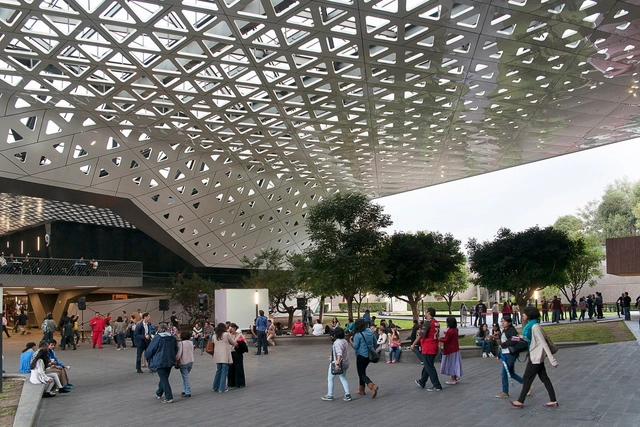
In a Design and the City episode - a podcast by reSITE on how to make cities more liveable – Mexican architect Michel Rojkind talks about running, coming from a musical background, and the responsibility of architects to create buildings that can “give something relevant” back to the community. The interview delves into Rojkind’s philosophy of making sure that architectural conversations are not insular, but instead conversations that take place within a multi-disciplinary context.
Popularly known as the lotus, the aquatic species Nelumbo nucifera has a useful particularity. Its leaves are self-cleaning, or ultra-hydrophobic. This means that no particles of dirt or water adhere to its leaf, which is especially useful in the humid and muddy environments where the plant typically grows. However, this effect does not derive from a perfectly smooth surface or a resinous layer on the leaves. The lotus is, in fact, full of tiny folds that reduce the area of the contact surface and repel all the particles that try to adhere there. The lotus effect has been studied by nanotechnologists in order to apply this same effect to products, such as surfaces, paints, fabrics, and tiles that can easily clean themselves. As trivial as this may seem, when we think of the resources applied to cleaning skyscraper glass or even of the reduction in photovoltaic energy generation due to dust on solar panels, we can get a sense of the infinite possibilities that hydrophobic surfaces could represent.
Nature, over billions of years, has developed adaptive solutions that are beginning to be understood by us with new technologies applied to the needs of areas such as the construction industry. When professionals such as scientists, biologists, engineers, architects, and others join forces and focus on understanding aspects of nature, with an empathetic and respectful view, the results can be impressive.
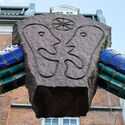
Talking to the Louisiana Channel, Danish professor, sculptor, and artist Bjørn Nørgaard outlines the philosophy that underpins his work and reflects upon his architectural projects. Nørgaard describes in the film, a co-production with Munkeruphus, the strong influence of his mentor in the 1960s - German artist Joseph Beuys - whose theories formed a key part of Nørgaard's evolution and ethos as an artist. The concept of "die soziale Plastik", or social sculpture, would go on to shape Nørgaard's approach to architecture and other forms of art - its main philosophy being that every part of life can be approached creatively.
Yes, we know. We have been talking a lot about carbon. Not only here, but everywhere people seem to be discussing the greenhouse effect, carbon dioxide, fossil fuels, carbon sequestration, and several other seemingly esoteric terms that have increasingly permeated our daily lives. But why is carbon so important and why do we, as architects, architecture students, or architecture enthusiasts, have to care about something that seems so intangible?
Rare are the fields, from arts and culture, that have so many things in common with architecture, as film does. Acknowledging that this is far from new, this topic has been debated by theorists and authors from both fields ever since the beginning of the 20th century. Architecture has been trying to embody subtle and poetical features from film while cinema has historically served as a means to discuss, represent, and denounce topics tightly related to architecture and cities.
An interesting example of this overlapping can be found in the contemporary production of French-Italian film company Bêka & Lemoine, whose works show a sensible look towards the details and the simplicity of the architecture and urban spaces. Currently encompassing thirty feature films, Ila Bêka's and Louise Lemoine's portfolio casts light on the everyday life of different cities around the world, revealing an attentive gaze to the most trivial aspects of human existence in the urban realm.
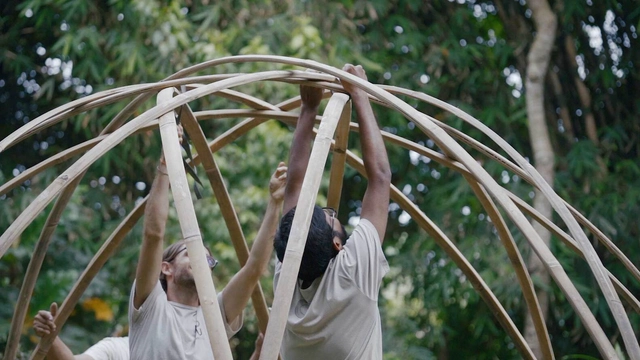
Bamboo has endless possibilities and when combined with creativity, it can lead to a wide range of interesting shapes. In its natural form, it is a straight, slightly tapering pole. But how do we bend it to create fluid, dynamic spaces? Bamboo is naturally flexible and can be flexed into a slight bend and simple framed structures can be built using bamboo’s natural straight form.
However, it requires specific techniques to achieve extensive curvilinear forms. In the structures we build here in Bali, there are 3 techniques to create curved structures using bamboo. These are:
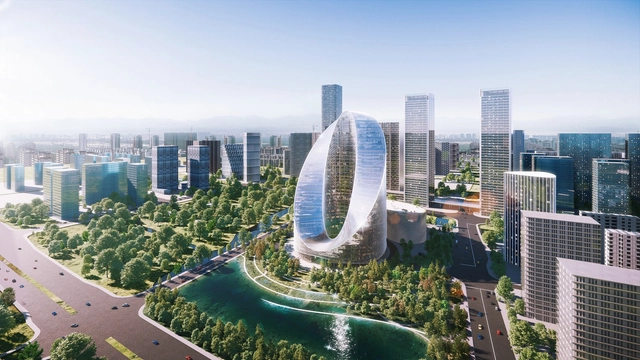
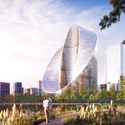
Nestled in the heart of Yuhang District, Bjarke Ingels Group’s design for the new OPPO R&D Headquarters, China’s largest smartphone company, combines aesthetics and innovative technology in a building that will be an environmental, economical, and socially sustainable hub for innovation.
Continuing our quest to redefine how architecture is perceived nowadays and exposing the different notions out there, ArchDaily gave space for its users to answer four fundamental questions: "What is architecture? What can architecture do? What is your architectural position? What is your design method?" With around 200 entries per interrogation, gathered from all over the world, the ideas shared are mostly complementary and non-conflicting, underlining a general understanding of the role and essence of this field.
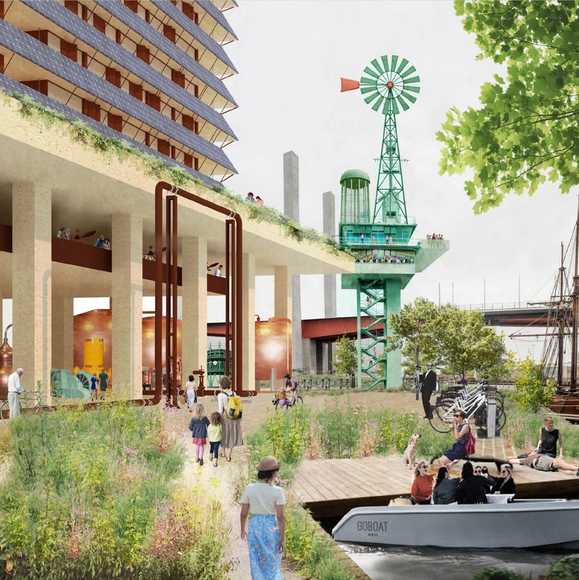
New Architecture by Kennedy Nolan. Image Courtesy of Finding Infinity
Australian research lab Finding Infinity has collaborated with architects, councils and investors to create a strategy that would turn Melbourne into a self-sufficient city by 2030. Building on exemplary case studies and scientific research, the initiative proposes a 10 step plan for the city’s transition from a consumer of resources to a zero-carbon urban environment.
In Design and the City's fifth episode - a podcast by reSITE on how to make cities more liveable - filmmaker and visual artist Gary Hustwit was interviewed on his creative process and evolution, and what motivates him to make films that strive to make design more accessible to the general public. The interview delves into the process behind Hustwit's filmography, from documentaries such as Helvetica, which explores the use of type in urban spaces, to films such as Rams, a personal and intimate portrait of the influential German industrial designer Dieter Rams.
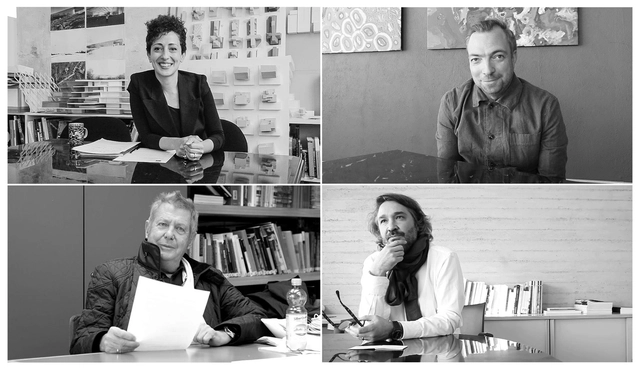
Simple in form but complex in substance, “What is Architecture?” remains an existential question for a lot of architecture students and young professionals. In an attempt to define this ever-changing interrogation and expose the different visions out there, the interview series: WIA – What is architecture? asks four, straightforward, questions to world-leading architectural designers and thinkers. Seeking to uncover their opinion on what architecture is and what it can do, these short videos reveal responses to “What is architecture? What can architecture do? What is your architectural position? and What is your design method?”.
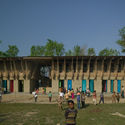
Talking to the Louisiana Channel, German architect Anna Heringer outlines the way she works and her multi-disciplinary approach to architectural practice. Growing up in a small town at the Austrian-Bavarian border close to Salzburg - Heringer spent a year living and working in Bangladesh at the age of 19, a place that is now home to a majority of her office's projects. Heringer describes herself as a mix of things in addition to being an architect, describing herself as an activist and a development worker - using her creativity to explore ideas in a variety of forms and media.
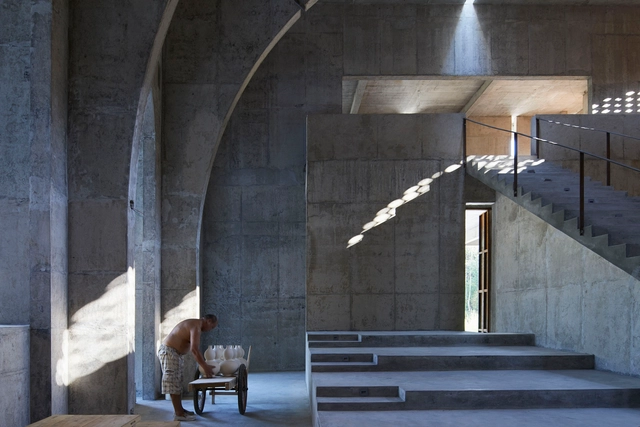
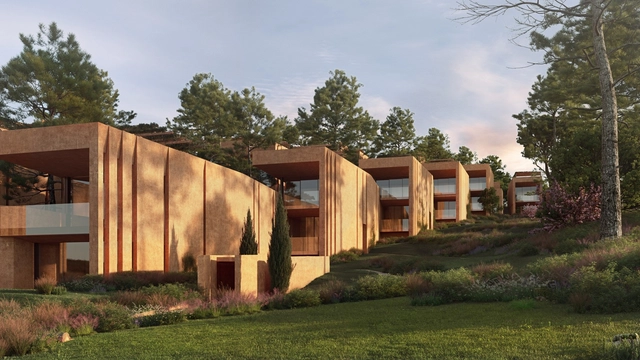
Inspired by the colors and textures of the surrounding environment, Pritzker Prize winners RCR Architectes have translated the Algarve's landscape into new residences and facilities at the Palmares Ocean Living & Golf Resort. A total of 37 new signature apartments and luxury villas are currently under construction, with completion due dates expected between summer 2021 and 2022.
Simple in form but complex in substance, “What is Architecture?” remains an existential question for a lot of architecture students and young professionals. In an attempt to define this ever-changing interrogation and expose the different visions out there, the interview series: WIA – What is architecture? asks four, straightforward, questions to world-leading architectural designers and thinkers. Seeking to uncover their opinion on what architecture is and what it can do, these short videos reveal responses to “What is architecture? What can architecture do? What is your architectural position? and What is your design method?”.
Simple in form but complex in substance, “What is Architecture?” remains an existential question for a lot of architecture students and young professionals. In an attempt to define this ever-changing interrogation and expose the different visions out there, the interview series: WIA – What is architecture? asks four, straightforward, questions to world-leading architectural designers and thinkers. Seeking to uncover their opinion on what architecture is and what it can do, these short videos reveal responses to “What is architecture? What can architecture do? What is your architectural position? and What is your design method?”.
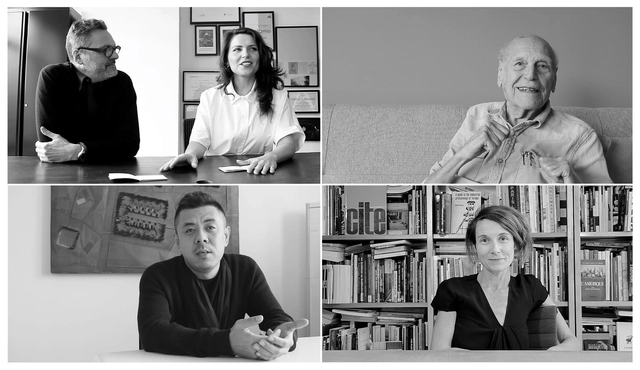
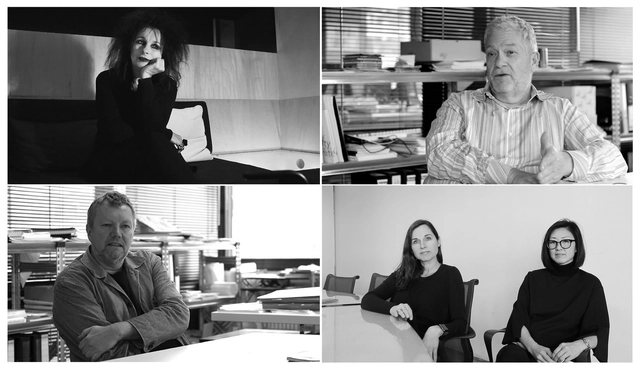
ArchDaily has collaborated with WIA to release every week, 4 of these conversations, and to invite you to take on the challenge and answer these questions. This second article of the series highlights the ideas and visions of Odile Decq from Studio Decq, Kjetil Thorsen from Snøhetta, Florencia Pita & Jackilin Hah Bloom from Pita & Bloom, an architectural design collaborative based in Los Angeles, and Jeffrey Kipnis, an American architectural critic and theorist.
In the midst of International Women’s Day which was on March 8th, this year features a week-long curation of articles and editorials by ArchDaily, seeking to dissipate the gender disparity that exists in the world of architecture. In highlighting women's voices in architectural conversations - the following are 10 interviews from ArchDaily’s archived Youtube playlists that feature inspiring women figures in the world of architecture.