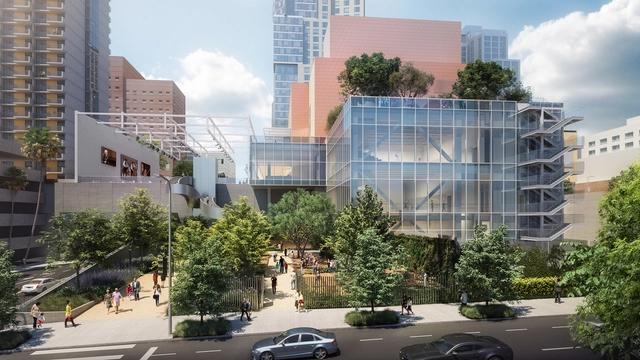
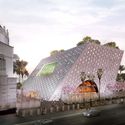
Rendering of the Colburn Center at the Colburn School. View from Hill Street West towards dance school entrance, adjacent park, and stairs leading up to Olive Street and public plaza.. Image Courtesy of Gehry Partners
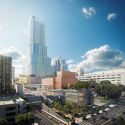
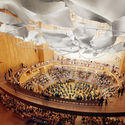
The Colburn School, Los Angeles' renowned school for music and dance, has unveiled architectural designs by Frank Gehry for the Colburn Center, a 100,000 square-foot campus expansion that aims to inspire and promote the region’s young performing artists and organizations. The center will serve as a cultural and civic hub in the heart of Downtown LA through public programs, as well as performance and educational collaborations with local and touring artists.
Last year, a series of new museums, expansions and several museum renovations have opened their doors to the public, adding a new dimension to the cultural landscape around the world. From the long-awaited re-opening of the Neue Nationalgalerie in Berlin, to Ryue Nishizawa's Jining Art Museum merging with the landscape, and MVRDV's reflective Art Depot, discover the architecture of the latest venues of art and culture.
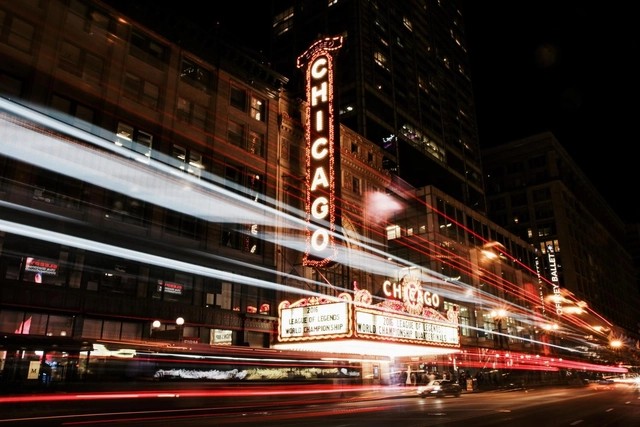
On August 12, 1833, the Town of Chicago had roughly 200 inhabitants. Four years later, in 1837, it was upgraded to The City of Chicago – an interesting fact given that there are still 19 incorporated towns in Illinois. The Great Chicago Fire of 1871 killed 300 people, destroyed about 3.3 square miles (9 km2), and left more than 100,000 residents homeless. However, by that time Chicago had become the world’s fastest-growing city and its population had risen over 300,000 inhabitants. The fire meant these ambitious citizens had to start again.
With admirable strength, the city was reborn from the ashes and some of Chicago’s best architecture was constructed immediately after. Structures like the Rookery Building (1888, Frank Lloyd Wright), the Auditorium Building (1889, Louis Sullivan) and the Monadnock Building (1893, Burnham & Root, Holabird & Roche) are a few examples of the high standards the city was aiming for.
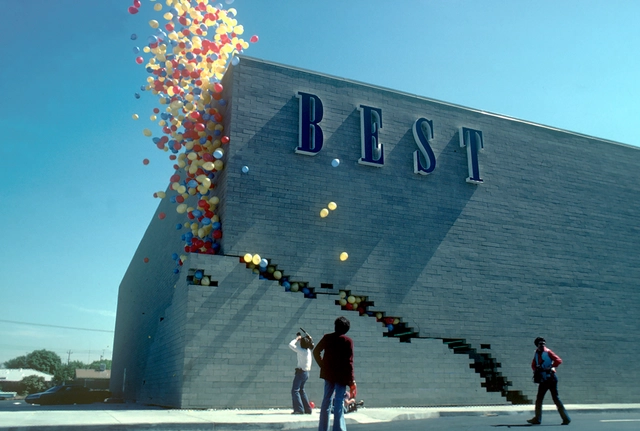
Architecture can be funny. Of course, it often makes for a well-disposed butt of the joke, like when Frank Gehry is satirized on the Simpsons, but buildings themselves can be funny as well. Philosophers like Kant believed humor was in the incongruity between what is expected and what is experienced. There are all sorts of expectations placed on buildings and an infinite number of ways that incongruity might grow between those expectations and what a building actually delivers. This video explores some of the most interesting of these humorous buildings through history, from Giulio Romano’s Mannerism, to SITE Architects BEST stores, and many more. Finally, it points to some contemporary practices that deploy humor to achieve more than just a chuckle.
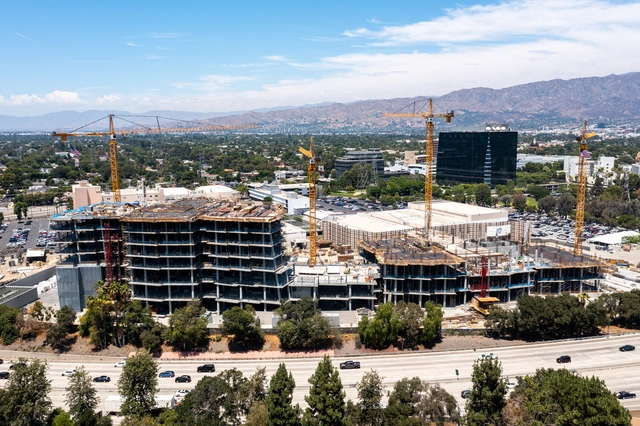
Construction is underway for Gehry Partners' Second Century Project, which will house the new headquarters of Warner Bros. After breaking ground in early 2020, the project now has its structural framework in place, and the façade is currently taking shape. Set for completion in 2023, in time for the production company's centennial, the design features a series of mid-rise, slanted office towers grouped within two distinct structures resembling "icebergs floating along the freeway".
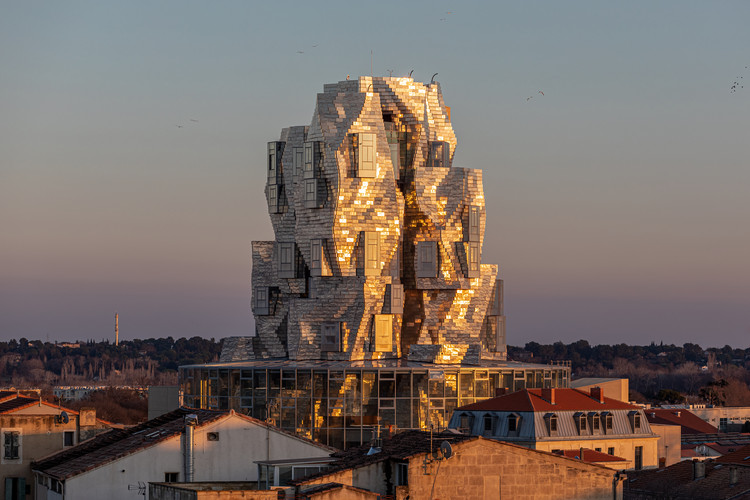
Frank Gehry's long awaited LUMA Arles has finally opened its doors to the public. The stainless-steel-clad tower with a twisting geometric structure sits in a 27-acre creative campus at the Parc des Ateliers in the French city of Arles, housing exhibition galleries, project spaces, and the LUMA’s research and archive facilities. Over 45 world renowned artists and designers, such as Etel Adnan, Olafur Eliasson, Koo Jeong A, Carsten Höller, and KerstinBrätsch will feature their creations across the tower's 12 levels, making it a focal point for global artists, curators, and art enthusiasts.
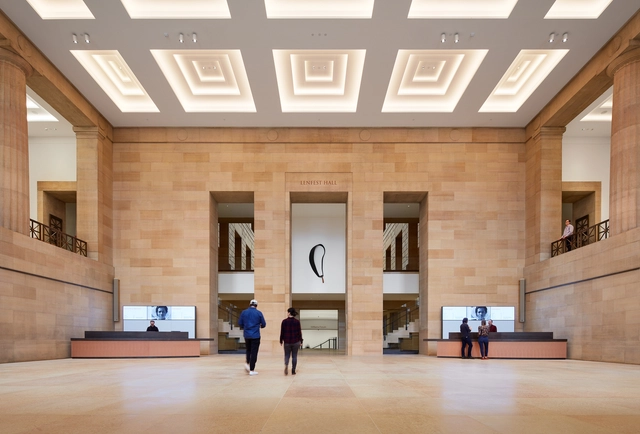
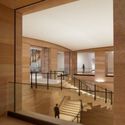
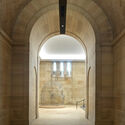
Philadelphia Museum of Art opened to the public earlier this month after completing an extensive four-year renovation and interior expansion project led by Frank Gehry. The intervention, dubbed the Core Project, focused on renewing the museum's infrastructure, creating galleries and public spaces while leaving the 1928 exterior untouched. The culmination of two decades of planning and design, the project led by the renowned architect creates a compelling vision for the future of the museum while honouring the landmark building.
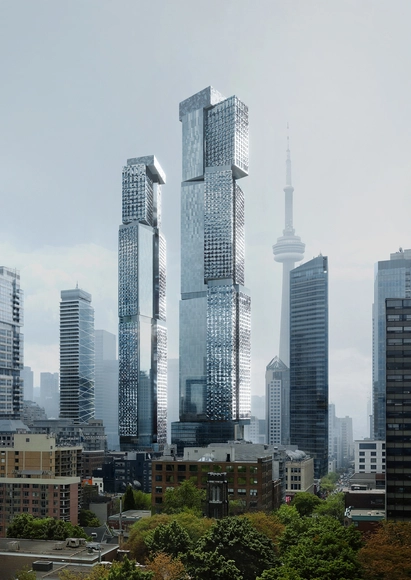
New images highlight a refined design of Frank Gehry's latest landmark, a two-tower project in the skyline of the city of Toronto. Unveiled by Great Gulf, Westdale Properties, and Dream Unlimited, the intervention is part of the King Street West Project, an ensemble of mixed-use buildings.
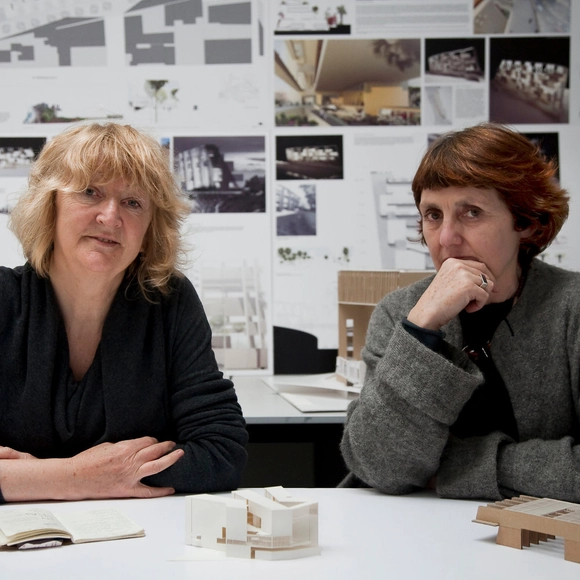
This year, architecture’s highest honor, the Pritzker Prize, has been granted to Grafton Architects, a Dublin-based architectural firm mainly ran by female partners Yvonne Farrell and Shelley McNamara. For the first time ever in its 42-year history, due to the constraints set by Covid-19 global pandemic, the organizers of the Pritzker Prize decided to use Livestream the award ceremony. Having reached the end of 2020, ArchDaily has summed up what current and previous Pritzker Prize winners have accomplished during this turbulent year.
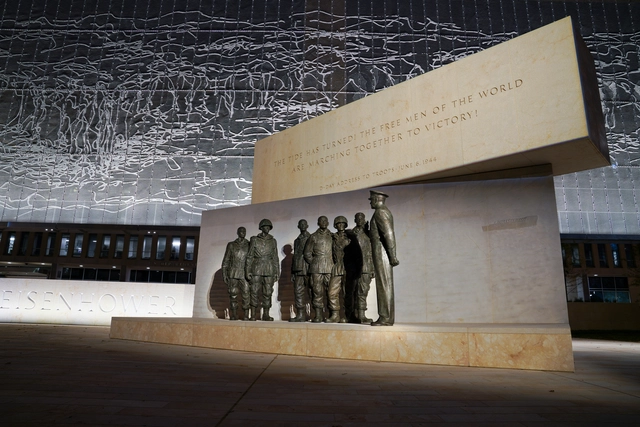
Courtesy of Dwight D. Eisenhower Memorial Commission
Over two decades in the making, Frank Gehry's design for the Dwight D. Eisenhower Memorial in Washington, D.C. will finally open to the public this Friday. A tribute to the 34th President of the United States, the memorial was commissioned by Congress in 1999 to honor the legacy of the World War II Supreme Allied Commander. Eisenhower is well known for leading the invasion of Normandy, a turning point in the war, and for serving two terms as President of United States.
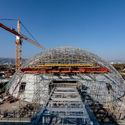
Atelier Vincent Hecht has released a series of recent photographs that document the construction status of Frank Gehry's Luma Arles Tower in the south of France. The twisting tower opening this spring will include artist studios, workshops, seminar rooms, and research facilities.
As 2019 winds down, we're taking a look ahead to the projects we're most looking forward to in 2020. With a mix of cultural and commercial programs, the designs are located across five continents, with many under construction for multiple years. Designed across a wide range of scales, they represent a mix of interconnected landscapes, museums, and the world's newest skyscrapers.
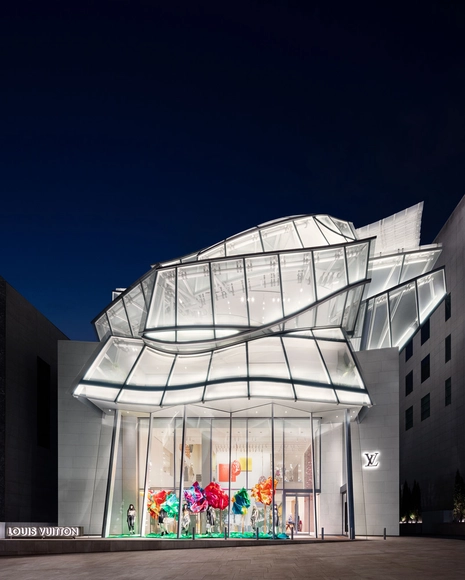
The Louis Vuitton Maison Seoul, imagined by architects Frank Gehry and Peter Marino has just opened in the South Korean capital. Celebrating Korean heritage and culture, the design puts in place a curved glass facade, perched atop a white cubic mass.
In the last decade, Miami has progressively transformed into a mecca of architecture and design. While the city’s tropical persona is most often associated with Art Deco, Miami offers a wide range of architectural styles from Mediterranean Revival to Miami Modern and everything in between. Over the years, the city has welcomed a some of the world’s leading talent including Pritzker Prize winners like “Queen of the Curves” Zaha Hadid, French visionary Jean Nouvel, Swiss duo Herzog & de Meuron, Frank Gehry and more – who have all left a lasting impression on Miami through their work. Whether visiting Miami Beach’s Art Deco district or the quaint, village-like Coconut Grove neighborhood, visitors can discover an array of awe-inspiring architecture no matter where their travels take them.
Set to screen at the ADFF:NOLA festival, Frank Gehry: Building Justice showcases how Gehry-led student architecture studios developed proposals for more humane prisons.
Thanks to initiatives like the Art for Justice Fund, Open Society Foundations, and a slew of insightful reporting, the American criminal justice system has been under great scrutiny and pressure to reform. Some of these changes have been quite prominent—such as the increasingly-widespread decriminalization of pot and pending major federal legislation—and have faced opposition from the powerful lobbying of the private prison corporations. However, despite the depth and breadth of criminal justice reform, one critically important element has remained mostly overlooked: the design of correctional facilities.
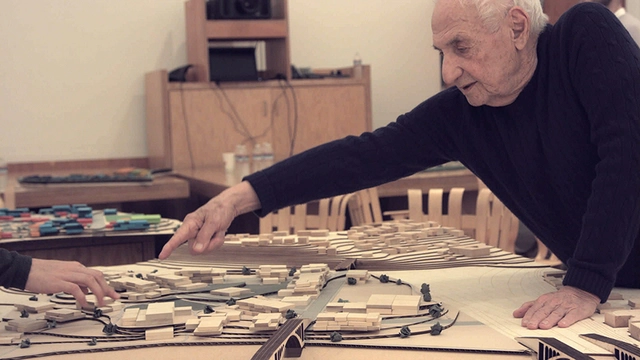
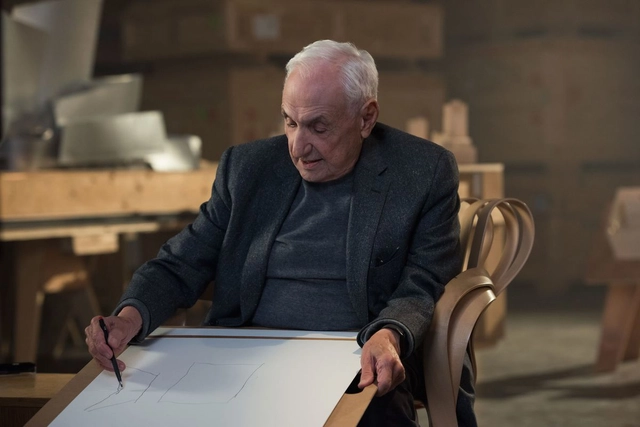
WSJ. Magazine recently visited the studio of Frank Gehry to explore his life, work and his plans for the future. As one of the world's most famous architects, Gehry and his work are intrinsically linked to Los Angeles. Today, he chooses from many proposals for the projects he wants to take on. Gehry discusses his early love for Los Angeles architecture and wood-framed housing, as well as his insecurities and some of his most famous projects.




.jpg?1641932763 "© Ossip van Duivenbode / MVRDV")











_ADRIAN_DEWEERDT_(4).jpg?1624868699 "© Adrian Deweerdt")
_ADRIAN_DEWEERDT_(1).jpg?1624868918 "© Adrian Deweerdt")





.jpg?1599848656 "Courtesy of Dwight D. Eisenhower Memorial Commission")
.jpg?1599849450 "Courtesy of Dwight D. Eisenhower Memorial Commission")
.jpg?1599848766 "Courtesy of Dwight D. Eisenhower Memorial Commission")

.jpg?1583478544&format=webp&width=640&height=580)
.jpg?1583478660 "© AVH/ Vincent Hecht")
.jpg?1583427371 "© AVH/ Vincent Hecht")
.jpg?1583427442 "© AVH/ Vincent Hecht")
.jpg?1583478347 "© AVH/ Vincent Hecht")
.jpg?1583478544)






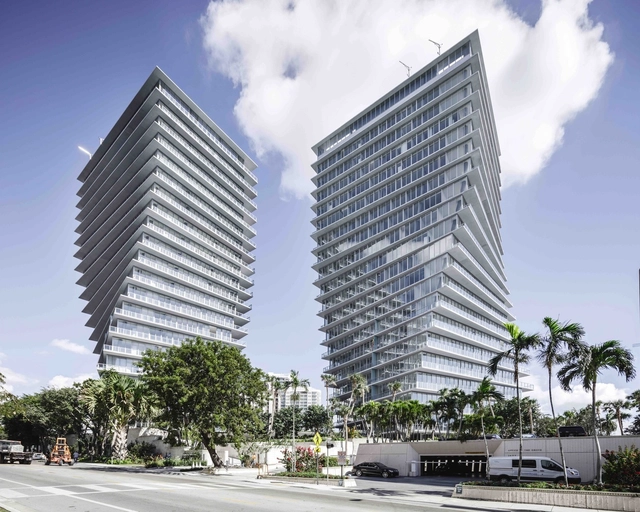
_HI_RES_(5)_copy.jpg?1565259186 "© Robin Hill. ImagePark Grove / OMA | Shohei Shigematsu")


.jpg?1565259275 "Courtesy of Herzog & de Meuron. Image1111 Lincoln Road / Herzog & de Meuron")