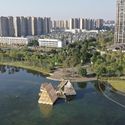
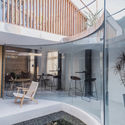
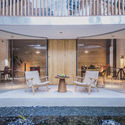
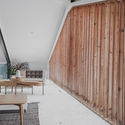
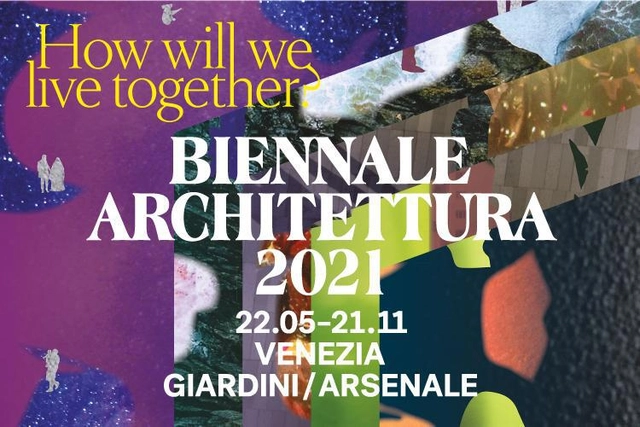
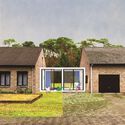
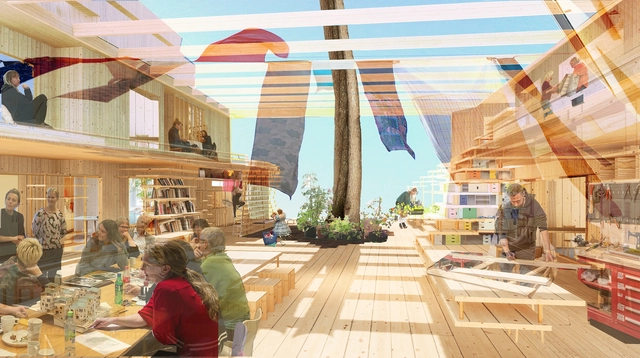
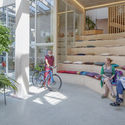
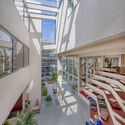
The Nordic Pavilion at the 17th International ArchitectureExhibition of the Venice Biennale will be transformed into an experimental cohousing project by architects Helen & Hard, supported by a curatorial team from the National Museum of Norway. Responding to the theme of How will we live together? the intervention “will present a framework for designing and building communities based on participation and sharing”.
Luonnos Bagdadin taidemuseosta Irakiin (1957–58). Originaalipiirustus. Image Courtesy of Alvar Aalto Foundation
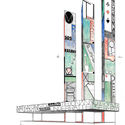
The Alvar Aalto Museum is showcasing one last exhibition before it undergoes a complete renovation, highlighting the architect’s unbuilt museum designs. While Aalto designed a total of 15 museum buildings, only three made it from concepts to the actual built structures. The exhibition entitled “The Dream of a Museum” includes both detailed and more sketch-like plans, along with competition entries.
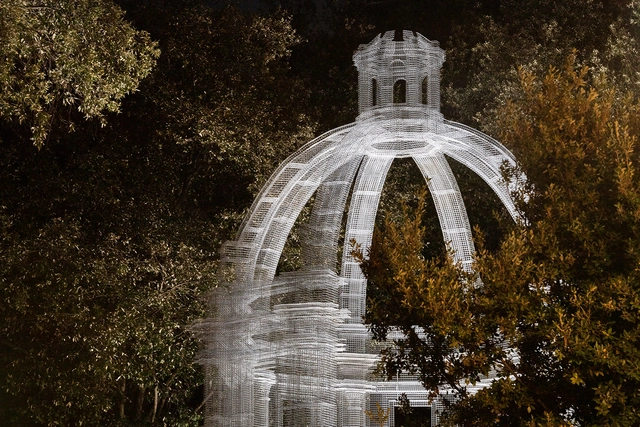
Etherea, the installation conceived by Edoardo Tresoldi for the Coachella festival in 2018, has landed in Rome for "Back to Nature”, an exhibition project curated by Costantino d’Orazio. The large transparent mesh sculpture will dialogue with the trees of the Parco dei Daini, in Villa Borghese, until December 13, 2020.
Videos
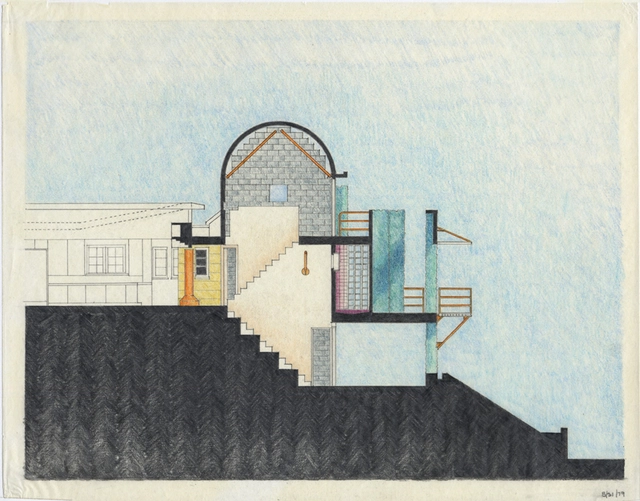
Flores Residence, Pacific Palisades, Los Angeles, USA 1979. Image Courtesy of Thom Mayne
Running from 11 September till 15 November 2020, "Thom Mayne: Sculptural Drawings" is the latest architectural exhibition at Tchoban Foundation Museum for Architectural Drawing in Berlin. Curated by Kristin Feireiss, together with Esenija Bannan, the project questions the nature of architectural drawing and how it influenced the work of Thom Mayne, founder of Morphosis. The exhibition features Mayne’s works dating from 1979 through 2020 and leads visitors from “traditional” drawings and new experimentations with techniques, through to 3D paintings.
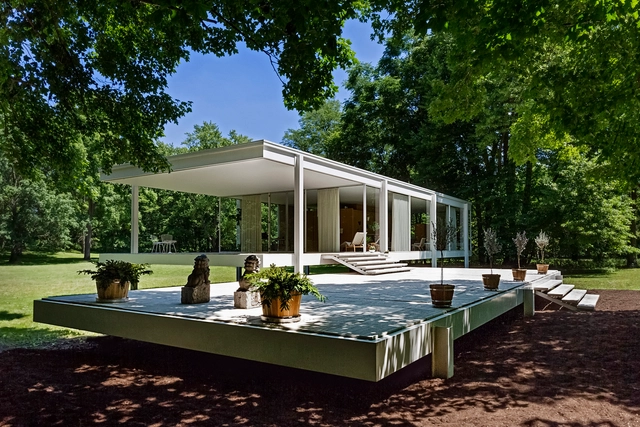
After a prolonged closure due to the COVID-19 pandemic, Farnsworth House reopens its doors with a new exhibition entitled “Edith Farnsworth Reconsidered”, a temporary refurnishing of the country house to reflect its 1955 appearance. Focusing on Dr. Edith Farnsworth’s life and times, the exhibition aims to highlight the untold story of this woman.
Next year’s Tallinn Architecture Biennale (TAB) has been postponed until 2022. Announced by the Estonian Centre for Architecture, the 6th edition has been adjourned “due to the postponement of the Venice Architecture Biennale as well as the uncertain times that international cultural events are facing because of the coronavirus outbreak”.
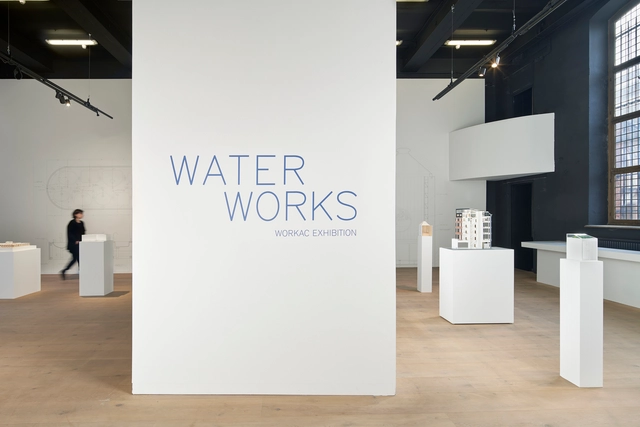
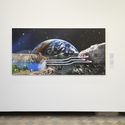
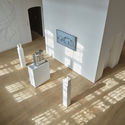
WORKac in collaboration with Musea Brugge and Cultuurcentrum Brugge has created an exhibition entitled Water Works. Set to run initially from March 7th to June 7th, 2020 at the historic Poortersloge in Bruges, Belgium, the exhibition has been temporarily closed to the public due to the ongoing COVID-19 epidemic. However, the New York-based architectural practice has produced a brief video highlighting its six themed rooms and the eighteen projects on display.
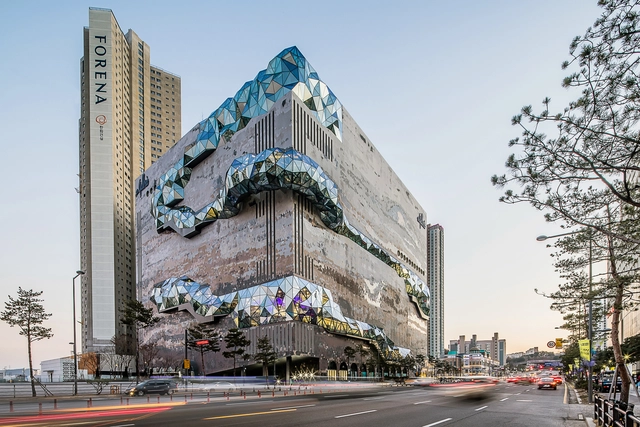
Designed by OMA / Chris van Duijn, the Department Store Galleria in Gwanggyo, south of Seoul has just opened. The store’s sixth branch is located at the center of the relatively young and new urban development.
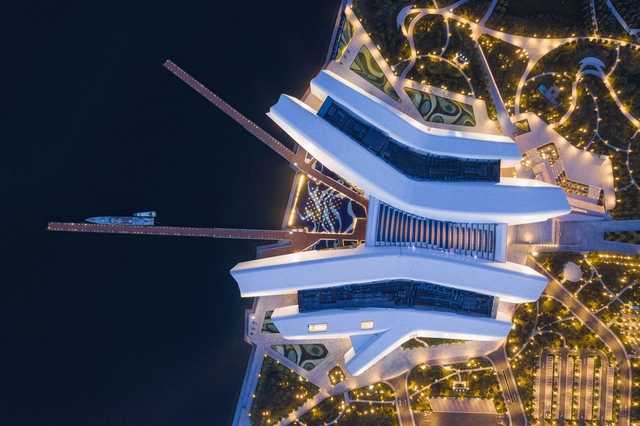
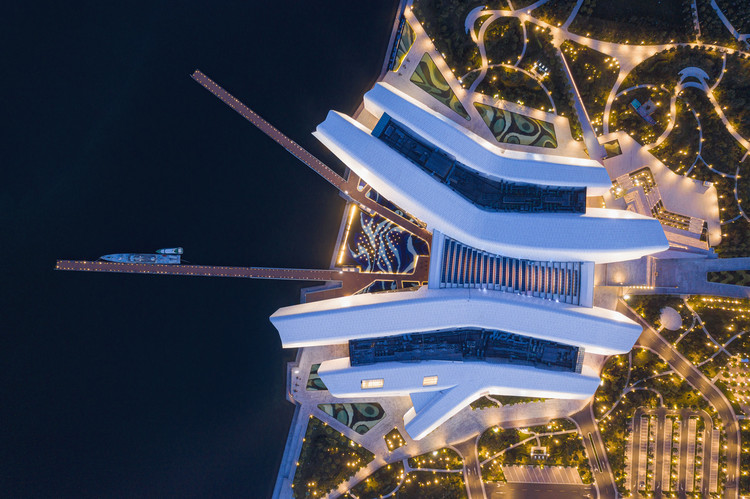
China’s latest landmark, the National Maritime Museum is now open to the public. 6 years in the making, the project is first of its kind. Designed by COX Architecture, after winning the international design competition back in 2013, the museum is located in the recently developed Binhai New Area, in the city district of Tianjin.
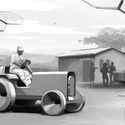
AMO, the think tank of the Office for Metropolitan Architecture (OMA), co-founded by Rem Koolhaas and led by Samir Bantal, has announced a recent research collaboration with Volkswagen. Focused on rural areas and the countryside, the partnership will look into the future of rural mobility, through a first conceptual study on electric tractors.
Videos
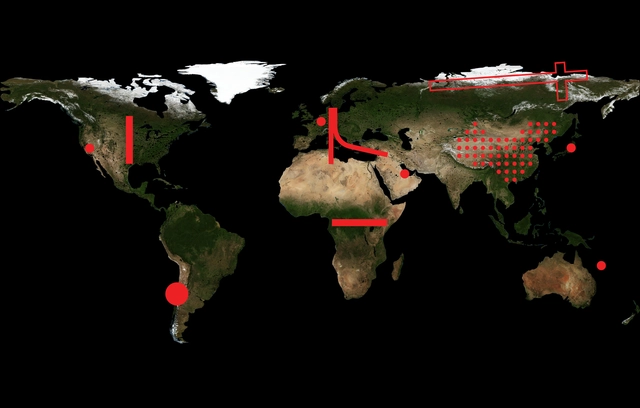
AMO’s selection of unique and highly specific conditions distributed over the globe serves as a framework for their research and represents where the world is headed.. Image Courtesy of OMA
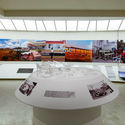
Opening in February 2020, the Solomon R. Guggenheim Museum is showcasing an exhibition by Rem Koolhaas and AMO, the think tank of the Office for Metropolitan Architecture (OMA). Entitled Countryside, The Future the exhibition seeks to investigate urgent environmental, political, and socioeconomic transformations in the nonurban areas.
The third edition of the Hangar Exhibition was held this past October in the Jordanian capital, Amman, as part of the city's Design Week. Among the projects exhibited, one installation was able to momentarily teleport visitors into one of the country's most historic sites.
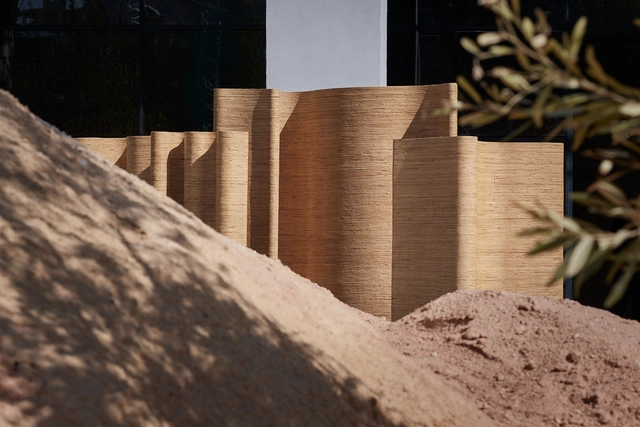
Designed by architect Rasem Kamal, Canyon Walls, a series of freestanding curvilinear partitions, served as a sanctuary for people to disconnect and remain in solitude for a period.
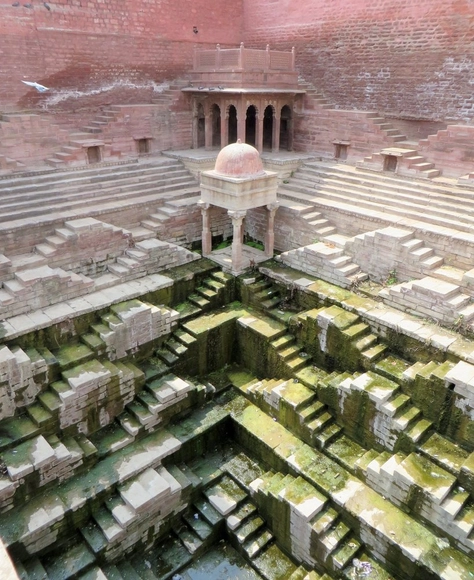
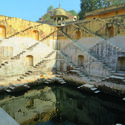
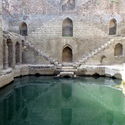
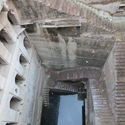
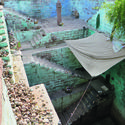
Victoria Lautman, the LA-based journalist, started taking pictures of stepwells in India, thirty years ago, collecting images from all over the country. The Fowler Museum at UCLA is exhibiting nearly fifty photographs of these water-harvesting structures, till the 20th of October 2019.
Originally published in Metropolis Magazine as "Inside the Homes and Workspaces of 8 Great Architects", this article shows the spaces occupied by some of the best-known architects in the world. Documented for an exhibition that will be featured at the Milan Design Week 2014, the images give a glimpse inside the private worlds of some of our favorite designers.
It's a cliche that architects have messy workspaces. From chaos comes creation, so the phrase goes. But an upcoming exhibition at this year's Salone del Mobile intends to dispel the myth. Studio Mumbai.
Curator Francesca Molteni interviewed each of the designers in their private homes and came away with one finding: architects are actually quite tidy. The studios are all pristinely ordered; books are neatly stowed away, figurines and objets astutely displayed, and table tops swept clean. The photographs below are part of the exhibition materials, produced with the help of scenographer Davide Pizzigoni, which faithfully document the physical environments in images, video, and audio. These will be used to recreate the architects’ “rooms” at Salone del Mobile in April.
Where Architects Live is not limited to satisfying our curiosity about what these architects’ homes look like. Richard Rogers’ affirmation that “a room is the beginning of a city” resonates with the project’s aim in trying to articulate its subjects’ personal tastes and obsessions, and how those are reflected in their architectural work.
Read on to see more images of the inside of architects' homes and studios
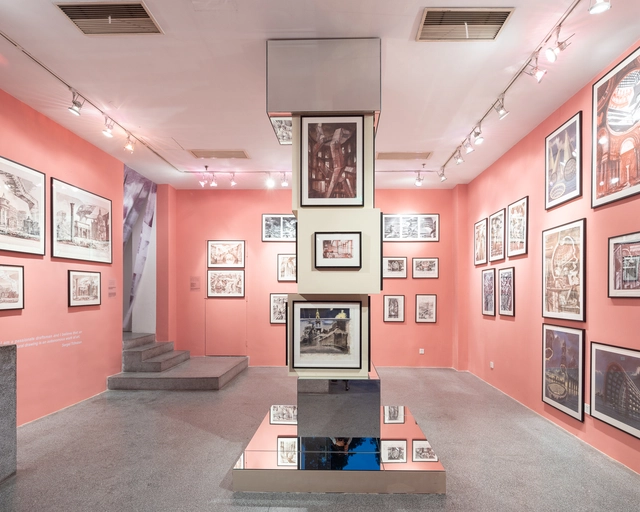
“A drawing should be a key to the understanding of architecture – what is there to like or dislike, where do architects’ ideas come from, how do these ideas make it to paper, and what is important in this process.” - Sergei Tchoban
For the past month the Russian-German architect, artist, and collector Sergei Tchoban has been the focus of the exhibition, Sergei Tchoban: Drawing Buildings/Building Drawings, bringing together fifty of the architect’s large-scale urban fantasy drawings. These drawings, while intriguing for their technical and artistic value, also reflect Tchoban's deeply personal contemplations about the past, present, and future of his favorite cities - Saint Petersburg, Rome, Amsterdam, Venice, Berlin, New York – along with in-depth documentation of five realized projects (two museums, two exhibition pavilions, and a theater stage design.)
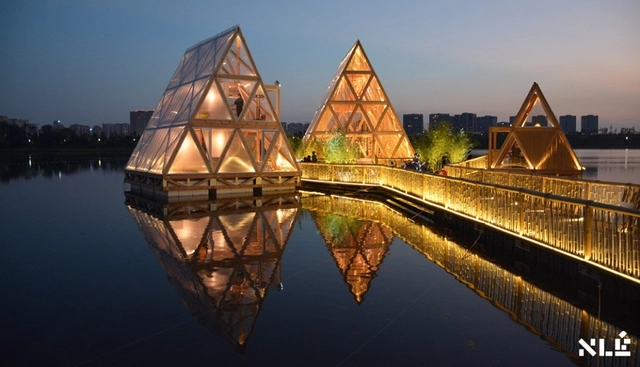
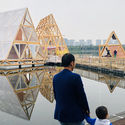
As part of a collaboration between the Centre Pompidou and the Mao Jihong Arts Foundation, the Cosmopolis #1.5: 'Enlarged Intelligence' exhibition features the developments of NLÉMakoko Floating School. The Minjiang Floating System (MFS IIIx3), the fourth prototype and the third iteration of the prefabricated self-built system for water, investigates methods to counter the challenges posed by urbanization and climate change.
Earlier prototypes of the Makoko Floating School include the Waterfront Atlas (MFS II) launched in Venice, Italy and the Minne Floating School (MFS III) in Bruges, Belgium. The project, initially developed for the water in Lagos, is now usable in all these sites including the Jincheng Lake in Chengdu.






._Originaalipiirustus_Alvar_Aalto_-s%C3%A4%C3%A4ti%C3%B6..jpg?1604925160&format=webp&width=640&height=580)
_julkisivupiirustus._Alvar_Aalto_Museum_(1971-73)__facade._Original_drawing_Alvar_Aalto_Foundation..jpg?1604924810 "Alvar Aalto Museum (1971-73), facade. Original drawing . Image Courtesy of Alvar Aalto Foundation")
__pohjapiirustus__julkisivu_ja_poikkileikkaus._Perni%C3%B6_Museum_(1928-29)__Finland._Original_Drawing_Alvar_Aalto_Foundation..jpg?1604926408 "Perniö Museum (1928-29), Finland. Original Drawing . Image Courtesy of Alvar Aalto Foundation")
__Viro._Sis%C3%A4perspektiivi._Tallinn_Art_Museum_(193-37)__Estonia._Interior_perspective._Original_drawing_Alvar_Aalto_Foundation..jpg?1604926715 "Tallinn Art Museum (193-37), Estonia. Interior perspective. Original drawing . Image Courtesy of Alvar Aalto Foundation")
._Originaalipiirustus_Alvar_Aalto_-s%C3%A4%C3%A4ti%C3%B6..jpg?1604925160)






.jpg?1590479205&format=webp&width=640&height=580)
.jpg?1590479740 "TAB 2019 \"Beauty Matters\", Head Curator Yael Reisner. Image © Tõnu Tunnel")
.jpg?1590479729 "TAB 2019 \"Beauty Matters\", Head Curator Yael Reisner. Image © Tõnu Tunnel")

.jpg?1590479205)