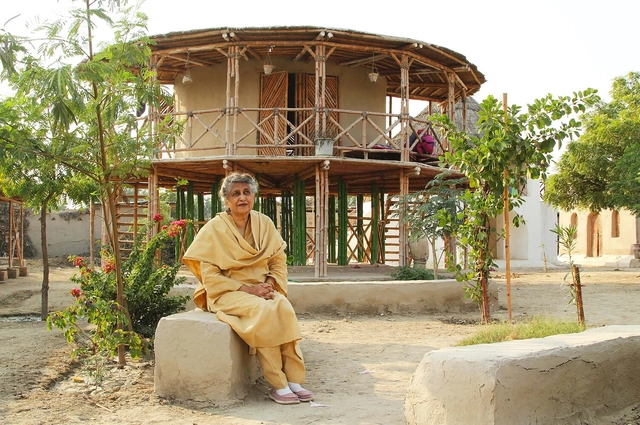
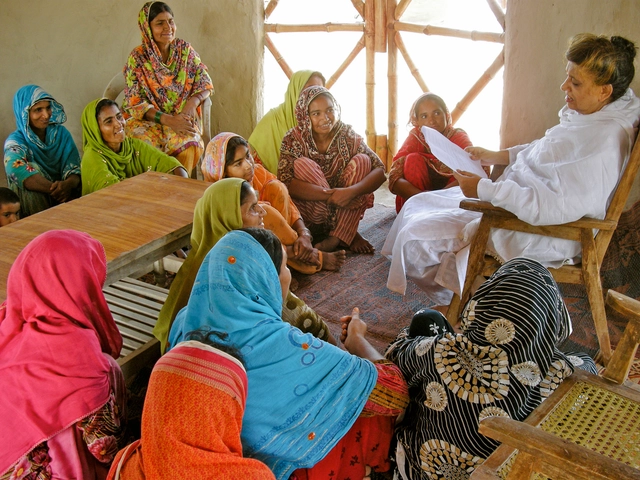
Yasmeen Lari’s Pakistani Chulah - an outdoor stove used by women in South Asia- is a powerful intervention that highlights the architect's commitment to feminist and environmental activism. The project synchronically tackles issues of deforestation, pollution, and health hazards faced by women in rural areas. Her design is systemic, locally specific, and conscious of the needs of society’s most vulnerable - women and nature. Her vast body of humanitarian work elaborated on in Yasmeen Lari: Architecture for the Future, opens up a dialogue for viewing architecture through an eco-feminist lens.
Homes of the Future. Image Courtesy of Mossawi studios
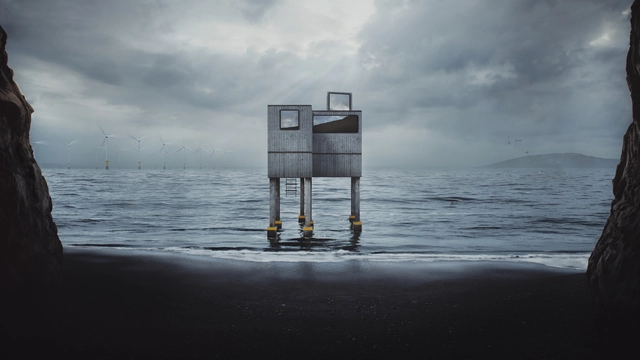
This week's curated selection of Best Unbuilt Architecture highlights visionary homes by the ArchDaily community. From a prefabricated house to supporting Ukraine war victims, a modular multi-story house highlighted during the Dutch Design Week, and a villa "shaped" by the Dubai coastline wind flow, this round-up of unbuilt projects showcases how architects move forward from the conventional residence concept to project alternative habitational standards in responding to harsh environments, nature, and technology.
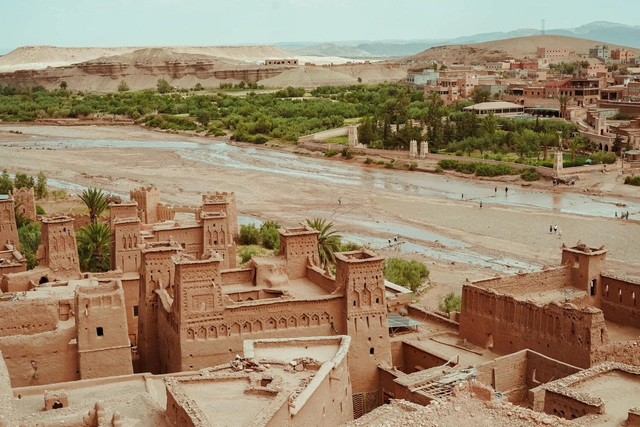
The world’s most primitive construction materials are being used to create the most advanced buildings. In light of environmental crises, architects are focusing their efforts in designing better built environments for people and the planet. The results may often seem ‘greenwashed’, failing to address the root of ecological distress. Environmentally responsible architecture must aim not to reverse the effects of the ecological crisis, but instigate a revolution in buildings and how we inhabit them. Essays from the book The Art of Earth Architecture: Past, Present, Future envision a shift that will be a philosophical, moral, technological and political leap into a future of environmental resilience.
Architects assume a significant amount of responsibility when it comes to considering designs that will be successful for not just their clients, but any person who inhabits or is impacted by their spaces. Topics of sustainability, social inclusion, economic opportunities, and overall urban equity, have consistently been top of mind in recent years, ultimately creating a new holistic approach to designing for a better future, that many people are referring to as Environmental, Social, and Governance metrics, more commonly known as ESG.
The urgency to reduce greenhouse gas emissions has never been greater, and getting there is going to require bold steps for buildings, infrastructure, and communities. Incremental reductions are not enough; we need to focus on full decarbonization, which means removing carbon emissions caused by our built environment.
These big changes in the way energy is generated and used will raise important questions about who benefits and who pays. Technology-focused incentive programs can wind up leaving our most vulnerable communities behind, exacerbating a legacy of underinvestment and health disparities, while also failing to reach the essential goals of a complete energy transition. Instead, we need holistic solutions that put disadvantaged communities first and transition buildings that would otherwise be left out, leading to bottom-up market transformation that benefits everyone.
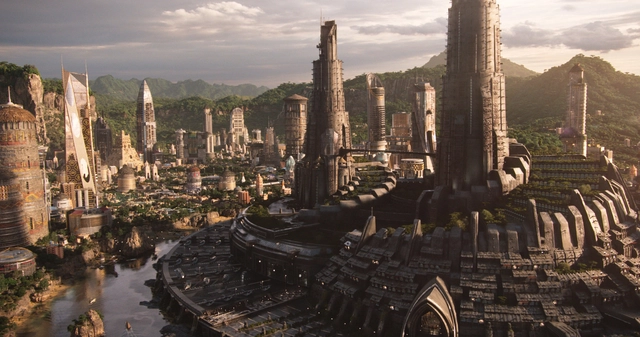
Storytelling is undoubtedly one of the oldest informative tools; a universal language that has transcended generations and cultures, and has been adapted into different media such as video games, theater, and film. Regardless of how old the narratives are, the success of these adaptations relies heavily on production - the visual and audible elements - and their ability to allow viewers to fully immerse themselves in the storyline. In this article, we explore the magical and captivating world of Marvel Cinematic Universe, and how architecture played an important role in contributing to the movies’ notorious storylines.
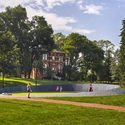
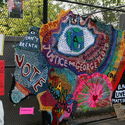
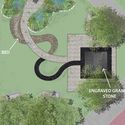
Tragedy, protest, insurrection, and political turmoil have led to a renewed awareness of racial injustice and democratic instability. These issues create new challenges for users and designers of public spaces in America. Cultural spasms have resulted in contested public spaces — sites of killings, protests in streets and parks, and forgotten burial grounds. These spaces need a new form of environmental justice.
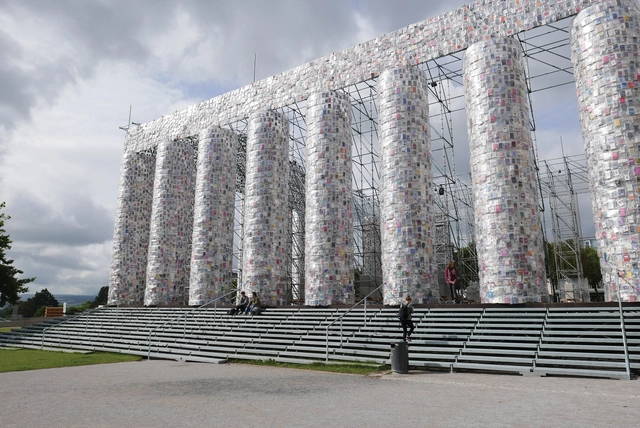
Marta Minujín, Parthenon of Books, Dokumenta 14, Kassel, Germany, 2017. Image by Anne-Catrin Schultz.. Image Courtesy of Real and Fake in Architecture–Close to the Original, Far from Authenticity?
The term “fake” has been in the media frequently in the early 21st century, referring to headlines and fictional statements that are perceived as real and are influencing public opinion and action. Replacing the historically more common term “propaganda,” fake news aims at misinformation and strives to “damage an agency, entity, or person, and/or gain financially or politically, often using sensationalist, dishonest, or outright fabricated headlines.” Tracing fake news and differentiating “real” information from personal opinions and identifying intentional (or unintentional) deceit can be complicated. It is similarly complex to trace the duality of fake and real in the built world. To explore the larger context of fake statements in architecture and environmental design, a look at the definition of fake and related terms might be necessary.
PARKROYAL COLLECTION Pickering, designed by WOHA and Tierra Design. Image
Singapore as of late is continually building its reputation as a City in Nature, with Singaporean design long having a strong consciousness to acknowledge that green spaces matter. Urban planners and architects alike have taken a conscientious decision to weave in nature throughout the city as it continues to uproot new buildings and developments, incorporating the implementation of plant life in any form, whether it be through green roofs, cascading vertical gardens, or verdant walls.
This article will explore the pioneering actions taking place in Singapore to create a more biodiverse city and nation, and how this provides a view of how other major cities can adopt similar initiatives over the next decade to provide a blueprint for the future.
Biodiversity has become ubiquitous in project descriptions as yet another mark of the design's environmental accomplishments. The increasing focus on sustainability, the standard inspired by the UN Sustainable Development Goals, prompts a deeper understanding of what biodiversity in urban environments means and how can architecture and urban design actively contribute to it. With species extinction rates soaring and urbanization over natural land continuing, cities become an essential factor in sustaining biodiversity, and the following explores how the built environment can foster multi-species habitats.
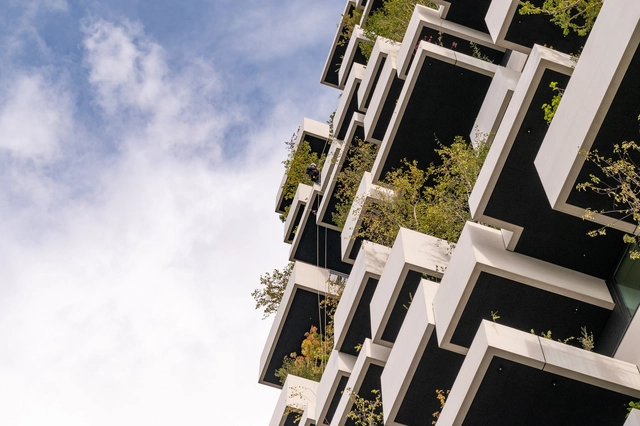
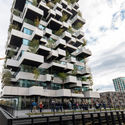
Trudo Tower. Image Courtesy of Stefano Boeri Architetti
“Designing a house for trees”, as he puts it, Stefano Boeri is working across the planet, exporting his approach with trees from Mexico to Shenzhen. Building a whole ecosystem, rather than just a green facade, the architect understands the need to redefine our relationship with nature, especially in cities.
ArchDaily’s Christele Harrouk had the chance to interview the architect in Eindhoven, during the inauguration of the Trudo Tower, Stefano Boeri’s first social housing project, in collaboration with Francesca Cesa Bianchi, his partner at Stefano Boeri Architetti, Laura Gatti, botanist and plantation consultant, and Paolo Russo, Project leader. Discussing mainly his approach with nature, the environmental quality, and his exported perspective around the world, the conversation also tackled the 4 ongoing vertical forests in West Europe: A first that has just started in Utrecht, a second in Brussels, a ready to go building in Eindhoven and a last one in Antwerp.
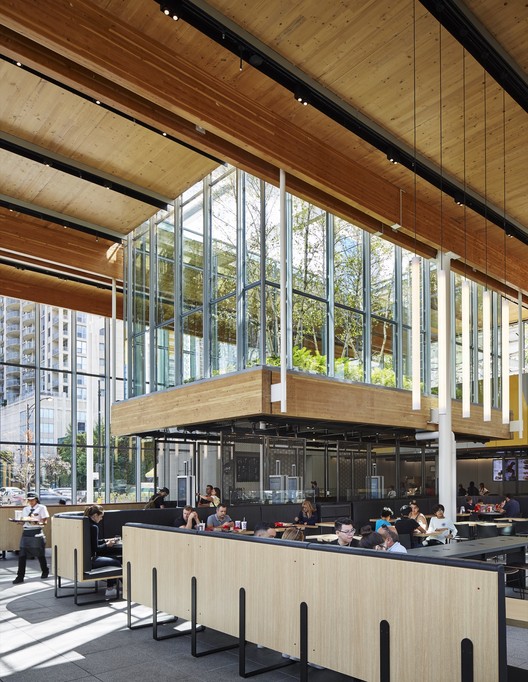
In an effort to reinvent an iconic American fast-food brand, McDonald’s U.S. has announced a new direction for the corporation, beginning with rethinking the restaurant’s current archetypal design both in its interior eating spaces and exterior urban landscape. A primary example of this commitment can be seen in the recently completed design for McDonald’s Global Flagship in Chicago by Ross Barney Architects.
The structure, which fills an entire city block in the heart of Chicago, was envisioned as a hallmark example of both the architect and the corporation's shared commitment to environmentally sustainable design. Cross Laminated Timber (CLT), an essential material for the project, replaced many of the commonly-used building materials such as steel, concrete, and plastics that have a larger environmental footprint.
Working remotely throughout the past year has accelerated the introduction of new approaches to real-time rendering, and with it, a new necessity was born: how can a person feel physically present inside a space, without actually being there? Ultimately, designers resorted to the virtual world, a vast realm of interactive built environments that can be accessed from the comfort of one's home. Even the tools utilized, such as headsets and goggles, have become more accessible to the vast majority of the public and are being sold at a lower price than they initially were. We have become accustomed to build, modify, and navigate between different environments, going back and forth between what is real and what isn't. Truth is, virtual has become the new normal.
The Shing Mun River in Sha Tin, a residential town in Hong Kong, has struggled with plastic waste pollution for years. Household waste that is not properly recycled will either end up in landfills or floating in the river. In 2018 almost 17 million plastic items, or 40,000 items daily, were found to be drained into the ocean via the Shing Mun River, mostly being food packaging, cutleries, and household plastic bottles. This quantity of plastic pollution in the river and surrounding environment could eventually jeopardize the natural ecosystem irreversibly.
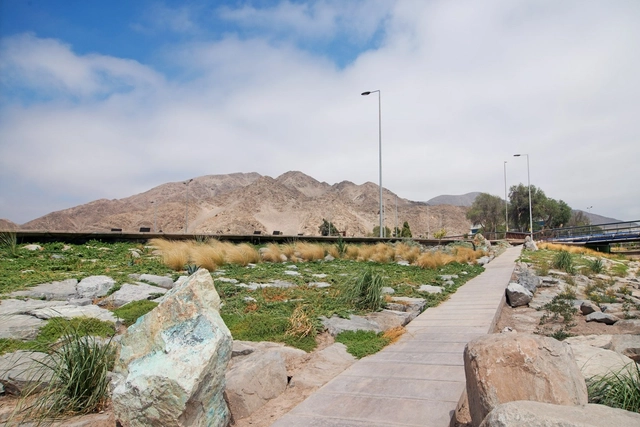
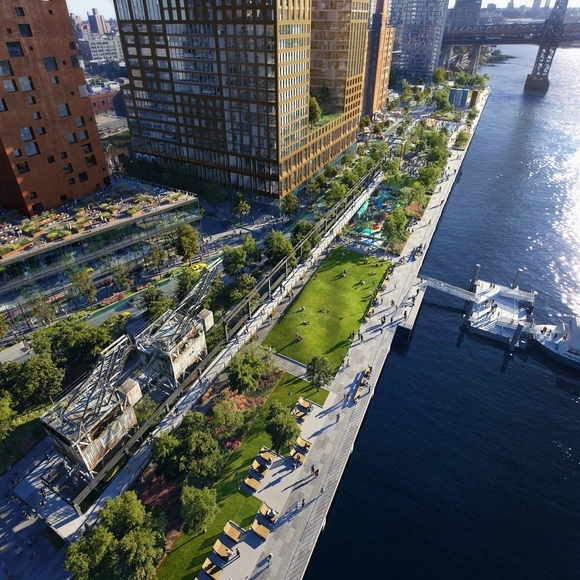
Does it make sense to design green parks in desert cities such as Casablanca, Dubai, or Lima? Ostensibly it does because they contribute freshness and greenness to the urban environment. In exchange, however, they disrupt native local ecosystems, incur high maintenance bills, and begin a constant struggle to ensure water availability.
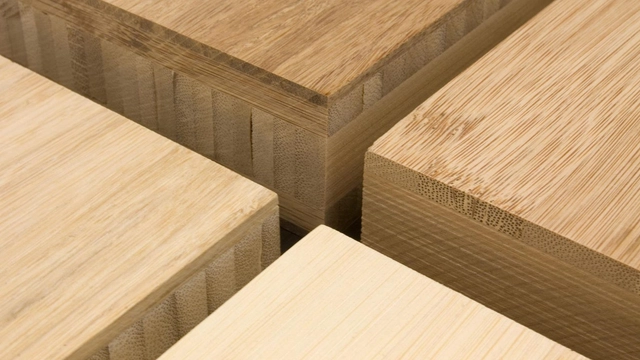
Mass timber has been hailed as the solution to architecture’s notorious sustainability problem – that buildings account for nearly 40% of global energy use is by now a worn and overcited fact. But timber isn’t the world’s only renewable material, and architects and engineers have begun looking elsewhere for other possible steel and concrete replacements. One such possibility that has recently come to light is engineered or laminated bamboo, a highly sustainable and structurally impressive material. Below, we investigate how laminated bamboo is made, what its primary qualities are, and how it compares to timber.
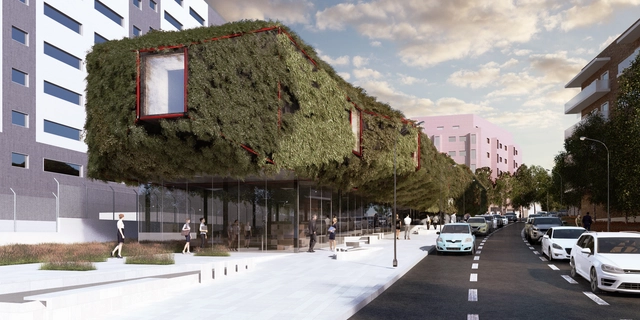
A Green Spaceship appears to have landed in Villaverde, Madrid, in design firm 3GATTI’s proposal for the new municipal library. The design for the landmark building employs the public’s curiosity to draw visitors in and create an iconic presence in the city. The library is split between two floors, both architecturally and conceptually. The ground level is transparent and open, meant to house the noisy, public aspects of the program; the upper floor is the architectural showpiece, floating above the ground and containing the more private, quiet study spaces.

















..jpg?1644514229&format=webp&width=640&height=580)

._1.jpg?1644514203 "Oasia Hotel Downtown, designed by WOHA and STX Landscape Architects. Image")

.jpg?1644514319 "Kampung Admiralty, designed by Ramboll Studio Dreiseitl and WOHA. Image")
..jpg?1644514229)


.jpg?1633431403 "Palazzo Verde . Image Courtesy of Stefano Boeri Architetti")
.jpg?1633431510 "Palazzo Verde . Image Courtesy of Stefano Boeri Architetti")