1. ArchDaily
  2. Climate

Climate: The Latest Architecture and News

Net-Zero Buildings Are Critical to Staving off Further Climate Change

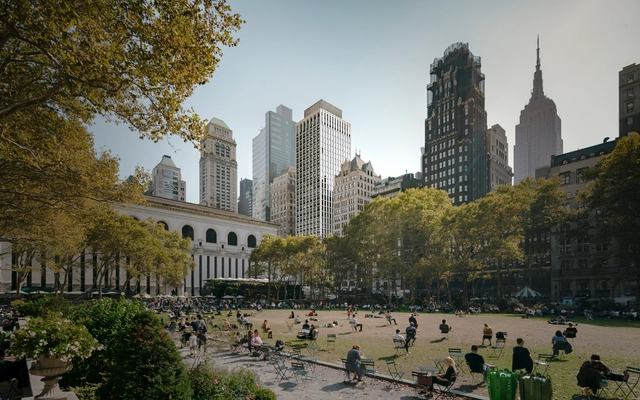
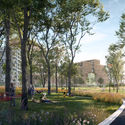
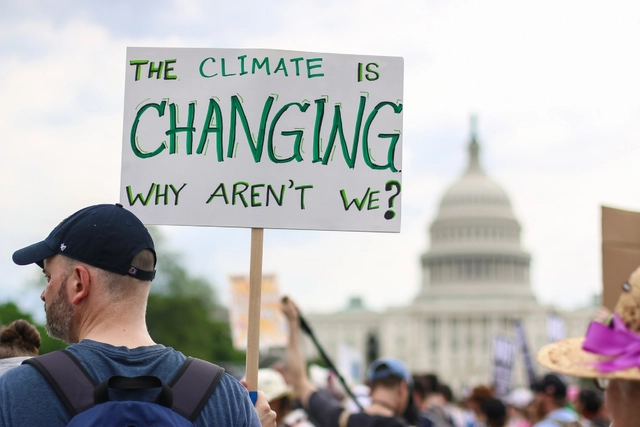
A new report from the Intergovernmental Panel on Climate Change (IPCC) states that global warming of 1.5°C (2.7 °F) is essentially inevitable in coming decades. The question now is whether the world can prevent further, more destructive warming of 2°C (3.6°F), or, even worse, 3°C (5.4°F), which is what current policies put us on a trajectory to experience. Our economies can only put another 420 gigatons of greenhouse gas emissions into the atmosphere if we want a good chance of keeping a temperature increase to 1.5°C instead of 2°C. At our current pace, the world’s carbon budget will be used up before 2030. We need to phase out fossil-fuel use, build thousands of new clean power plants -- and swiftly move to power our homes, offices, schools, and transportation systems with clean energy.

Net-Zero Buildings Are Critical to Staving off Further Climate Change    - Image 1 of 4Net-Zero Buildings Are Critical to Staving off Further Climate Change    - Image 2 of 4Net-Zero Buildings Are Critical to Staving off Further Climate Change    - Image 3 of 4Net-Zero Buildings Are Critical to Staving off Further Climate Change    - Image 4 of 4Net-Zero Buildings Are Critical to Staving off Further Climate Change    - More Images+ 7

Subscriber Access

Future-Proofing Cities Against Climate Change

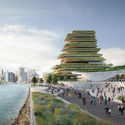
Recent extreme weather events and the acceleration of climate change, paired with decarbonization efforts that are not on track, make climate-related disruption unavoidable for urban environments, raising the issue of climate-risk adaptation. Moving past what can be done to prevent climate change, there is a strong imperative to develop strategies to prepare urban environments to cope with inevitable challenges such as sea-level rise, floods, water scarcity or extreme heat. The following discusses how cities can build resilience and adapt to undergoing and expected future climate threats.

Future-Proofing Cities Against Climate Change - Image 2 of 4Future-Proofing Cities Against Climate Change - Image 3 of 4Future-Proofing Cities Against Climate Change - Image 1 of 4Future-Proofing Cities Against Climate Change - Featured ImageFuture-Proofing Cities Against Climate Change - More Images+ 2

Subscriber Access

Houses in Guatemala: Shade and Ventilation in Tropical Architecture

"Here in the tropics, it's the shade not the stove that refreshes and brings people together," says Bruno Stagno about tropical architecture.

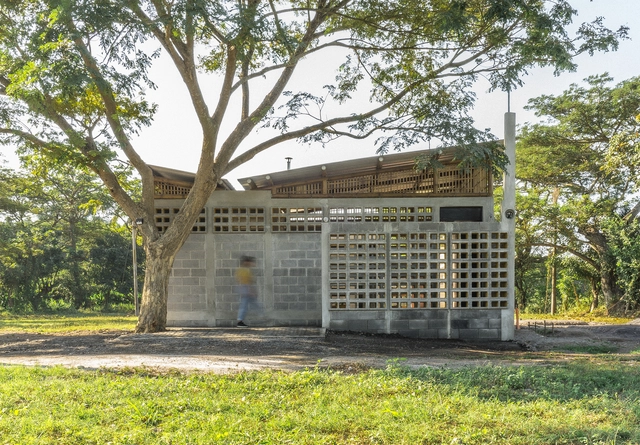
Guatemala ha estado construyendo su sombra a lo largo de los años. Nos encontramos con 3 ejemplos que proponen interesantes respuestas a este clima. Proyectos que materializan tanto grandes cubiertas con pendientes para dar sombra y evacuar el agua de lluvia con rapidez, como fachadas perforadas que permiten el ingreso de la brisa y la ventilación interior.

What 2020 Meant for Climate Change and the Environment

The first lockdown brought most of the world to a standstill, and many were quick to point out the silver lining: the significant drop in carbon emissions. However, this pollution reduction was short-lived, and past crises indicate that we might be standing at a crossroads when it comes to our climate goals. What has this unprecedented year meant for the efforts to curb climate change and protect the environment?

Architecture and Nature: A Framework for Building in Landscapes

Building in nature constitutes a contradiction, as architecture enables immersive access to the landscape, while at the same time, natural landmarks are being slowly engulfed by tourists. The human presence in natural landscapes is an interplay of scales, a juxtaposition of archetypal shelters against the vast sceneries, as well as a negotiation between access to the landscape and environmental conservation. Exploring a variety of attitudes and formal strategies, the following takes a look at what could be learned from the experiences and design philosophies of several architects and practices that have perfected ways of addressing architecture in the landscape.

Architecture and Nature: A Framework for Building in Landscapes - Films & ArchitectureArchitecture and Nature: A Framework for Building in Landscapes - Films & ArchitectureArchitecture and Nature: A Framework for Building in Landscapes - Films & ArchitectureArchitecture and Nature: A Framework for Building in Landscapes - Films & ArchitectureArchitecture and Nature: A Framework for Building in Landscapes - More Images+ 7

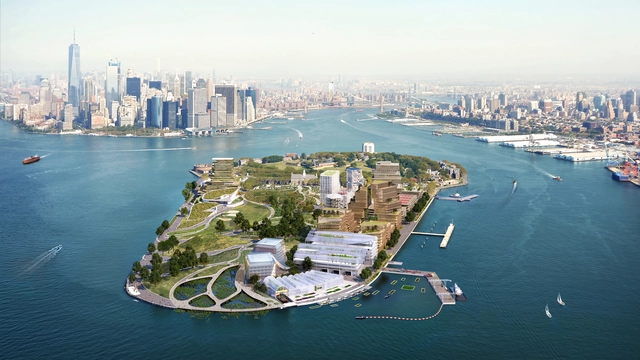
WXY Proposes Climate Solution Center on Governors Island in New York

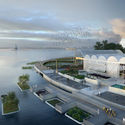
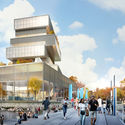
Focusing on research, education, and public engagement, the Trust for Governors Island unveiled plans to develop a climate solutions center, designed by WXY Architecture + Urban Design. Inspired by the unique environment of the island, the project will generate a public living laboratory, cementing NYC’s position as a leader in climate change action.

WXY Proposes Climate Solution Center on Governors Island in New York - Imagen 1 de 4WXY Proposes Climate Solution Center on Governors Island in New York - Imagen 2 de 4WXY Proposes Climate Solution Center on Governors Island in New York - Imagen 3 de 4WXY Proposes Climate Solution Center on Governors Island in New York - Imagen 4 de 4WXY Proposes Climate Solution Center on Governors Island in New York - More Images+ 1

From Australia to AEC Industry Action

Unless you’re living in a news or social media bubble, it’s unlikely you’ve missed seeing the devastating effects Australia’s climate change exacerbated wildfires and drought have had on the continent. One of the images that still sticks with me is that of the young boy, mask over his face, steering his family’s boat as they flee a large bushfire – flames and smoke enveloping the entire scene within an apocalyptic reddish-orange glow.

The loss of life (humans and wildlife), the destruction of property, infrastructure and habitat, the negative impacts on air quality, biodiversity and access to water, and the resulting refugees will have long term impacts on Australia’s economy and general well-being. What’s worse, these negative impacts have been, and will continue to be, inequitably distributed among the continent’s populations. Not surprisingly, the resulting stress already placed on individuals and social institutions has weakened community cohesion through anti-social actions like water theft.

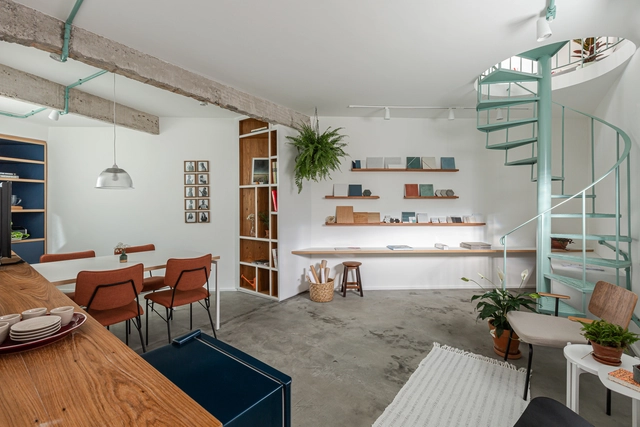
Macaxa Office / Macaxá Arquitetura

Macaxa Office / Macaxá Arquitetura - Interior Photography, Offices Interiors, Kitchen, TableMacaxa Office / Macaxá Arquitetura - Interior Photography, Offices Interiors, Kitchen, Table, Countertop, Lighting, ChairMacaxa Office / Macaxá Arquitetura - Interior Photography, Offices Interiors, Facade, StairsMacaxa Office / Macaxá Arquitetura - Interior Photography, Offices Interiors, Table, ChairMacaxa Office / Macaxá Arquitetura - More Images+ 18

  • Area Area of this architecture project Area:  538 ft²
  • Year Completion year of this architecture project Year:  2019
  • Manufacturers Brands with products used in this architecture project
    Manufacturers:  AutoDesk, Amanda Lopes Rodrigues, Amorim, Andra Iluminação, Cortinas Carmelita, +7

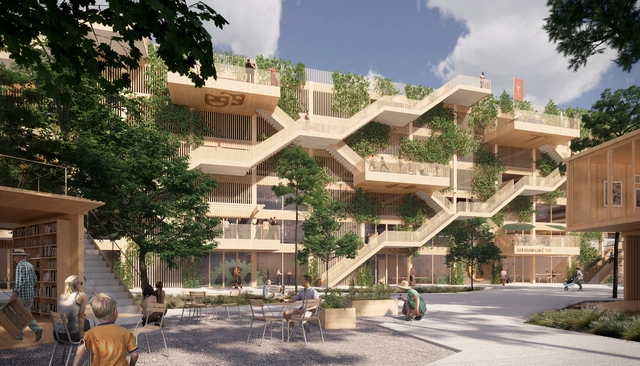
Open Platform and JAJA Architects Win Competition to Design Denmark’s First Wooden Parking House

Open Platform (OP) and JAJA Architects, together with Rama Studio and Søren Jensen Engineers, have won the open competition for a new parking house in Aarhus. In line with Denmark’s vision of becoming climate neutral by 2050, the structure will be the country’s first wooden parking house.

Open Platform and JAJA Architects Win Competition to Design Denmark’s First Wooden Parking House - Imagen 1 de 4Open Platform and JAJA Architects Win Competition to Design Denmark’s First Wooden Parking House - Imagen 2 de 4Open Platform and JAJA Architects Win Competition to Design Denmark’s First Wooden Parking House - Imagen 3 de 4Open Platform and JAJA Architects Win Competition to Design Denmark’s First Wooden Parking House - Imagen 4 de 4Open Platform and JAJA Architects Win Competition to Design Denmark’s First Wooden Parking House - More Images+ 15

FuturArc Prize 2020

FuturArc Prize 2020 asks how an Asian city might restore a human-nature balance.

2°C: A COTE|LA SYMPOSIUM ON CLIMATE CHANGE

The 2°C Symposium is an opportunity to learn essential technologies, strategies and tools that address climate change at a critical time for our collective future.

Subscriber Access

Reframing Climate Change as a Local Problem of Global Proportion: 4 Ways Architects can Deliver Change

Reframing Climate Change as a Local Problem of Global Proportion: 4 Ways Architects can Deliver Change - Image 8 of 4
Bankside 123 in London creates new routes, public spaces and retail, with three simple rectilinear buildings set within a permeable public realm designed to reconnect the site with its surroundings. Image Courtesy of Allies & Morrison

The latest UN special report on climate change, released in October 2018, was bleak - perhaps unsurprisingly after a year of recording breaking temperatures, wildfires, floods, and storms. The report, released by the UN Intergovernmental Panel on Climate Change (IPCC), reiterated the magnitude of climate change’s global impact, but shed new light on the problem’s depth and urgency. Climate change is a catastrophe for the world as we know it and will transform it into something that we don’t. And we have just 12 years to prevent it.
Subscriber Access

6 Materials That Age Beautifully

Often as architects we neglect how the buildings we design will develop once we hand them over to the elements. We spend so much time understanding how people will use the building that we may forget how it will be used and battered by the weather. It is an inevitable and uncertain process that raises the question of when is a building actually complete; when the final piece of furniture is moved in, when the final roof tile is placed or when it has spent years out in the open letting nature take its course?

Rather than detracting from the building, natural forces can add to the material’s integrity, softening its stark, characterless initial appearance. This continuation of the building process is an important one to consider in order to create a structure that will only grow in beauty over time. To help you achieve an ever-growing building, we have collated six different materials below that age with grace.

AA Visiting School Amazon

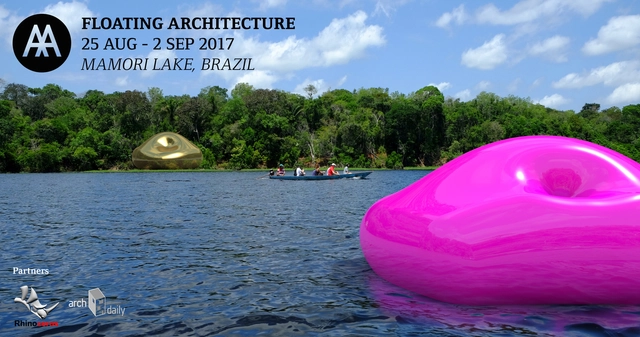
Research shows that sea levels around the world have been rising for many decades due to global warming. The consequences of this will put hundreds of cities at risk of being flooded. Similarly, water levels in the Mamori Lake vary greatly between the dry and wet season, when the river can grow up to 14 meters flooding the forest and changing the physiognomy of the land. Currently, local houses are built on stilts to deal with tidal variations but in recent years, this has not always been enough to prevent the river from causing devastation. Conversely, there are several floating plants in the Amazon that have developed clever buoyancy strategies to adapt to this ever-changing environment. Through physical and digital modeling as well as biomimetics, the workshop will investigate new types of floating architecture that can adapt to tidal variations and rising water levels while responding to extreme weather conditions. While the proposed new typologies will be highly adapted to the area of Mamori Lake, the proposals will also be evaluated as a global response to the pressing demands of world sea-level rise.

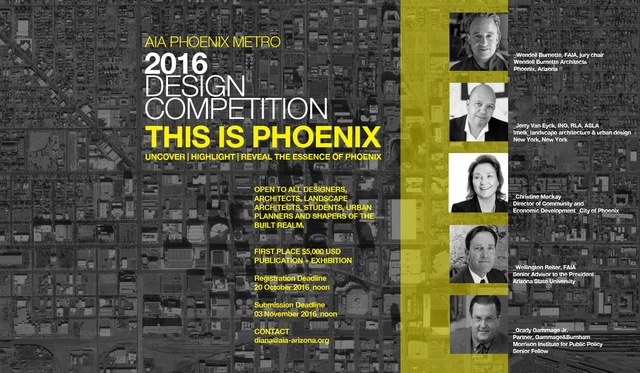
THIS IS PHOENIX: uncover | highlight | reveal | the essence of phoenix

THE 2016 AIA PHOENIX METRO DESIGN COMPETITION

THIS IS PHOENIX
uncover | highlight | reveal | the essence of phoenix

"A man travels the world over in search of what he needs and returns home to find it." - George Moore

While we may not always see it for ourselves, each PLACE has the potential to inspire great possibilities.

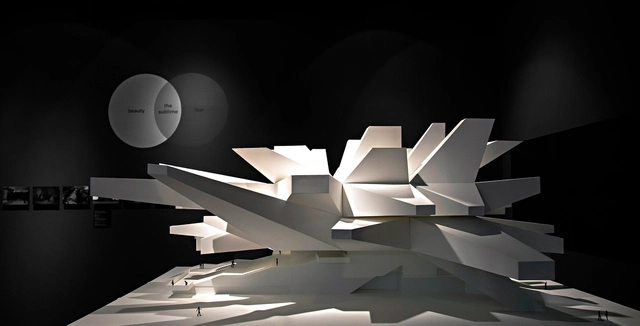
Weather Forms Exhibition by Stallan-Brand

Scotland / ‘Shadow Land’
The word Scotland is derived from the ancient Greek word for shadow, or darkness and gloom ‘skótos’. Quite simply Scotland’s ancient meaning being ‘shadow land’.

“Our weather shapes everything in our world; our psyche, our homes, our fashion, our architecture, our culture … weather is an omnipresent force”.

Scottish practice Stallan-Brand present art and architectural works that explore ‘how our place on earth defines us’ challenging the popular idea that ‘people make places’ by demonstrating that they in fact make us.

Happy World Architecture Day!

Created by the Union International des Architects (UIA) in 2005, World Architecture Day is celebrated on the first Monday of October with the aim of reminding the world about the collective responsibility of architects in designing our future cities and settlements.

This year, the UIA has selected “Architecture, Building, Climate” as the theme of the day, seeking to highlight the essential role that architecture, design and urbanism have in the reduction of greenhouse gas emissions. With international climate treaty negotiations set to happen later this year, the “UIA members, working bodies and partners will mobilize on 5 October to promote actions and solutions that apply the enormous power of architecture and urban design in coping with global climate change, one of the greatest challenges of our time.”

Through small actions architects can collectively make a big difference and create significant changes. To celebrate World Architecture Day, we have rounded up a selection of projects that have taken steps towards the challenge of protecting our environment.

Monocle 24 Investigates Playful Design and the Role of Luck in Shaping our Cities

For this week's editions of Section D, Monocle 24's weekly review of design, architecture and craft, and The Urbanist, their weekly "guide to making better cities," the Monocle team investigate the how the act of playing can shape design and the role of luck in our cities.

In Section D, David Plaisant meets artist Simon Terrill at the new Brutalist Playground, currently on display at the RIBA in London. Terrill, along with Assemble, have reimagined a concrete childrens' playground from one of the UK's Brutalist housing estates, in foam – plus more. In this week's edition of The Urbanist, Andrew Tuck explores the role of luck (and misfortune) in our cities, from how architects apply the philosophy of feng shui to their work to a Brazilian district that it was given the name of Boa Sorte ('good luck' in Portuguese). The show also visits Moore – the city dubbed as "tornado alley of Tornado Alley" – in Oklahoma, US, to understand how best to build in such intense climactic environments.

Listen to both episodes after the break.

Monocle 24 Investigates Playful Design and the Role of Luck in Shaping our Cities - Image 5 of 4