As seen throughout architectural history, ephemeral installations and pavilions are key elements for addressing specific architectural moments and social manifestations in an almost immediate way. While some pavilions have proven so significant that they transcended their temporary nature to become permanent, exemplary expressions of a historical moment—such as the Barcelona Pavilion, designed by Ludwig Mies van der Rohe and Lilly Reich for the Barcelona International Exposition in Montjuïc—others remain documented in photographs, plans, and experiences, to be rewritten in future projects.
The Guadalajara region in Mexico is home to one of the country's most prominent cities, ranking as one of the most populous urban areas alongside Mexico City, Tijuana, the State of Mexico, and Monterrey. However, the exponential growth experienced by cities in the 20th century resulted in an urban sprawl that expanded far beyond traditional geographic boundaries. The capital of the state of Jalisco was no exception, ultimately leading to the definition of the Guadalajara Metropolitan Area, which integrates the key municipalities surrounding the capital.
The state of Querétaro is located in the north-central region of Mexico, bordered by the states of San Luis Potosí, Guanajuato, Hidalgo, Estado de México, and Michoacán. Covering an area of 11,684 km², it is one of the most expansive regions in the country. Its capital is Santiago de Querétaro, which is also the state's most populous city. Among its most popular Pueblos Mágicos (Magical Towns) are Bernal, Tequisquiapan, Jalpan de Serra, Cadereyta de Montes, San Joaquín, and Amealco de Bonfil. Additionally, the state boasts four UNESCO World Heritage sites and one entry on the Intangible Cultural Heritage list: the Historic Monuments Zone of Santiago de Querétaro, the Franciscan Missions of the Sierra Gorda, the Otomí Chapels, and the living traditions of the Otomí-Chichimeca culture, respectively.
In Latin America, the concept of emergency architecture refers to spaces that serve as temporary shelter in the face of adverse circumstances, such as earthquakes, floods, and migration. Various countries, including Mexico, Chile, Colombia, Ecuador, Uruguay, and Panama, have faced events that required redefining emergency housing according to each nation's specific needs.
In a year defined by physical distancing, social media has taken on an even greater role in how we connect and stay informed. Our Instagram accounts have broken reach records, bringing our audience the very best of our website's content: projects, articles, interviews, and news from the architectural world, inspiring new ideas and tools for a better future for our cities.
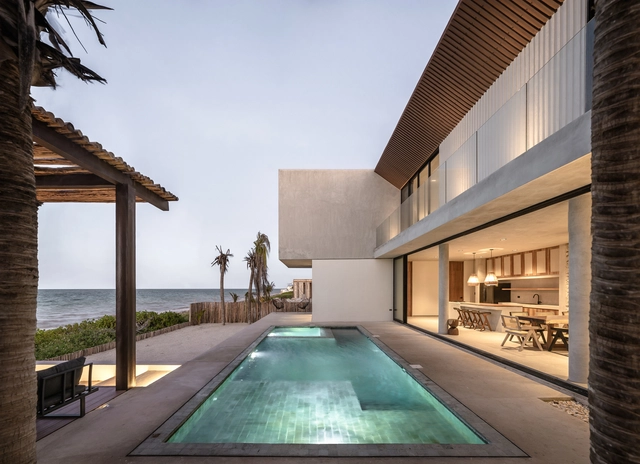
Pool design is an opportunity to create sophisticated, relaxing spaces that complement and enhance their surroundings. When choosing materials, it is essential to look for options that are not only aesthetically appealing but also durable and wear-resistant. One material that meets all these criteria is Sukabumi stone.
This natural stone is quarried in the region from which it takes its name, Sukabumi, Indonesia. In addition to its visual appeal and emerald green color, Sukabumi stone has slip-resistant properties and is highly resistant to erosion. These qualities make it a popular choice for pool projects and decorative accents with a natural aesthetic worldwide.
Serein: Porcelánico Esmaltado. Image Cortesía de Firenze
The transition of human settlements from a nomadic to a settled lifestyle transformed the conception of dwellings, extending beyond their primary use as shelter. Over time, each housing typology that developed around the world acquired unique characteristics that defined its identity and materiality, shaped by the culture and geographic region where it emerged.
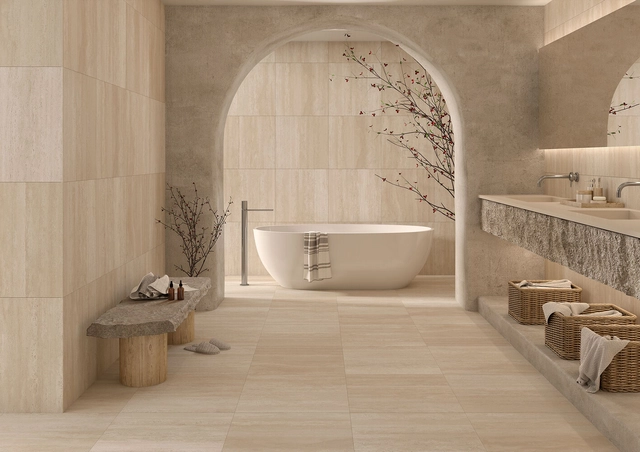
In North America, the ancient city of Tenochtitlan was a benchmark for the technological and construction advancements of its time, distinguished by the use of native materials, such as earthen/stone floors, adobe walls, and local wood/cane posts. Over time, dwellings in Mexico have managed to preserve their identity while incorporating high-quality materials. The development of new technologies and the sophistication of the manufacturing process for architectural materials led to the rise of porcelain tiles, such as those developed by Firenze, which became a valuable resource due to their versatile aesthetics, high strength, and durability.
https://www.archdaily.com/1136434/porcelain-tile-inspiration-from-origins-to-the-contemporaryEnrique Tovar
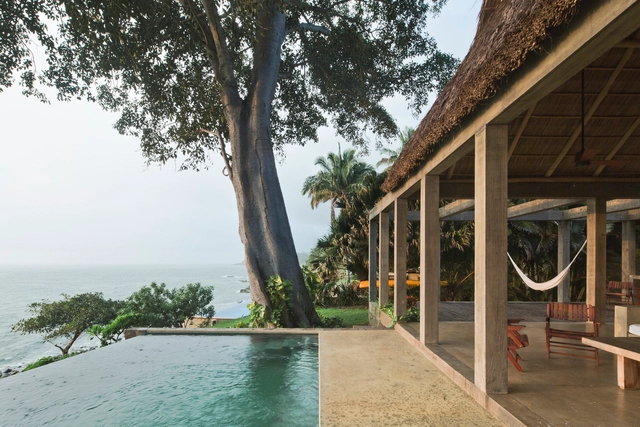
Harmonizing with nature is a fundamental premise in architecture, aiming for buildings to be an extension of their environment rather than invasive elements. Frank Lloyd Wright, for instance, maintained that a house should not be placed on a hill, but rather merge with it. Today, this integration has gained greater relevance, driven by the growing need to manage resources and a deep desire to reconnect with the environment. Moreover, this contextual relationship manifests on a sensory level, where visual and tactile elements fuse with the landscape, creating an immersive experience through architectural features that blend with nature.
These spaces include bathrooms, courtyards (both indoor and outdoor), and even swimming pools, all characterized by their inherent connection with water, where finishes—depending on texture and color—can achieve a visual and compositional harmony with the surroundings. A prime example of this is the variety of stones offered by Sukabumi: materials featuring low water absorption, high durability, ease of cleaning, and slip resistance. Through combinations of different tones, sizes, and textures, these stones become a powerful resource for creating organic and welcoming atmospheres through materiality.
https://www.archdaily.com/1078797/stone-cladding-that-blends-with-nature-the-rise-of-quartz-and-basaltEnrique Tovar
The year 2018 has been filled with achievements and surprises for the architectural community. As the year draws to a close, we reflect on the crucial role competitions play in reinforcing the global image of each region or country. Mexico was no exception, securing nearly 18 international recognitions (including grants, competitions, nominations, etc.) that showcased its key interests and goals for the coming years to the rest of the world. This selection highlights the prominent participation of Mexican architects Frida Escobedo and Rozana Montiel—both invited and recognized on multiple occasions at some of the industry's most prestigious events—as well as outstanding projects like the Teopanzolco Cultural Center by Isaac Broid + Productora, which received several national and international awards.


.jpg?1595384588&format=webp&width=230&height=230&crop=true)






.jpg?1602009335&format=webp&width=230&height=230&crop=true)







.jpg?1639602926&format=webp&width=230&height=230&crop=true)










.jpg?1526044317&format=webp&width=640&height=580)
.jpg?1526044805&format=webp&width=230&height=230&crop=true)
.jpg?1526044643&format=webp&width=230&height=230&crop=true)

.jpg?1526045001&format=webp&width=230&height=230&crop=true)
.jpg?1526044317)