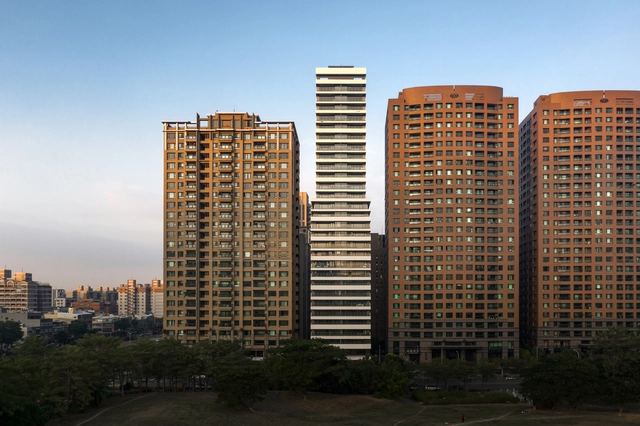
Taiwan's One More residential tower by Spatial Practice has been captured through a series of new photographs by Kris Provoost. The 100 meter tall concrete tower is composed of 53 two-bedroom units with open kitchen and living room views toward the nearby park. The design was made to break from the monotony of the neighboring typical residential typology with simple bands that vary in height.
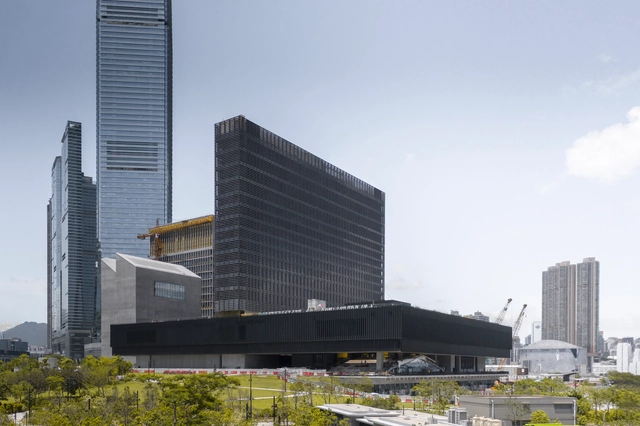
Photographer Kris Provoost has captured new images of Herzog & de Meuron's M+ Museum in Hong Kong. Focusing on 20th and 21st century art, design, architecture and moving image, M+ will be the centerpiece of the West Kowloon Cultural District, and a key venue in creating interdisciplinary exchange between the visual arts and the performing arts in Asia.
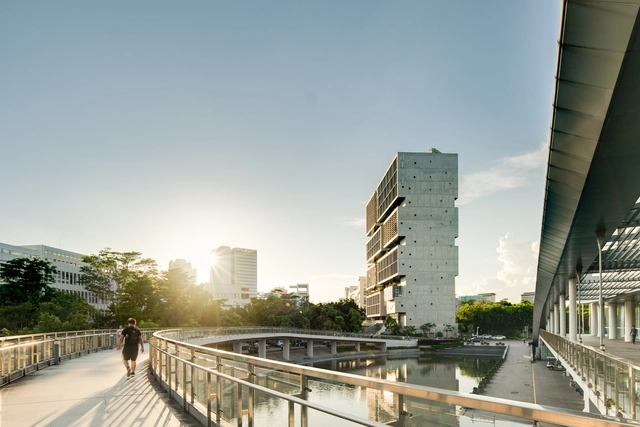
Architect and photographer Kris Provoost recently captured new photos of OPEN Architecture's Tsinghua Ocean Center in China. Designed as a laboratory and office building for the newly established deep-ocean research base of Tsinghua University, the project is located at the eastern end of Tsinghua graduate school campus in Shenzhen Xili University Town next to the main campus entrance. Provoost's images reveal details throughout the construction and showcase the project in its larger context.
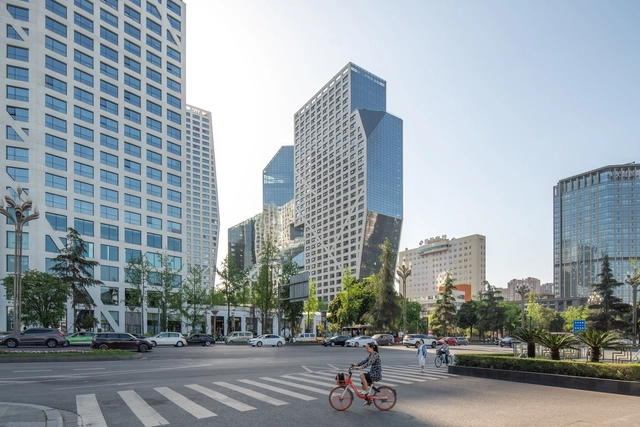
Architectural photographer Kris Provoost has published his latest series, on the subject of Steven Holl’s Sliced Porosity Block in Chengdu, China. Designed in 2007, and completed five years later, the scheme sought to break the standard typology of Chinese cities, bringing public interaction to new heights. Six years on from the building’s completion, Provoost captured the building immersed in the daily life of Chengdu citizens.
A decade ago, a wave of striking architecture invaded major Chinese cities as the country prepared for the 2008 Beijing Olympics and 2010 Shanghai World Expo. Internationally renowned architects proposed and developed over-the-top structures, which soon became new symbols of the country. These iconic buildings helped mark Beijing and Shanghai as the major entry points to China, but as time progressed, the phenomenon spread to other, lesser-known Chinese cities. As these "second tier" cities thrived, their governments wanted to improve living standards and develop their own trademark, resulting in new theaters, stadiums, schools, and office towers.
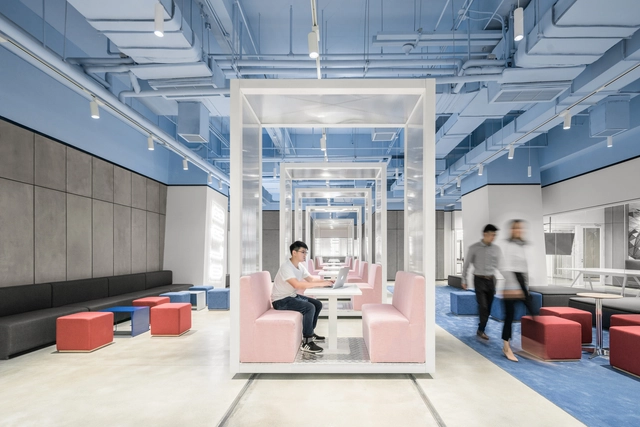
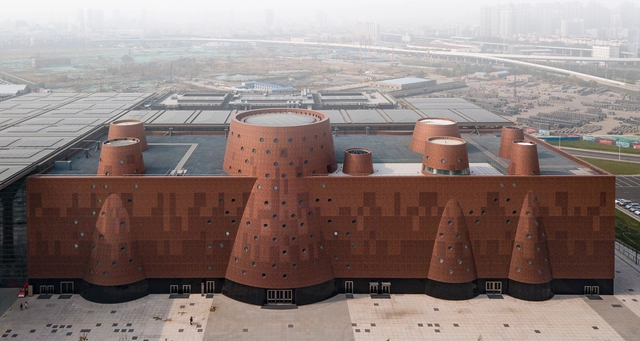
Having focused on Beijing and Shanghai in his first series of photographs, Kris Provoost has continued his "Beautified China" series with a deeper look at buildings in 12 Chinese cities throughout the country, from Harbin to Hong Kong. The project continues under the same premise: 20 minimalist photos taken over the past 8 years of striking architecture built in the last decade.