Inspiring women architects, planners, and urban policymakers have always existed, yet worldwide, the built environment professions—particularly their upper echelons—remain heavily male-dominated, far more so than other fields like education or healthcare.
It is well known that the construction industry is one of the largest producers of CO2. Although significant progress has been made in technology and in design and construction processes, there is still a long way to go to minimize or nearly eliminate carbon emissions in the development of the built environment.
Indeed, as revolutionary as the construction industry may seem today, it remains responsible for nearly 40% of global carbon dioxide emissions, 11% of which result from the manufacturing of building materials such as steel, cement, and glass.
What are the latest trends in reducing emissions in both design and material manufacturing? How should the industry transition toward net-zero architecture? These are some of the questions we want you to help us answer.
With every fraction of a degree of global warming, the impacts of climate change become more intense. In the Sixth Assessment Report of the Intergovernmental Panel on Climate Change (IPCC), 278 scientists from 65 countries demonstrate that to keep the 1.5°C limit established by the Paris Agreement within reach, global greenhouse gas (GHG) emissions must peak within the next three years.
https://www.archdaily.com/1132298/6-key-takeaways-from-the-2022-ipcc-report-on-climate-change-mitigationClea Schumer, Sophie Boehm, Taryn Fransen, Karl Hausker e Carrie Dellesky
The Second Studio (formerly The Midnight Charette) is an explicit podcast about design, architecture, and the everyday. Hosted by Architects David Lee and Marina Bourderonnet, it features different creative professionals in unscripted conversations that allow for thoughtful takes and personal discussions.
A variety of subjects are covered with honesty and humor: some episodes are interviews, while others are tips for fellow designers, reviews of buildings and other projects, or casual explorations of everyday life and design. The Second Studio is also available on iTunes, Spotify, and YouTube.
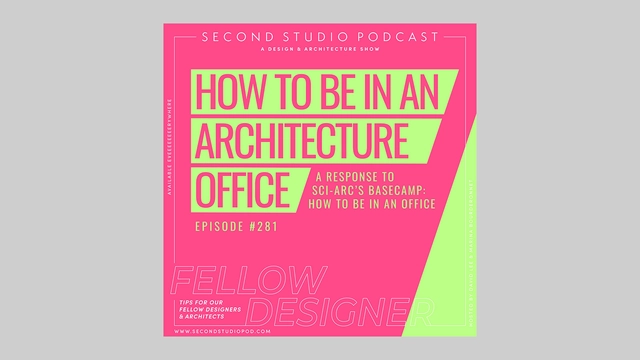
This week, David and Marina break down SCI-Arc's controversial panel "Basecamp: How to be in an office" and share their own advice on "how to be in an office”. The two discuss choosing the right office to work at; why the idea of committing to an office is right, but also wrong; why side hustles are not the solution to low fees and/or low pay; why just ‘getting shit done’ is not enough; why being underpaid is not just a ‘personal choice’; why the profession is struggling with low pay and long hours; and the nuances of SCI-Arc’s panel discussion.
https://www.archdaily.com/980293/the-second-studio-podcast-a-response-to-sci-arcs-basecamp-how-to-be-in-an-officeThe Second Studio Podcast
No País dos Arquitectos is a podcast created by Sara Nunes, who also runs the architectural film production company Building Pictures. The podcast aims to profile the professionals, projects, and stories behind leading contemporary Portuguese architecture. With just over 10 million inhabitants, Portugal is a fascinating country when it comes to this professional field, and its architectural output far exceeds what its population or territorial scale might suggest.
In this episode, Sara talks with Marcio Kogan, Diana Radomysler, and Suzana Glogowski of Studio MK27 about the use of the muxarabi (wooden latticework) and the influences of Portuguese colonialism and Brazilian modernism on the firm's work. Listen to the full interview and read an excerpt of the conversation below:
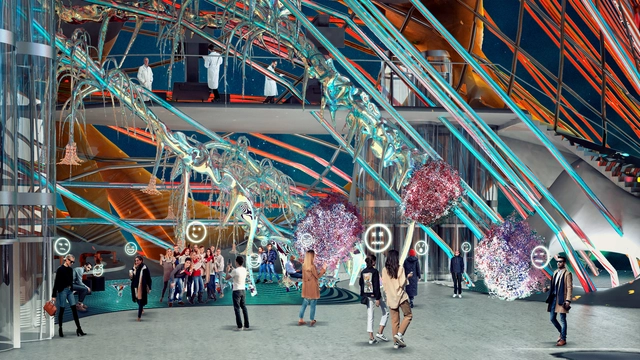
El poder de la Data - Render interior conceptual. . Image Cortesía de Online Lab of Architecture (OLA)
From NFTs and the Metaverse to the productivity benefits of real-time rendering, this year presents a prime opportunity to discuss the latest trends in visualization.
With this in mind, we want to open the debate and hear your thoughts on the following questions: How much can we learn from other related industries such as cinema, video games, and industrial design? How can architecture contribute to and advance the world of visualization?
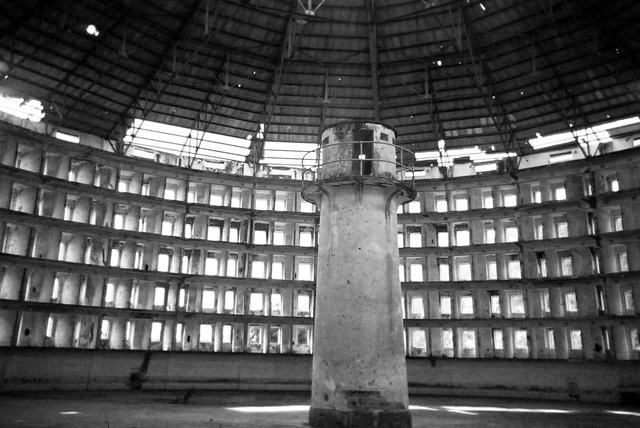
Panopticon prison model – author's own intervention on an existing image. Image via Friman/Wikimedia Commons, license CC BY-SA 3.0
This essay seeks to call upon the field of Architecture and Urbanism to reflect on the prison. When discussing urban crises, the existence of spaces of confinement is rarely problematized as a component—or even a generator—of the issues facing contemporary cities. Yet, this essay advances the premise that they are, in fact, central to them.
https://www.archdaily.com/1131863/critical-reinterpretation-of-prison-space-through-an-abolitionist-lensNara Albiero e Pedro Flosi Trama
The course Architecture and City in Brazil, taught by architect, curator, and professor Guilherme Wisnik, joins the online learning catalog of the Sesc Digital platform starting March 31. Entirely free and open, the self-paced, asynchronous course allows students to watch at their own pace.
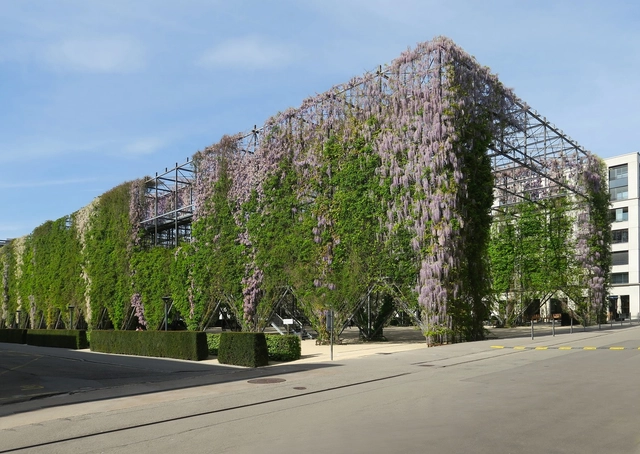
Paul Clemence’s capture of Zürich’s MFO Park is an evocative photo series for Archi-photo, demonstrating the juxtaposition between the metal shell of the man-made and the wild nature of the park itself. Vines intertwining themselves upon the skeleton of the structure create an attractive destination, replenishing the brownfield land and replacing it with a renewed and captivating image.
Zürich’s MFO park is a vibrant parkscape in Switzerland, previously a site used for around a century by the Oerlikon Machine Works (MFO). Saturated with construction debris and pollution during a long period of industrialization, it has been transformed into a green paradise with the nearby wooded Oerliker Park brimming with ash trees. Offering a diverse area of open space it is available to the public for a wide range of activities and events, with the presence of ‘Park House’, a large open hall, and trellis enveloped with climbing vegetation.
Pinheiros River, São Paulo. Photo: Pixabay, via CicloVivo
The Novo Rio Pinheiros Program announced the results of actions taken by the São Paulo State Government to clean up the river since 2019. According to January data from the Secretariat of Infrastructure and Environment, there has been a significant improvement in oxygenation and a reduction in organic matter in the water. In June 2019, Governor João Doria promised to clean up the river by 2022.
Whittier Heights Village. Photo: Low Income Housing Institute, via CicloVivo
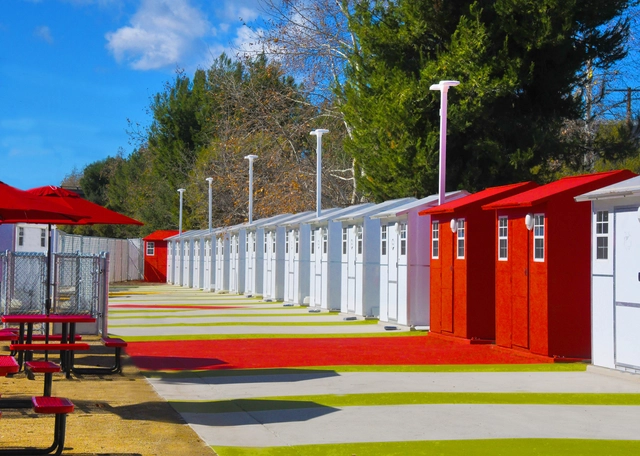
A small community of tiny homes has been built in Seattle, Washington, with the goal of helping homeless women transition back into stable shelter. What makes the project even more remarkable is that Whittier Heights Village was built entirely by female volunteers.
The site is tucked away between a bank parking lot and a four-story apartment complex in the Ballard neighborhood. The fenced-in lot features 16 tiny homes capable of temporarily sheltering up to 20 women at a time.
By digitizing architecture services, German firm baupal seeks to democratize sustainable and customized architecture, making design, energy assessments, permitting and cost evaluations more accessible and straightforward for private builders and smaller construction projects. Baupal is an online building application service that takes advantage of digital processes and efficient team structures to streamline design, planning and permitting processes for a range of small-scale projects.
Selected as one of Archdaily's Best New Practices of 2021, Baupal is a Berlin-based start-up co-founded in 2020 by Constantin Schmidt-Thomé, Justus Menten, and Max Schroeren with the purpose of "simplifying design and building application for everyday homeowners and their contractors. "With backgrounds in finance, entrepreneurship and architecture, the team set out to transform the design and planning approval process into a customer experience through digital and transparent workflows. The firm specializes in conversions, extensions and new single-family houses, while also providing building application services to construction companies.
After an extensive five-year restoration carried out by David Chipperfield Architects and Generali, the iconic Procuratie Vecchiein St. Mark's Square has opened again to the city, with an installation by Italian artist Edoardo Tresoldi. Titled "Monumento", the artwork responds to the new socially-driven functions presented by the vast space, "renewing the language of the monumental column and the values to which society aspires in order to reflect its own epoch".
Foster + Partners revealed the design of a new skyscraper at 270 Park Avenue that will host JPMorgan Chase’s New York headquarters. The 60-story tower is set to be the city’s largest all-electric tower with net-zero operational emissions powered by renewable energy sourced from a New York State hydroelectric plant and is designed around high standards regarding wellness and hospitality. The project’s morphology creates extensive ground-level outdoor space with green areas and a public plaza, accompanied by various amenities geared towards the neighbourhood’s residents. Under construction since 2021, the project replaces SOM's Union Carbide Building, which became the tallest voluntarily demolished building in the world.
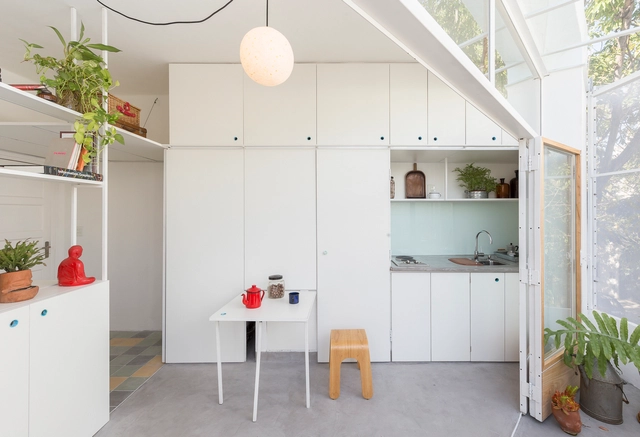
Regardless of the design adopted for kitchen spaces, for some years now and with increasing frequency, many architects have been deciding to design kitchens by integrating them into other rooms in the home. Free of dividing walls or joinery, integrated kitchens are implemented with the aim of leaving the activities that take place there in full view of everyone, encouraging interaction and communication between the inhabitants.
When the estimable Blair Kamin stepped down as architecture critic of the Chicago Tribune in early 2021, it left the city without a daily critic at any of the local news outlets. That sad state of affairs was partially corrected recently, when the Chicago Sun-Times announced that Lee Bey would begin a monthly architecture column. The writer, historian, photographer, and critic brings a wealth of experience to the task: he was architecture critic for the Sun-Times for five years in the late 1990s, served as deputy chief of staff for planning and design in Mayor Richard M. Daley’s administration, directed governmental affairs at SOM, and taught at IIT. His most recent book is Southern Exposure: The Overlooked Architecture of Chicago’s South Side. Last week I talked to Bey about the new role, how the city has changed since his last stint as a critic, and the unique importance of architecture to the city.
Cladding systems have important functions in buildings. They can confer thermal insulation, protect internal spaces from the weather and–just as important–give the building a "face", improving its appearance and clearly identifying the element of design. "Cladding" refers to the components that are linked to the structure of a building to form non-structural external surfaces. While in the past wooden cladding was the only option, there are currently multiple possibilities of materials, colors, weights, textures, anchoring systems, and many other variables available. Below, we outline some of the main materials used for façade cladding, and the projects that use them in a remarkable way:
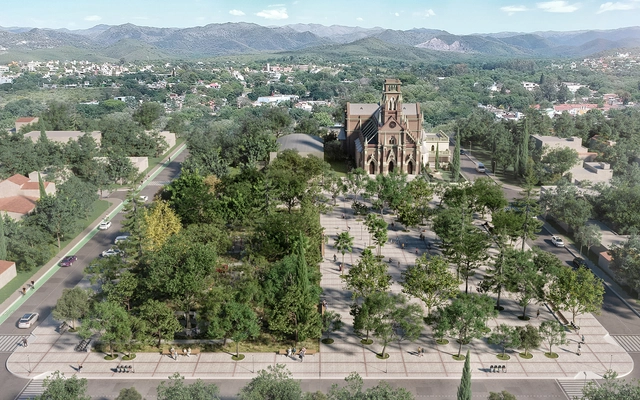
The Provincial Preliminary Project Competition for the remodeling of Plaza Gral. Manuel Belgrano in the city of Villa Allende, Córdoba, Argentina, was organized by the Association of Architects of the Province of Córdoba (CAPC) and sponsored by the Argentine Federation of Architecture Entities (FADEA). As a binding competition, the Municipality of Villa Allende will contract the winning team to develop the project, which includes construction drawings, details, and technical specifications.
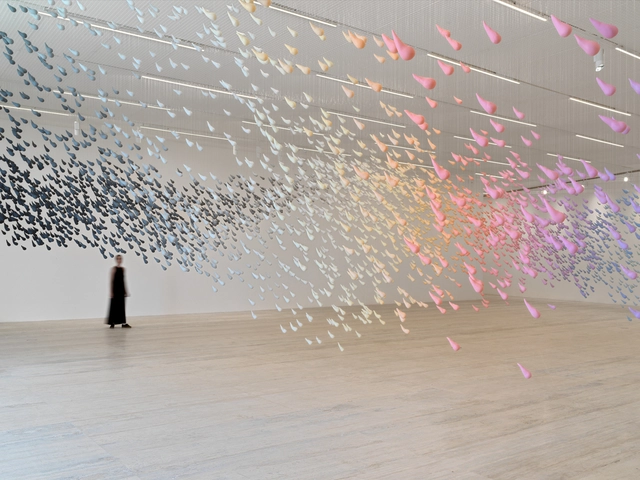
As part of the programming hosted by Museo Jumex from April 2 to September 18 in Mexico City, "Urs Fischer: Lovers" presents a 25-year retrospective of one of today's most celebrated international artists. Organized by guest curator Francesco Bonami, the exhibition brings together new pieces created specifically for the museum alongside works from international public and private collections, as well as the artist's own archives. Together, these works showcase the expansive creativity, humor, and depth of the artist's practice.
https://www.archdaily.com/1132140/urs-fischer-presents-his-first-major-exhibition-for-mexico-and-latin-america-at-museo-jumexArchDaily Team
Videos
Museo Regional de Aysén. Image Cortesía de Ministerio de las Culturas, las Artes y el Patrimonio
On Thursday, April 7, the Regional Museum of Aysén (MRA) won the LCD Berlin Award 2021/22 for “best new museum” globally in the Latin American category. The accolade was presented by the international organization “Leading Culture Destinations,” which is headquartered in the German capital, in cooperation with VisitBerlin.
The award, which recognizes the museum located in the city of Coyhaique as one of the world's emerging and established cultural destinations, is a recognition of the work carried out by the Ministry of Cultures, Arts, and Heritage through Chile's National Cultural Heritage Service.
Pingado, carioca, espresso, drip, americano, cappuccino. Unlike in architecture, in this case, form is the least important factor when it comes to declaring a passion for coffee. A loyal companion since the college days of pulling all-nighters, and one that continues to accompany the daily creative process throughout the careers of many architects, this traditional beverage holds a special place in the profession and deserves to be celebrated. Today, March 14, is World Coffee Day. To celebrate, we feature a selection of projects where this sensory-awakening ingredient takes center stage.
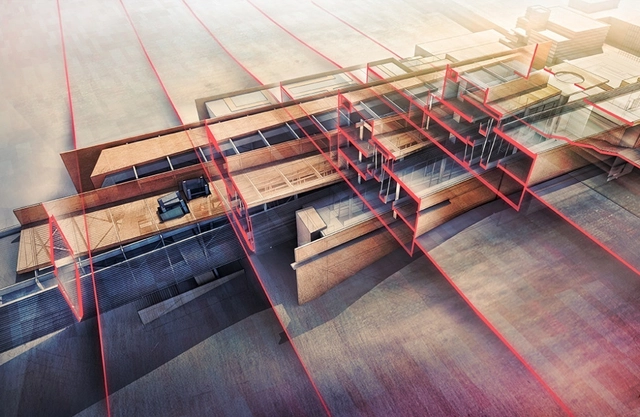
Drawings and visualizations are architecture in their own right. As means to reconsider what we see or what could be, drawing styles are as diverse as the mediums through which they are produced. For transparent drawings, observation and imagination go hand in hand. Not only does this unique style require critical examination, but also an ability to conceptualize new possibilities.
DAAily jobs is a platform for people to find jobs, and firms of all sizes to attract new talents in the world’s largest architecture and design community. Users can find the latest offers from architecture to interior design to project manager to civil engineering. In other words, anywhere where architectural toolkit/design thinking is needed. Moreover, people can filter by only-remote job positions according to their interests or even search for specific companies' applications.
https://www.archdaily.com/978499/from-project-architect-to-industrial-designer-some-of-plus-100-architecture-and-design-jobs-offers-in-daaily-jobsDAAily jobs