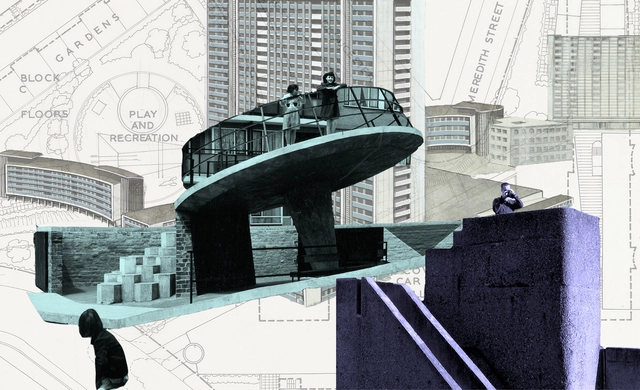
Starting June 10, the RIBA will present The Brutalist Playground - an exhibition that is part sculpture, part architectural installation, which invites people of all ages to come and play, the Brutalist way. Occupying the entire Architecture Gallery, the immersive landscape is a new commission by Turner Prize nominated design and architecture collective Assemble and artist Simon Terrill. It explores the abstract concrete playgrounds that were designed as part of Brutalist housing estates in the mid-twentieth century, but which no longer exist. They became playgrounds unsuitable for play.
As competition in the UK becomes tighter, architects are keen to find work overseas, often in such places where the prevailing human rights record has been a growing cause of concern and debate for some time.
Is the question of ethics in architecture a matter where business must be led by pragmatics of the head, rather than emotions of the heart? Or is compromise a defeat?
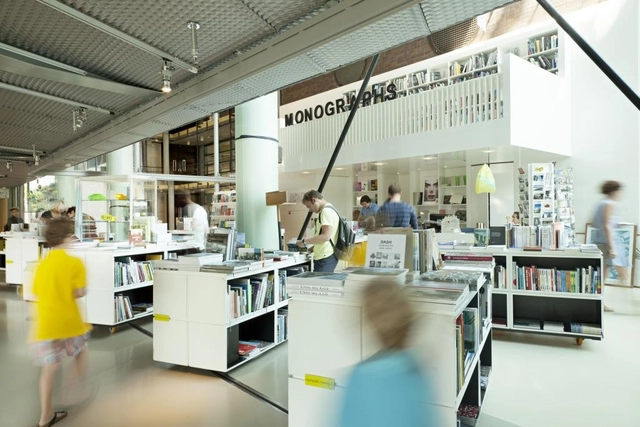
The bookshop of the Netherlands Architecture Institute, with a space dedicated to the architectural monograph. Image via Nieuwe Instituut
It's common to find an architectural monograph (or three) on an architect's bookshelf. Within the pages of these large, heavy, often expensive tomes lie a formalised portfolio of a studio's professional output, interspersed by essays penned by influential writers, thinkers or practitioners. They are sources of both information and inspiration, bringing architecture from around the world into your personal field of vision.
Recent years have seen a vast number of these types of books published on architects and their practices, begging the question: Why a Monograph? Are they simply part and parcel of a studio's creative process, or necessary tools for communication with the wider world? Perhaps more interestingly, what role does the recording of work in this way have for architects in enabling them to take stock and move forward? It will seek to examine how the print monograph has become a staple tool for self-promotion, reflection, and criticism in a world which is leaning towards a gradual digitisation of the discourse.
https://www.archdaily.com/632117/why-has-the-monograph-become-a-default-in-architectural-publishingAD Editorial Team
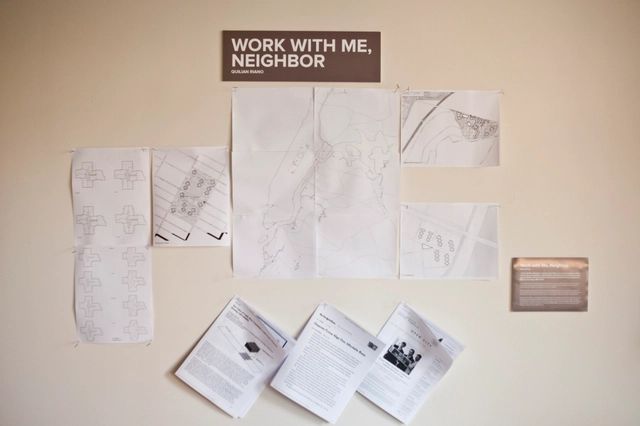
Institute for Public Architecture exhibition on public and affordable housing in NYC, "Total Reset." Installation by IPA Fellow Quilian Riano: “Work with Me, Neighbor.”
Mayor de Blasio has declared a “total reset” for public housing in New York. At the same time, the decline of affordable housing options has become New Yorkers' greatest concern.
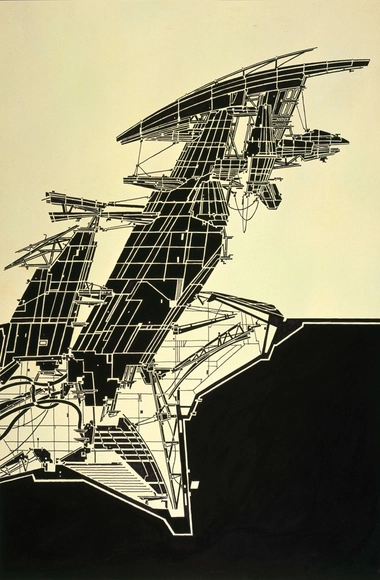
The Museum for Architectural Drawing presents Lebbeus Woods, ON-line, an exhibition of the finest works of architectural theorist, draftsman, educator and architect, Lebbeus Woods (1940–2012). Curated by his longtime friend and partner Christoph a. Kumpusch, the exhibition brings together a collection of Woods’ visionary works that have never been exhibited before. The intensely rendered architectural and urban environments produced early on in Woods’ career are exhibited together for the first time. These ink and pencil drawings cover a wide range of Woods’ research and re-imagination of cities both real and fictive and support Woods’ longstanding desire to show the capacity of architecture as a transformative and eloquent force.
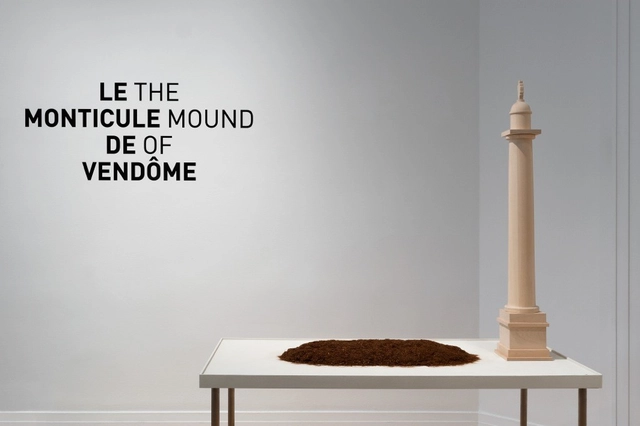
On view at the CCA from 19 June to 14 September 2014 and curated by architectural historian David Gissen, The Mound of Vendôme revisits one key episode of French history when the Commune de Paris in 1871 voted to demolish the Vendôme Column, abolishing all allusions to the Napoleonic era. To protect the surrounding architecture during demolition, a radical landscape was erected on Place Vendôme. Informed by the methods of experimental history, Gissen’s ongoing research project and installation at the CCA traces the provocative history of the column and mound, while arguing for its historicisation and reconstruction.
AA Visiting School is an international network of design workshops and other programs organized by the Architectural Association School of Architecture. This event will be realized in Bilbao, Spain between July 23 and August 5.
A new exhibition in Germany looks at the history of the architectural model in contemporary art. It begins with a legendary model by Charles Simonds, covers the 1990s with Ludger Gerdes, Hermann Pitz and Thomas Schütte, and ends up in the present day with Alicia Framis, Hinrich Sachs and Carlos Garaicoa.
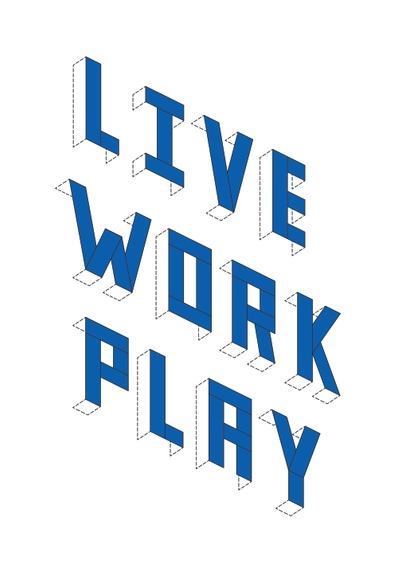
Live Work Play, an exhibition organised as part of the Hampshire Festival of Architecture 2014 (UK), showcases over 100 projects from "within the country, the UK, and beyond." Featuring a range of "thoughtful, robust, elegant and ingenious designs", the show will include designs from local practices such as PAD Studio, Design Engine, AR Design Studio, Design ACB and John Pardey Architects. The exhibition will be open seven days a week between the 14th June and the 16th July. Find out more from RIBA Hampshire.
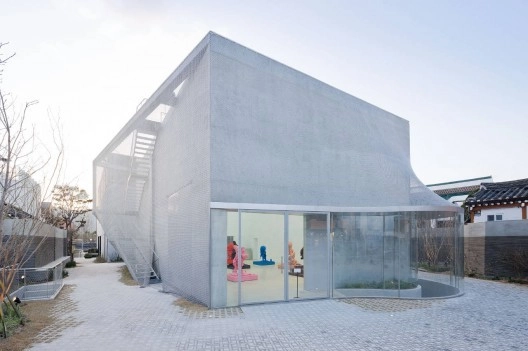
The Parrish Art Museum is pleased to present Soft Footprints: Works by SO – IL as the fourth installment of Architectural Sessions—an ongoing series co-presented with AIA Peconic that explores the connection between art and architecture, and how both disciplines elicit conversation about space, form, materials and aesthetics. On June 6, host architect Maziar Behrooz, AIA, will moderate a discussion with SO – IL co-founders Florian Idenburg and Jing Liu about their design philosophy, inspiration, and interdisciplinary approach to architecture and designing spaces for art.
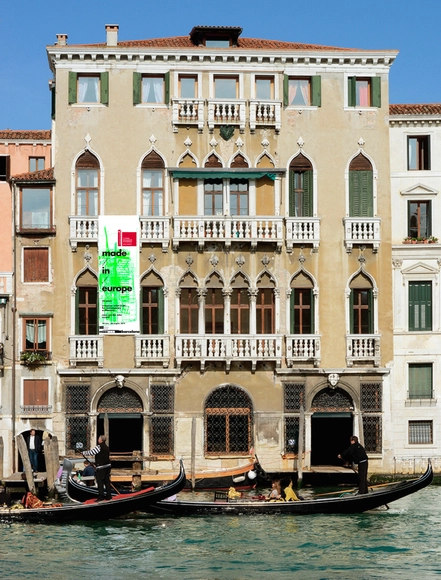
House Housing is the first public presentation of a multi-year research project conducted by the Temple Hoyne Buell Center for the Study of American Architecture at Columbia University. Situated in the Casa Muraro in Venice and staged as an open house, the exhibition responds unsolicited to the proposal by Rem Koolhaas, curator of the 14th International Architecture Exhibition, that architecture focus on its "fundamentals."
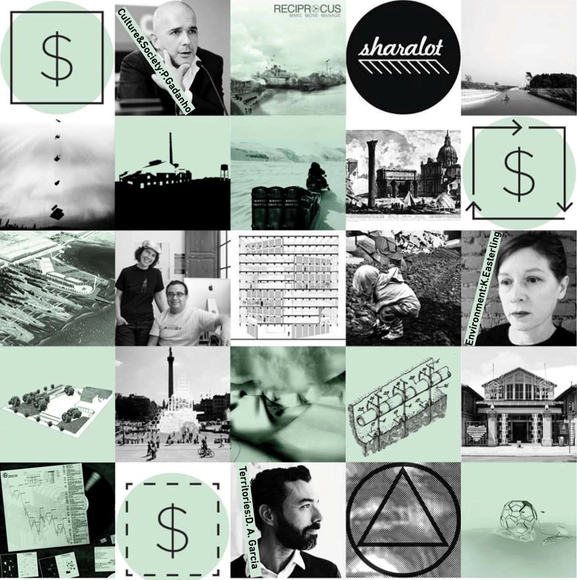
The annual theme Money and its questions posed by the Think Space 2013 | 2014 guest curators Ethel Baraona Pohl & Cesar Reyes Najera will undoubtedly trigger conversations at the upcoming Unconference event. Conceived as a series of highly interactive sessions for a hundred participants, Money Unconference will enable thinkers, architects, participants, authors, winners, jurors and guest curators from the MONEY cycle to meet in person at Lauba, People and Art House in Zagreb, 11-13 June 2014.
From the Organizers. Europe is currently experiencing a paradigm shift from national to urban identities. As its boundaries become increasingly blurred, each city is claiming an identity of its own. Europe is predominantly urban, and the condition of the European city is related to a stratification of architectures, functions and events which, palimpsest-like, shape a compact, complex understanding of the urban experience that embraces its architectonic heritage, industrial development, social housing, archaeological sites, modern infrastructure and the cities rebuilt after WW2.
The globalisation process began with the emigration of artists and architects during WW1, and continuing with the exodus due to the rise of the Nazi Party in Germany and the start of WW2. In this sense, Europe acted as a transmission device, the key node in a complex process of emission and assimilation. Today we live in a liquid reality whose theme is permeability, a reality in which professionals and intellectuals can move across porous borders.
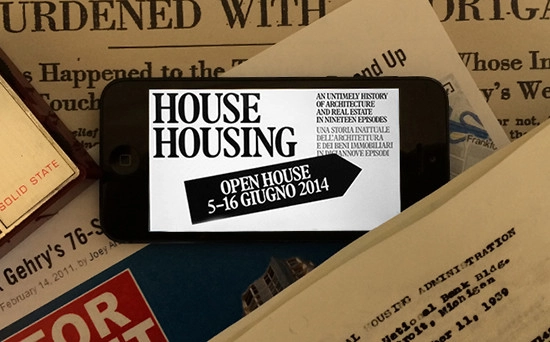
House Housing: An Untimely History of Architecture and Real Estate in Nineteen Episodes is the first public presentation of a multi-year research project conducted by the Temple Hoyne Buell Center for the Study of American Architecture at Columbia University. Installed in the second-floor apartment of Columbia’s Casa Muraro in Venice and staged as an open house, the exhibition responds unsolicited to the proposal by Rem Koolhaas, curator of the 14th International Architecture exhibition, that architecture focus on its “fundamentals.” House Housing replies by considering architecture’s economic fundamentals, which locate housing at the center of the current economic regime, with the United States as an influential node in a transnational network.
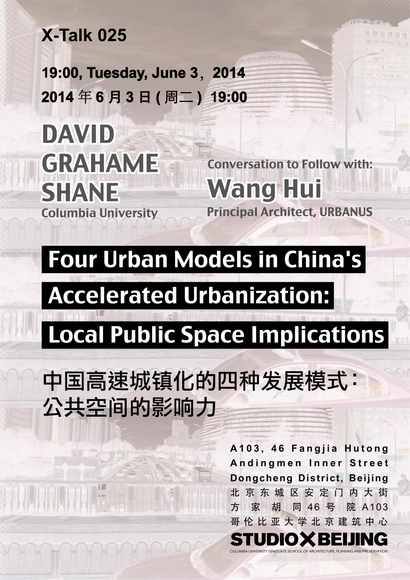
China's accelerated urbanization juxtaposes many local and global urban models in the contemporary urban space of the mega-city/metacity region. Since 1945 the global and local discourse on urban design and development has been dominated by four conceptual models. These four models, the metropolis, the megalopolis, the fragmented metropolis and the megacity/metacity have appeared in Asia with local characteristics and with special, hybrid characteristics. China's rapid urbanization has been based on an equally rapid industrialization that has telescoped the historical development pattern of western nations into 60 years.
This summer, the American Institute of Architects New York Chapter (AIANY) and the Center for Architecture Foundation will present Open to the Public: Civic Space Now, an exhibition exploring why people gravitate to (or avoid) civic spaces – the places between buildings where people can assemble. Curated by Thomas Mellins and designed by Athletics, the exhibition opens Thursday, June 12, 6:00 PM and runs through Saturday, September 6 in the main galleries at the Center for Architecture, 536 LaGuardia Place.
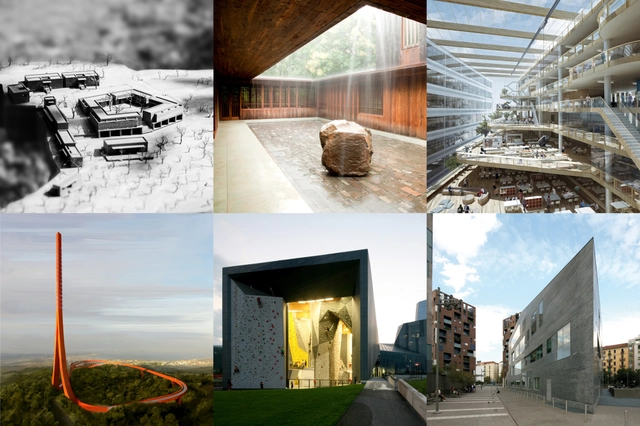
Recent work from panel members. Image Courtesy of Greenhouse Talks
Greenhouse Talks, an auxiliary public lecture series to the 2014 Venice Architecture Biennale, will take place on Thursday, June 5th and Friday, June 6th between 9:00 and 11:00am. During each session, an international panel of professionals - including the founder of MAD Architects, Ma Yansong, and the director of AMO, Reinier de Graaf - will discuss a topic pertaining to Rem Koolhaas' chosen theme for the Biennale: Fundamentals. The first day of discourse will focus on the future of the architectural profession, investigating the potential influence of the market crisis and the intersection of architecture with other disciplines. The second will reflect on the representation of architecture, considering the Western practice of exhibiting architecture projects in museums, institutes, and biennial events and what this practice's adoption might mean for the East. For the full list of panel members and event details, read on after the break.
_Arch_Press_Archive_RIBA_Library_Photographs_Collection.jpg?1432159232 "Park Hill Estate, Sheffield - 1962. Image © Arch Press Archive RIBA Library Photographs Collection")


_John_Maltby__RIBA_Library_Photographs_Collection_(1).jpg?1432159169 "Churchill Gardens - 1956. Image © John Maltby RIBA Library Photographs Collection")