.jpg?1363369829&format=webp&width=640&height=580)

.jpg?1363369974 "© Erieta Attali")
.jpg?1363369829)
-
Architects: Myrto Miliou Architects
- Area: 400 m²
- Year: 2011
-
Manufacturers: Patiris

The main idea of ABM Arquitectos in their Re-Think Athens proposal, which was a finalist in the competition, is to join the two parks at the end of the intervention (Pedion Areos and Lotos Likavitou) with a green mass that will flow all along the intervention. By doing this, the architects hope to bringvback the greenery to an area that used to be a green zone in the outside of the old Athens walls and creating a green corridor that joins the old Athens with the new Athens. More images and architects’ description after the break.
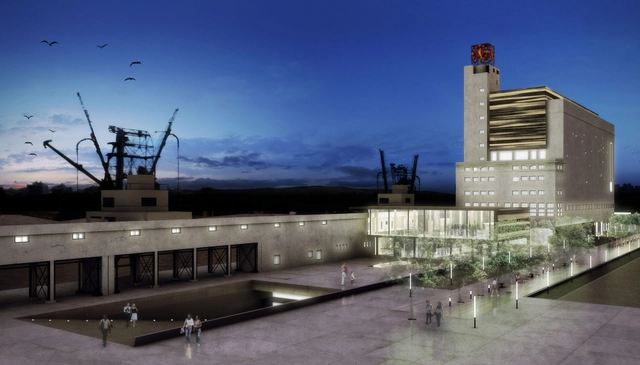
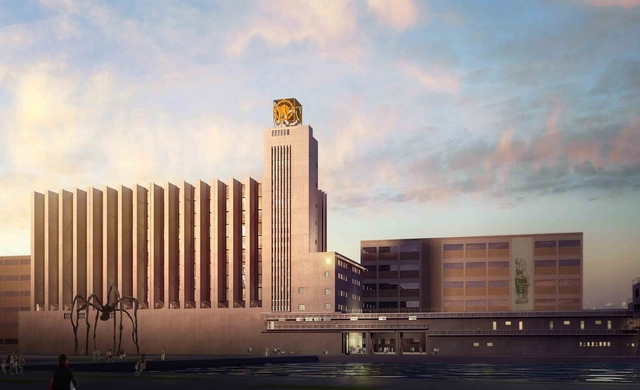
Designed by Dimitris Thomopoulos and his team, their proposal for the Museum for Underwater Antiquities and Regeneration of part of the Piraeus Port Authority, which received an honorable mention, intends to create an experiential space that stimulates the visitors’ senses through their exploration in the museum’s interior. The museum itself corresponds to its special function in a more contemporary way, while highlighting the existing building’s shell and its original use. More images and architects’ description after the break.
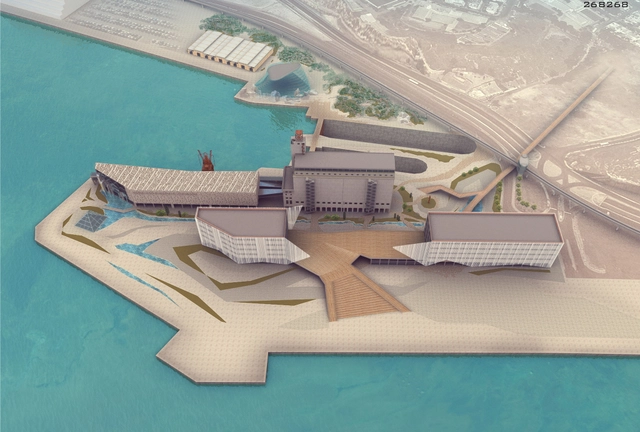
The collaborative team of architects Khvil Anastasia, Ivanova Elena, Fadeeva Alina, Rudikov Aleksei, and Spiridon Mellos chose simplicity as their main strategy in the Piraeus Museum for Underwater Antiquities Competition. Without creating enormous change, their design aims to use only what is already there, emphasizing simplicity and industrial nature of the building and beauty of the place to create a complex travel route. More images and architects' description after the break.
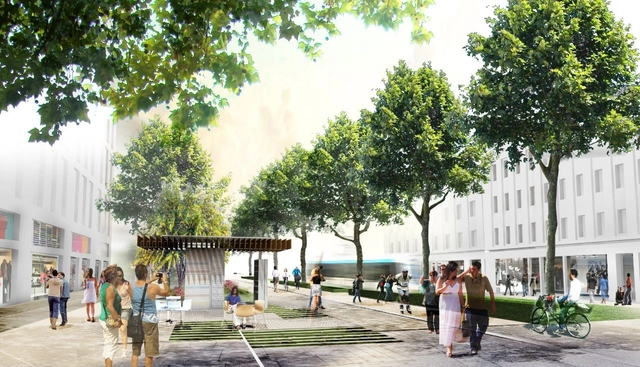
OKRA, in collaboration with Mixst urbanism and Wageningen University, was recently announced as the winning team of the prestigious competition ReThink Athens towards a new city centre. Changing the heart of Athens into a true contemporary metropolitan city centre requires transformation of the city triangle into a lively part of the city. The project aims to strongly contribute to the change of Athens and improve the environment of the city plus activating the area economically. The team is supported by the Greek Architects of Studio 75 and Werner Sobek Green Technologies. More images and architects’ description after the break.
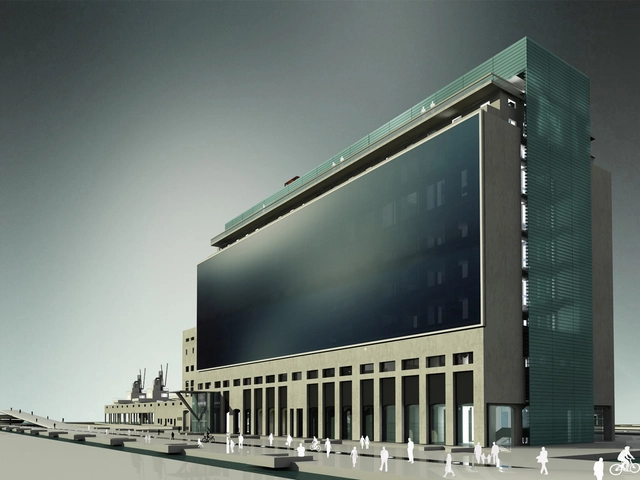
Designed by d-code Architects, the proposal for the Museumof Underwater Antiquities is a synthesis of a building characterized by orthometrical simplicity with incorporated high-tech components and a surrounding area of curved and parabolic shaped paths, installations and water parks. Given the importance of the two subjects of the museum building and its surroundings, the overall effect is presented as arythmological dialogue between linear building solidity and environmental curving fluidity. More images and architects’ description after the break.

Following the initial challenge of amplifying connectivity, adjustability and interaction for its Correlations cycle, AA Athens Visiting School scales up its design intentions in order to investigate links among discrete individual architectural systems in its 2013 version, Recharged.
Recharged with interconnectivity on different levels, the theme of investigation will revolve around the design of semi-independent design prototypes acting together to form elaborate unified results. The driving force in Cipher City: Recharged is the synergistic effect behind complex form-making systems where interactive design patterns arise out of a multiplicity of relatively simple rules.