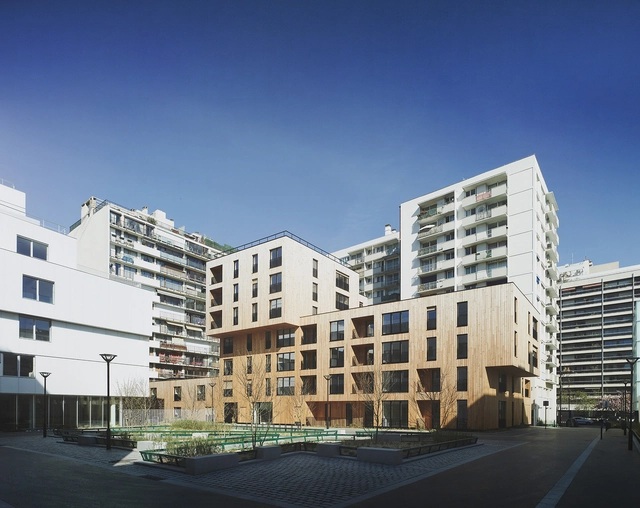
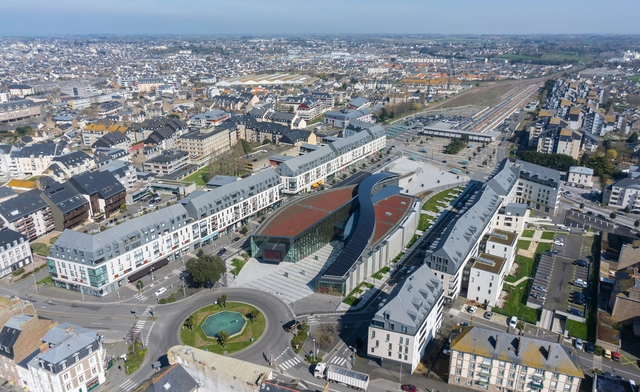
50 years after the adoption of the new cities program, the Pavillon de l’Arsenal recounts the history of Cergy-Pontoise, emblematic of this unique urban and human adventure.
How can we build a landscape city in the 20th century? Who are the founding fathers and the pioneers of this planning policy? What transports for the satellite city? What urban strategies shall be adopted to invent a city of 200,000? How can we encourage citizen participation from the start? How do we continue developing urban planning, with the environmental ambitions of today? What are the conurbation’s future challenges?
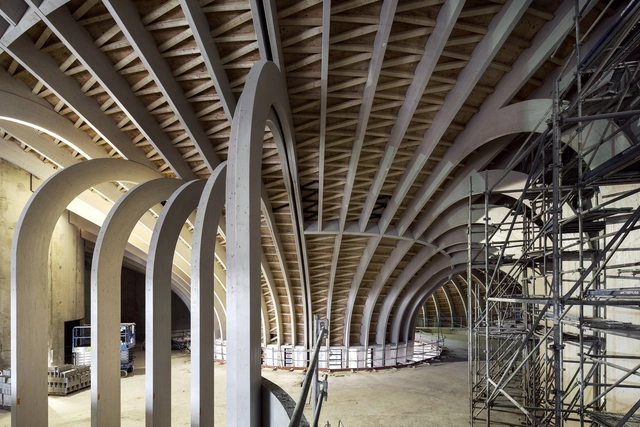
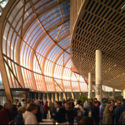
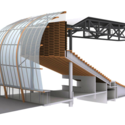
Wooden Structure. Image Courtesy of XTU Architects
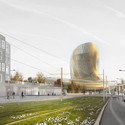
The BordeauxWineMuseum’s wooden structure has been completed, the first step in an ambitious project slated to open in 2016. Designed by XTU Architects, and situated along the coast of the river Garonne in Bordeaux, France, the museum aims to stand as a beacon and “guardian angel” against the skyline of the riverbank. Inspired by the timeless spirit of French wine, the building forms flow in a continuous space without corners, evoking the circular motion that awakens a wine before tasting.
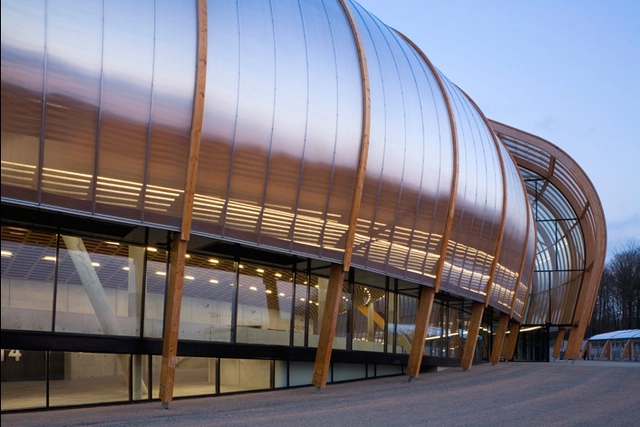
For those familiar with the more canonical work of Bernard Tschumi, the Limoges Concert Hall may seem a puzzlingly conventional departure from the radical, intensively theoretical projects that introduced the world to the Swiss architect. In one sense, the visual clarity of the design doesn’t provoke the same complex discourses on architectural violence and eroticism that guided his early-career pursuits, and it is certainly a more functional evolution of his polemic on non-programmatic space that was famously exhibited at Parc de la Villete. In another sense, the concept and form of Limoges aren't anything novel, either, emerging almost in its entirety from a concert hall prototype Tschumi developed in the late 1990s for a similar venue at Rouen. But Limoges is important for other reasons: in addition to its thoughtful material and spatial choices, it is one of the more articulate illustrations of Tschumi’s explorations of movement and enclosure—“vectors and envelopes”—that inform much of his recent work.