Romullo Baratto

Romullo Baratto is an architect with a PhD from FAUUSP and Managing Editor of ArchDaily. He previously coordinated the editorial team of the 11th São Paulo Architecture Biennial and served as Managing Editor of ArchDaily Brasil, where he led the platform to win the FNA Award—the first time the honor was granted to a media outlet. He collaborated on the editing of the book "Concrete Jungle", published by gestalten, and has curated architecture exhibitions in Brazil, Chile, Denmark, and Italy, as well as delivered lectures and moderated debates in Spain, the United States, and Portugal. His doctoral thesis investigates the urban landscapes of São Paulo through cinema. His work spans academic research and editorial practice, communicating architecture through texts, interviews, lectures, curatorship, and photography. Follow him on Instagram @romullobf.

BROWSE ALL FROM THIS AUTHOR HERE

Statue of Tebas, an enslaved 18th-century architect, unveiled in São Paulo

On November 20 — Black Consciousness Day — the city of São Paulo inaugurated a statue honoring Joaquim Pinto de Oliveira, an enslaved 18th-century Black architect known as Tebas. Located in Praça Clóvis Beviláqua, on the eastern side of Praça da Sé in the city center, the sculpture was designed and developed by visual artist Lumumba Afroindígena and architect Francine Moura.

The work aims to cement Tebas's legacy, showcase his sophisticated technical output for the era, and, above all, provoke reflection on the historical significance of Black territorial presence in the city center, which has been fragmented over the centuries.
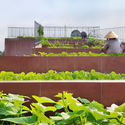
Urban agriculture can feed 20 million people in São Paulo

Subscriber Access | 

Urban agriculture can feed 20 million people in São Paulo - 1 的图像 4Urban agriculture can feed 20 million people in São Paulo - 2 的图像 4Urban agriculture can feed 20 million people in São Paulo - 3 的图像 4Urban agriculture can feed 20 million people in São Paulo - 4 的图像 4Urban agriculture can feed 20 million people in São Paulo - More Images+ 3

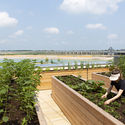
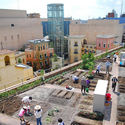
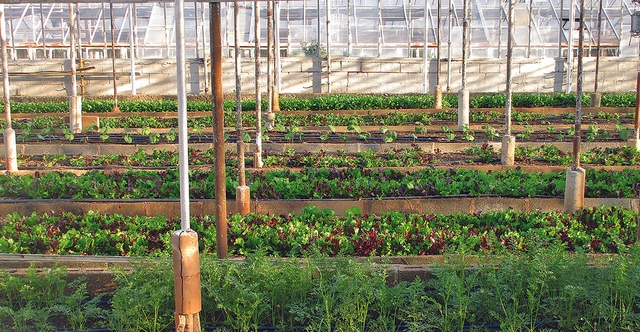
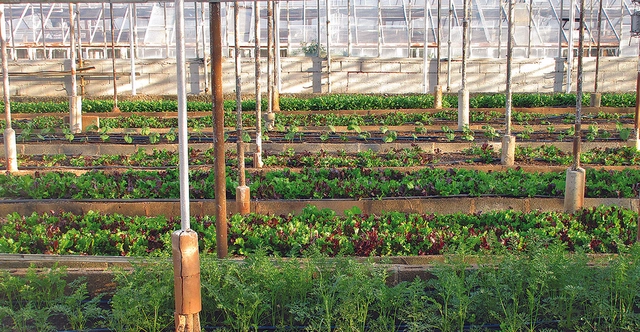
The Metropolitan Region of São Paulo (RMSP) has nearly 22 million inhabitants, representing about 10% of Brazil's total population. To feed this massive population, tons of food supplies arrive in the metropolis daily from different parts of the country. However, a new study by Instituto Escolhas shows that, with certain measures, it is possible to supply this entire population with locally grown vegetables.
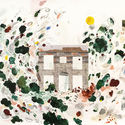
Indigenous worlds: interfaces between art, architecture, and geography

What would happen if we abandoned the modern epistemology that separates “us” from “others”? What would art history look like without this restrictive separation? Many other, non-disenchanted worlds coexist with ours. Other cosmopolitics can offer us less exclusionary views of life and relationships, unearthing previously unsuspected futures.

Guilherme Wisnik talks with Renata Marquez, a professor at the UFMG School of Architecture and Design and co-editor of Piseagrama magazine. Holding a PhD in Geography and a postdoc in Anthropology, she researches curatorial practices, theory, and criticism at the intersection of art, architecture, geography, and anthropology.

NGO brings dry toilets to the Brazilian Northeast

Subscriber Access | 

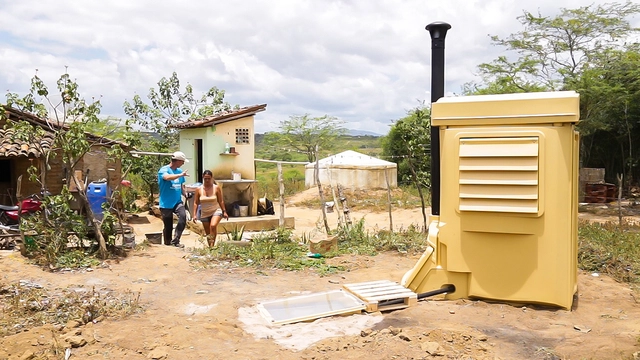
According to the 2018 National Sanitation Information System, 25.8% of the population in Northeast Brazil lacks access to water and 72% has no connection to the sewage network. “Now tell me, how am I supposed to have a bathroom at home under these conditions?” This was the question that robbed Vera of her sleep and peace of mind.

Vera lives in the small community of Riacho das Almas (PE), and her story is similar to those of thousands of families living in the rural areas of the semi-arid Northeast. Where access to water is scarce and basic sanitation is practically nonexistent, the use of traditional bathrooms—equipped with faucets, showers, and flushing toilets—is uncommon in the region. Consequently, families like Vera's and many others rely on improvised outdoor spaces for their needs: the "aveloz bathroom."

Espírito Santo launches incentive program for solar energy generation

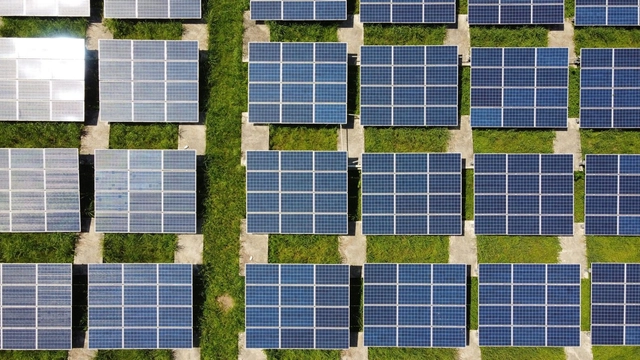
The government of Espírito Santo announced last week the launch of the GERAR Program, which aims to triple investments in distributed solar photovoltaic generation and expand incentives for renewable sources. Supported by the Brazilian Association of Photovoltaic Solar Energy (ABSOLAR), the program demonstrates the state's commitment to its targets for reducing pollutant emissions and combating the climate crisis.

Espírito Santo launches incentive program for solar energy generation - Imagem 1 de 4Espírito Santo launches incentive program for solar energy generation - Imagem 2 de 4Espírito Santo launches incentive program for solar energy generation - Imagem 3 de 4Espírito Santo launches incentive program for solar energy generation - Imagem 4 de 4Espírito Santo launches incentive program for solar energy generation - More Images

Street Cultures, the Body, and Public Space: Guilherme Wisnik in Conversation with Luiz Antonio Simas

"The streets think; they have ideas, philosophy, and religion. As such, they are born, they grow, they change character, and, eventually, they die." Drawing from this quote by João do Rio in Alma Encantadora das Ruas, Guilherme Wisnik talks with Luiz Antonio Simas about street cultures through the concepts of terreirização and corporeality, viewing cities as spaces that are daily contested, tensioned, enchanted, and disenchanted.

"I don't believe in disciplinary, geographic, or generational boundaries": Interview with Andreia Garcia of Architectural Affairs

Subscriber Access | 

Portugal is a country of modest dimensions and a small population, yet it boasts a profound architectural legacy, especially from the mid-20th century onward, rendering the mention of those who stood out in the modernist era unnecessary. Its contemporary production, however, also deserves attention—not only for the virtuosity with which these young professionals in Porto, Lisbon, and beyond design and build, but for how they push the boundaries of our discipline, in both practice and theory.

One example of these offices and collectives operating in an interdisciplinary territory is Architectural Affairs, led by architect Andreia Garcia. Founded in Porto in 2016, the practice approaches architecture through three dimensions—design, curation, and publishing—and has been recognized with several national and international awards. Among their most recent projects, Andreia Garcia and Architectural Affairs curated the Maia'19 Contemporary Art Biennale and the exhibition celebrating the 20-year career of Fernando Guerra at the Roca Lisboa Gallery.

"I don't believe in disciplinary, geographic, or generational boundaries": Interview with Andreia Garcia of Architectural Affairs - 1 的图像 4"I don't believe in disciplinary, geographic, or generational boundaries": Interview with Andreia Garcia of Architectural Affairs - 2 的图像 4"I don't believe in disciplinary, geographic, or generational boundaries": Interview with Andreia Garcia of Architectural Affairs - 3 的图像 4"I don't believe in disciplinary, geographic, or generational boundaries": Interview with Andreia Garcia of Architectural Affairs - 4 的图像 4I don't believe in disciplinary, geographic, or generational boundaries: Interview with Andreia Garcia of Architectural Affairs - More Images+ 7

Community project employs bioclimatic strategies and local labor in Paraisópolis

Favelas are an established reality in São Paulo, Brazil, housing more than 10% of the city's population. Within these communities, housing is a critical issue, due to both its inherent social dynamics and the poor environmental quality of indoor spaces—primarily caused by the overexposure of building envelopes to the sun and inefficient openings for ventilation. Against this backdrop, the project develops simple, replicable strategies to retrofit self-built housing based on the local climate.

Community project employs bioclimatic strategies and local labor in Paraisópolis - Image 1 of 4Community project employs bioclimatic strategies and local labor in Paraisópolis - Image 2 of 4Community project employs bioclimatic strategies and local labor in Paraisópolis - Image 3 of 4Community project employs bioclimatic strategies and local labor in Paraisópolis - Image 4 of 4Community project employs bioclimatic strategies and local labor in Paraisópolis - More Images+ 5

Timber structures in 10 public and community buildings

Subscriber Access | 

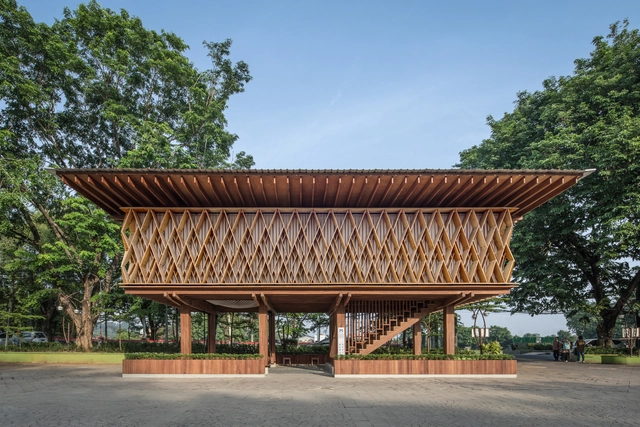
Whether for environmental, structural, or aesthetic reasons, wood is widely used in contemporary architecture, although it still falls far short of its true potential. Properly managed, it becomes an inexhaustible resource—which, in itself, should attract significant attention from architects and other construction professionals.

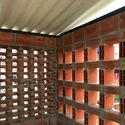
To separate wood from its association with cladding and partitions—or purely ornamental uses—we have compiled 10 public and community projects of varying scales, from small neighborhood libraries to conference centers, built in locations as far apart as Ecuador and Bangladesh, that employ wood in their structures.

Timber structures in 10 public and community buildings - Image 1 of 4Timber structures in 10 public and community buildings - Image 2 of 4Timber structures in 10 public and community buildings - Image 3 of 4Timber structures in 10 public and community buildings - Image 4 of 4Timber structures in 10 public and community buildings - More Images+ 6

Voma, the world's first fully virtual art museum

In a year deeply marked by virtual interactions, a temporary suppression of urban public spaces, and a profusion of digital exhibitions, the Virtual Online Museum of Art (Voma)—the world's first fully virtual art museum—has opened. Set in a context as intangible as its concept–perhaps on the shores of a lake or an inlet, one cannot be sure–the virtual building features a unique architecture, composed of complex, somewhat ambiguous volumes and a simulated materiality reminiscent of pigmented concrete.

Do more walkable neighborhoods promote social mobility?

Subscriber Access | 

In a revealing use of big data, Raj Chetty and his colleagues at the Equality of Opportunity Project used anonymous tax records to track the childhood-to-adulthood income of individuals who grew up in the United States. The results show that the neighborhoods and metropolitan areas where these individuals were raised have a major impact on their lifelong economic prospects.

Surprisingly, children from low-income families who grow up in certain neighborhoods—particularly those with mixed-income demographics and lower levels of racial segregation—fare much better economically.

TV Cultura premieres the documentary "Social Housing: A Matter of Public Health"

During the week celebrating Architects and Urbanists Day, TV Cultura will broadcast the documentary Social Housing: A Matter of Public Health. Premiering on national television, the production shows how the COVID-19 pandemic laid bare the country's chronic social housing crisis to all of society. Directed by Paulo Markun and Marcelo Amiky and hosted by Adriana Couto, the mid-length film will air this Wednesday (12/16) at 10:45 PM.

Exploring architectural anatomy: an interview with Corpo Atelier

Subscriber Access | 

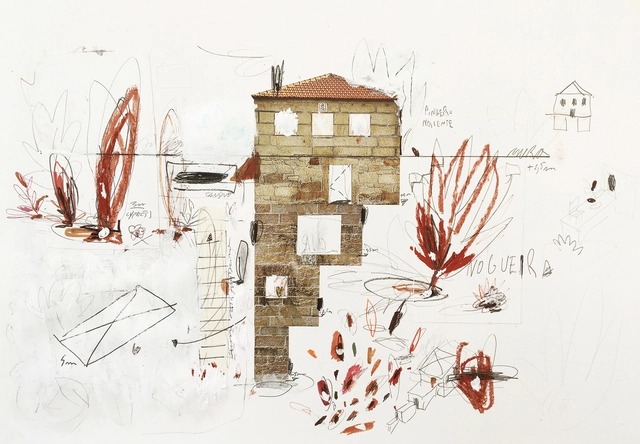
Founded by Filipe Paixão in 2014, Corpo Atelier is an architecture and art studio based in Faro, Portugal, dedicated to exploring and expanding architectural anatomy through a practice rooted in the tradition of hand drawing. With projects spanning the rehabilitation of existing structures, new buildings, product design, writing, and book editing, the studio views this diversity as a natural extension of architectural practice—"conceptual processes that are exactly the same."

Following the studio's selection for ArchDaily's Best New Practices of 2020, we had the opportunity to speak with Filipe Paixão about the studio's design approaches, their interdisciplinary vision, and their affinity for the work of artist Gordon Matta-Clark. Read the interview below:

Exploring architectural anatomy: an interview with Corpo Atelier - Image 1 of 4Exploring architectural anatomy: an interview with Corpo Atelier - Image 2 of 4Exploring architectural anatomy: an interview with Corpo Atelier - Image 3 of 4Exploring architectural anatomy: an interview with Corpo Atelier - Image 4 of 4Exploring architectural anatomy: an interview with Corpo Atelier - More Images+ 6

Gaúcho modernist icons are featured in a new documentary series on YouTube

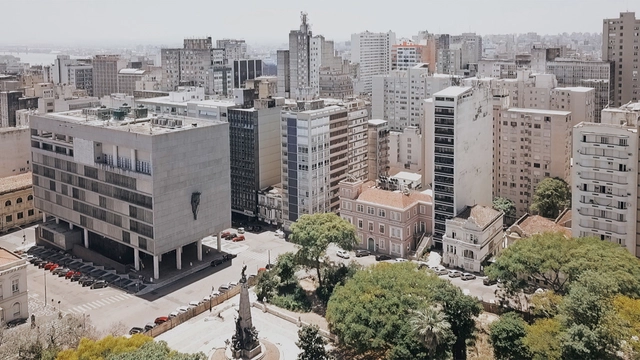
Honoring and reaffirming the importance of Porto Alegre's modernist icons, a new series launched by AsBEA-RS on its YouTube channel invites the public to visit, alongside architects, market experts, and users, six of the most important buildings constructed between the 1950s and 1960s in the state capital.

Faial, Santa Tecla, Santa Cruz, Palácio da Justiça, Centro Administrativo Fernando Ferrari, and Grêmio Náutico União: six projects that shape the skyline and reaffirm the construction quality of fifty-year-old structures, revisiting the legacy and lessons of prominent architects from Rio Grande do Sul for contemporary urban development. 

Gaúcho modernist icons are featured in a new documentary series on YouTube - Imagem 1 de 4Gaúcho modernist icons are featured in a new documentary series on YouTube - Imagem 2 de 4Gaúcho modernist icons are featured in a new documentary series on YouTube - Imagem 3 de 4Gaúcho modernist icons are featured in a new documentary series on YouTube - Imagem 4 de 4Gaúcho modernist icons are featured in a new documentary series on YouTube - More Images+ 7

Designer captures daily life in isolation in an illustrated book

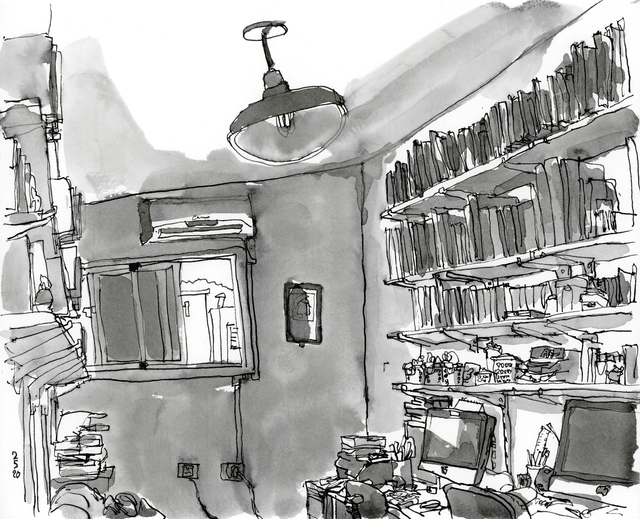
During the first two months of isolation due to Covid-19, designer Ivan Jerônimo accumulated more than forty drawings depicting objects and rooms in his apartment. These are ordinary scenes that were suddenly brought to the forefront during the pandemic.

Designer captures daily life in isolation in an illustrated book - Imagen 1 de 4Designer captures daily life in isolation in an illustrated book - Imagen 2 de 4Designer captures daily life in isolation in an illustrated book - Imagen 3 de 4Designer captures daily life in isolation in an illustrated book - Imagen 4 de 4Designer captures daily life in isolation in an illustrated book - More Images+ 2

City of São Paulo Launches New Urban Design and Road Works Manual

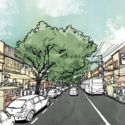
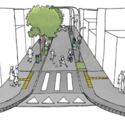
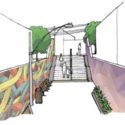
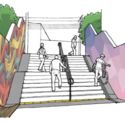
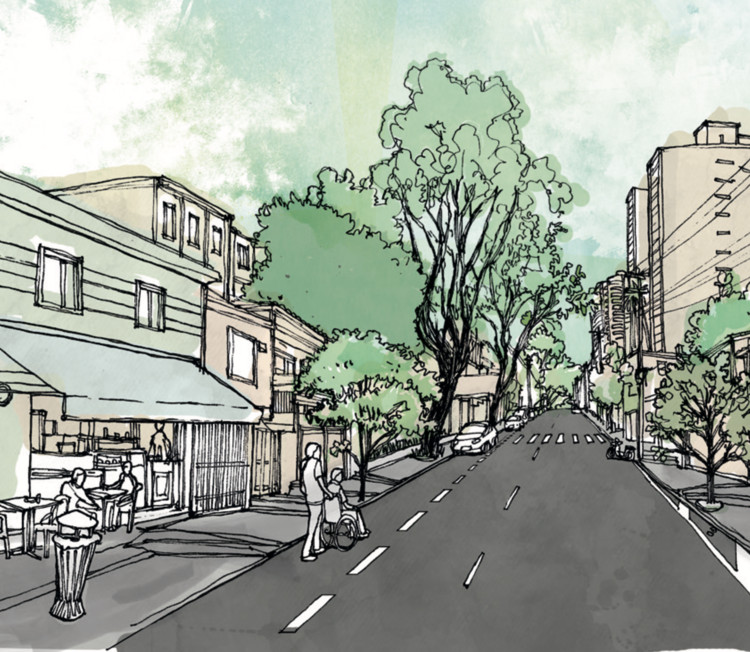
The City of São Paulo launched the digital platform for the Urban Design and Road Works Manual in December last year. This document compiles guidelines for urban projects aligned with the principles of accessibility, social equity, road safety, and environmental sustainability. Coordinated by Elisabete França, José Renato S. Malhem, and Maria Teresa Diniz, the manual aims to guide the design of projects in the road space to meet citizens' well-being needs.

City of São Paulo Launches New Urban Design and Road Works Manual - Imagen 1 de 4City of São Paulo Launches New Urban Design and Road Works Manual - Imagen 2 de 4City of São Paulo Launches New Urban Design and Road Works Manual - Imagen 3 de 4City of São Paulo Launches New Urban Design and Road Works Manual - Imagen 4 de 4City of São Paulo Launches New Urban Design and Road Works Manual - More Images+ 2

IABsp announces the jury for the co-curatorship competition of the 13th International Architecture Biennale of São Paulo

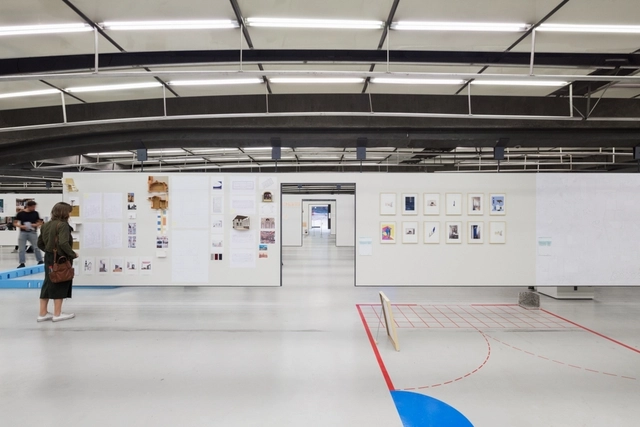
In November 2020, IABsp, the organizer of the International Architecture Biennale of São Paulo, launched a Co-Curatorship Competition for the Biennale's 13th edition, scheduled for 2022. Proposals, which can be submitted through the website until January 24, 2021, will be evaluated by a jury representing diverse fields of knowledge, composed mostly of women and Brazilians.

The 13th Biennale presents RECONSTRUCTION as its initial central provocation, starting from the idea of rebuilding, reshaping, and renewing the relationships of social groups with their domestic spaces, citizens with public spaces, and the personal and professional dynamics unfolding in spaces of confinement and collective use, during and after the pandemic. The Competition also proposes that this reflection involve one or more guiding themes: democracy, bodies, memory, information, and technology.

Project transforms vacant spaces into urban gardens in Roraima

Having a backyard and the willingness to learn how to grow their own food are what unite low-income families participating in an innovative project in Roraima. This is "Sustainable Backyards" (Quintais Sustentáveis), an initiative by Embrapa in partnership with Lar Fabiano de Cristo (Casa de Timóteo unit) and funded by CNPq, which seeks to stimulate the production and consumption of vegetables, fruits, and medicinal plants in backyards across Boa Vista.

Launched in 2018, the project's pillars include sustainable agroecological production, food and nutritional security, income generation, and the social and productive inclusion of vulnerable populations.

Project transforms vacant spaces into urban gardens in Roraima - Image 1 of 4Project transforms vacant spaces into urban gardens in Roraima - Image 2 of 4Project transforms vacant spaces into urban gardens in Roraima - Image 3 of 4Project transforms vacant spaces into urban gardens in Roraima - Image 4 of 4Project transforms vacant spaces into urban gardens in Roraima - More Images