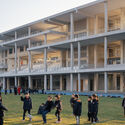
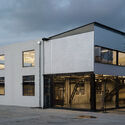
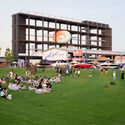
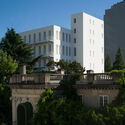
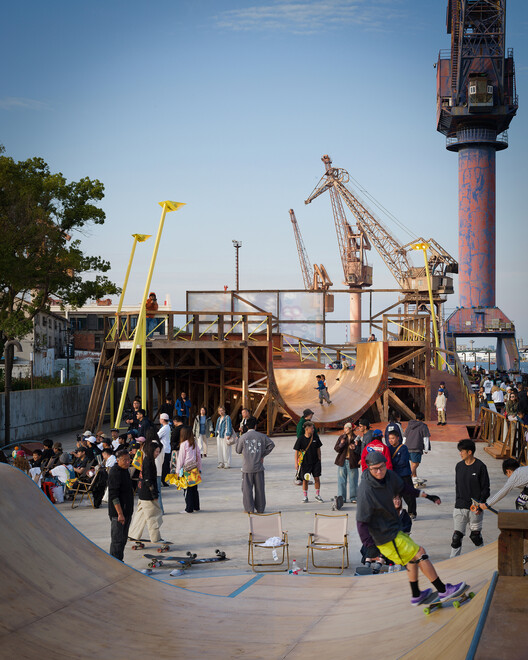
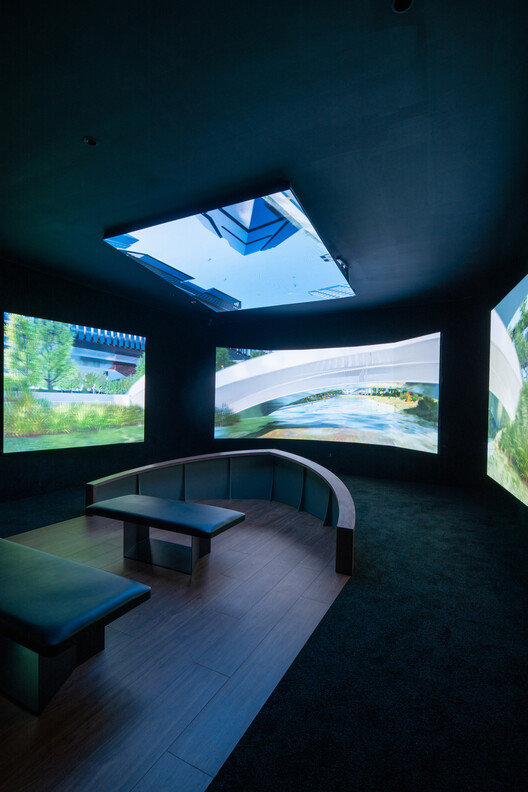
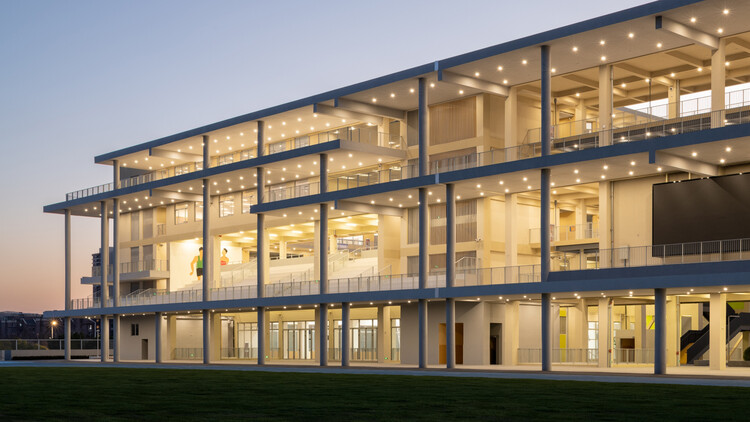
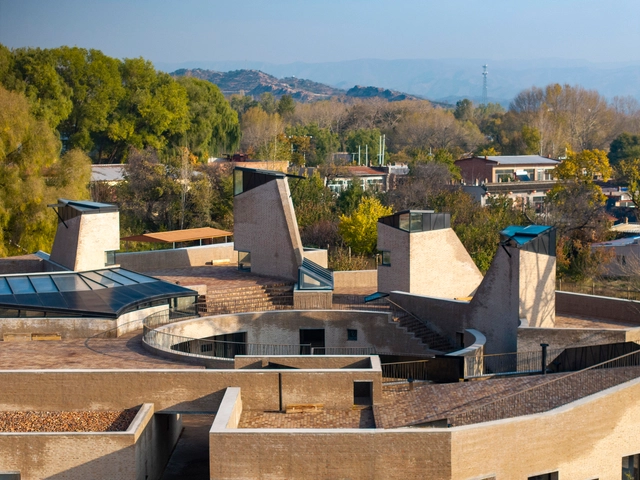
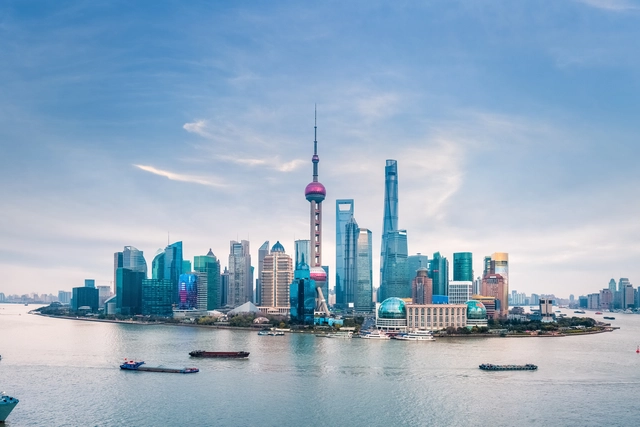
Another year, another successful ArchDaily China Building of the Year Awards! Once more, the award has proved to be the largest architecture prize centered around people's opinion. Crowdsourced, the most relevant projects of the year were nominated and selected by our readers.
Following two exciting weeks of nominations, ArchDaily's readers have evaluated 455 projects and selected 15 finalists for the Building of the Year Award China. Architects and enthusiasts participated in the nomination process, choosing projects that exemplify what it means to push architecture forward. These finalists are the buildings that have inspired ArchDaily readers the most, which also reveal the growing trend of Chinese architecture.
Among the 15 finalists of the 2026 China Building of the Year Award, we can see a gradual shift in focus from large-scale public buildings to rural revitalization, community public spaces, exploration of new typology of school and small-scale interior spaces. People are paying more attention to their personal needs and living experiences as well as the surrounding spaces. We can also observe how different firms are responding to the needs of cities and users during the period of transformation in the real estate.
Before we get to shortlisted nominees, we want to highlight the values of this awards process — as the world's largest platform for architecture we are acutely aware of our responsibility to the profession, and to the advancement of architecture as a discipline. Since our mission is directly related to the architecture of the future—inspiring and educating the people who will design the urban fabric of the future—the trust placed in us by our readers to reflect architectural trends from regions around the whole world creates challenges that we are eager to rise to. The democratically-voted, user-centered Building of the Year Awards is one of the key pillars of our response to these challenges, aiming to tear down established hierarchies and geographical barriers. Here are the 15 finalists of the 2026 China Building of the Year Award, and the voting period will run from April 8th to April 15th, 11:59 PM (Beijing Time), 2026. The final winners will be announced on April 16th, 2026. Click here to see the details and how to vote.
We invite you to participate in the ArchDaily China's 2026 Building of the Year Awards. We ask you to recognize and reward the projects that you feel are creating the largest impact in the built environment, that ArchDaily China has published on our projects database in 2025. By nominating and voting, you form part of an interdependent, impartial, distributed network of jurors and peers that has consistently helped us celebrate architecture of every scale, purpose, and condition, from countries large and small, and architects of all descriptions. Over the coming weeks, your votes will result in 455 projects being filtered down to just 15 projects. The 15 projects with the most nominations will move on to the voting round.
https://www.archdaily.com/1040283/last-days-for-nominations-in-the-archdaily-chinas-2026-building-of-the-year-awards韩爽 - HAN Shuang
ArchDaily China is 11 years old this year. The design based on Chinese culture and site has become an important part of the global architectural design exchange, and has become a highly topical part of the global architectural and design development wave. ArchDaily China brings global architecture and design consulting and information to Chinese readers. Moreover, it showcases Chinese architecture and design to the world. We stick to our original intention and become an open platform that benefits the public, making the architecture and design industry more inclusive and equal.
This year, we once again extend an invitation to Chinese readers, hoping that everyone can participate in the selection of the 2026 China Annual Architecture Award. Through an unbiased and non-geographical voting method, everyone is a member of the jury, selecting the most representative Chinese architecture and design projects for everyone.In the next three weeks, the whole process of the selection will be divided into two stages: In the first stage, you will vote on 455 projects released in the past year, and the top 15 with the highest nominations will enter the second stage finalist list; In the second stage, the 15 outstanding projects will be voted again to determine the best champion, runner-up and third place of the year.
The 2026 Building of the Year Awards China is brought to you thanks to Dornbracht, renowned for leading designs for architecture, which can be found internationally in bathrooms and kitchens.
https://www.archdaily.com/1054644/working-in-shanghai-yeas-design-hiring-product-specialist-exhibition-planner-spatial-designer-administrator-interns韩爽 - HAN Shuang
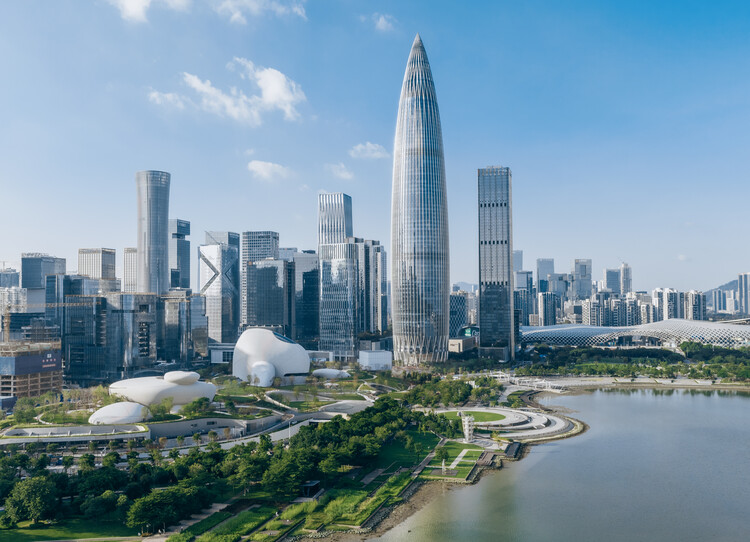
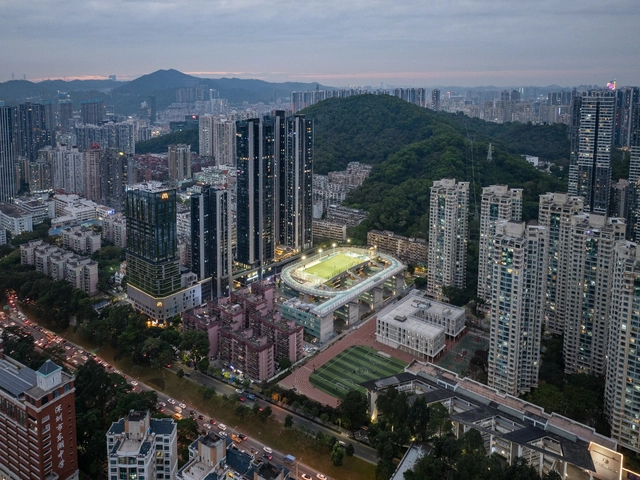
Shenzhen is China's first Special Economic Zone(SEZ), serving as a window for China's Reform and Opening-up and an emerging immigrant city. It has evolved into an influential, modern, and international metropolis, creating the world-renowned "Shenzhen Speed" and earning the reputation of the "City of Design." Architectural design stands as the most intuitive expression of Shenzhen's spirit of integration and innovation. Over the past decade (2015-2025), the development of urban architecture in Shenzhen has closely integrated with its open and inclusive urban character, ecological advantages of being nestled between mountains and the sea, and the local spirit of blending traditional culture with innovative technology, showcasing Shenzhen's unique charm and robust vitality across multiple dimensions.
Chinese architect Sui Yanfei has won the 4th Kazuhiro Kojima Award in 2025, becoming the first recipient from outside Japan since the award's inception. The jury presented this honor to Sui in recognition of his deep insight into Chinese social realities alongside his continuous exploration of new, future-oriented possibilities for architecture. His work focuses on extending Eastern thought within a post-human context and excels at reinterpreting historically accumulated social structures. Grounding his practice in social, economic, and institutional realities, he transforms architecture within complex networks of relationships into a medium that connects people, objects, and time. The diverse practice of his studio is both deeply rooted in reality and brings a new poetry to contemporary life.
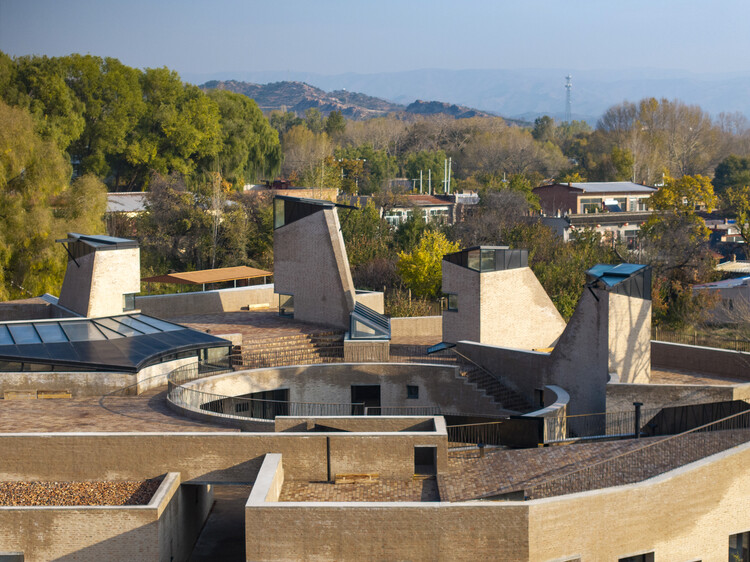
In recognizing this project, the award jury praised its ability to intervene in a sensitive yet rational manner, using design to foster inclusivity, resilience, sustainability, and overall well-being. The design achieves these goals by rejecting rigid functional zoning. Instead, a permeable circular courtyard integrates diverse community activities, organizing circulation and connecting multiple open rooms into a cohesive whole.
https://www.archdaily.com/1140959/beijing-jobs-he-li-architectural-practice-concept-designer-project-architect-interior-technical-designer-intern韩爽 - HAN Shuang
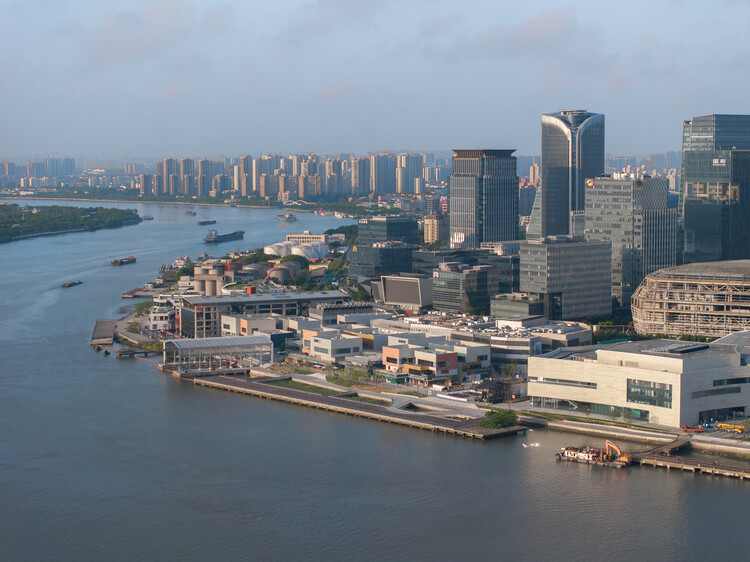
Amidst global economic adjustments and a domestic focus on high-quality development, Shanghai has implemented a strategic shift in its urban development approach—moving from 'incremental expansion' to 'connotative enhancement.' Guided by the concept of a "people-oriented city", Shanghai has elevated urban construction from mere physical space aggregation to a comprehensive endeavor aimed at optimizing functional quality, revitalizing spatial vitality, and boosting residential resilience through urban renewal initiatives. This transformation is framed not merely as a response to resource constraints but also as an intentional approach to urban development principles. Its core proposition lies in: under the policy framework of strictly controlling incremental land use, how to unleash development potential through the "reproduction" of existing spaces.
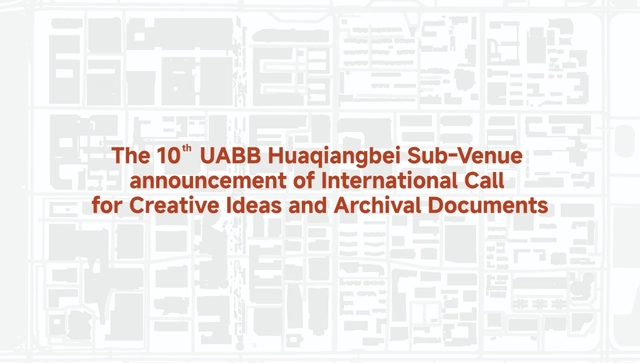
The Bi-City Biennale of Urbanism\Architecture (UABB) is a biennial cultural event collaboratively established by Shenzhen and Hong Kong. The 10th UABB will feature a sub-venue at Huaqiangbei, set to open in December 2025. Huaqiangbei, known globally as "China's No. 1 Electronic Street", will host exhibitions themed on "Future City x Technology x Art" during the 10th UABB. For this purpose, we are inviting creative ideas and proposals from individuals and organizations worldwide to energize the spatial innovation of Huaqiangbei. This call for submissions is divided into two main categories: "Creative Renovation Proposals" and "Archival Documents" submissions.
O-office Architects was founded in Guangzhou in 2007 by He Jianxiang and Jiang Ying. Through research-driven design, the studio seeks to construct a fresh spatial discourse between rapid economic growth and regional culture. Maintaining professional composure and restraint, O-office pursues the widely lost essence of inner space and urban life. Viewing architectural design as tectonic exploration and travel within a generalized metropolis, the firm attempts to establish an integrated design strategy that spans different scales and disciplines. The preservation of urban history and memory in the Pearl River Delta, alongside research into new forms of urban living, has been the focus of the firm's recent design and research efforts. O-office's unique regional practice has garnered widespread attention from professional media both domestically and internationally. Their works and essays have been featured in top academic publications, including The Architectural Review (UK), Architectural Record (US), L'Architecture d'Aujourd'hui (France), CASABELLA (Italy), and Architectural Journal (China), as well as several international volumes on contemporary Chinese architectural research and case studies.
O-office's work has received numerous prestigious international and domestic architecture and design awards, most notably with the Lianzhou Museum of Photography being shortlisted as one of the top three finalists for the 2024 RIBA International Prize. Other accolades include two ARCASIA Gold Medals (in 2022 and 2020), the 2021 RIBA International Award for Excellence, the 2020 Sanlian Humanities City Award (Architecture), a Highly Recommended commendation in The Architectural Review's 2017 New into Old Awards, and a nomination for the 2016 BSI Swiss Architectural Award. In 2015, the firm was named one of the top ten Design Vanguards globally by Architectural Record. In 2020, O-office was selected by the authoritative architecture media outlet Domus as one of the world's 50 best architectural practices of the year.
Completed projects by O-office include the Shenzhen Hongling High School Sports & Art Center, Hongling Experimental Primary School, the Duichuan Tea Yards in Gaoming (Foshan), the Shenzhen iD Town Youth Art District, Shenzhen Mingde Academy, and the Lianzhou Museum of Photography. The office has also designed a series of collective housing research and practice projects in collaboration with Vanke (such as the Songshan Lake Residential Complex, Guangzhou Bashe Port Apartment, and Tianhe Chuangxiang Commune), cultural centers in Guangzhou, Beijing, and Shanghai in collaboration with the EMGdotART Foundation, and the Palazzo Zen exhibition pavilion in Venice, Italy, completed in 2014. Ongoing projects currently under development include the Dongjiao Fire Station and Bus Terminal Complex in Liwan (Guangzhou), rural art centers in Linhai (Zhejiang) and Kaiping (Guangdong), and the renovation of Langtou Primary School in Huadu (Guangzhou).
https://www.archdaily.com/1140926/guangzhou-job-openings-o-office-architects-project-architect-architect-assistant-architect-media-and-research-specialist-intern韩爽 - HAN Shuang
Another year, another successful ArchDaily China Building of the Year Awards! Once more, the award has proved to be the largest architecture prize centered around people's opinion. Crowdsourced, the most relevant projects of the year were nominated and selected by our readers.
Following two exciting weeks of nominations, ArchDaily's readers have evaluated over 500 projects and selected 15 finalists for the Building of the Year Award China. Architects and enthusiasts participated in the nomination process, choosing projects that exemplify what it means to push architecture forward. These finalists are the buildings that have inspired ArchDaily readers the most, which also reveal the growing trend of Chinese architecture.
Among the 15 finalists of the 2025 China Building of the Year Award, we can see a gradual shift in focus from large-scale public buildings to rural revitalization, community public spaces, exploration of new typology of school and small-scale interior spaces. People are paying more attention to their personal needs and living experiences as well as the surrounding spaces. We can also observe how different firms are responding to the needs of cities and users during the period of transformation in the real estate.
Before we get to shortlisted nominees, we want to highlight the values of this awards process — as the world's largest platform for architecture we are acutely aware of our responsibility to the profession, and to the advancement of architecture as a discipline. Since our mission is directly related to the architecture of the future—inspiring and educating the people who will design the urban fabric of the future—the trust placed in us by our readers to reflect architectural trends from regions around the whole world creates challenges that we are eager to rise to. The democratically-voted, user-centered Building of the YearAwards is one of the key pillars of our response to these challenges, aiming to tear down established hierarchies and geographical barriers. Here are the 15 finalists of the 2025 China Building of the Year Award, and the voting period will run from April 2nd to April 9th, 11:59 PM (Beijing Time), 2025. The final winners will be announced onApril 10th, 2025. Click here to see the details and how to vote.
Shanghai, as one of China's most representative global cities, features an architectural vocabulary that seamlessly blends its distinctive "Haipai" (Shanghai style) urban character with an international perspective. The city boasts a rich spatial hierarchy, ranging from the micro-level of alleyways and neighborhoods to the macro-scale of urban planning. From the Suzhou Creek to the Huangpu River, every architectural landmark embodies Shanghai's unique history, culture, and vision for the future.