
Videos
The Berlage Archive: Rem Koolhaas + Kenneth Frampton (1998)
https://www.archdaily.com/480619/the-berlage-archive-rem-koolhaas-kenneth-frampton-1998Becky Quintal
VIDEO: Solving the Mysteries of Brunelleschi's Dome
A new hour long documentary for PBS' series, Building the Great Cathedrals, explores the mystery of how, in the 15th century, Florentine architect Filippo Brunelleschi constructed one of the largest domes the world had ever seen. Winning what could be considered one of the earliest architectural competitions, Brunelleschi developed a unique system that allowed construction on the dome to occur while services were being conducted in the cathedral 100 metres below. The team in this episode model this freestanding structure in an attempt to understand just how Brunelleschi achieved such a feat of Renaissance engineering.
You can find out more about the film here. Please note that the film is only viewable through PBS within the USA. For those of you outside the USA, you can watch the 30 second preview above; for those in the USA, see the full video after the break...
https://www.archdaily.com/477161/video-solving-the-mysteries-of-brunelleschi-s-domeJames Taylor-Foster
VIDEO: Liz Diller on the High Line, A Mile of Respite in the City that Never Sleeps
Liz Diller, one of the three partners of Diller Scofidio + Renfro, discusses the history of the High Line and the active design decisions which led to its success.
The elevated railroad, which was designed to penetrate city blocks rather than parallel an avenue, saw its last delivery (of frozen turkeys) in 1980. By 1999, a “very strange landscape had formed, with a whole eco system around it,” says Diller. Advocacy for the site’s preservation began with two local residents, and culminated in its reclamation with the multidisciplinary collaboration of city officials and impassioned designers (namely James Corner Field Operations, Diller Scofidio + Renfro, and planting designer Piet Oudolf). "The High Line project couldn’t have happened without the right people, the right time and the right administration."
https://www.archdaily.com/479794/video-liz-diller-on-the-high-line-a-mile-of-respite-in-the-city-that-never-sleepsAndrew Gipe
VIDEO: The Endless Table
When designing offices for creative companies, it's important to strike a balance between an efficient workplace, a fun space to be in, and an attention-grabbing signature for the company itself. That's exactly what Clive Wilkinson Architects did for the Barbarian Group, an advertising group in New York for whom they designed the Endless Table, a single desk which both seats all of their 125 staff members, but also defines spaces within the office, such as meeting rooms and cozy work nooks.
https://www.archdaily.com/478812/video-the-endless-tableRory Stott
Video: MASS Design Group 'Beyond The Building'
MASS Design Group, the award-winning design group behind the Butaro Hospital and Umubano Primary School in Rwanda as well as other public-interest projects in Haiti, have launched a video series on a great topic that really resonates with us. "Beyond the Building" will look at the ways in which architecture, beyond buildings, impacts lives around the world, giving dignity back to the users. Check out the awesome video above (the first of the series) and join the conversation on Twitter by using the hashtag #beyondthebuilding.
https://www.archdaily.com/478987/video-mass-design-group-beyond-the-buildingVanessa Quirk
VIDEO: What We Can Learn From Tall Buildings
What do you think the North American, Asian and Western European tall building communities most need to learn from each other? This is precisely what the Center on Tall Buildings and Urban Habitat (CTBUH) sat down to ask five leading architects, whose responses formed an eclectic and meaningful overview on the state of tall building worldwide. As Rem Koolhaas noted, each region has their own journey that is worth understanding, such as the Arab world’s transition from “extravagance to rationality” or Asia’s hyper-focus on project realization. But, as James Goettsch points out, “not every building has to be something remarkable." It’s alright for some buildings to be nothing more than “good citizens.”
https://www.archdaily.com/478459/rem-koolhaas-james-goettsch-jeanne-gang-on-lessons-learned-from-tall-building-communitiesKarissa Rosenfield
VIDEO: Elegance in Motion at Calatrava's Liège-Guillemins Railway Station in Belgium
We present you with a compelling video depicting the sublime interaction of light and space at Santiago Calatrava’s Liège-Guillemins railway station in Belgium. Inspired by Eadwards Muybridge’s 1886 short-film "Horse in Motion," architectural photographer Yannick Wegner uses time lapse photography to uniquely portray the experience within and around this bustling building.
“Time lapse as a stylistic device offers new opportunities in acknowledging remarkable architecture,” describes Wegner. “The appearance of time through motion gives the impression of vitality and emphasizes the architecture."
https://www.archdaily.com/476994/video-elegance-in-motion-at-calatrava-s-liege-guillemins-railway-station-in-belgiumAndrew Gipe
Videos: Viewpoint / Finnish Architects

https://www.archdaily.com/476427/videos-viewpoint-finnish-architectsSebastian Jordana
VIDEO: Jean Nouvel on Arabic Architecture, Context and Culture
In this powerful interview, Jean Nouvel explains his relationship to Arabic architecture. Discussing his various projects in Arabic countries - such as his office tower in Doha or the Louvre Abu Dhabi - Nouvel discusses how he is influenced by and integrates the abstraction and geometry of traditional Islamic architecture into his modern designs. He also espouses a strong opinion on the understanding of context in architecture, saying: "I'm a contextual architect, but for me the context isn't only the site. It's above all a wider historical context - a cultural context... each time, building is trying to continue a history, and to take part in this history." His architecture, he says, is about listening: "The architect is not meant to impose his own values or his own sensitivities on such general plans." Video via Louisiana.
https://www.archdaily.com/476799/video-jean-nouvel-on-arabic-architecture-context-and-cultureRory Stott
Siza, Souto de Moura, Kuma Reflect on Their 'Sensing Spaces' Exhibitions
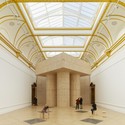
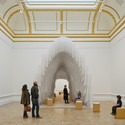
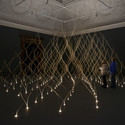
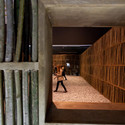
As an accompaniment to their ongoing Sensing Spaces Exhibition in London, the Royal Academy of Arts has produced six wonderful films interviewing the architects involved in the exhibition, unearthing what motivates and inspires them as architects, and what the primary themes of their exhibition projects are.
The above video features both Álvaro Siza and Eduardo Souto de Moura, who both designed their Sensing Spaces exhibits with the other in mind. Siza explains his preoccupation with the joints between the natural and the man-made through his Leça Swimming Pool complex, and the way the rock formations informed his interventions. He also introduces his one-time protégé Souto de Moura's Braga stadium as expressing the same understanding of the natural and man-made.
See videos from the 5 other Sensing Spaces participants after the break

https://www.archdaily.com/475585/siza-souto-de-moura-kuma-reflect-on-their-sensing-spaces-exhibitionsRory Stott
VIDEO: Inspired by Archigram, A Humanoid Walking City
“Walking City: Architecture + Evolution + Movement” is an awesome new video from Universal Everything that we came across on Fast Co.Design. In it, the humanoid figure, a literal "Walking City," shape-shifts: one moment like the Plug-In City, another like Bucky Fuller's geodesic domes.
For another awesome project inspired by Ron Herron's The Walking City, check our popular post on Manuel Dominguez's "Very Large Structure." And check out the fun gif of “Walking City: Architecture + Evolution + Movement" after the break.
https://www.archdaily.com/474850/video-inspired-by-archigram-a-humanoid-walking-cityVanessa Quirk
VIDEOS: ArchiLab 2013 Discusses "Naturalizing Architecture"
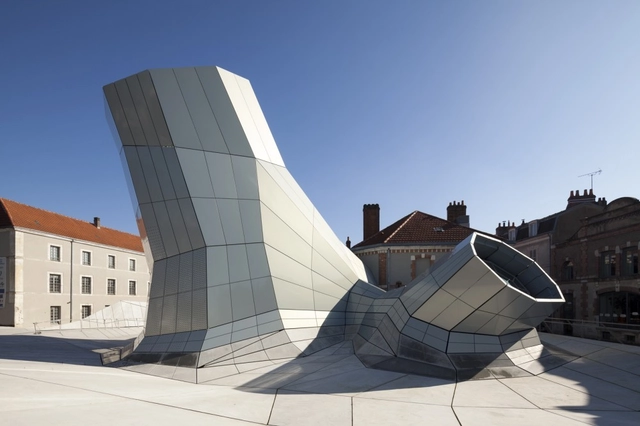
This past September marked the commencement of ArchiLab 2013 at the newly completed FRAC Centre in Orleans, France. Forty architects, designers and artists gathered for the annual architectural exposition and conference’s ninth edition to discuss the deepening overlap between digital architecture and the sciences, particularly molecular biology. Under the theme “Naturalizing Architecture,” two international symposiums took place which provided the opportuntiy for architects and scientists to present, and debate, the latest research revolving this subject and its ever-evolving role within the living world.
To encourage the continuation of discourse, we have complied a video list of all the discussions from the symposium for your viewing pleasure. Enjoy them, after the break, and feel free to share your thoughts in the comment section below.
https://www.archdaily.com/473018/videos-archilab-2013-reviews-topics-related-to-digital-architecture-and-scienceKarissa Rosenfield
VIDEO: Angles on the View with Parametric Design
This two-minute video with NBBJ’s Andrew Heumann highlights a valuable capability of parametric design; whereby the architect can optimize the shape and orientation of a building to appropriate a variety of viewing conditions at the client’s request.
https://www.archdaily.com/472944/video-angles-on-the-view-with-parametric-designAndrew Gipe
Construction Story: Carlos Arnaiz Discusses the Church of 100 Walls
When commissioned to design a church in Cebu, the oldest urban center of the Philippines, Carlos Arnaiz of CAZA hoped to create a “scared place that embodied the contemporary search for meaning.” Inspired by the world’s diversity, Arnaiz, together with his colleagues, envisioned the Chapel of San Pedro Calungsod, the “Church of 100 Walls.” Symbolic of “commonality and difference,” the church represents the many paths one may take through life and invites visitors to explore its many, distinct spaces made up of 100, uniquely-sized walls.
https://www.archdaily.com/470545/construction-story-carlos-arnaiz-discusses-the-church-of-100-wallsKarissa Rosenfield
TED Talk: Manhattan's Past, Present and Future
When it comes to global cities, New York City may be one of the most prominent - but it is also relatively young. Just 400 years ago, Manhattan island was mostly covered in forests and marshes. In his talk at TEDx Long Island City, Eric Sanderson discusses the city's radical changes in land use over the past four centuries, and begins to contemplate what the next four might look like. How can we take a city like New York and make it as efficient as the forest it replaced? In a bid to uncover the ideas that might make this possible, he introduces Manhatta 2409 - an online tool which maps/compares the historic and current land use of Manhattan and allows users to propose new uses. Learn more in the video above.
https://www.archdaily.com/470508/ted-talk-manhattan-s-past-present-and-futureRory Stott
VIDEO: "If You Build It" Trailer
If You Build It is a documentary following the story of high school students in Windsor, a small and downtrodden rural town in Bertie County, North Carolina. In this setting, architects Emily Pilloton and Matt Miller started Project H, an educational initiative designed to not only improve the education of these disadvantaged young people, but also to reach out to the wider community and make real change.
Read on for more about Project H and the If You Build It documentary
https://www.archdaily.com/468816/video-if-you-build-it-trailerRory Stott
VIDEO: Thom Mayne Talks the Cooper Union Building
In honor of Thom Mayne's birthday today, we're sharing this video interview from Danish Website Louisiana. In it Thom Mayne introduces his building at 41 Cooper Square by saying "I wanted to produce something that was off, and was not at all systematic in any normal architectural sense." Ultimately, the form of the building is, he says, an attempt to engage with New York City, understanding Cooper Union as a key part of the city's incredible intensity of intellectual creative capital. He also discusses how the building - despite its avant garde form - won over the local community. Enjoy!
https://www.archdaily.com/468215/video-thom-mayne-talks-the-cooper-union-buildingRory Stott
'Hacked' Offices: The Future of Workplace Design?
What does the workplace of the future look like? Shawn Gehle, of Gensler, explains in this TEDx Talk that with over 10 billion square feet of existing office space in North America, we may not even need to envision new buildings. Rather, by "hacking" existing buildings, architects can transform them into something completely new. For more on Gensler's "hacker" philosophy, read our article here.
https://www.archdaily.com/466904/saving-north-america-s-office-spaces-by-hacking-themJose Luis Gabriel Cruz