1. ArchDaily
  2. Articles

Articles

Subscriber Access

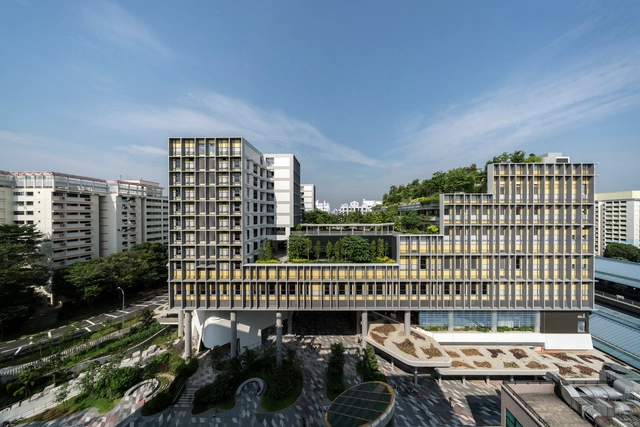
The Utopia of Social Housing in Spain

The social housing model currently seems like a utopia in Spain—ruled by developers and real estate firms, and mired in national policies that fail—and have always failed—to address the housing problem.

Over the years, the idea has been promoted that renting a home is almost a crime, throwing away money that could otherwise go toward purchasing property. Welcome to the wonderful world of real estate speculation. Driven by exorbitant rents set by real estate agencies or landlords with absolutely no state or provincial regulation to control them, the system itself pushes the population to take out mortgages and participate in private development. While over 50% of housing in Spain was rented back in the 1950s, those figures are a far cry from the progressive decline that brings us to the present day: nearly 80% of current housing is owner-occupied, while rentals have shrunk to just 20%.
Subscriber Access

Chairs, microarchitecture in public space

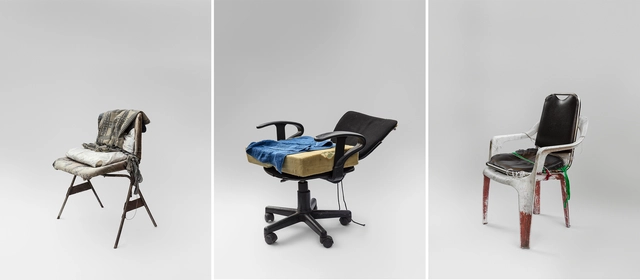
Cristóbal Caro presents a photographic exhibition titled "Chairs: Micro-Architecture in Public Space," which seeks to link objects scattered throughout the urban fabric with the implicit symbols and traces they hold.

Subscriber Access

Ornament, Crime & Prejudice: Where Loos' Manifesto Fails to Understand People

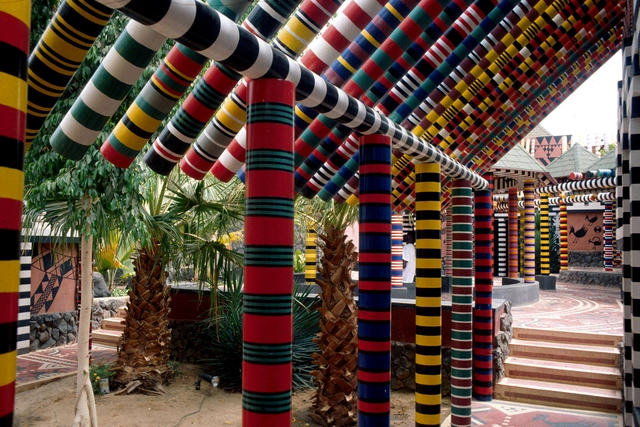
This article was originally published on CommonEdge as "African Architecture: Ornament, Crime & Prejudice."

Subscriber Access

Brazilian Houses: 11 Residences with Eaves

Frequently used in residential design as an extension of the roof slab, eaves have shed their modest dimensions and traditional role of simply protecting outer walls from rain. Today, they are being reinvented to create new living spaces, such as verandas, which seem to reinterpret the historic alpendre bandeirista and extend the interiors, blurring the boundaries between inside and out.

Subscriber Access

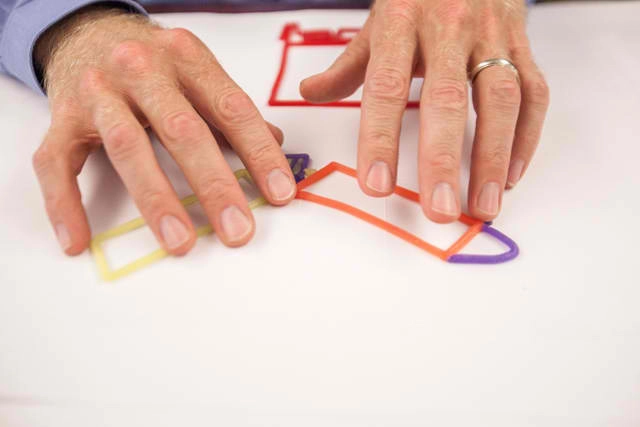
How does a blind architect perceive the city?

The dynamics of city dwellers are shaped by their daily routines, including the work they perform, their schedules, and their chosen mode of transportation. Furthermore, physical and mental conditions underpin how people interact with the streets. This experience is entirely subjective, determined by factors such as age, height, or any physical condition involving the loss of a sense or limb.

People walk, crossing at traffic lights when they see the signal change, while simultaneously listening to a playlist on their phones. They recognize textures because they see them, and they track the direction of the wind visually. They perceive the city without deeply engaging with the sensory information they receive.

Subscriber Access

Olson Kundig's Zooraji Immerses Visitors in a Fantasy World

Zooraji, Olson Kundig's latest, takes its inspiration not from its site (the roof of a department store) or context (the futuristic city of Busan), but from a story. Aesop's The Town Mouse and the Country Mouse, to be precise. 

Olson Kundig's Zooraji Immerses Visitors in a Fantasy World - Image 1 of 4Olson Kundig's Zooraji Immerses Visitors in a Fantasy World - Image 2 of 4Olson Kundig's Zooraji Immerses Visitors in a Fantasy World - Image 3 of 4Olson Kundig's Zooraji Immerses Visitors in a Fantasy World - Image 4 of 4Olson Kundig's Zooraji Immerses Visitors in a Fantasy World - More Images+ 5

Subscriber Access

The 50 Most Inspiring Architecture Photographs of 2018

The 50 Most Inspiring Architecture Photographs of 2018 - Image 28 of 4
Courtesy of JAJA Architects

The 50 Most Inspiring Architecture Photographs of 2018 - Image 1 of 4The 50 Most Inspiring Architecture Photographs of 2018 - Image 2 of 4The 50 Most Inspiring Architecture Photographs of 2018 - Image 3 of 4The 50 Most Inspiring Architecture Photographs of 2018 - Image 4 of 4The 50 Most Inspiring Architecture Photographs of 2018 - More Images+ 48

Because, for all the inspirational works across the world, we would be lost without the photographers dedicated to sharing this inspiration with us. Here we present to you the 50 most influential architectural photographs of the year.

Subscriber Access

World Architecture Festival Winner Shares Their Experience of the Event

A month after the event, the various nominees of 2018's World Architecture Festival have returned to their home cities, leaving the fanfare of the year's event in Amsterdam as a memory. But that's not to say it's not left a lasting impact.

Subscriber Access

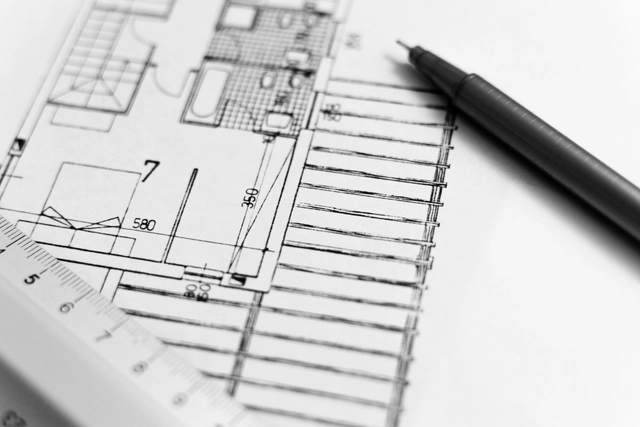
When you want to translate a volatile idea, drawing is indispensable.

Architecture does not illustrate or imitate ideas born from philosophy, literature, painting, or any other form of artistic representation; rather, it constitutes a mode of thought in its own right: architectural thought. This way of thinking and making requires its own tools as the only means of translating these ideas into something concrete, something real, capable of communicating on its own. One of these tools—perhaps the most indispensable—is drawing.

Art Will Save Architecture, According to Steven Holl

Art Will Save Architecture, According to Steven Holl - Featured Image
Courtesy of Yudi Ela

Award-winning architect Steven Holl has expressed his dismay of modern-day architecture to Metropolis Magazine. Although Steven Holl Architects (SHA) have recently won the design competition of a gateway building at University College Dublin, and have completed new buildings in London, Houston, Virginia, and Richmond this past year only, the architect is convinced that regardless of all the success, “it’s not a great moment, there are a lot of bad architects”.

Subscriber Access

Utzon UNBUILT Competition to Shed New Light on the Danish Master's Works - and Invites the Public to Take Part

Jorn Utzon’s name is, for most people, tied inextricably to his most famous work: the Sydney Opera House. Completed in 1973, the project was named a World Heritage Site in 2007, making Utzon only the second architect (after Oscar Niemeyer) to receive such an honor in his lifetime. The project is arguably the most recognizable and significant works of architecture of the 20th century and remains a work ahead of its time. But the uncompromising detail and futuristic design of Utzon’s work left many of his projects unrealized or unknown by the time of his death in 2008.

Subscriber Access

Architecture Transcends Time in New Architectural Illustrations by Xinran Ma

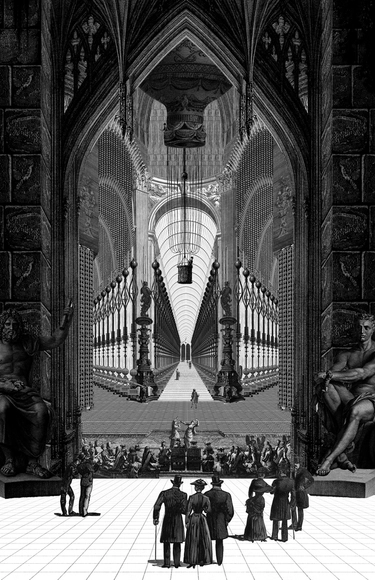
As imaginative and hypothetical as their work may seem to some people, many visionaries have created admirable artwork that look beyond the ordinary and rethink architecture and urban spaces. Xinran Ma, the New York-based architectural designer and illustrator has visualized his architectural fantasies, and created numerous series of drawings, two of which were entries for Fairy Tales 2016 and 2017 by Blank Space."

Drawing inspiration from Italian artist Giovanni Battista Piranesi, known for his imaginative etches of Rome, and the collaborative works of Alexander Brodsky and Ilya Utkin, who produced avant-garde depictions of cities and landscapes, the illustrator has once again shared his creations with Archdaily, expressing his passion “to vision architectural fantasies that transcends time through graphic narratives”.

Architecture Transcends Time in New Architectural Illustrations by Xinran Ma  - Image 1 of 4Architecture Transcends Time in New Architectural Illustrations by Xinran Ma  - Image 2 of 4Architecture Transcends Time in New Architectural Illustrations by Xinran Ma  - Image 3 of 4Architecture Transcends Time in New Architectural Illustrations by Xinran Ma  - Image 4 of 4Architecture Transcends Time in New Architectural Illustrations by Xinran Ma  - More Images+ 5

Subscriber Access

These are the international awards for Mexican architecture in 2018

These are the international awards for Mexican architecture in 2018 - Image 1 of 4These are the international awards for Mexican architecture in 2018 - Image 2 of 4These are the international awards for Mexican architecture in 2018 - Image 3 of 4These are the international awards for Mexican architecture in 2018 - Image 4 of 4These are the international awards for Mexican architecture in 2018 - More Images+ 15

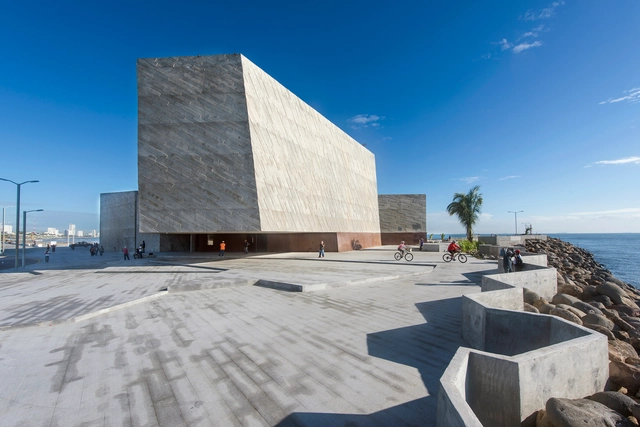
The year 2018 has been filled with achievements and surprises for the architectural community. As the year draws to a close, we reflect on the crucial role competitions play in reinforcing the global image of each region or country. Mexico was no exception, securing nearly 18 international recognitions (including grants, competitions, nominations, etc.) that showcased its key interests and goals for the coming years to the rest of the world. This selection highlights the prominent participation of Mexican architects Frida Escobedo and Rozana Montiel—both invited and recognized on multiple occasions at some of the industry's most prestigious events—as well as outstanding projects like the Teopanzolco Cultural Center by Isaac Broid + Productora, which received several national and international awards.

Read on for the complete list.

Subscriber Access

Renzo Piano’s Renovation of the Harvard Art Museums is, Years On, a Quiet, Neighbourly Triumph

On the surface, designing a new art museum for Harvard University is a brief so straightforward that it sounds like part of university curriculum itself. The program lends itself to the type of light and airy spaces architects dream of creating; the campus site promises both steady and engaged traffic. But, for all the apparent advantages, the road to realizing Harvard’s Art Museums was a deceptively complex one - one that ultimately took six years to see realized.

Renzo Piano’s Renovation of the Harvard Art Museums is, Years On, a Quiet, Neighbourly Triumph - Image 1 of 4Renzo Piano’s Renovation of the Harvard Art Museums is, Years On, a Quiet, Neighbourly Triumph - Image 2 of 4Renzo Piano’s Renovation of the Harvard Art Museums is, Years On, a Quiet, Neighbourly Triumph - Image 3 of 4Renzo Piano’s Renovation of the Harvard Art Museums is, Years On, a Quiet, Neighbourly Triumph - Image 4 of 4Renzo Piano’s Renovation of the Harvard Art Museums is, Years On, a Quiet, Neighbourly Triumph - More Images+ 16

Subscriber Access

This modular system made from reclaimed plastic addresses low-environmental-impact housing in Argentina.

The team at '3 Construcciones' has developed a sustainable housing construction system based on frames and recovered plastic modules, aiming to establish a mass-scale, low-cost, and low-energy method to address Argentina's housing deficit.

Subscriber Access

Happy Holidays from Architects Around the World (2018 Edition)

'Tis the season of holiday cheer, and with that comes the creative greetings from offices, museums, photographers and collaborators around the world! See our favorites below (or check out our best reader-submitted cards).

Here’s to a joyful, exciting, and architecture-filled 2018! See the best projects and articles published this year, here.

Happy Holidays from the ArchDaily team!

Subscriber Access

The danger of “green gentrification”

The waters of the Gowanus Canal in Brooklyn, New York, still do not smell good, although the problem was once much worse. They carry the remnants of years of industrial pollution and untreated sewage.

The area, which in the 19th and 20th centuries was primarily industrial, has undergone revitalization in recent years through federal investment (see here). New green spaces were created, and service-oriented businesses moved into the neighborhood. Residential property prices also rose, ultimately displacing long-time residents.

Why Your Home and Office Affect Your Mood and Health

Why Your Home and Office Affect Your Mood and Health - Image 1 of 4
© Saint-Gobain / illustration by Elisa Géhin

If asked about comfort, what is the first thing that comes to mind? Luxurious finishes, plush chairs and sleek interiors? Few would think of their office, and the likely culprit is a fundamental ignorance of an alternative definition of comfort. When defined as a state of physical well-being derived from the provisions that are necessary for occupants to perform space-specific tasks, it’s apparent that architects play a key role--and that comfort is not just about spaces that are comfortable for leisure activities.

Architects and designers are responsible for the visual, thermal and acoustic qualities of spaces, not to mention the indoor air quality of our offices and homes. This is fundamental considering that the typical 21st century urbanite spends an average of 90% of time indoors. We constantly experience physical, psychological and physiological consequences of the balance (or imbalance) of indoor environmental design .

With this in mind, thermal comfort seems obvious (and it is) but unfortunately comfort as a holistic goal of architecture has not been taken seriously enough. Beyond measuring the acoustic and visual aspects of a built space, architects must have a solid understanding of the underlying concepts that drive the best practices. A solid grasp on how material selections will affect qualitative assessments of conferences rooms, homes, theaters, etc. can improve basic tectonic decision making that can, in turn, create more comfortable spaces.