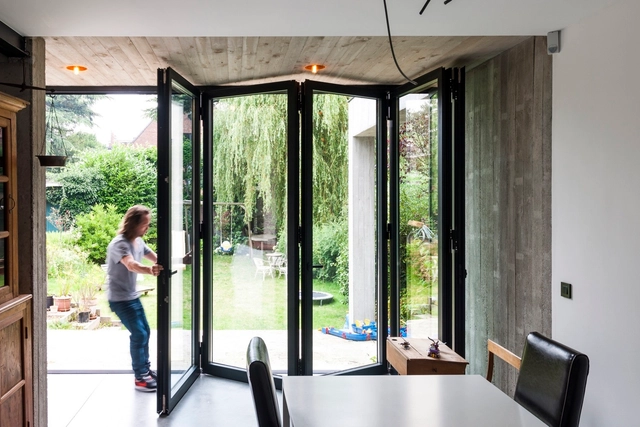
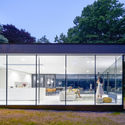
Although all windows have common functions such as allowing the passage of light, providing ventilation, and focusing the different views, these objectives can be enhanced through a series of useful options. Depending on the orientation of the building, climatic conditions, direction of the wind, and architectural point of view, each specific window model can make a difference within a project, improving usability and the spatial and environmental quality of each room.
Below, we present types of windows that can be found in today's homes, specifically in 11 projects previously published on our site.
YAC - Young Architects Competitions launches “Plastic Monument”, a competition of ideas aiming to create an itinerant architectural installation. It will travel all around the world to raise awareness about the impact of plastic waste on our planet. A cash prize of € 15,000 + realization of the 1st Prize will be awarded to winners selected by a well-renowned jury made of, among the others, Kengo Kuma, Carlo Ratti, Italo Rota, Mandy Barker, Maria Cristina Finucci.
https://www.archdaily.com/914526/plastic-monument-an-architectural-call-for-our-planetSponsored Post
Fernando Higueras (1930-2008), a leading figure of late-modern Spanish architecture in the 1960s, was, like many others of his generation, an Icarus-like youth obsessed with reaching the sun. Far from conforming to the rigid standards of his time, his architecture rose above the earthly plane with a single goal: to conquer the unknown. Even then, he concluded that modern architecture was misguided, that none of it made sense. Looking at contemporaries like Le Corbusier and Mies van der Rohe—with their flat roofs and obstinate obsession with lightness—nothing added up for him. His undeniably reactionary attitude drove him, from an early age, to boldly rebel against the hypocrisy of the triumphant establishment.
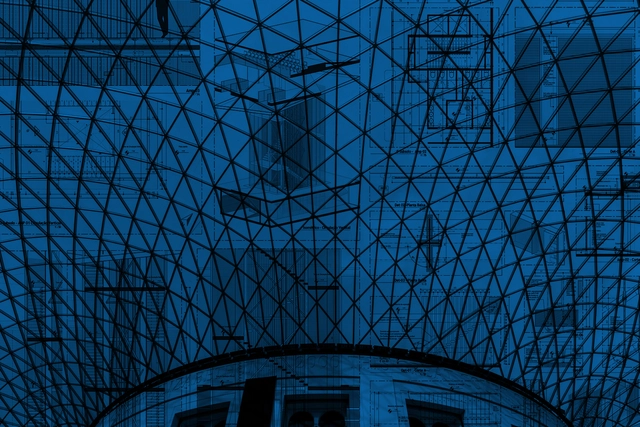
Today, computer-aided design (CAD) is the most widely used system for producing technical drawings among construction professionals and academics. It became popular through AutoCAD (Autodesk) by representing geometries that translated design intent into two dimensions. Released in the 1980s, it remains highly relevant and is still used by large corporations, extending its utility through the tradition it has built over four decades in the market.
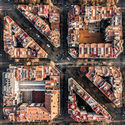
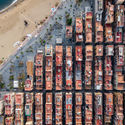
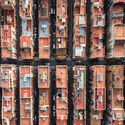
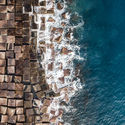
Exploring the streets of foreign cities is profoundly engaging. Whether it's meeting new cultures, observing new architectures, or trying new food, travelers usually go for the typical sightseeing activities. However, some have quite a unique take on tourism and choose to think outside the box - or in this case, above it.
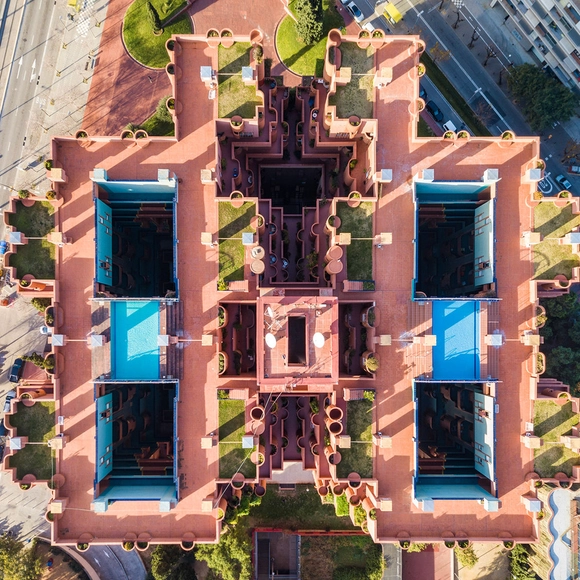
Hungarian photographer Márton Mogyorósy chose to explore the Catalonian capital from above, capturing aerial shots of the city. Drone photography has helped us see cities from a unique perspective, and with Barcelona’s dynamic urban fabric, the coastal city’s buildings and beaches have turned into vibrant geometric artwork.
Studies show that public investment in integrated and safe cycling networks promotes urban transformation, providing more humanity, health and quality of life in urban spaces. While cities in the Netherlands and the Nordic countries have already incorporated bicycles into daily life, with a significant portion of the population using the means of transport for daily commutes, much of the world is still seeking a model to reduce congestion and increase its use. According to the Institute for Transportation and Development Policy (ITDP), investing in non-motorized transport allows congestion reduction, improves air quality, physical and mental health of residents, and local trade and brand visibility, once that cyclists tend to pay more attention to local commerce and take up less space than cars.
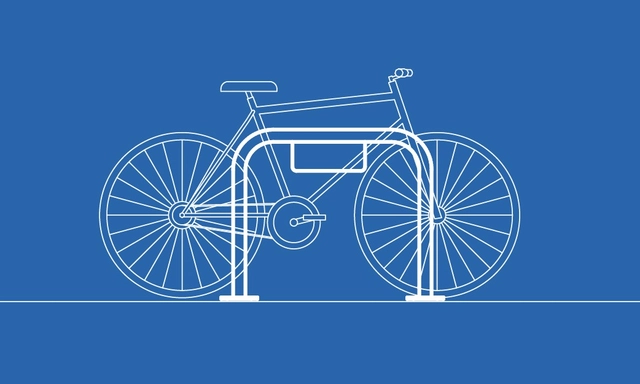
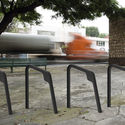
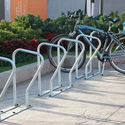
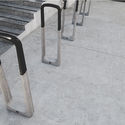
But along the cycle lanes and cycle paths it is essential to provide suitable places so that bicycles can be parked at the end of the trails. While bike stands are enclosed spaces, usually with some kind of surveillance and additional infrastructure, paracycles are the structures that allow to securely support and lock the bike. They can integrate in the urban furniture of a city, next to benches, plates, lamps and informative totems.
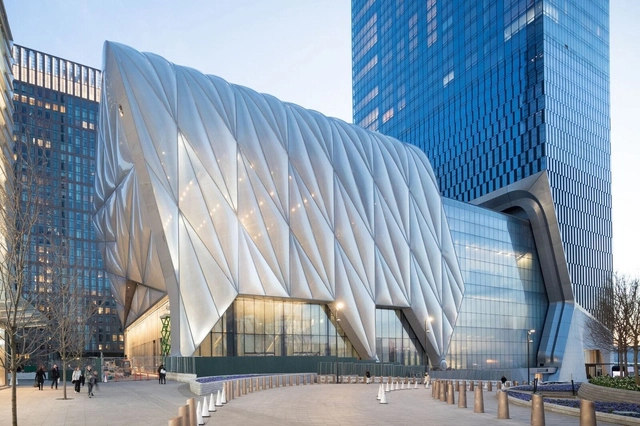
Until recently, the architecture world largely viewed plastic polymers as inferior building materials, handy for wipe-clean kitchen surfaces, but not practical in full-scale building applications. But with technological innovations driving material capabilities forward, polymers are now being taken seriously as a legitimate part of the architect’s pallet. One of the most widely-used of these materials is a fluorine-based plastic known as ETFE (Ethylene tetrafluoroethylene). Brought into the public consciousness thanks to its use on the facade of PTW Architects' Water Cube for the 2008 Beijing Olympics, architects are now realizing the film’s capabilities to express a new aesthetic and replace costlier transparent and translucent materials. Its most recent and spectacular public appearance was on the 120-foot telescopic shell of The Shed, designed by Diller Scofidio + Renfro and Rockwell Group in New York City.
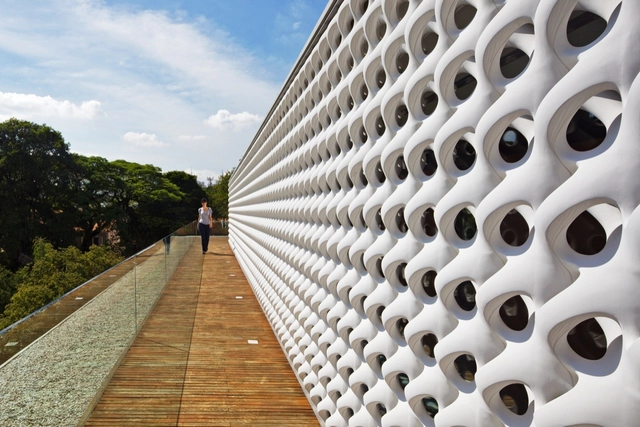
The cobogó is a widespread element in Brazilian architectural culture. Its origin and name trace back to the creators of this piece, which filters natural light and ventilation while providing rhythm and lightness to facades and interior partitions. Amadeu Oliveira Coimbra, Ernest August Boeckmann, and Antônio de Góis are the engineers who, working in Recife in the early 20th century, conceived this type of hollow block.
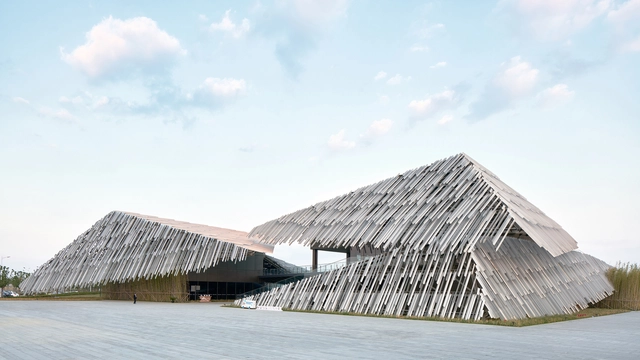
From Chinese architectural photographerZheng Shi comes imagery of Kengo Kuma's Yangcheng Lake Tourist Transportation Center in China. Architecture aimed to build a topographic structure as a large hill by randomly placing aluminum extruded materials with single-sized sections. Inside is designed as the assemblage of slanted floors, in order to maintain the same landform both in inside and outside that create some random yet ambiguous state.
Access to housing, both in the case of purchasing or renting, with any type of financing, is usually one of the most important economic investments in people's lives. It is natural to ask oneself what considerations are necessary in order to have a knowledge base before acting.
Within the framework of Espacios Oscuros research project, focused on observing and analyzing the experience of sexual diversity in public spaces of Santiago de Chile, architects María González and José Tomás Franco spoke with Nikos Salingaros, a mathematician and thinker known for his alternative theoretical approach to architecture and urbanism. Salingaros promotes design focused on human needs and aspirations, combining rigorous scientific analysis with a deep intuitive experience.
Our cities are, for the most part, hostile to the sensibilities of their citizens. (...) Almost everything has been aligned, standardized, emptied. So, how to meet different people, and how to expect a mix between strangers?
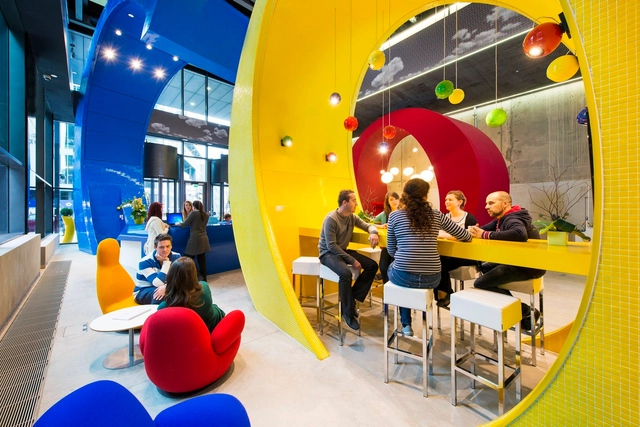
Architecture, unlike other aspects of culture (such as fashion or music), can only really be experienced and understood in person. For highly branded companies, designing a new building can be a prime opportunity to signal taste and values - but also creates an interesting architectural conundrum. While the buildings will be inhabited (nearly 24/7) by company employees, they’re also very much populated by the imaginations of people across the globe. What is it like to be in these places?
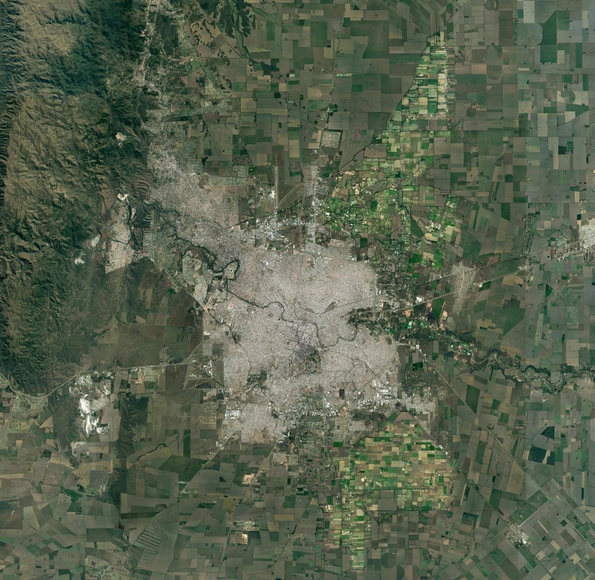
"The Metropolitan Rural Landscape" is a compendium that presents diverse, intentional perspectives on metropolitan rural territory. These viewpoints aim to highlight and open a discussion on the challenges and potential of these spaces. Below are some excerpts from the project:
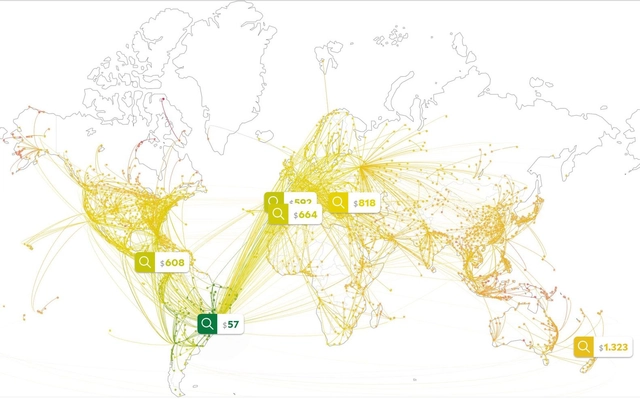
MIT's Senseable City Lab, led by the architect Carlo Ratti, has launched Escape, an interactive platform for visualizing air travel data. "Escape" serves as a search engine that helps users find the cheapest flights from a particular city, and to make the decision on their next trip faster and easier.
https://www.archdaily.com/914292/mits-new-travel-platform-finds-you-cheaper-flights-around-the-worldPedro Vada
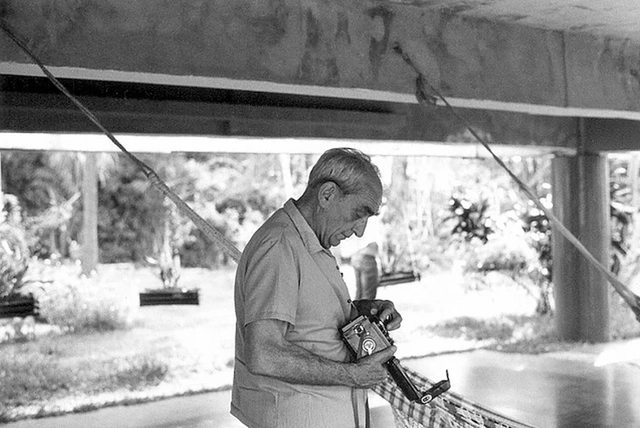
Flávio de Carvalho, publicity photo. Image via Arquivo.Arq
Flávio de Carvalho was a modern Brazilian architect recognized worldwide for his innovative and provocative way of showcasing his worldview through art. Discover some of his artistic expressions below.
Under heavy bombing, buildings seem to have only one fate: destruction. Severely damaged during the Spanish Civil War, the 13th-century Gothic Church of Vilanova de la Barca (Lleida, Spain) remained abandoned since 1936.
It was only almost 80 years later that the remnants of the structure – parts of the naves, the west façade and the apse towards the east– went through a restoration and refurbishment process. This time, however, the building was not meant to be used as a church but as a multi-purpose hall.
.jpg?1548697132 "Headquarters 'Le Duff Group' / Ateliers 2/3/4/ | ArchDaily. Image © Juan Sepulveda")


.jpg?1554996532&format=webp&width=640&height=580)













_.jpg?1553955025&format=webp&width=640&height=580)
_.jpg?1553955147 "© Laurian Ghinitoiu")
_.jpg?1553955015 "© Laurian Ghinitoiu")
_.jpg?1553955174 "© Laurian Ghinitoiu")
_.jpg?1553955102 "© Laurian Ghinitoiu")
_.jpg?1553955025)