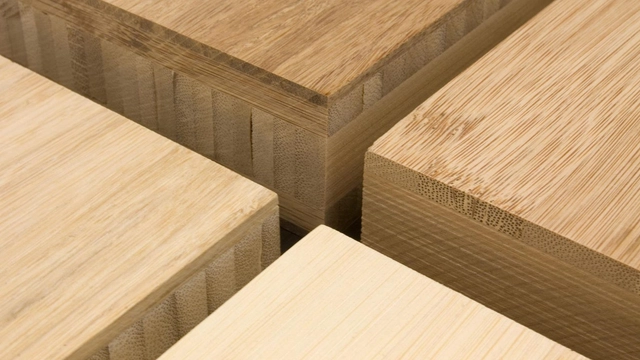
Mass timber has been hailed as the solution to architecture’s notorious sustainability problem – that buildings account for nearly 40% of global energy use is by now a worn and overcited fact. But timber isn’t the world’s only renewable material, and architects and engineers have begun looking elsewhere for other possible steel and concrete replacements. One such possibility that has recently come to light is engineered or laminated bamboo, a highly sustainable and structurally impressive material. Below, we investigate how laminated bamboo is made, what its primary qualities are, and how it compares to timber.
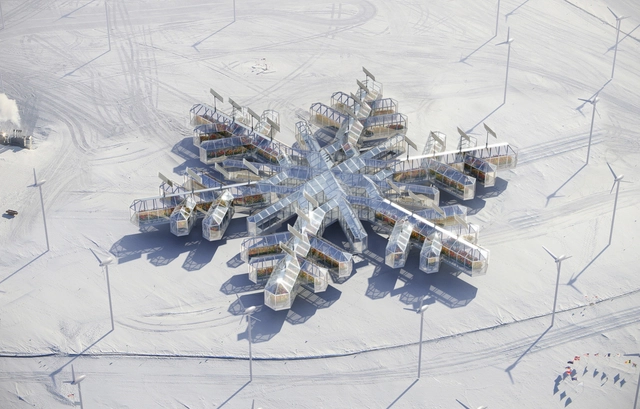
In 1773, James Cook circumnavigated Antarctica, representing humankind’s first known encounter with the continent. Ever since, Antarctica has been a vast, formidable, yet curious 14 million kilometer landscape, which explorers, scientists and governments have sought to understand and exploit. Given the harsh realities of building on the continent, aesthetics and architectural creativity have remained an afterthought in Antarctic settlements up until recent years. Today, however, the architectural scene is heating up.
Open More Doors is a section by ArchDaily and the MINI Clubman that takes you behind the scenes of the world’s most innovative offices through exciting video interviews and an exclusive photo gallery featuring each studio’s workspace.
For this episode, we talked with Jo Nagasaka of Schemata Architects about his firm’s history, mission, and office space. Schemata works on a wide range of scales and programs, from furniture to city development, but maintains a commitment to a one-to-one scale of design that focuses on material exploration.
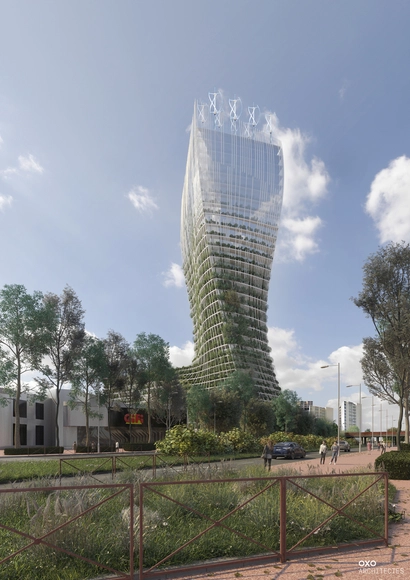
Ensuring a platform for everyone, ArchDaily is rounding up, every once in a while, a curated selection from our readers’ submissions. With proposals coming from all over the world, our aim is to feature the best Unbuilt Architecture out there.
In this article, we are highlighting proposals that were awarded the first prize in international competitions. Each one of these projects showcases a unique conceptual approach and responds to a different program. With a mixed-use project in France, a market in Helsinki, an aquarium in New York and a civic building in Norway, to name a few, the variety of these unbuilt interventions underlines the vast scope of the architectural field.
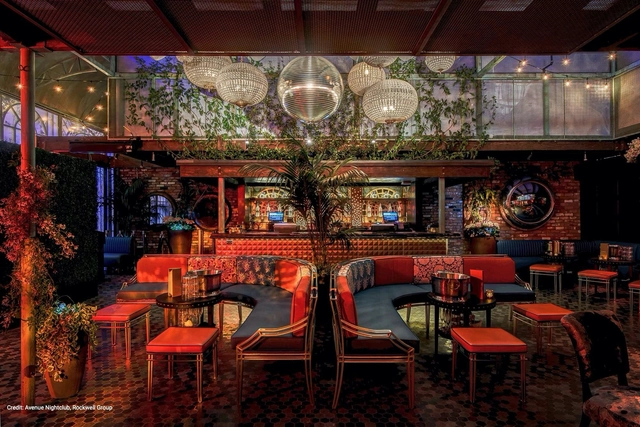
Hospitality Design Fair, held at the world-class ICC Sydney on 24-25 September, is the premier trade fair and conference for creative professionals who shape the hospitality interiors marketplace and create amazing spaces. As the only event in Australia focused exclusively on interior design and furniture for hotels, bars, restaurants and clubs, HDF brings together designers, architects, owner/operators, purchasers, brand executives and manufacturers for two days of product discovery, inspiration, education and exceptional networking.
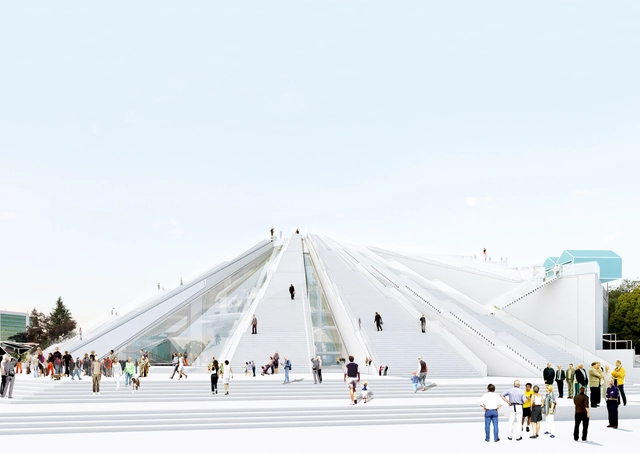
Albania's architecture is tied to the sea and the country's cultural heritage. Bordered by Montenegro, Kosovo, North Macedonia and Greece, the republic spans both the Adriatic and Ionian Sea as it connects to the Mediterranean. Over time, Albania has seen a confluence of different civilizations and cultures, each shaping the built environment as we experience it today.
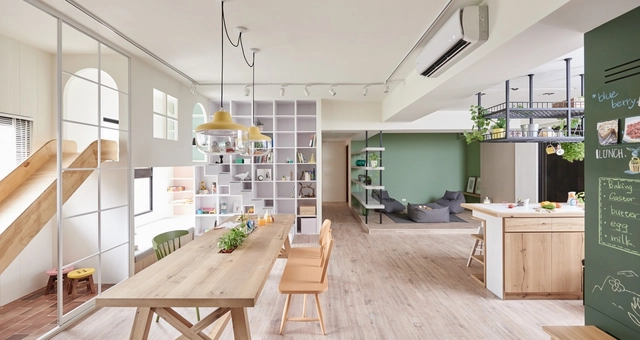
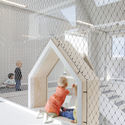
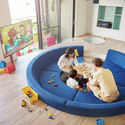
Although we know how important it is to allow children to play in public and outdoor spaces, it is difficult to deny that there are few cities offering adequate prepared environments for children - fun and safe spaces that allow them to experience urbanity and become conscious citizens of community life. For this reason, it is also understandable that families have increasingly instituted leisure spaces in indoor environments, giving their children the freedom and security necessary to learn and grow.
In this article, we have selected 11 incredible examples that demonstrate how interior architecture can help create play spaces for kids of all ages, helping them take their first steps in this world with greater autonomy and confidence.
Inverted beams, as the name suggests, differ from conventional ones due to a shift in position. Instead of the typical arrangement where the beam sits below the slab, the beam is positioned above it. In other words, its base, which usually hangs below the level of the slab, is aligned with the slab's underside. Formally, this strategy creates the illusion of a continuous, beam-free span when viewed from the building's interior.
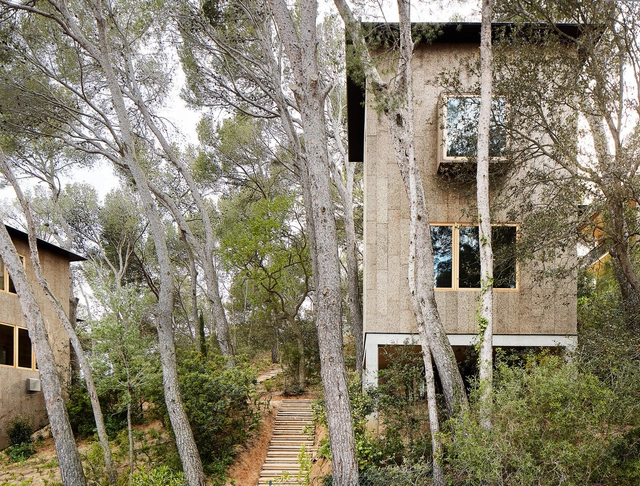
The history etched into Spain's wooden houses has many lessons to teach us about the role of wood in creating everything from light-weight and mobile modular homes to interior and exterior finishes. What's more, these lessons are not limited to new constructions. They apply to everything from furniture to remodels.
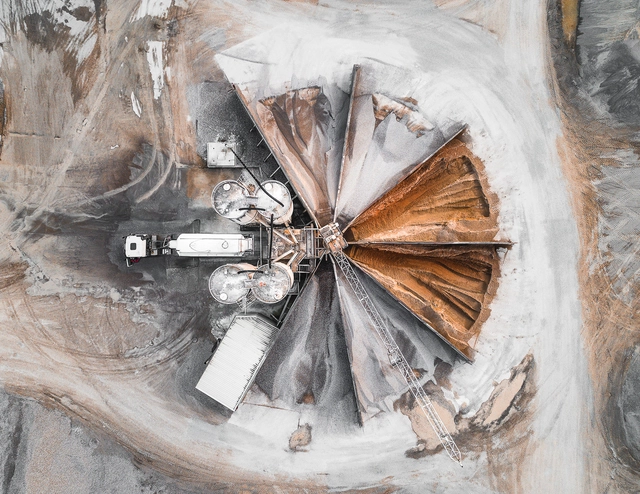
Newton’s Third Law of Motion dictates that for every action, there is an equal and opposite reaction. In urbanism, this concept is evident in how the unprecedented growth of the built environment causes a reaction in rural landscapes. By 2050, the number of people living in cities will have increased by 2.5 billion, representing two-thirds of the global population. This mass flow of people from rural to urban areas gives rise to an equally dramatic flow of natural resources. As can be seen in studies such as Tom Hegen’s The Quarry Series, whose imagery accompanies this article, the extraction of these minerals represents yet another physical manifestation of rapid, linear urbanism.
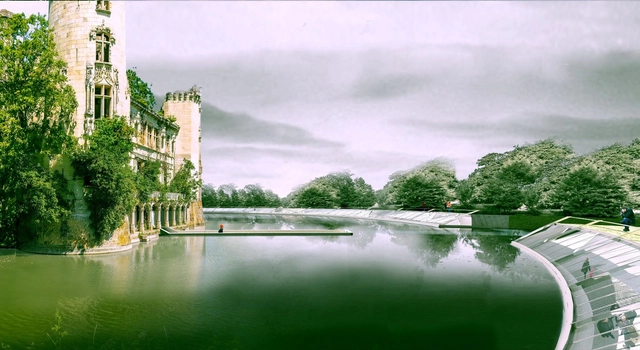
Hiroshi Toda, Mitsuki Shibairi, Kahara Mori are the three members of team D-D-D rewarded with the 1st Prize and a “Castle Choice” Mention at the COMMON RUINS international competition held by YAC - Young Architects Competitions and Mothe Chandeniers .
https://www.archdaily.com/930111/three-japanese-young-architects-to-breathe-new-life-into-an-iconic-french-castleSponsored Post
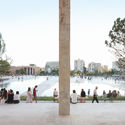
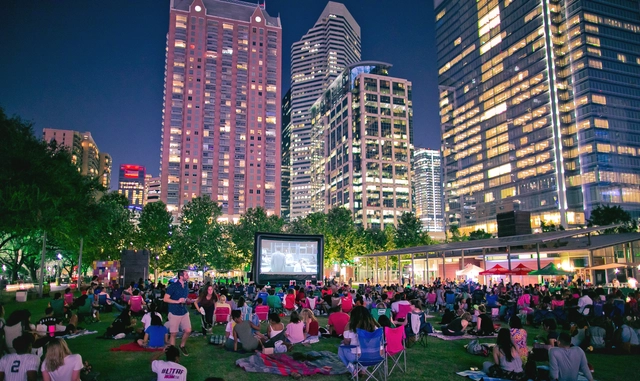
A crowd of locals watch a movie at Discovery Green, Houston, TX, USA. Image Courtesy of PPS
This article was originally published by Project for Public Spaces as "What makes a successful place?", a brief guideline about how to develop great public spaces by following four qualities: Sociability, Uses & Activities, Access & Linkages, and Comfort & Image.
Great public spaces are those places where celebrations are held, social and economic exchanges occur, friends run into each other, and cultures mix. They are the “front porches” of our public institutions – libraries, field houses, schools – where we interact with each other and government. When these spaces work well, they serve as the stage for our public lives, but what makes some places succeed while others fail?
https://www.archdaily.com/914616/what-makes-a-great-public-placeProject for Public Spaces
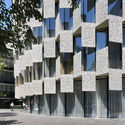
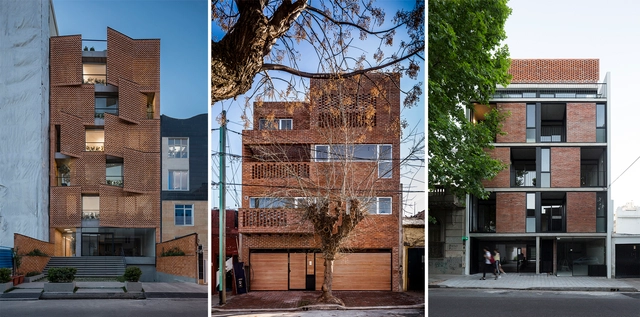
Rotation, displacement, and interleaving of blocks are some of the options that enable the diversity of raw brick patterns in architecture. The shape of these elements, usually used for the construction of walls, has been explored in a creative way to compose facades of residential buildings, representing the formal identity of the building itself and its relationship with its context.
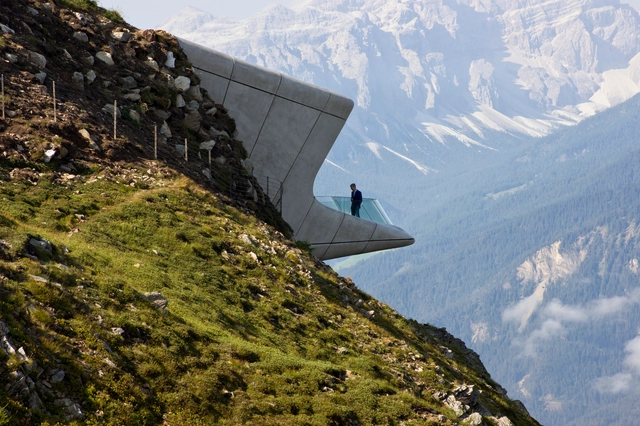
During architectural training and practice, we encounter countless examples of works that, for a wide variety of reasons, have shaped the history of the discipline. These examples become major references in an architect's repertoire, shaping how they view and design architecture. However, understanding a place is incomplete without experiencing it in person; therefore, when traveling, we seek out iconic works to enrich our perspective.
Yet, these works are not always easily accessible or close to established itineraries, which can turn the quest to visit them into true pilgrimages.
The field of architectural visualization has come a long way: It used to be a very time and cost-intensive process that only larger firms could afford and was usually outsourced to specialist companies that let their supercomputers render images for days or even weeks. Whilst this still might sound familiar to some architectural companies, the reality today is that something else is becoming the new standard in visualization: real-time rendering.
https://www.archdaily.com/934243/real-time-rendering-in-architecture-evolves-to-become-a-natural-workflow-enhancementSponsored Post
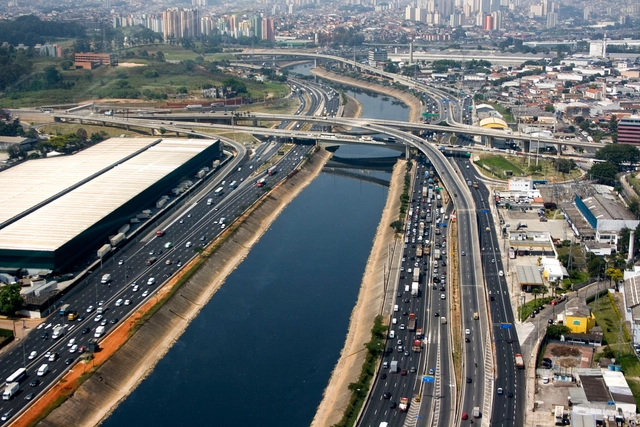
Aerial view of the Tietê River Expressway in São Paulo. Photo by Fernando Stankuns via Flickr / CC BY-NC-SA
Every year, the rainy summer months bring a wave of media coverage detailing the devastating effects of floods on the lives of citizens and the urban territory of São Paulo. It is as if, during this period, public discourse platforms become a stage for reporting chaos and seemingly insurmountable challenges that urban centers must face in their daily relationship with water.
What if hiring an international architect with great skills, qualifications, and unique insights was as easy as hiring someone from upstate New York or Indiana? Architects worldwide dream of an opportunity to enter the competitive American market and it is common for young professionals to travel internationally for study or work. At the same time, many top US firms are searching for diverse new talent, yet the cost, paperwork, and bureaucracy of hiring international candidates can be discouraging. Architect-US was created to fill that gap.






_7728.jpg?1582615054 "© Laurian Ghinitoiu")
_7878.jpg?1582615043 "© Laurian Ghinitoiu")
_7844.jpg?1582615091 "© Laurian Ghinitoiu")
_7863.jpg?1582615200 "© Laurian Ghinitoiu")
_7744.jpg?1582615115)