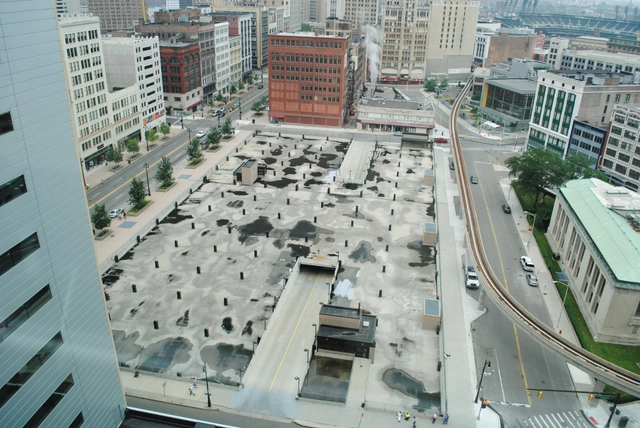
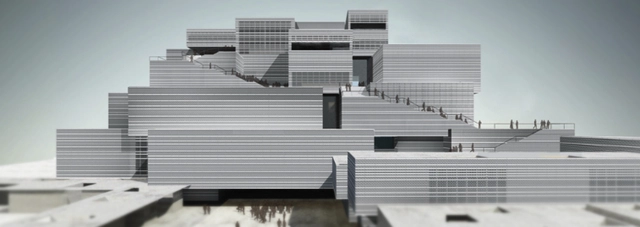
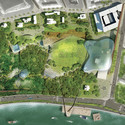
One of Detroit's most prominent vacant sites is slated to become one of its most iconic buildings. SHoP Architects will partner with Detroit-based Hamilton Anderson Associates to transform the site formerly occupied by Hudson's Department Store. Located at Grand River and Gratiot in the city's Central Business District, the two-acre site has remained a scar in the urban landscape since the implosion of the Hudson's building in 1998.
https://www.archdaily.com/452116/shop-architects-selected-for-design-of-iconic-site-in-downtown-detroitRennie Jones
The Kolkata Museum of Modern Art (KMOMA), Herzog & de Meuron’s first project in India, has broken ground in the new district of Rajarhat. The new museum seeks to embrace the city’s renowned cultural past and ultimately transform it into India’s “Art City”. Programs ranging from high-end gallery and art restoration facilities, to artist studios and an outdoor performance theater aims to empower local artists so they may play a critical role in the evolution of their community.
Now in its 5th edition, the Bi-City Biennale of Urbanism / Architecture (UABB) is the only biennial exhibition in the world to be based exclusively on the themes of urbanism and urbanization. The Biennale is co-organized by Shenzhen and Hong Kong, two of the most intensely urban cities in the world, where political and economical contexts have shaped unique urban dynamics.
The Hong Kong Biennale is led by Chief Curator Prof. Colin Fournier along with Joshua Lau and Allen Poon of TETRA and Travis Bunt and Tat Lam of URBANUS. As reported earlier, the Shenzhen edition will be curated by Ole Bouman and Team Li Xiangning + Jeffrey Johnson.
As Asia’s leading architecture, design and planning event, it will exhibit work by leading international and local design professionals and engage in a three month cultural dialogue that will include satellite exhibitions, performances, fi lm screenings, forums, workshops, guided tours and lectures.
The Biennale "will be informed by the singularity of Hong Kong but it will not be primarily about Hong Kong, just as the Venice Biennale is not about Venice: it will be about the cities of the world, making use of the unique bi-city setting of the Biennale as a platform to address global issues in a visionary and critical way."
ArchDaily will be present at the opening of the Shenzhen edition to bring you all the insights of the event.
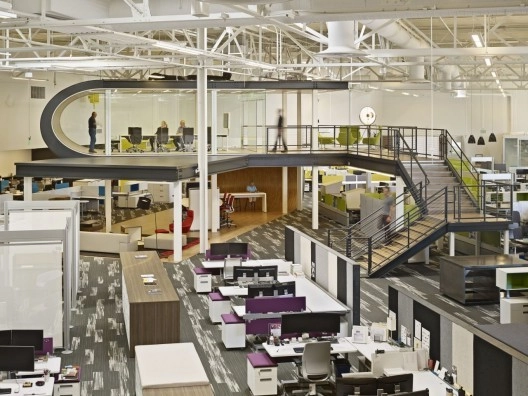
The concept of the open plan revolutionized architecture - promising light, space, and effortless collaboration (not to mention a more cost-effective way of getting lots of people into one space). Today, it's practically become a standard of design - but at what cost?
A new report from researchers Jungsoo Kim and Richard de Dear, published in the Journal of Environmental Psychology, concludes that the open plan comes with some serious collateral damage - namely a lack of "sound privacy" - which outweighs its positive qualities. What's more, according to their results, the open plan doesn't even make a measurable improvement in communication at all.
When Kanye West spoke with students at my alma mater on Sunday evening, he said “I really do believe that the world can be saved through design, and everything needs to actually be ‘architected.’” In the social media frenzy that followed, a recurring response that I saw on architecture-centric sites was to snicker at West’s use of the word “architect” as a verb. For many, this was symbolic of West’s ignorance and hubris as he presumed to talk about something without knowing anything.
Except, of course, that “architect” is well recognized as a verb. Dictionaries say so, architects say so, and academics say so. If you’re architect Doug Patt and call yourself howtoarchitect on YouTube, you get a contract from MIT Press to write a book—called How to Architect. If you are the French philosopher Louis Marin, you can suggest that “the castle and gardens of Versailles ‘architect’ the Prince to make him not only the absolute of political power, but the center of the cosmos in its entirety,” and you will be counted among the most eminent semioticians of the twentieth century. If you are Harvard architecture theorist K. Michael Hays, you might stand up at an academic conference and say, “There are only certain things that can be done at this moment. Not just anything can be architected at this moment, right? There are limits.” When you do, people will nod and applaud.
But if you are Kanye West and you suggest that “everything needs to actually be ‘architected,’” it disqualifies you to speak about architecture.
Filmed at TEDxToronto in September 2013, this talk by architect, educator and theorist Rodolphe el‐Khoury is based on the inevitable “internet of things.” As TEDxToronto described, “More than ever before, the line between the digital and real worlds is increasingly blurred. Historically, computers and devices have functioned as a separate layer within our lives... In this world, our homes, workplaces, and the objects within them will all be digitally connected, intelligent, and responsive.” It is only a matter of time.
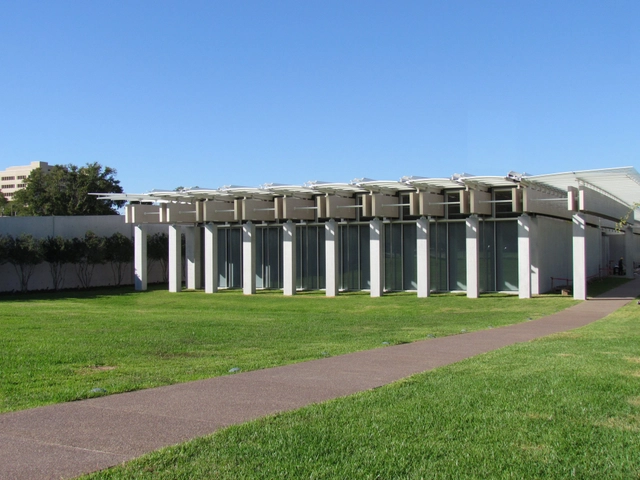
For architects, Louis Kahn's Kimbell Museum has long been hallowed ground. For Renzo Piano, who designed the museum's first major expansion, it was also an enormous difficulty to overcome. His addition to the museum could be neither too close to Kahn's building, nor too far. It had to solve a parking problem, yet respect Kahn's distaste for cars. It had to respond to Kahn's stately progression of spaces—and that silvery natural light that make architects' knees go wobbly. And yet it could not merely borrow from Kahn's revolutionary bag of tricks.
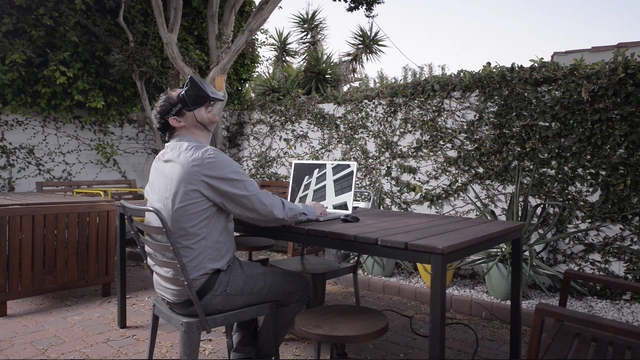
And secrets they must be because Kemp’s little company, Digital Physical, has kept under the radar, housed away in some nondescript loft space in Los Angeles. What Mr. Kemp and his bearded acolytes have developed is something so simple, so obvious, and yet utterly revolutionary. It’s one of those inventions that all architects are soon going to realize they need - and clients will soon start to expect.
Robert Miles Kemp is going to be one of 2014’s Innovators of the Year. Mark my words. If I worked for Autodesk, I’d be calling him up right about now - or at the very least trying to steal his secrets.
The “it” is Spacemaker VR, architecture’s first virtual reality system made for designers. Yes, you have to wear a VR headset, but you won’t care if you look like a dork because you (and your big clients) will be blown away by the fact that you’re looking, flying around a 3D model of a future-space - all while being firmly in the present.
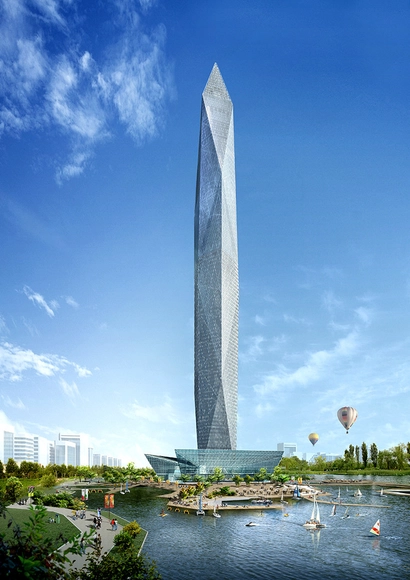
The Infinity Tower by GDS Architects. Image Courtesy of fastcodesign.com
Last week Time Magazine released their list of the top 25 inventions of 2013. The list covers both fun and life-changing new ideas, covering everything from the Cronut to the Artificial Pancreas - but there are also four architectural innovations that made the prestigious list. Find out more about them after the break.
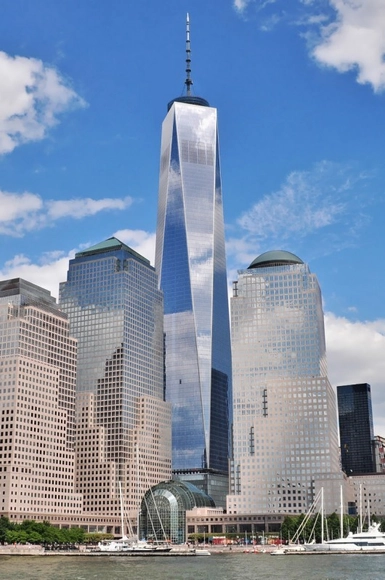
We all know what architecture critic Banksy thinks about 1 World Trade Center. He infamously called it a “shyscraper” in an op-ed piece the New York Times declined to publish. But that hasn’t stopped the article from circulating and pissing New Yorker’s off. In true Banksy form you can find it on his website, mocked up to appear like a front page headline.
In it, he writes, “It reminds you of a really tall kid at a party, awkwardly shifting his shoulders trying not to stand out from the crowd. It’s the first time I’ve ever seen a shy skyscraper.” Of course, this didn’t stop the Council on Tall Buildings and Urban Habitat (CTBUH) from recently celebrating it as the tallest building in this here United States of America. Yippee ki-yay!
But- who cares? New York has many other things going on urbanistically and architecturally that render tallness less significant than it used to be, if not outright pointless. Infrastructural interventions of the more horizontal sort, a la the High Line for example, seem far more significant. In the face of real urban complexity and uneven development, grasping for tallness is a simplistic go-to, while the real problems remain down on the street, unrelated to air rights, view corridors, sunlight access angles, and blocked horizons.
And yet cities of the world continue to privilege tall towers as icons of economic and political might.
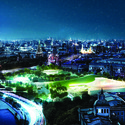
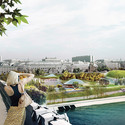
UPDATE: The video detailing Diller Scofidio + Renfro's winning proposal for Moscow's Zaryadye Park has just been released. In it the three partners discuss the central idea behind the proposal - "Wild Urbanism" - in which plants and people are of equal importance and "nature and architecture are merged into a seamless whole." They explain how each of Russia's varied landscapes - its tundra, steppe, forest, and wetland - will be imported to the park and overlapped into "enfolded nodes" that will house sustainable, artificial micro-climates that will allow for year-round use of the park.
The consortium led by the New York-based firm, beat out an impressive shortlist. Russian-led TPO “Reserve” came second and MVRDV third.
Zaryadye Park, 13 acres of land just a minute’s walk from the Kremlin and the Red Square, is hoped to “project a new image of Moscow and Russia to the world.” See the renderings from Diller Scofidio + Renfro's winning proposal for Moscow's new and most important public space, after the break...
If the discussions recently held at the Battle of Ideas are any indication, it seems that we in the architecture community are living a certain crisis of confidence.
Not one new utopian vision has been presented in the past 30 years, lamented Theodore Dounas; all these pop-ups popping up are just evidence, said Pedro Bismarck and Alastair Donald, of architecture's fearful reluctance to tackle complex problems or act as a legitimate agent for change at all; and then there’s the problem, voiced by Rory Olcayto, of architects being bullied by their clients into executing questionable agendas.
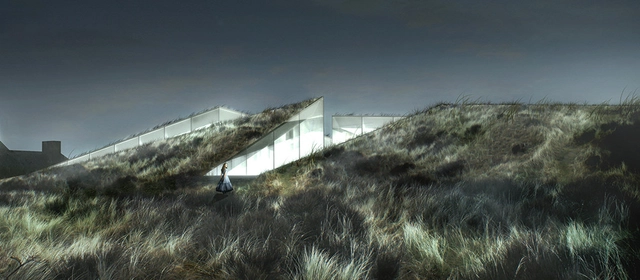
BIG’s Blåvand Bunker Museum has secured the necessary funds to move forward. Set to transform a former German WWII bunker carved into the banks of Blåvand, Denmark, the 2,500 square meter museum will include four independent institutions: a bunker museum, an amber museum, a history museum and a special exhibitions gallery.
"Contrary to the existing closed concrete lump, the new museum will, in its architecture, function as an open heart integrated into the landscape,” Bjarke Ingels described. “The museum is in every way the opposite of the militant history with its more closed, dark and heavy features.”
Friends of the High Line, along side James Corner Field Operations and Diller Scofidio + Renfro, have unveiled what could possibly be the gateway into the third and final stretch of New York’s most prized parkway. Planned to mark the northeast terminus of the High Line at Rail Yards on 10th Avenue at West 30th Street, the “immersive bowl-shaped structure,” known as “The Spur,” hopes to bring a pocket of New York’s lush woodlands to the heart of the city.
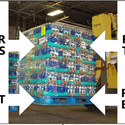
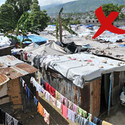
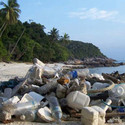
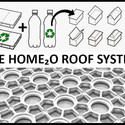
Last week’s devastating typhoon in the Philippines has reminded designers of the ongoing challenge of creating safe, temporary shelters when natural disasters hit. Crates of food and water are some of the first types of aid delivered to these ravaged areas; so what if these resources could be designed to also provide shelter and minimize waste? The New York Institute of Technology’s School of Architecture asked just that question and came up with a solution: SodaBIB, a new type of shipping pallet that would allow commonly used plastic bottles to be used for shelter.
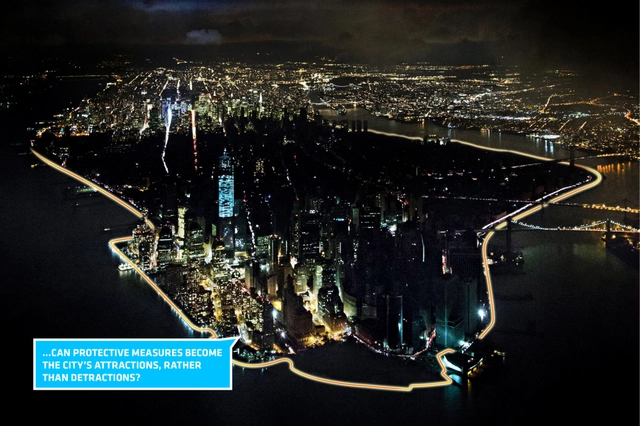
After three months of in-depth analysis and public outreach, the U.S. Department of Housing & Urban Development (HUD) has shortlisted 10 design “opportunities” for the third and final round of Rebuild by Design. The design competition, focused on making New York’s Sandy-effected regions more resilient, sustainable, and livable, will now have the final project teams collaborate with local and regional stakeholders in developing their projects over the next five months. The goal is to arrive at projects that are implementable and fundable, leveraging the variety of federal recovery investments being made in the region.
OMA, BIG and WXY are just a few practices involved in the final round. Read on to review a glimpse of each shortlisted proposal.
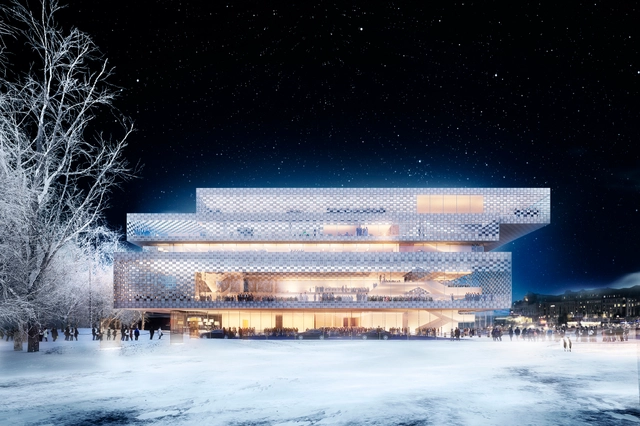
With completion aimed for 2018, the Nobel Center plans to become on of Stockholm’s most attractive destinations. Not only will the Center’s large auditorium host the annual Nobel Prize Award Ceremony, but it will offer key amenities to serve its surrounding public; In addition to a library, restaurant and retail shop, the Center will include spaces for exhibitions, school programs, events, and interdisciplinary meetings.
The proposals, listed in no particular order, are:
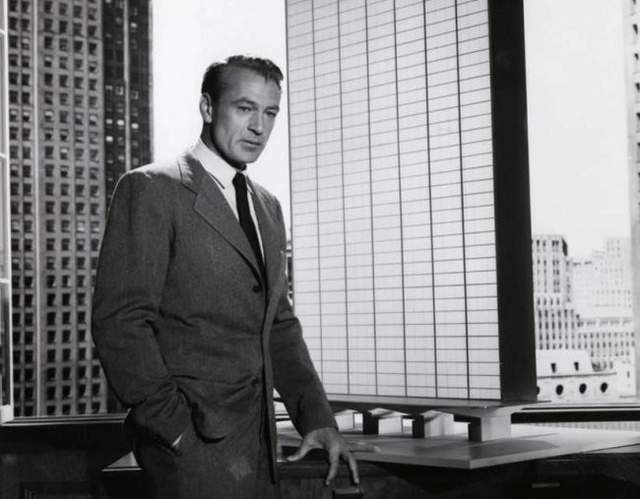
Gary Cooper as Howard Roark in a film adaptation of The Fountainhead. Via Courtesy King Vidor, The Fountainhead (Warner Brothers, 1949).. Image Courtesy of Metropolis Magazine
Howard Roark, the fictional architect envisioned by Ayn Rand in The Fountainhead, has possibly done more for the profession in the past century than any real architect at all - inspiring hundreds to enter architecture and greatly shaping the public's perception. And, according to Lance Hosey, Chief Sustainability Officer at RTKL, that couldn't be more damaging. In his recent article "The Fountainhead All Over Again," for Metropolis Magazine, he details why it's such a problem, going so far as to accuse Ayn Rand's dictatorial protagonist of committing architectural terrorism.
It came out in 1943, exactly 70 years ago this summer. In the movie version a few years later, Gary Cooper played Howard Roark, the character famously modeled after Frank Lloyd Wright. Since then, Ayn Rand’s The Fountainhead, her “hymn in praise of the individual” (New York Times), has made legions of young people want to become architects. The late Lebbeus Woods wrote that the story “has had an immense impact on the public perception of architects and architecture, and also on architects themselves, for better and for worse.” I’d say worse. In fact, the Fountainhead remains the perfect representation of everything that’s wrong with the profession.