

-
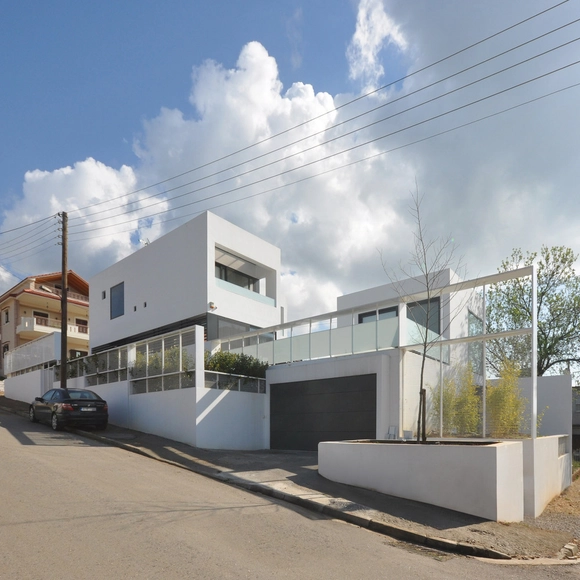
Architects: Plaini and Karahalios Architects
- Area: 300 m²
- Year: 2010
-
Manufacturers: Pedini




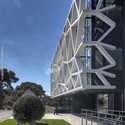
Bringing harmony and sense to the surrounding context, the proposal by Kamvari Architects for the Crete Bioclimatic School creates a simple linear movement across the site, looking inwards towards the heart of the school. This subtle exterior introduces excitement and fun to the interior while giving the school an impression of enclosure and security, but sustaining the sense of its landscape setting. More images and architects' description after the break.

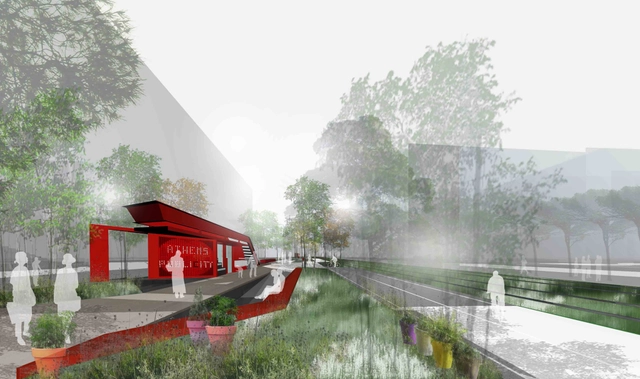
The proposal, ‘Athens PubliCity: an urban neuron for a new city center’, for the Re-Think Athens competition organizes a public space processing system which develops and expands like an “urban neuron”. Designed by Nikiforidis-Cuomo Architects, their concept becomes an entire living framework aiming to re-activate and revitalize the urban body. The system acts as a familiar, habitable and dynamic framework able to “contain” events and situations of both collective and individual actions. More images and architects’ description after the break.
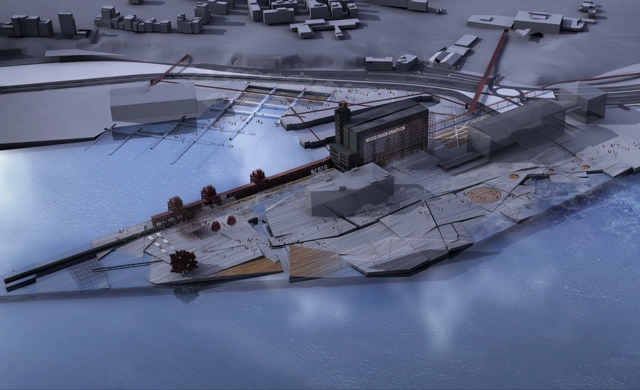
Designed by Charry C. Bougadellis & Associate Architects + Georges Batzios Architects, their proposal for the Piraeus Museum of Underwater Antiquities, which received an honorable mention, was divided in two elements based on the notion of ‘Viollet-le-Duc’: the negative element being the void, whilst the positive being the vertical and horizontal elements that define a space (walls and slabs). The link between these two elements, which defines the unity of the space is man. Therefore, the architectural space cannot be applied without the presence of man. More images and architects' description after the break.
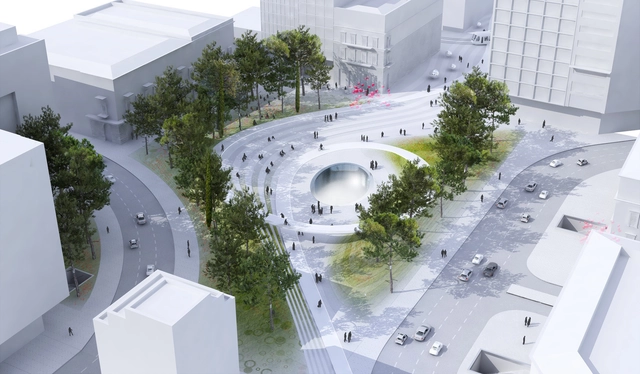
Designed by the collaborative team composed of Harry C. Bougadellis & Associate Architects, Georges Batzios, and Martha Schwartz Partners, their proposal for the Re-Think Athens competition, which was named as the 2nd runner up, is an urban landscape element which will characterize the entire center of Athens. Titled 'Belvederes of Athens ', their design concept creates a high velocity urban corridor void of anchors or rest by structuring the street space into a series of terraces, expressive belvederes define individual urban spaces along this perpetual slope. More images and architects' description after the break.
.jpg?1363369829&format=webp&width=640&height=580)

The main idea of ABM Arquitectos in their Re-Think Athens proposal, which was a finalist in the competition, is to join the two parks at the end of the intervention (Pedion Areos and Lotos Likavitou) with a green mass that will flow all along the intervention. By doing this, the architects hope to bringvback the greenery to an area that used to be a green zone in the outside of the old Athens walls and creating a green corridor that joins the old Athens with the new Athens. More images and architects’ description after the break.
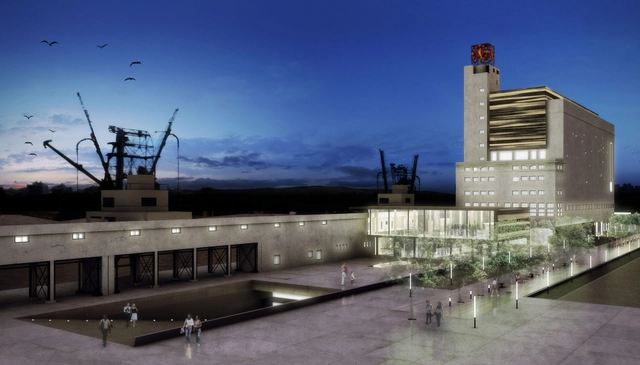
Designed by Dimitris Thomopoulos and his team, their proposal for the Museum for Underwater Antiquities and Regeneration of part of the Piraeus Port Authority, which received an honorable mention, intends to create an experiential space that stimulates the visitors’ senses through their exploration in the museum’s interior. The museum itself corresponds to its special function in a more contemporary way, while highlighting the existing building’s shell and its original use. More images and architects’ description after the break.
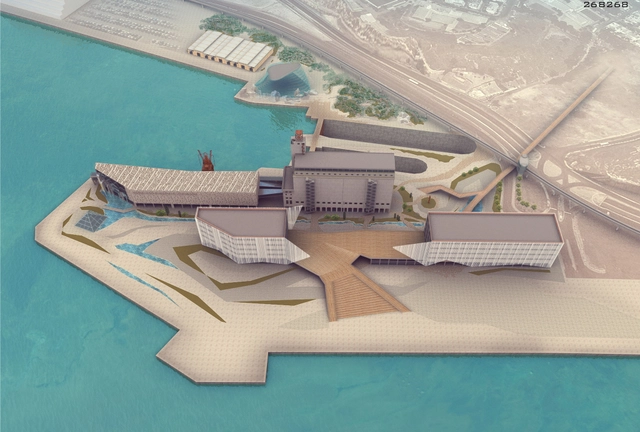
The collaborative team of architects Khvil Anastasia, Ivanova Elena, Fadeeva Alina, Rudikov Aleksei, and Spiridon Mellos chose simplicity as their main strategy in the Piraeus Museum for Underwater Antiquities Competition. Without creating enormous change, their design aims to use only what is already there, emphasizing simplicity and industrial nature of the building and beauty of the place to create a complex travel route. More images and architects' description after the break.
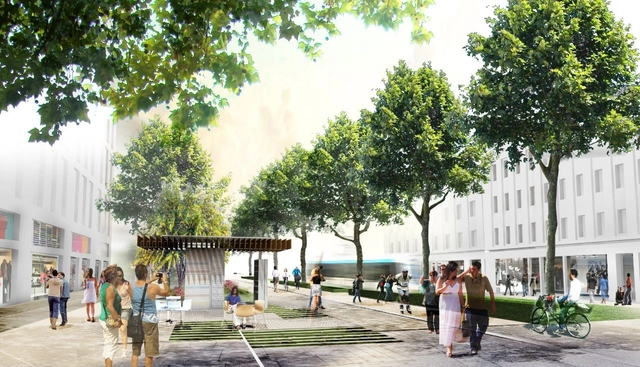
OKRA, in collaboration with Mixst urbanism and Wageningen University, was recently announced as the winning team of the prestigious competition ReThink Athens towards a new city centre. Changing the heart of Athens into a true contemporary metropolitan city centre requires transformation of the city triangle into a lively part of the city. The project aims to strongly contribute to the change of Athens and improve the environment of the city plus activating the area economically. The team is supported by the Greek Architects of Studio 75 and Werner Sobek Green Technologies. More images and architects’ description after the break.

.jpg?1370135517 "Courtesy of Prodromos Nikiforidis - Bernard Cuomo")






.jpg?1367332639 "© George Fakaros")
.jpg?1367332678 "© George Fakaros")







.jpg?1363369974 "© Erieta Attali")
.jpg?1363369829)