Hadir Al Koshta

Dipl. Ing. / M.A. in Architecture and Junior Projects Curator at ArchDaily for European and African Practices

BROWSE ALL FROM THIS AUTHOR HERE

Beyond Manufactured Landscapes: Quarries as Sites for Interdisciplinary Collaboration

Quarries can be seen as indelible abandoned scars of human resource extraction. Man-made spaces, perceived as voids, and material gain, have fundamentally shaped our accelerating built environment. All the while, the earth stands still as a silent witness. For decades, these open-pit mines have been viewed as a necessary consequence of consumerism and urban growth, their raw, imposing forms a testament to the large-scale extraction of materials essential for building our cities. However, a global architectural movement is now emerging to engage with these existing forms, transforming these subtractive spaces into sites of innovation, collaboration, and renewed purpose.
Beyond Manufactured Landscapes: Quarries as Sites for Interdisciplinary Collaboration - Image 1 of 4Beyond Manufactured Landscapes: Quarries as Sites for Interdisciplinary Collaboration - Image 2 of 4Beyond Manufactured Landscapes: Quarries as Sites for Interdisciplinary Collaboration - Image 3 of 4Beyond Manufactured Landscapes: Quarries as Sites for Interdisciplinary Collaboration - Image 4 of 4Beyond Manufactured Landscapes: Quarries as Sites for Interdisciplinary Collaboration - More Images+ 25

Rooted in Tradition, Nature, and Community: Wellness and Healing Spaces from the North to the South Africa

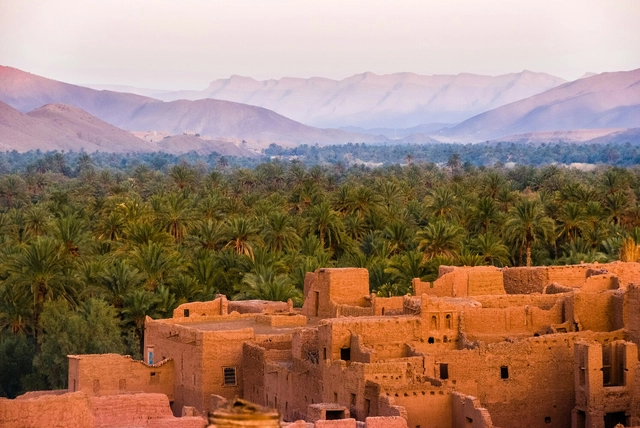
Wellness and healing spaces are shaped by cultural traditions, geographical contexts, and social structures. Across the world, certain practices have been deeply rooted for centuries, like Roman baths, Turkish hammams, and Japanese onsens, while others evolve by drawing inspiration from rituals or redefining their own concept and image of a healing environment. Europe, North America, and Oceania are characterized by a focus on personal journeys, self-care, and often luxurious wellness spaces. Asia shapes the prevailing global perception of wellness through meditation-based healing, inner reflection, and holistic retreats. In Africa, wellness is deeply rooted in ancestral traditions, integrated with nature, and centered around community and social interaction. The commonality worldwide lies in sensory engagement, relaxation, and holistic healing, often tied to nature. But what does wellness look like in Africa? What are the healing spaces that shape it, and what architectural languages define wellness from north to south?

Rooted in Tradition, Nature, and Community: Wellness and Healing Spaces from the North to the South Africa - Image 1 of 4Rooted in Tradition, Nature, and Community: Wellness and Healing Spaces from the North to the South Africa - Image 2 of 4Rooted in Tradition, Nature, and Community: Wellness and Healing Spaces from the North to the South Africa - Image 3 of 4Rooted in Tradition, Nature, and Community: Wellness and Healing Spaces from the North to the South Africa - Image 4 of 4Rooted in Tradition, Nature, and Community: Wellness and Healing Spaces from the North to the South Africa - More Images+ 2

Beyond Conventional Design: The Unique Approaches of Office ParkScheerbarth

 | Sponsored Content

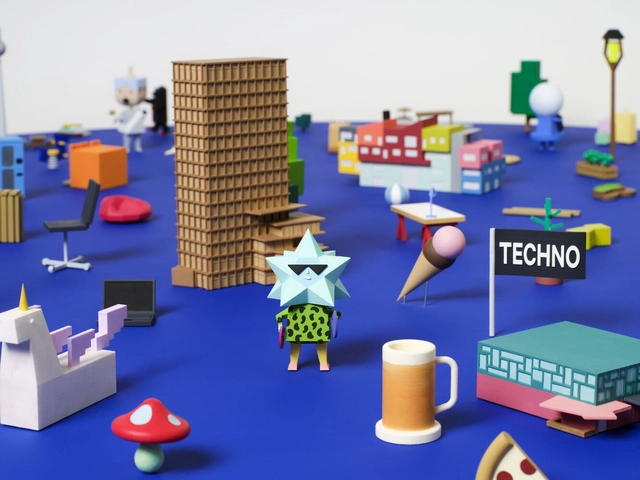
Office ParkScheerbarth, selected as one of ArchDaily's 2024 Best New Practices, was founded in Berlin in 2019 by principals Moojin Park and Benjamin Scheerbarth. Together, they create a synthesis between architecture, urban planning, and social science, drawings on cultural and educational contexts from Korea, the US, and Germany. Their work creates spaces that welcome versatility, challenges, and growth. The duo embodies a fusion of cultures, nationalities, and diverse disciplines, approaching each project from multiple perspectives and emphasizing adaptability, respect for ownership, and the continuous pursuit of knowledge and innovation. Challenging norms and regulations of the built environment, Moojin Park and Benjamin Scheerbarth share a commitment to pushing and exploring design boundaries. They met during their Master's studies in the US, where their shared vision took shape and marked the beginning of their journey together.

Beyond Conventional Design: The Unique Approaches of Office ParkScheerbarth - Imagen 1 de 4Beyond Conventional Design: The Unique Approaches of Office ParkScheerbarth - Imagen 2 de 4Beyond Conventional Design: The Unique Approaches of Office ParkScheerbarth - Imagen 3 de 4Beyond Conventional Design: The Unique Approaches of Office ParkScheerbarth - Imagen 4 de 4Beyond Conventional Design: The Unique Approaches of Office ParkScheerbarth - More Images+ 7