
From heart-shaped plans to sweet "buttresses," we're really feelin' the love! Out of over 250 submissions to our Valentine contest, these are our favorites. (Beware, puns ahead!)
From heart-shaped plans to sweet "buttresses," we're really feelin' the love! Out of over 250 submissions to our Valentine contest, these are our favorites. (Beware, puns ahead!)

After two weeks of nominations and voting, we are pleased to present the winners of the 2016 ArchDaily Building of the Year Awards. As a peer-based, crowdsourced architecture award, the results shown here represent the collective intelligence of 55,000 voters, filtering the best architecture from over 3,000 projects featured on ArchDaily during the past year.
As is so often the case with the Building of the Year award, the list of winners represents great diversity. It features two Pritzker Prize winners, Renzo Piano and Herzog & de Meuron (the first practice to ever receive two Building of the Year awards in the same year), but also small, young practices such as Tim Greatrex and Elisabete de Oliveira Saldanha. The buildings which garnered these prizes also range in effect: from the tremendous poise demonstrated by projects such as NAP Architects' Ribbon Chapel and MAD's Harbin Opera House to the rustic charms of Terra e Tuma Arquitetos' Vila Matilde House or Sharon Davis Design's Partners In Health Dormitory.
By publishing them on ArchDaily, these exemplary buildings have helped us to impart inspiration and knowledge to architects around the world, furthering our mission. So to everyone who participated by either nominating or voting for a shortlisted project, thank you for being a part of this amazing process, where the voices of architects from all over the world unite to form one strong, intelligent, forward-thinking message.
And of course, congratulations to all the winners!
.jpg?1454936073&format=webp&width=640&height=580)
The Alvar Aalto Foundation is seeking a Director for the Alvar Aalto Academy. The post is for the term 1.4.2016–30.8.2018 (or by agreement). The Director works in Helsinki.
The Alvar Aalto Academy is an international forum for environment culture, particularly contemporary architecture, product design and relevant research, as well as education, and is part of the Alvar Aalto Foundation. It produces symposiums, seminars and other architecture events of international significance, and runs continuing education in architecture. The Academy also coordinates publication and research on Alvar Aalto.
We've all been there: it's time to write a cover letter to apply for the job you've always dreamed of, but all that you can seem to muster are tired phrases and generic expressions. Well, in walks Étienne Duval to put us all to shame. Duval, a 30-year old architect, wanted to work at BIG, with "Yes is More"-man Bjarke Ingels. And what kind of cover letter did Étienne write? A rap... with an accompanying video. It's witty, well-done and (in our humble opinion) a perfect fit for BIG.
After the video made the rounds here at ArchDaily, we had some burning questions for Étienne. Check out the video, which has racked up over 20,000 views, and the short interview below.
ArchDaily: What inspired you to create a video for your application?

Following an exciting week of nominations, ArchDaily’s readers have evaluated over 3,000 projects and selected 5 finalists in each category of the Building of the Year Award.
Over 18,000 architects and enthusiasts participated in the nomination process, choosing projects that exemplify what it means to push architecture forward. These finalists are the buildings that have most inspired ArchDaily readers.
This diverse group of projects hail from all corners of the globe and from firms of different sizes and style. This year's selection includes some Building of the Year stalwarts alongside a healthy selection of lesser-known and emerging practices - but most importantly, they all capture architecture's capacity to spark positive change in the environment.

Roses are red, violets are blue; we'd love to receive a valentine from you!
We have long admired our reader's creativity, so we wanted to celebrate this Valentine's Day by featuring the most lovely, architecture-themed cards submitted by our readers. Whether you're looking for Mr. Wright or you love someone Gehry much, we hope you will share your witty and beautiful valentines with us. <3
Alejandro Aravena's proposal for the Architecture Biennale 2016, "Reporting from the front”, invites each country to share experiences and moments of crisis that architecture has experienced in recent years. The proposal calls for a reflection on the mistakes in order to share solutions that may allow other countries to anticipate and avoid similar situations.
During the last period of economic growth in Spain, construction became the main driving force of the economy. Today, reality reveals us the built presence and the unfinished remains of what once was the largest edificatory enterprise in Spanish history, leaving behind a difficult situation in which to deal with partially constructed large volumes which are not consolidated.
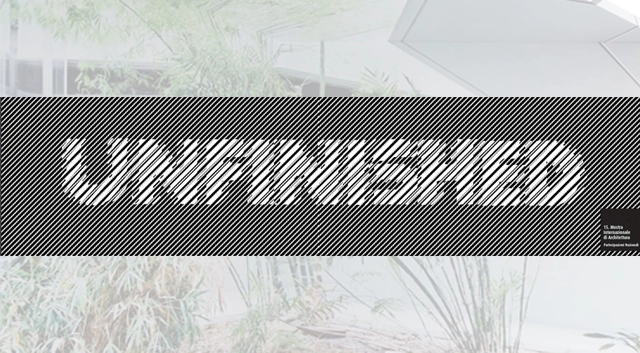
Under the title "Unfinished", the exhibition in the Spanish Pavilion for the Venice Biennale 2016 draws attention to these unfinished architectures in order to discover virtues that can become design strategies. Robert Venturi, referring to the Farnsworth House, points out how architects are highly selective in determining those problems they want to solve often giving up solving others.

2015 was an excellent year for ArchDaily. As we've continued to grow, we've delivered more information and tools to more people all around the world, leveling access to architectural knowledge and encouraging an exchange of ideas from professionals of diverse backgrounds, opening architectural up to everyone rather than just the privileged few.
Now for the 7th consecutive year, we are tasking our readers with the responsibility of recognizing and rewarding the projects that are making an impact in the profession with ArchDaily's 2016 Building of the Year Awards. By voting, you are part of an unbiased, distributed network of jurors and peers that has elevated the most relevant projects over the past six years. Over the next two weeks, your collective intelligence will filter over 3,000 projects down to just 14 stand-outs - the best in each category on ArchDaily.
This is your chance to reward the architecture you love by nominating your favorite for the 2016 Building of the Year Awards!
Full rules after the break.
.gif?1453316188)
Since the foundation of ArchDaily in 2008, our goal has been to build a large database of projects, news stories and articles in order to give our readers the inspiration, knowledge and tools they need to do their best work. But just because our database is becoming increasingly complex, that doesn't mean that your interaction with it has to be overwhelming.
Seven months ago we introduced our new, custom-built publishing platform - a largely behind-the-scenes change which allowed us to bring you new organizational tools such as our faceted search for projects, events and competitions as well as an improved version of My ArchDaily to let you create your own architectural library. Since then, our development team has been working hard on a new front-end design that is worthy of the changes we have already made under the surface.
With the new design, we have sought to simplify the ArchDaily site, re-emphasizing our "less is more" motto from the last design by organizing the layout into just two main columns: one for our stream of articles and one which helps you navigate the site by suggesting related content and popular articles. In addition, our developers have updated the website technology to improve loading speeds and bring you a seamless experience on our site. Read on to find out more details about the updated site!

The Nordic nations—Finland, Norway and Sweden—have reached a pivotal point in their collective, and individual, architectural identities. The Grandfathers of the universal Nordic style—including the likes of Sverre Fehn, Peter Celsing, Gunnar Asplund, Sigurd Lewerentz, Alvar Aalto, and Eero Saarinen—provided a foundation upon which architects and designers since have both thrived on and been confined by. The Nordic Pavilion at the 2016 Venice Biennale—directed by Alejandro Aravena—will be the moment to probe: to discuss, argue, debate and challenge what Nordic architecture really is and, perhaps more importantly, what it could be in years to come.
We're asking for every practice (and individual) across the world who have built work in Finland, Norway and Sweden in the past eight years to submit their project(s) and be part of the largest survey of contemporary Nordic architecture ever compiled.
Update: the Open Call for In Therapy closed on the 24th January 2016.
As the first month of 2016 draws to a close, we decided to tap into our network and ask an esteemed group of architects, critics, theorists and educators to tell us what they are looking forward to this year in architecture.
What are you looking forward to in architecture this year?
As part of OMA co-founder Rem Koolhaas' sixth interview with Charlie Rose, the Rotterdam-based Architect discusses why the Dutch port-city is his practice's base – and why he switched from journalism and scriptwriting to architecture. In the discussion, of which four snippets have been made available, Koolhaas also explains why he feels that smart technology has a "sinister dimension," and on how he—and his practice—have a tendency to "resist aesthetic."
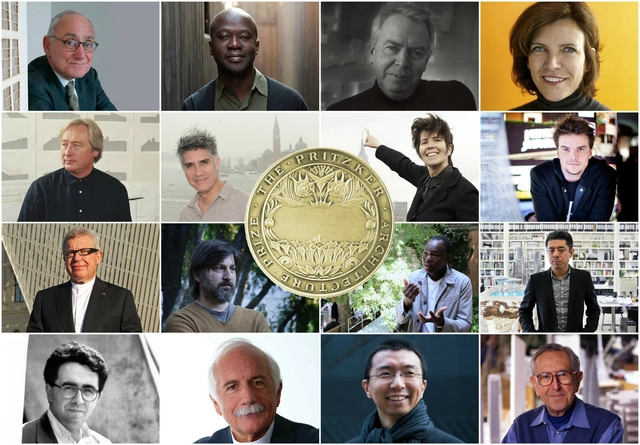
For over 30 years, the Pritzker Prize has awarded some of the most inspirational and accomplished architects on the planet, and it has long helped to shape public discussion about current trends and ideas in architecture. Recent years have been no exception; in 2014, for example, the jury's citation of Shigeru Ban's humanitarian work sparked a heated discussion about the social duties of architects.
However, just as the selection by the Pritzker jury can shape public debate, it is also influenced by public opinion. So with the announcement of the 2016 Pritzker Prize winner due on Wednesday, last month we asked our readers to give us an insight into which architects they feel should be in the running. Through a poll and the comments on the post, they let us know who they think is deserving of architecture's biggest prize.

Happy New Year from ArchDaily to our readers from around the globe! We had a great 2015 and we couldn’t have done it without your support. We can’t wait to see what 2016 will bring. In the meantime, check out some of our most popular projects, stories and highlights of 2015, after the break.
If there's one word that sums up our most popular projects of 2015, it's "diversity." The list features architects ranging from old favorites such as SANAA, Diller Scofidio + Renfro and OMA down to newer names like Sculp[IT] and Tropical Space; it also includes everything from museums to multi-family housing and spa retreats to chapels - along with the usual smattering of private residences. Interestingly, this year's list also shows the symbiosis between great architecture and great photography, with no less than 4 projects also appearing in our most bookmarked images from this year's World Photo Day. But despite their diversity, there's one thing all of these 20 projects have in common: great architecture. So settle in, relax and read on - here's our 20 most popular projects of 2015.

Over the past few days we've received dozens of holiday and New Year's cards from our network of architects around the world. See them all after the break (or check out our reader-submitted cards). Happy Holidays from the editors of ArchDaily!

From Gehry, Mies and Corbusier puns to trees made of scales, rulers and buildings, we were overwhelmed by the depths of our readers’ creativity! Out of the 450 submitted cards, these are 52 of our favorites.
.jpg?1450380794&format=webp&width=640&height=580)
5,000 3D cameras to help preserve the architecture of a country torn by war; A team of Latin American architects that moved into Venezuela’s most dangerous neighborhoods in order to design and build with the community; A legendary architect who understood architecture’s relationship to the transformation of technology -- and whose projects have celebrated technology across a trajectory of multiple decades. These are the projects, initiatives and people who have proven to be leaders in 2015.
ArchDaily’s editorial team wanted to recognize these projects for their commitment to promoting practices in architecture that serve many, in all corners of the globe -- from Bolivia to London, from Chicago to Venice, from public spaces in favelas to projected drone-ports in Africa. These are the stories that have inspired us in 2015, and whose influence we hope to continue to see into 2016.