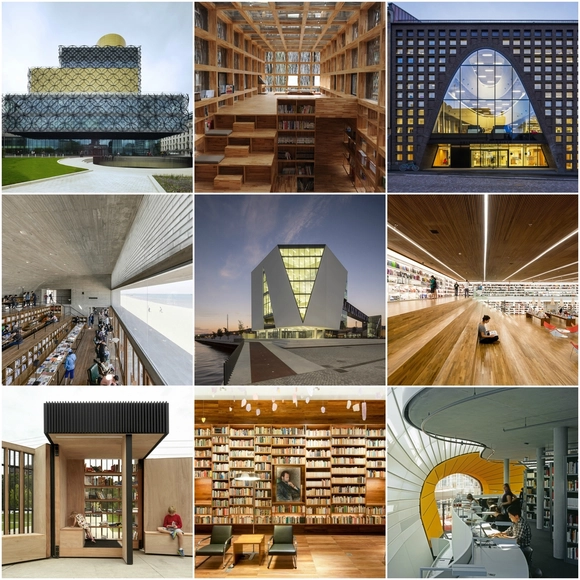
From community meeting hubs to secluded refuges, places to learn and places to study, libraries can be so much more than just a place to a check out a book. With this in mind, we’ve rounded-up 15 awe-inspiring libraries, including a Canadian church that was converted into a library, the first library in Muyinga, Burundi – built using participatory design and local materials – and the largest academic library in Finland. See what makes each of the libraries unique after the break.
The majority of our built environment is designed for people who hear, with little regard for how the hearing-impaired navigate a space. But what would a space look like if it were designed for the deaf? This video from Vox and Curbed focuses on Gallaudet University, the world’s only liberal arts institution for the deaf, and the ways the campus is tailored to the needs of its students. By analyzing what they refer to as “Deaf Space,” the university has been able to pinpoint techniques that not only make communication and wayfinding simpler for the deaf, but to produce spaces that function more effectively and comfortably for everyone. For more on the university and how its members are impacting the architecture world, read the full article over at Curbed here.
UPDATE: The videos are no longer available on YouTube. :(
Over the past 20 years, many of the most renowned European cultural institutions - including ARTE France, Les Films d’Ici, the Louvre, the Ministry of Culture and Communication Department of Architecture and Heritage, Centre Pompidou, City of Architecture and Heritage, Musée d'Orsay and the Fundació Mies van der Rohe - have come together to produce more than 50 architecture documentaries devoted to the most significant achievements of architecture, its beginnings, and the latest creations of the great architects of today. Now, these videos are accessible to the public via the YouTube Channel ACB (Art and Culture Bureau).
Each documentary is approximately 26 minutes long, and focuses on the genesis and impact of a single building that has played a role in the evolution of architecture. Narration is in English, and many of the videos of newer buildings feature interviews with the architects themselves. Check out some of the videos below, or find the entire list here.
Of course, the top story in recent weeks has been the sudden death of Dame Zaha Hadid, who passed away last week in Miami. At just 65 years of age, and at the height of her powers as an architect, the news of Hadid’s passing was a shock to many and unsurprisingly was met with grief from many of our readers. Read on to see what tributes those readers left, along with opinions on other stories from recent weeks.
Earlier this week, the Supreme Court of Sweden ruled against Wikimedia Sverige in a landmark case over “Freedom of Panorama,” a ruling which The Wikimedia Foundation has “respectfully disagreed with” in a blog post. The Swedish Supreme Court’s ruling, in short, states that Wikimedia Sverige is not entitled to host photographs of copyrighted works of art on its website Offentligkonst.se, which provides maps, descriptions and images of artworks placed in public spaces in Sweden.
The concept of freedom of panorama describes a provision in copyright law which extends the right to take and to disseminate photographs of copyrighted works provided those photographs were taken in public spaces. Most people who own a camera (in other words, most people) have probably given very little thought to their freedom of panorama, or any restrictions that may have been placed upon it. But the reality of this little-known copyright-related oddity is something that many people, and architects especially, should find very concerning indeed.
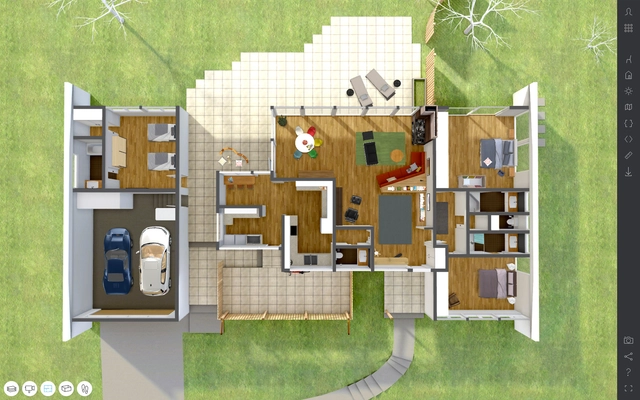
This month's Archilogic model is a virtual tour of the very first Case Study House being featured in Arts and Architecture Magazine's program, designed by Julius Ralph Davidson. After World War II, American soldiers returned home from battlefields in Europe. They had to cope with traumatic experiences during the war and probably just wanted to rebuild their life and settle down.
It must have been hard to get back to normal. Certainly people wanted to live the American Dream: The pursuit of happiness, the intention of all Americans. Life, liberty and the pursuit of happiness was first proclaimed in the United States Declaration of Independence in 1776 and became a sort of “doctrine” for American citizens. This was an idea often reflected in the Hollywood film and television industry. The films that were produced in Hollywood after 1945 were stories that suggested that every hard-working person would succeed. Hollywood seemed to repeatedly produce stories of the American Dream.
https://www.archdaily.com/785051/a-virtual-look-into-julius-ralph-davidsons-case-study-house-number-1David Tran and Florian Meier, Archilogic
The Project of a Collective Line: Santa Cruz in Bolivia is an agro-export region dominated by transnational corporations. Image Courtesy of USGS
The following article was first published by Volume Magazine in their 47th issue, The System*. You can read the Editorial of this issue, How Much Does Your System Weigh?, here.
In 2006 Venezuelan President Hugo Chávez, Brazilian President Lula da Silva and Argentinean President Néstor Kirchner proposed the construction of a gas pipeline connecting Venezuela to Brazil and Argentina, called the Gran Gasoduto del Sur. Although the project was never built, its path through the Amazon rainforest foregrounds the violent nature of resource extraction. At the same time, the project raised unique questions regarding the architecture of collective politics, particularly if understood in the context of the last fifteen years of political transformations throughout Latin America.
The search to connect with nature has been of great value to architecture, not only in terms of respecting and enhancing the natural conditions of a place, but also in creating a holistic relationship between the user and the space.
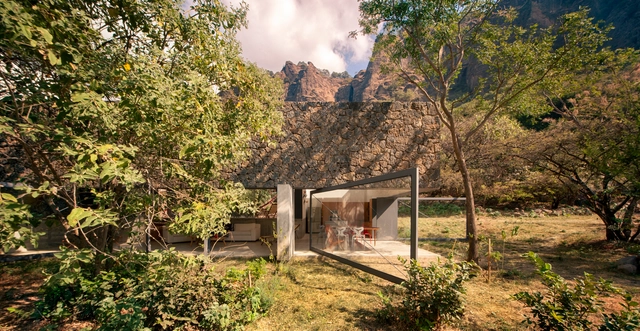
For the March Project of the Month, we recognize a residential project located in a unique landscape: the Tepozteco area in Mexico. In this project, the architecture connects with nature through a building that blends with the surroundings, while at the same time engaging with the setting in a unique way.
https://www.archdaily.com/784912/project-of-the-month-casa-meztitlaAD Editorial Team
A total of 150 eighteenth and nineteenth century listed wooden buildings remain under protection in Moscow today. Modern city dwellers see only remnants of pre-revolution Moscow, which stayed almost entirely wooden until the early seventeenth century. This is one of the reasons why the Museum of Architecture and Kuchkovo Pole publishing house have joined forces to release a two volume set named Wooden Russia: A Glance Back From the 21st Century.
The first volume contains stories of expeditions and research projects studying the early period of Russian architecture, reports from open-air museums and articles on religious and traditional architecture practices. The second book focuses on neo-Russian architectural style, club architecture, Soviet intelligentsia dachas, and modern park buildings. Shchusev State Museum of Architecture researchers Zoya Zolotnitskaya and Lyudmila Saigina—experts on eighteenth, nineteenth and early twentieth century architecture—agreed to share the stories of ten wooden buildings which managed to survive in the centre of Moscow to this day.
The Available City exhibition at the Chicago Architecture Biennial. Courtesy David Schalliol
At the Chicago Architecture Biennale, David Brown’s project “The Available City” addressed the fact that Chicago currently owns 15,000 vacant lots, many of which have become “havens for illegal dumping, weeds, rodents and street crime.” In this article, originally published on Autodesk’s Line//Shape//Space publication, Jeff Link takes a look at Brown’s project, examining its unique approach to developing the empty lots and converting them into public space.
David Brown’s Chicago Architecture Biennial project, The Available City, responds to a striking fact: Chicago, in an exodus story echoed across the rust belt, owns 15,000 vacant lots.
The parcels, many of them on the South and West Sides, don’t generate tax revenue, but the city is obliged to maintain them. Outside the watch of homeowners, many are havens for illegal dumping, weeds, rodents, and street crime.
Chicago hasn’t exactly turned a blind eye, says Brown, associate director of the University of Illinois at Chicago’s School of Architecture and the author of Noise Orders: Jazz, Improvisation, and Architecture. Through the Large Lot Program—a pilot that began in Chicago’s Englewood, East Garfield Park, and Austin neighborhoods—individuals and nonprofits that live on the same block as a city-owned vacant residential lot can buy select pieces of land for a dollar.
It’s a compelling idea, and through it and the related Adjacent Neighbors Land Acquisition Program, about 1,000 lots have been purchased in the past five years. But Brown says the city can do more; he suggests thinking of architecture and urban planning like jazz: a formal compositional structure inside of which experimentation can take place.
https://www.archdaily.com/784717/buy-land-for-a-dollar-converting-chicagos-15000-vacant-lots-into-booming-public-spaceJeff Link
Alvar Aalto was born in Alajärvi in central Finland and raised in Jyväskylä. Following the completion of his architectural studies at the Helsinki University of Technology he founded his own practice in 1923, based in Jyväskylä, and naming it Alvar Aalto, Architect and Monumental Artist. Although many of his early projects are characteristic examples of 'Nordic Classicism' the output of his practice would, following his marriage to fellow Architect Aino Marsio-Aalto (née Marsio), take on a Modernist aesthetic. From civic buildings to culture houses, university centers to churches, and one-off villas to student dormitories, the ten projects compiled here—spanning 1935 to 1978—celebrate the breadth of Aalto's œuvre.
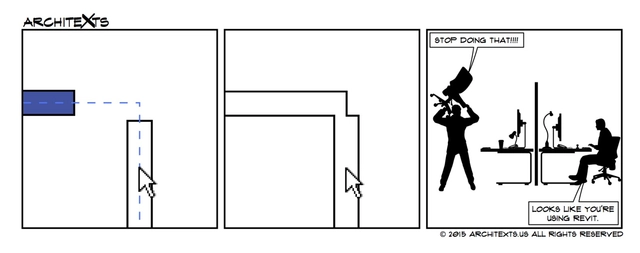
There is an ongoing battle between architects and our tools of the trade. Whether you use a 2D drafting program like AutoCAD, or a BIM program like Revit, you have experienced a full spectrum of frustration. Like many architectural firms, the office of Franklin + Newbury Architects, depicted in our webcomic Architexts, has been trying to transition to BIM for years, and that transition has translated into blood, sweat, tears, and expletives. Software woes and transitioning from 2D to BIM are just a couple of the many topics found in our body of comics.
In this post originally published on Metropolis, former ArchDaily Managing Editor Vanessa Quirk explores a client's expectations, and how Nicholas Grimshaw treated them--in both built and book form.
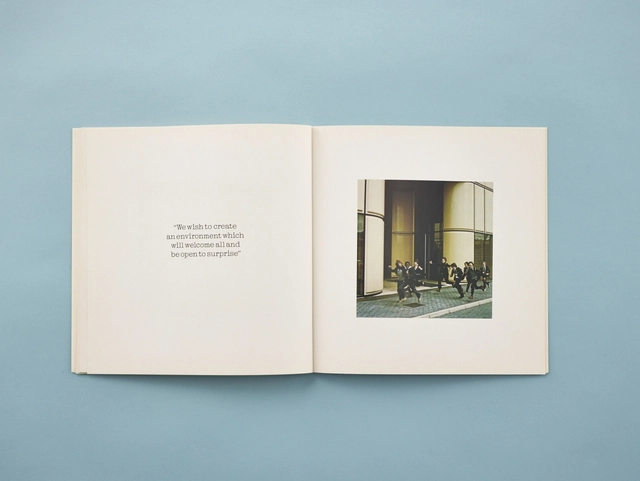
It is not often a client states that their aim is “to build the indeterminate building.” But so Max De Pree, the son of Herman Miller founder D.J. De Pree, expressed his hope for his company’s new manufacturing facility in 1975. Following the ideas of designers such as Charles and Ray Eames and Alexander Girard, De Pree compiled a long list of philosophical guidelines for the project, which he summed up under the laconic heading, “A Statement of Expectations.”
The young architect Nicholas Grimshaw, who had been hand-picked by De Pree for the project, was immensely inspired by the Statement, particularly its emphasis on the longevity and flexibility of the facility, its integration into context (the city of Bath, England), and the necessity for the building to empower its workers. In Grimshaw’s response to the brief, he noted: “Many of the views expressed about the well-being of the users, flexibility, and non-monumentality agree very closely with the approach we have built up since the founding of our practice ten years ago. We feel particularly that any new building should not impose itself on the occupiers, but that it should be a tool in their hands.”
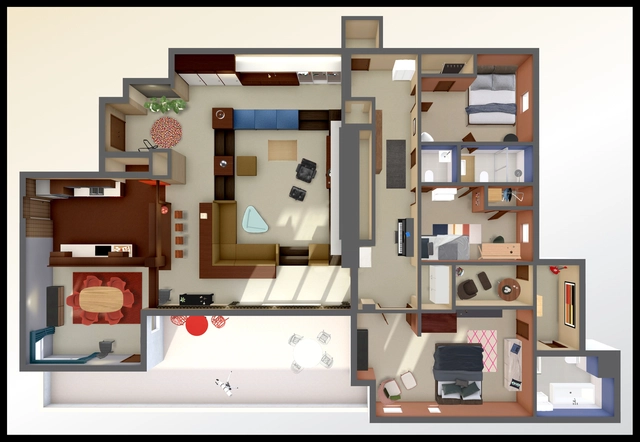
In the 5th season of Mad Men, it’s June 1966, and Draper moves into his love nest with his young wife, Megan. The set was designed by Claudette Didul and the Mad Men team, and it’s a psychogram of a man who is about to fall apart at the seams.
Everything about the space is designed to be perfectly of its time. It has a white carpeted conversation pit for a living room, and a modernist kitchen with clashing colours. The masculine elements include a leather armchair, and a drum-shaped ice bucket. The design is inspired by the 1965 book “Decoration USA,” by Jose Wilson and Arthur Leaman, and the bestselling books of Betty Pepis. This is pop design, no high modernist masterpiece, it’s about pretending you are happy, rather than about civilization. A small indicator of depravity: the living room is over twice the size of the dining room. Who cares about table manners when your wife is half your age?
https://www.archdaily.com/784720/a-virtual-look-into-don-drapers-mad-men-apartmentMadlaina Kalunder and Monika Kedrova, Archilogic
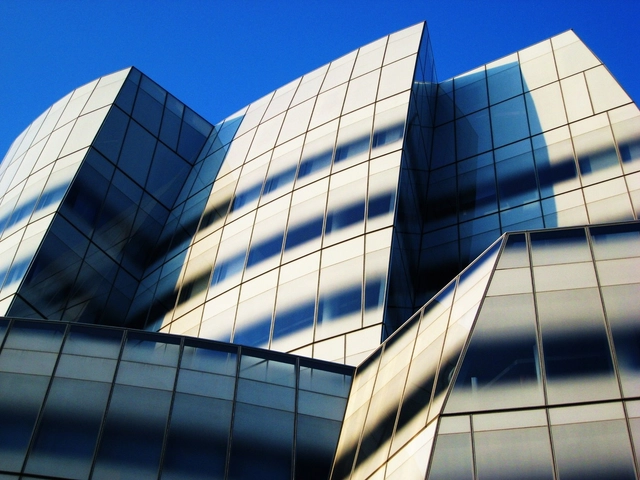
Discovered by archaeologists in civilizations as old as ancient Egypt and Mesopotamia, fritted glass is hardly a new technology. Yet thanks to its energy-saving abilities and the smooth, gradient aesthetic it produces, fritted glass has seen a rebirth in contemporary architecture.
Frit itself is a ceramic component that can be laid out into an assortment of patterns, most typically consisting of dots or lines. These patterns can then be silk-screened onto annealed glass using frit paint. Then, the glass is fired in a tempering furnace, which strengthens and improves the safety of the glass under thermal stress. The resulting product is glass of determined transparency that, when used in building facades, can reduce solar heat gain and even make buildings more visible and less deadly for birds.
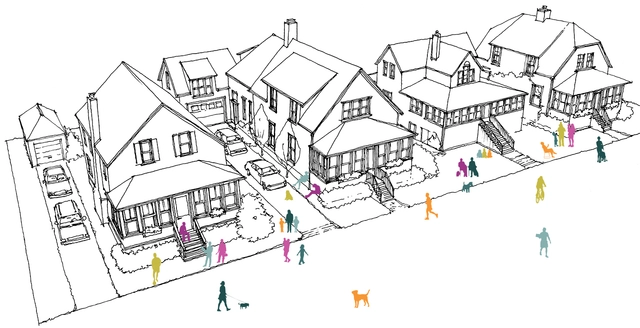
For a project in Maine, the author lived in the neighborhood and held charettes, presentations, and workshops in his cottage. Illustration: Adapted by Stoltze Design from a drawing by Russell Preston. Image
Too often community engagement can be seen as an afterthought, carried out in a dull and unengaging way. But does it always have to be this way? In this article from ArchitectureBoston’s Spring 2016 Issue, originally titled “Bring on the joy: Civic engagement strategies in the age of Twitter,” Russell Preston makes a case for more dynamic public engagement, citing several examples where “engagement is actually the process” rather than just a “required step to a planning process.
In New England, changing zoning is more difficult than sending someone to the moon. In the spring of 2015, Dan Bacon, planning director for Scarborough, Maine, asked for help implementing a better zoning code for Higgins Beach, a picturesque community of largely seasonal residents. Outdated regulations were putting its historic character in jeopardy. Different tactics were needed to successfully change the zoning before the next season of construction.
The hard task was helping the residents understand that they controlled future development with their own regulations. Change like this takes trust, and my team did not have months to build that trust. The best tactic? Become locals. We decided to live in the neighborhood, and in June of 2015, we rented a cottage with a large living room to host a multiday planning charette. Every meeting, presentation, and workshop was held in that cottage.
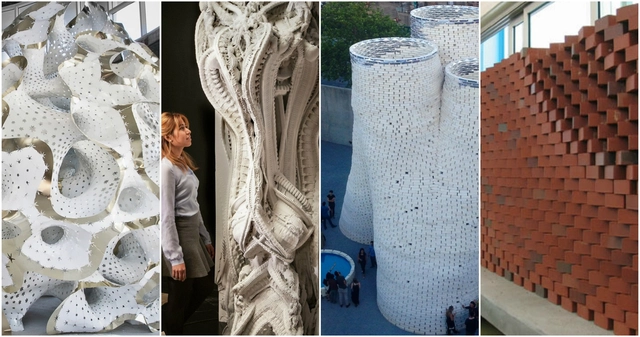
Swept up in an age of digitization and computing, architecture has been deeply affected in the past decade by what some critics are calling “The Third Industrial Revolution.” With questions of craft and ethics being heavily present in the current architectural discourse, projects taking advantage of these new technologies are often criticized for their frivolous or indulgent nature. On the other hand, there has been an emergence of work that exemplifies the most optimistic of this “Third Industrial Revolution” – an architecture that appropriates new technology and computation for the collective good of our cities and people.
We’ve collected 7 of these projects, ranging from exemplars of engineering to craft and artistry; projects that 80 years after Le Corbusier’s modernist handbook hint at a further horizon – towards a newer architecture.
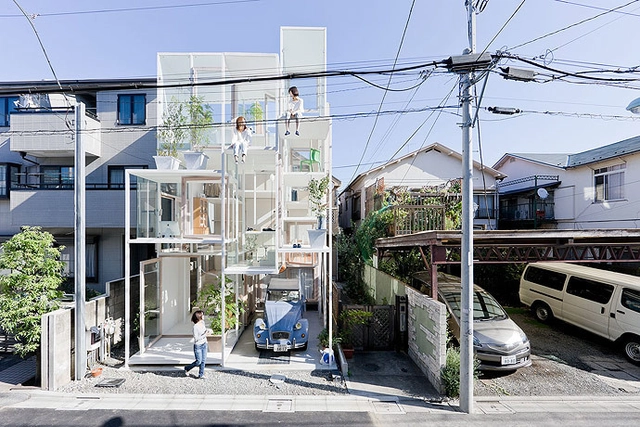
Most residential projects must include parking spaces, but only few cases are notably innovative. Your vehicle's resting place can be more than just a required space; it may even become the backbone of the design itself.
The integration of parking, interior spaces and facades can deliver extremely intriguing and unique results.
Here we present 8 cases in which the humble parking space has assumed a main role in the design, while integrating new functions such as exhibition spaces, or structural features and versatile technology.