If you are creating architectural visualizations through Lumion, the following tutorial can be of great use to you. These tutorials will maximize your output and teach you easy-to-master practical and technical tips.
Learn how to add objects, use lights, modify materials, and also create panoramic and 360° images, movies, and more.
"You're boosted. Your energy levels are higher, your oxygen is flowing, your mind is clear." Michel Rojkind has, by any standard lived a life of passion - first as a bonafide rockstar and now as an award-winning architect (not least among them an ArchDaily Building of the Year 2017 for his Foro Boca.) But those following Michel Rojkind's social media know what his true daily passion is.
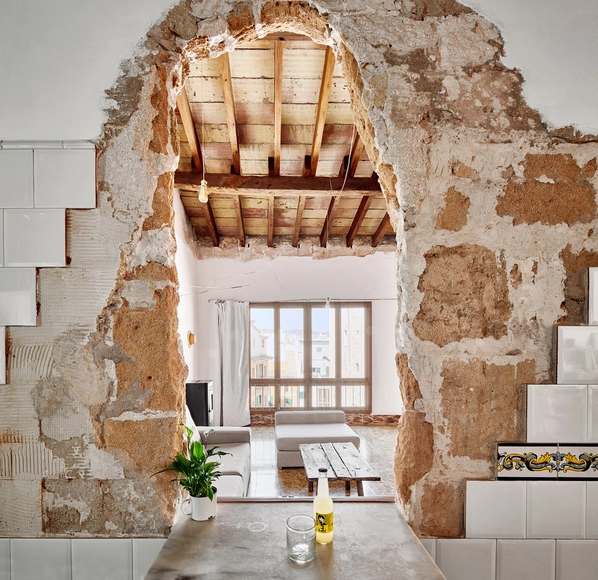
If walls could speak, they would have the most stories to tell - stories of antiquity, war, scandal, and reconciliation. Approaches to preservation are as varied as the architects behind them, but many take on the challenge with flair and restraint in equal measure. It is common to see preservation that combines ancient structure with contemporary features, creating beautiful combinations of old and new.
Take a look at some architectures from our projects database that highlight the beauty in the imperfections of ruins and great combinations of used and new materials.
This collection is one of many interesting content groupings made by our registered users. Remember you can save and manage what inspires you on My ArchDaily. Create your account here.
Videos
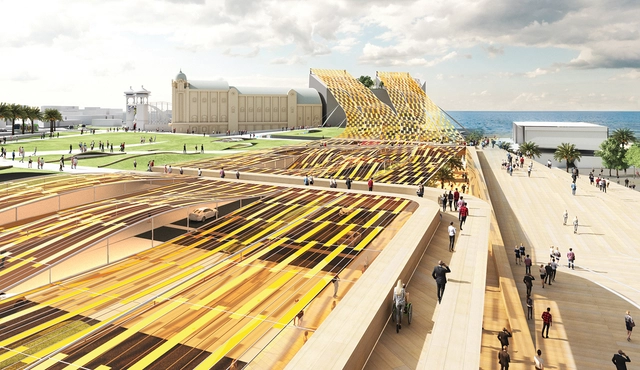
Light Up, by NH Architecture, Ark Resources, John Bahoric Design, and RMIT architecture students is the winner of the 2018 Land Art Generator Initiative design competition for Melbourne, and generates 2,220 MWh of clean energy.
The LAGI 2019 competition offers designers and creatives the opportunity to re-imagine energy infrastructure and demonstrate the beauty of a 100% renewable world.
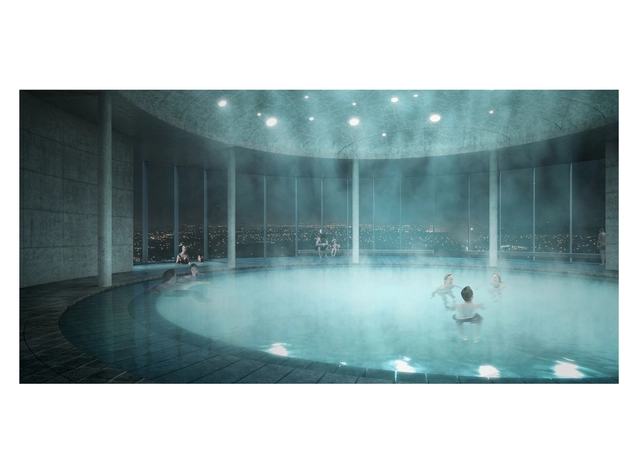
Raise your hand if you’ve ever wanted to go swimming inside a water tower. In reality, it would probably be dark and creepy and not as cool as it sounds, but that’s not the case with Danish firm SquareOne’s design, where the top of an abandoned water tower becomes a public swimming pool and spa. Utilizing the existing structural system of the tower, SquareOne is also proposing adding 40+ student housing units suspended around the tower. This dual-purpose scheme addresses Copenhagen’s desperate housing shortage while also giving new life to an old building.
Junya Ishigami's works at the 2008 Venice Biennale. Image Courtesy of junya.ishigami+associates
I think that the conversation with Junya Ishigami at his experimental (and very international) studio in Tokyo was one of the most memorable experiences of my recent trip to Japan. Junya's visions for not just of his own architecture but for the profession were wholeheartedly inspiring. He thinks that architecture today is “not free enough.” He wants to diversify it, liberate it from so many architects’ insistence on following particular building types and, in general, our narrow expectations. He wants his architecture to be soft and loose and finds inspiration in such improbable metaphors as clouds or the surface of water. “We need to introduce more varieties of architecture to better address peoples’ dreams…I want to expand architecture into the future by creating new comfortabilities,” says Ishigami, whose two recent manifesto-like exhibitions in Paris questioned the very nature and purpose of architecture. He is a visionary and essential voice in what is perhaps the most unsettled of all professions.
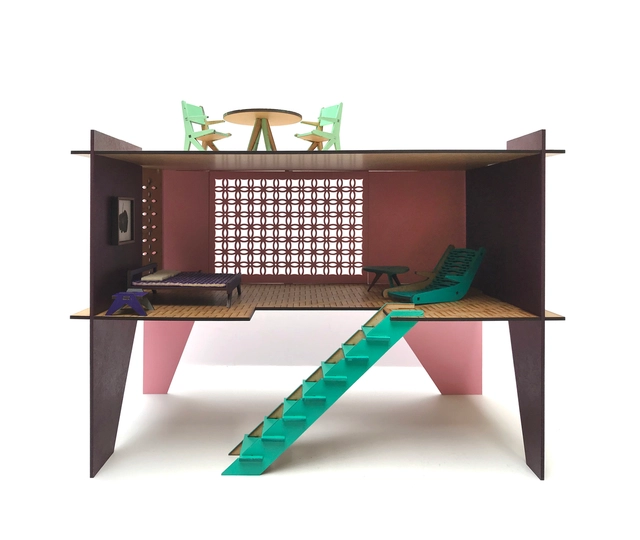
Most architects who are parents have thought, at some point, about designing and building toys for their children. Paula Zasnicoff, a partner at Arquitetos Associados, along with designer Andrea Gomes, decided to go for it and created the Bubud brand.
https://www.archdaily.com/911448/inspire-imagination-and-play-with-architecture-toys-to-assemblePedro Vada
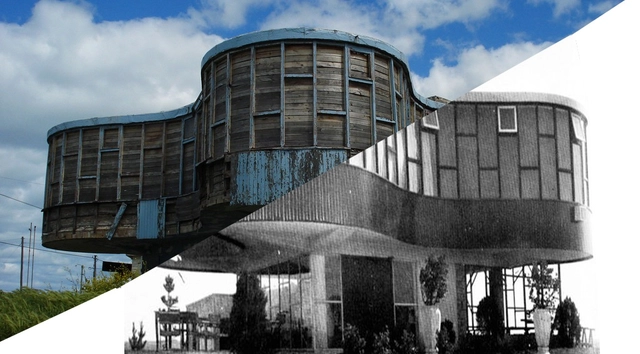
Historical photo: Courtesy of Retrieve the Ariston, Flickr user: ladyandrux. ImageArador Ariston / Marcel Breuer
When the work finally comes to an end, the cleaning is done and preparations for the opening are underway, everything looks perfect. Coatings are all in their proper place, shining and with the intended color; wood surfaces are as yet unmarked and there is even a feeling of freshness and new life. Photographs mean that, for many, this vision of perfection is all that will ever be seen.
But this perfection can be superficial. Failing to consider the damaging power of time during design and specification stages means can hasten the appearance of inevitable imperfections. Small fissures, stains, and scuffs among many other problems (that we have all dealt with at some point) begin to appear. The beautiful wood frame, so lovingly chosen, starts to look greyish. The paint fades where the sun hits the strongest. Boards begin to warp and fall from the facade.
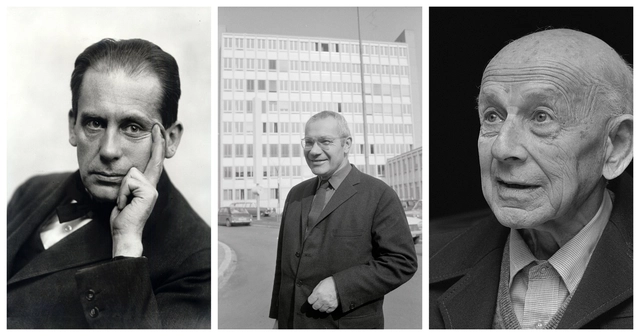
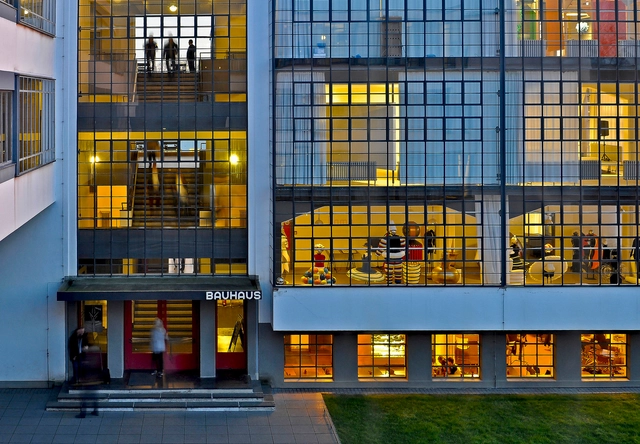
Every famed design movement has an interesting story of how it managed to influence architecture and design through the years. Despite their impact, not all movements began with the same principles they managed to ultimately lead with, and Bauhaus is no exception. The clean-cut modernist archetype, which has pioneered modern architecture for a century now, was once an experimental design institution of expressionism, unbound creativity, and handcraft, bridging the styles of Art Nouveau and Arts and Crafts with Modernist designs.
Celebrate Bauhaus 100 through the world's number one visual storytelling platform, Instagram. An essential tool for designers, Instagram is a constantly growing digital database of market sharing and stimulation. Social media has changed not only how we gather precedents and market our designs, but also our designs themselves. "Instagram Culture" drives designers to create more shareable moments. As we continue to seek these dynamic encounters, let us not forget our forefathers of user experience design and the Bauhaus school.
For its second year as part of the EDGE Center for Advanced Studies, the MS in Architectural Technologies program at SCI-Arc continued connecting issues of disciplinary relevance with the most advanced technological developments reshaping society and culture at large.
Taught by Program Coordinator Marcelo Spina and Casey Rehm, the program’s final degree studio “The Future of Experience: Speculations on New Cultural Centers” explored how artificial intelligence (AI) and its various forms of automation allow us to visualize, learn from, and reconfigure the world.
https://www.archdaily.com/911426/sci-arc-studio-connects-issues-of-disciplinary-relevance-with-advanced-technological-developmentsSponsored Post
Starting this month, ArchDaily will introduce monthly themes. Our editors and curators will align their efforts to go deeper into topics we find relevant in today’s architectural discourse, presenting new articles, projects, collaborations, and submissions by our readers. This month we will begin with Architectural Representation.
What started as a ground cut to represent buildings as a 2D maze or the flat representation of styles on an elevation, later evolved into the axonometric representations of battlefields and fortresses for military use, and since then into a diverse variety of views, formats and techniques that go beyond the mere representation of a volume for its construction.
Videos
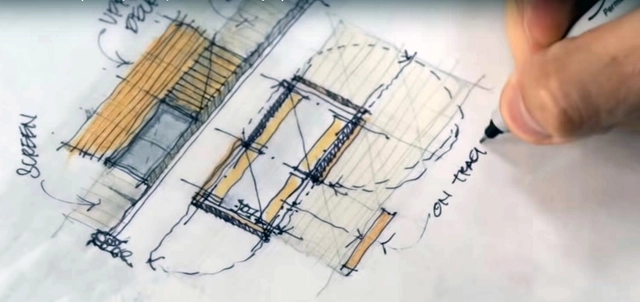
Screenshot do vídeo "Sketch like an Architect (Techniques + Tips from a Real Project)", de 30X40 Design Workshop
The slightly trembling linework, the distinctive crossed corners, the parallel hatching, and the uppercase letters: it is undeniable that architects have developed a style of drawing over time. And though free-hand perspectives are no longer the only (or even primary) form of representation for architectural projects, they still have enormous importance during the design process. They are a design tool rather than a form of representation.
A line that is too thick, an ill-chosen color, a disproportionate scale figure – these are all elements that can draw attention away from the things we actually want to show. Even for an unpretentious and quick sketch, some rules are very important. Some tips help turn an ordinary sketch into something you take pride in and want to show to others. Taking advantage of the huge collection of youtube videos, we have selected some content creators who dedicate themselves to sharing their expertise with the masses.
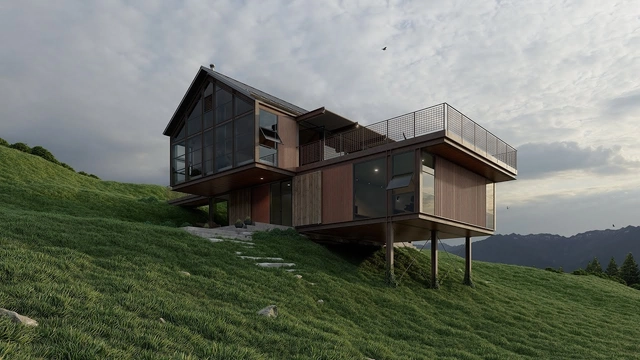
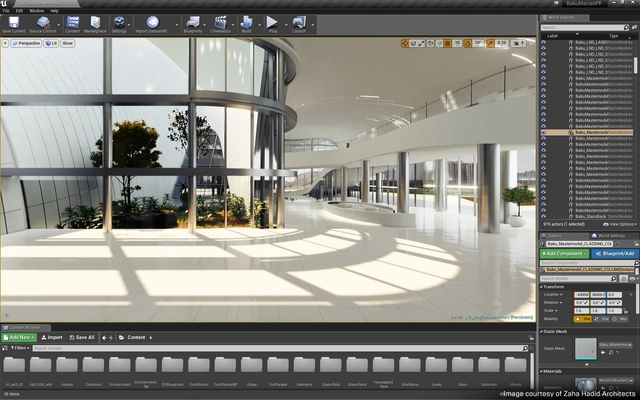
Every year we see new tools and techniques for better, faster architectural visualization. The last few years have been a particularly exciting time because of advances in real-time rendering applications. When coupled with supporting technology like virtual reality headsets, projectors, and graphics cards, real-time photoreal rendering is putting stunning, dynamic visualization media within reach—mixed and augmented reality worlds, interactive configurators, game-like presentations—so architects and designers can truly tell their stories.
https://www.archdaily.com/911327/trends-in-architectural-visualization-2019-storytelling-with-new-mediaSponsored Post
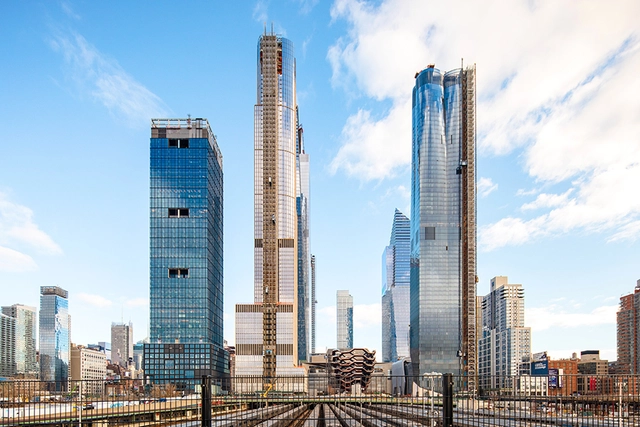
There’s something striking about the command center of America’s largest private real estate development, Hudson Yards, in that it’s actually pretty boring. The room—technically known as the Energy Control Center, or ECC for short—contains two long desks crammed with desktop computers, a few TV monitors plastered to the wall, and a corkboard lined with employee badges. The ceiling is paneled; the lighting, fluorescent. However, New York’s Hudson Yards was once billed as the country’s first “quantified community”: A network of sensors would collect data on air quality, noise levels, temperature, and pedestrian traffic. This would create a feedback loop for the developers, helping them monitor and improve quality of life. So where is the NASA-like mission control? Data collection and advanced infrastructure will still drive parts of Hudson Yards’ operations, but not (yet) as first advertised.
Opening in the late 1980s after more than ten years of construction, the Slovak Radio Tower is an unmissable feature in the landscape of Bratislava. The building, an inverted pyramid of steel frame construction, was designed by Štefan Svetko, Štefan Ďurkovič, and Barnabáš Kissling during the height of socialist realism.
After the dissolution of the Bauhaus due to Nazi political pressure in April 1933, the ideas, teachings, and philosophies of the school were flung across the world as former students and faculty dispersed in the face of impending war. Of the numerous creative talents associated with the Bauhaus, many went on to notable careers elsewhere. Some made a living as artists or practitioners, others either continued or began careers as teachers themselves - and many did both throughout the course of their lives.
In many parts of the world, more women have architectural degrees than men. However, this fact hasn’t translated past university into the working world as women continue to be underrepresented across nearly all levels of practice.
The conversation regarding women in architecture gained tremendous traction back in 2013 with the petition for Denise Scott Brown to be recognized as the 1991 Pritzker Prize winner, alongside her husband and the consequent rejection of that request by Pritzker. The Architectural Review and Architect's Journal have, since 2015, jointly presented awards to the exceptional female practitioners as part of their Women in Architecture Awards program. The swelling of these movements have helped to promote not only the role but also the recognition of women in architecture.










__New_YorkVG_Bild-Kunst__Bonn.jpg?1550306273&format=webp&width=640&height=580)


.jpg?1549809940)
.jpg?1549809709 "© Alexandra Timpau, Alex Shoots Buildings")
.jpg?1549811238 "© Alexandra Timpau, Alex Shoots Buildings")
.jpg?1549809072 "© Alexandra Timpau, Alex Shoots Buildings")
.jpg?1549809230)
.jpg?1549808705)