Magic lies in architectural ruins. Beneath the dirt and mold, fractured walls and deserted rooms still stand, preserving the remains that have lingered long after their owners' departure.
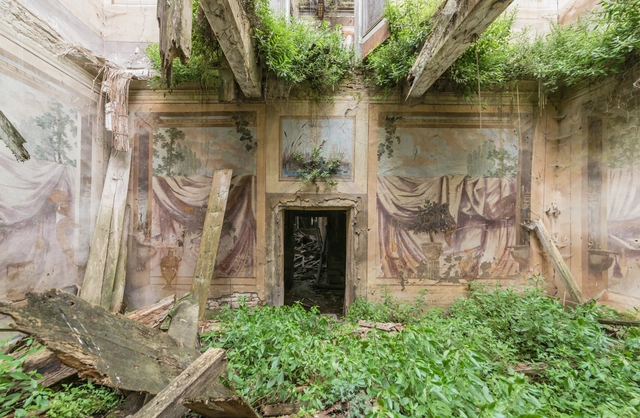
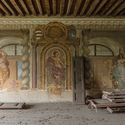
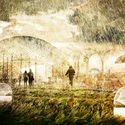
During his explorations of abandoned places across Europe, photographer Romain Veillon stumbled upon enchanting frescoes and paintings that were left to fade in the parlors of the aristocrats. Veillon became keen on finding more of these imaginary museums across the continent, and to his chance, managed to discover many in France, Germany, Italy, Ireland, and Portugal.
Before their art is forgotten and their houses quietly rust away, Veillon captured the murals found in these haute bourgeoisie family houses, which illustrate stories of the cities they lay in and the people they once belonged to.
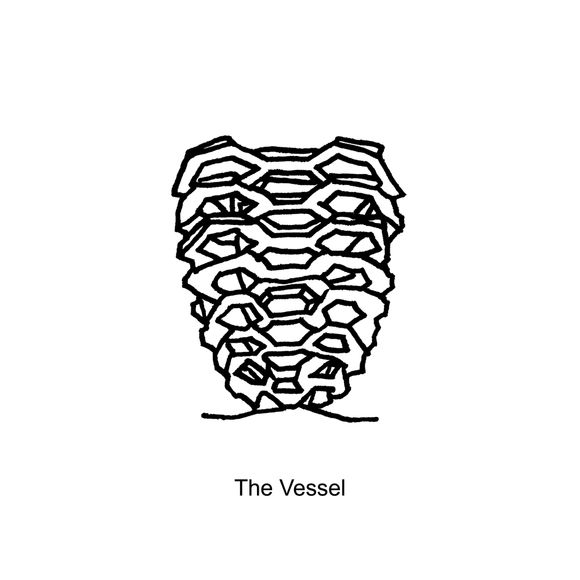
“Hudson Yards’ Large Honeycomb… Hudson Yards’ New Shawarma Sculpture…” Call it what you want, but the Vessel has created quite a buzz over the past couple of weeks, and it is not just because of its impressive architecture, or the panoramic view at the top (to which some claimed that getting there was an uncalled for work-out).
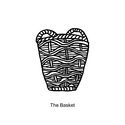
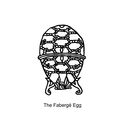
After coming across different nicknames of Hudson Yards’ now-famous point of attraction, architectural designer and illustratorChanel Dehond selected some of the most amusing ones and transformed them into sketches.
Tell us, ArchDaily readers, what do you call the Vessel?
This article was made in partnership with Design Indaba, a website and annual festival that uncovers innovation for good. Global Graduate Nicole Moyo presented her project Day 1 of the 2019 festival. Click here to learn more about the annual event.
Our planet is home to almost 7 billion people. Out of these 7 billion, more than 5 billion have access to mobile phones, but less have access to working toilets, and more than 1 billion still discharge waste in the open.
Home. Our shelter. Our private space. In an urbanized world with dense megalopolises like Tokyo, Shanghai, and São Paulo, homes are getting smaller and more expensive than ever. If you are claustrophobic, Marie Kondo is your best ally in the quest to earn some extra space. And even though private backyards have become a luxury for most, our data shows that single-family houses are still the most popular project type on ArchDaily. Why is this? (Especially when it seems incongruous given the reality of today’s crowded cities.) Why do some universities still insist on designing and building houses as academic exercises? Wouldn’t it be more creative—and more useful—to develop architecture in small-scale spaces? Would it be more rewarding to develop solutions on bigger scales?
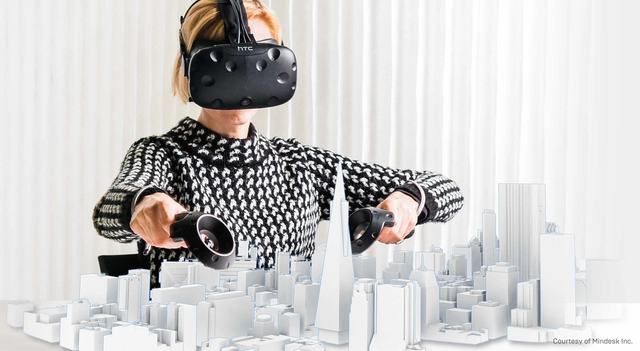
As more and more visualization professionals adopt real-time rendering for presentation and collaboration, we’re seeing yet another trend in this emerging field: the integration of various technologies to serve a wide variety of workflows.
Every firm has different needs for compatibility with their chosen CAD programs. No one wants to learn a new process from scratch when they've already spent countless months setting up a design-to-presentation process that works for them.
https://www.archdaily.com/913407/integration-the-latest-architectural-visualization-trend-of-2019Sponsored Post
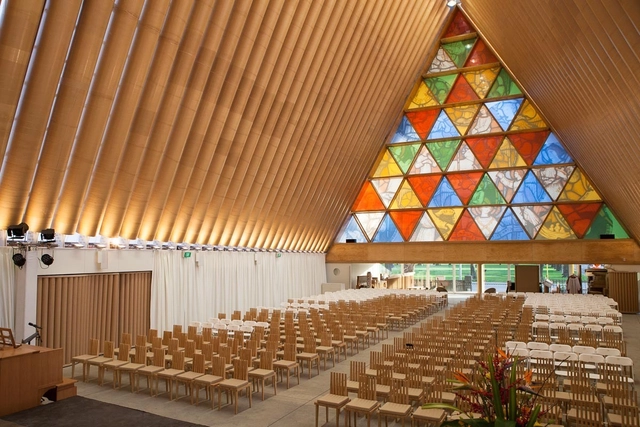
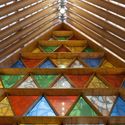
Cardboard tubes are so commonplace that we may no longer even notice them. Yet they are everywhere: in a roll of toilet paper, in the packaging of the college diploma, in fireworks, and in the tissue and paper industries. And now, more and more, they can be found in unusual places, such as on the walls of houses and buildings. The material is part of modern life and is being produced for a multitude of industrial applications and consumer products. The vast majority are used as structural cores in winding operations. Immediately after manufacturing, paper, film or textiles are rolled directly onto cardboard tubes resulting in a stable roll that is easily stored and transported.
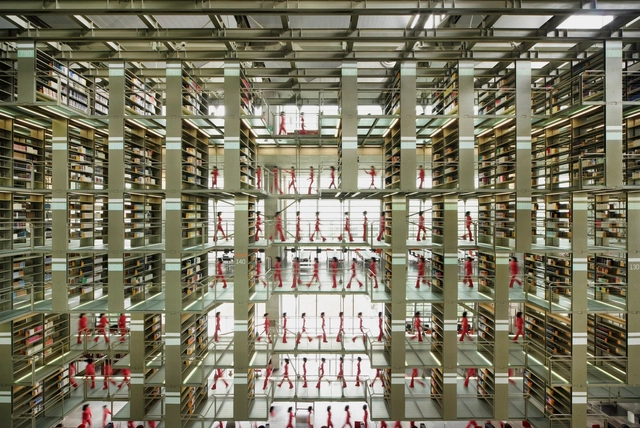
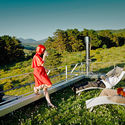
The purpose of architectural photography is to show a design in the best possible way, with the artform often characterized by perspective correction and atmospheric lighting. However, few architectural photographers have experimented with other artistic disciplines. Miguel de Guzmán, Paul Vu and Jules Couartou are among those who have challenged the limits of this form of photography, generating an interesting crossover between architecture photography, fashion and performances. In their images, the relationship between space and the user is shown through a scene designed to register an effect on the viewer. The results are images which are full of creativity.
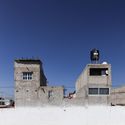
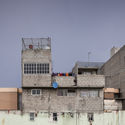
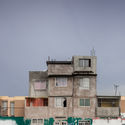
In 2005, as a way to increase its competitiveness, the government of the state that borders Mexico City – named Estado de México– launched a program called “Bicentenary Cities,” a nod to the 200th anniversary of the Mexican Independence. This program proposed careful land-use planning and the creation of a state structure for key population centers selected based on location, capacity for population increase, potential to host infrastructure and strategic equipment, and the possibility to create adequate communication lines to enable regional, statewide and national integration.
Architecture, just like art, has the ability to detach the individual and provoke a sense of intrigue and inspiration. Some buildings leave a greater mark, especially if the project or the site it is built on has a story of its own.
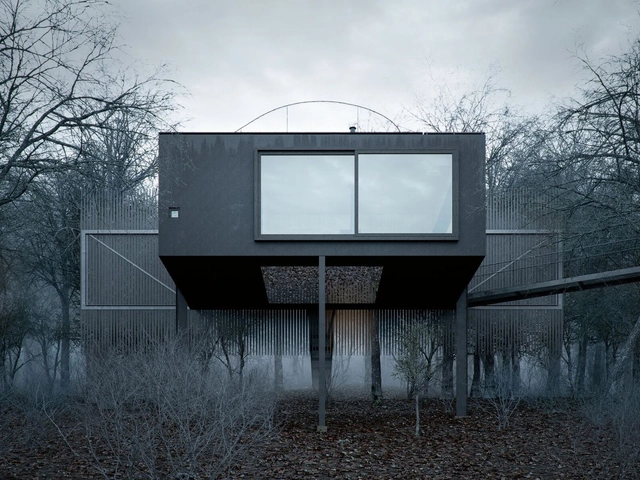
The Mask by WOJR is developed for an individual who lost his younger brother in a lake in Ithaca, New York. After the tragedy, the lake became a zone of detachment from the everyday world, transforming the structure from just a house on a lake, to a space of contemplation.
Developed by Nikos A. Salingaros, David Brain, Andrés M. Duany, Michael W. Mehaffy, and Ernesto Philibert-Petit, this series of articles offers here a set of evidence-based optimal practices for social housing, applicable in general situations. Varying examples are discussed in a Latin American context. Adaptive solutions work towards long-term sustainability and help to attach residents to their built environment.
They propose, then, new insights in complexity science, and in particular the work of Christopher Alexander on how to successfully evolve urban form. By applying the conceptual tools of “Pattern Languages” and “Generative Codes”, these principles support previous solutions derived by others, which were never taken forward in a viable form.
https://www.archdaily.com/913586/socially-organized-housing-design-that-establishes-emotional-ownershipNikos A. Salingaros, David Brain, Andrés M. Duany, Michael W. Mehaffy & Ernesto Philibert-Petit
Faced with the challenge of designing housing units for rural areas south of the city of Bogotá, Sociedad Colombiana de Arquitectos (Colombian Society of Architects) called upon a participation of proposals with technical and spatial solutions, not only allowing the development of viable forms of productivity and growth, but also applying criteria of sustainability, efficiency and comfort.
Considering the adaptability of this architecture of the unity to the terrains situated in three varying geographies and characterised by an Andean landscape, the jury granted the first price to the team of FP Arquitectura and the second prize to Espacio Colectivo Arquitectos + Estación Espacial Arquitectos. Get to know the latter project in detail below, described by the authors.
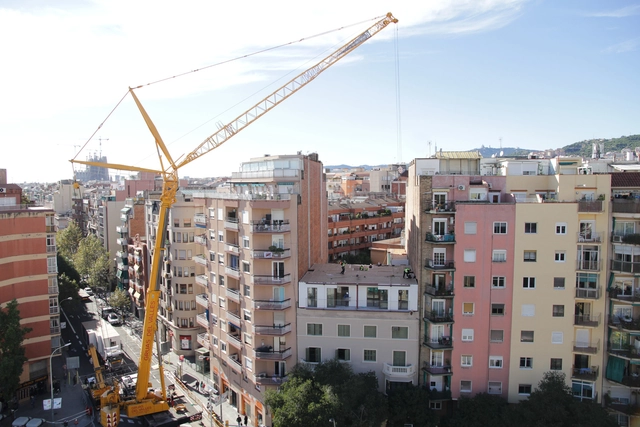
La Casa por el Tejado, a company specializing in the construction of old buildings, duplicated both the living spaces and the number of floors of an apartment building on Avenida Meridiana in the El Clot neighborhood of Barcelona. The new residences were built off-site in 12-weeks time and in accordance with the building's original dimensions and characteristics.
Although the ability to install home automation in a practical way is associated with new projects, it is possible to adapt previously built buildings in a relatively simple way. In both small and large renovations projects these systems can deliver automated features that responds to the requirements and needs of its users. They can also improve the habitability and comfort of its spaces, increase their security and promote long-term energy and money savings. So, what considerations must be taken into account in order to transform an regular architecture project into an "intelligent" one?
Architects are increasingly aware of our influence on the well-being and good health of the users of our projects. Natural lighting –and how it should be complemented with artificial lighting– is an essential factor to consider for the visual comfort of interior spaces. But, do we know how to handle it correctly?
The dramatic improvement in recent decades in our understanding of sustainable design has shown that designing sustainably doesn't have to be a compromise—it can instead be a benefit. When done correctly, sustainable design results in higher-performing, healthier buildings which contribute to their inhabitants' physical and mental well-being.
The benefits of incorporating vegetation in façades and in roofs, as well as materials and construction systems that take energy use and pollution into account, demonstrate that sustainable design has the potential to create buildings that improve living conditions and respect the natural environment.
Below we have compiled 30 plans, sections and construction details of projects that stand out for their approach to sustainability.
Where does originality and independent thinking come from? The answer is prosaically straight forward – from an inquiring individual, and an experimental environment wouldn’t hurt to stimulate it. Rem Koolhaas is credited with fostering such an environment, both through building his practice, Office for Metropolitan Architecture (OMA), a 300-architect network of seven global offices, and teaching at Harvard’s GSD, as well as lecturing all over the world. Koolhaas now has eight partners. One of the eight, since 2008, is Shohei Shigematsu who heads OMA New York since 2006. The studio originally numbered just a handful of people and over the years has grown into a large practice of 75 architects with a focus on projects in North America.
Architects' general ignorance about the needs and requirements of people with special needs is worrisome. Beyond complying with mandatory regulations (different in each country), the quality of life for different-abled people depends on specific and daily factors that go beyond a railing or a ramp, and are often left in the hands of professionals who have never dealt with such issues.
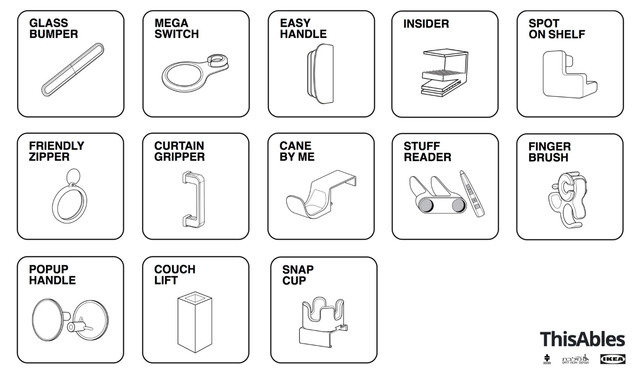
This Ables, a project developed by IKEA and the non-profit organizations Milbat and Access Israel, provides an excellent resource for how to create an equitable design in the smallest and simplest of details. From door handles that are can be opened with a forearm to a couch lift that enables users to sit down and get up easily, these 13 products are available to the general public on ThisAbles.com. Some products can even be 3D-printed independently.
See the video below for more details of the project.








.jpg?1553680440&format=webp&width=640&height=580)


.jpg?1553680440)
.jpg?1553267060&format=webp&width=640&height=580)











_Eric_Laignel.jpg?1551969702 "© Eric Laignel")
_comp.jpg?1551969713 "© Zooey Brown")