Exploring the streets of foreign cities is profoundly engaging. Whether it's meeting new cultures, observing new architectures, or trying new food, travelers usually go for the typical sightseeing activities. However, some have quite a unique take on tourism and choose to think outside the box - or in this case, above it.
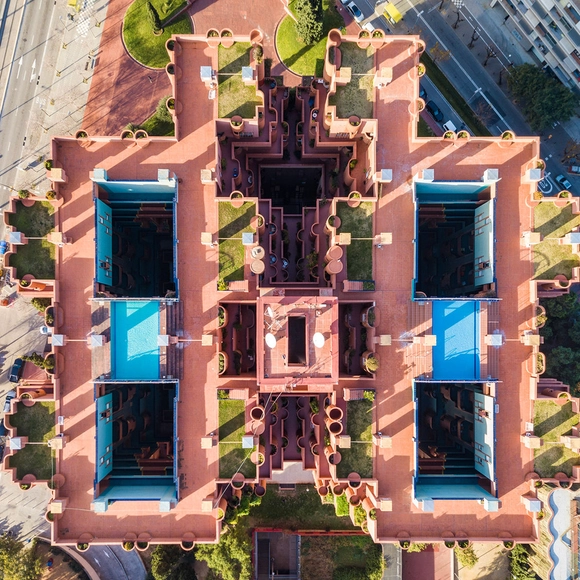
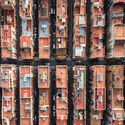
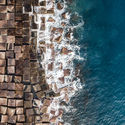
Hungarian photographer Márton Mogyorósy chose to explore the Catalonian capital from above, capturing aerial shots of the city. Drone photography has helped us see cities from a unique perspective, and with Barcelona’s dynamic urban fabric, the coastal city’s buildings and beaches have turned into vibrant geometric artwork.
Studies show that public investment in integrated and safe cycling networks promotes urban transformation, providing more humanity, health and quality of life in urban spaces. While cities in the Netherlands and the Nordic countries have already incorporated bicycles into daily life, with a significant portion of the population using the means of transport for daily commutes, much of the world is still seeking a model to reduce congestion and increase its use. According to the Institute for Transportation and Development Policy (ITDP), investing in non-motorized transport allows congestion reduction, improves air quality, physical and mental health of residents, and local trade and brand visibility, once that cyclists tend to pay more attention to local commerce and take up less space than cars.
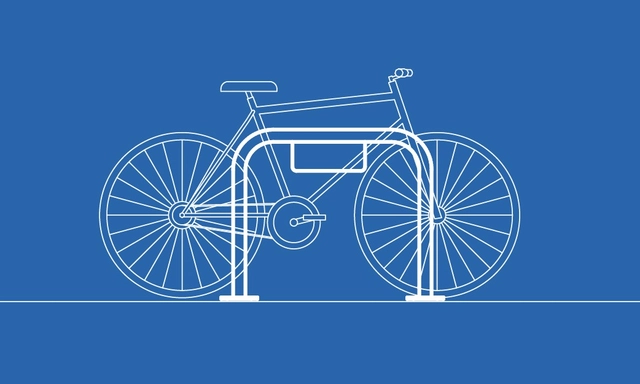
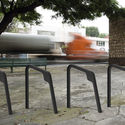
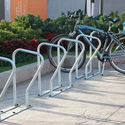
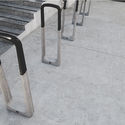
But along the cycle lanes and cycle paths it is essential to provide suitable places so that bicycles can be parked at the end of the trails. While bike stands are enclosed spaces, usually with some kind of surveillance and additional infrastructure, paracycles are the structures that allow to securely support and lock the bike. They can integrate in the urban furniture of a city, next to benches, plates, lamps and informative totems.
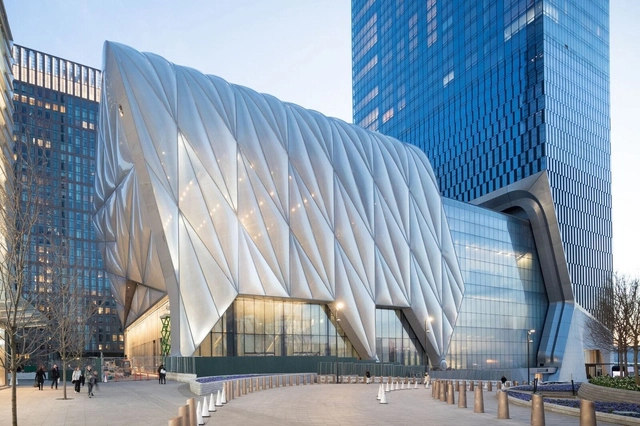
Until recently, the architecture world largely viewed plastic polymers as inferior building materials, handy for wipe-clean kitchen surfaces, but not practical in full-scale building applications. But with technological innovations driving material capabilities forward, polymers are now being taken seriously as a legitimate part of the architect’s pallet. One of the most widely-used of these materials is a fluorine-based plastic known as ETFE (Ethylene tetrafluoroethylene). Brought into the public consciousness thanks to its use on the facade of PTW Architects' Water Cube for the 2008 Beijing Olympics, architects are now realizing the film’s capabilities to express a new aesthetic and replace costlier transparent and translucent materials. Its most recent and spectacular public appearance was on the 120-foot telescopic shell of The Shed, designed by Diller Scofidio + Renfro and Rockwell Group in New York City.
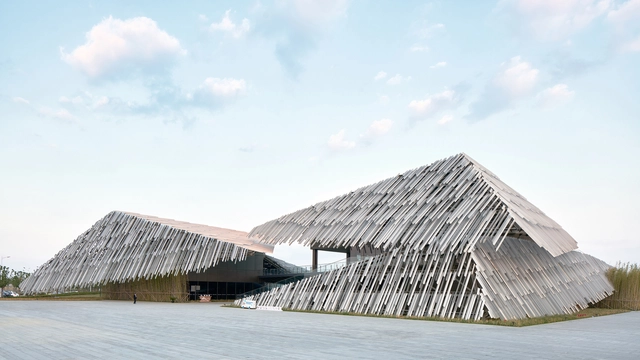
From Chinese architectural photographerZheng Shi comes imagery of Kengo Kuma's Yangcheng Lake Tourist Transportation Center in China. Architecture aimed to build a topographic structure as a large hill by randomly placing aluminum extruded materials with single-sized sections. Inside is designed as the assemblage of slanted floors, in order to maintain the same landform both in inside and outside that create some random yet ambiguous state.
https://www.archdaily.com/912694/kengo-kuma-and-associatess-yangcheng-lake-tourist-transportation-center-through-the-lens-of-zheng-shi韩双羽 - HAN Shuangyu
Access to housing, both in the case of purchasing or renting, with any type of financing, is usually one of the most important economic investments in people's lives. It is natural to ask oneself what considerations are necessary in order to have a knowledge base before acting.
Within the framework of Espacios Oscuros research project, focused on observing and analyzing the experience of sexual diversity in public spaces of Santiago de Chile, architects María González and José Tomás Franco spoke with Nikos Salingaros, a mathematician and thinker known for his alternative theoretical approach to architecture and urbanism. Salingaros promotes design focused on human needs and aspirations, combining rigorous scientific analysis with a deep intuitive experience.
Our cities are, for the most part, hostile to the sensibilities of their citizens. (...) Almost everything has been aligned, standardized, emptied. So, how to meet different people, and how to expect a mix between strangers?
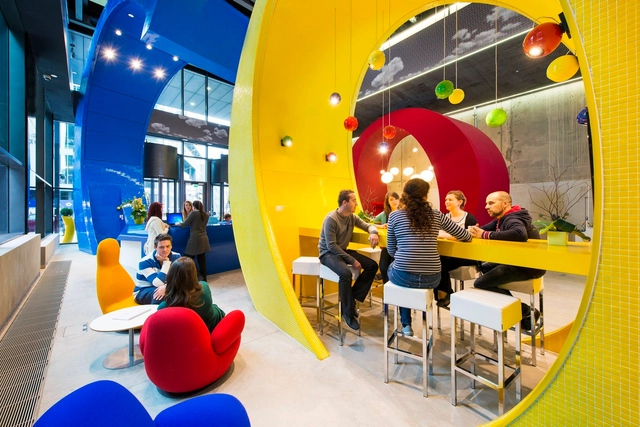
Architecture, unlike other aspects of culture (such as fashion or music), can only really be experienced and understood in person. For highly branded companies, designing a new building can be a prime opportunity to signal taste and values - but also creates an interesting architectural conundrum. While the buildings will be inhabited (nearly 24/7) by company employees, they’re also very much populated by the imaginations of people across the globe. What is it like to be in these places?
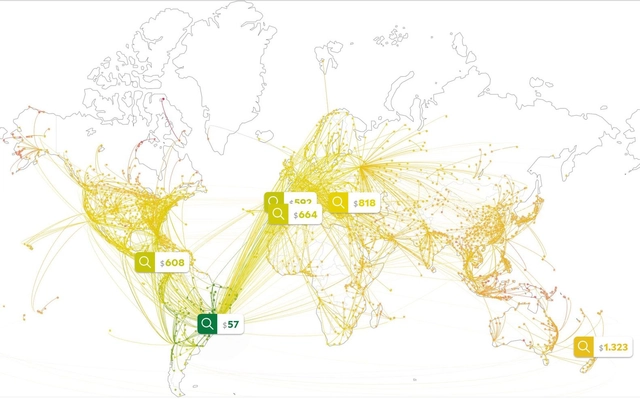
MIT's Senseable City Lab, led by the architect Carlo Ratti, has launched Escape, an interactive platform for visualizing air travel data. "Escape" serves as a search engine that helps users find the cheapest flights from a particular city, and to make the decision on their next trip faster and easier.
https://www.archdaily.com/914292/mits-new-travel-platform-finds-you-cheaper-flights-around-the-worldPedro Vada
Under heavy bombing, buildings seem to have only one fate: destruction. Severely damaged during the Spanish Civil War, the 13th-century Gothic Church of Vilanova de la Barca (Lleida, Spain) remained abandoned since 1936.
It was only almost 80 years later that the remnants of the structure – parts of the naves, the west façade and the apse towards the east– went through a restoration and refurbishment process. This time, however, the building was not meant to be used as a church but as a multi-purpose hall.
With the aim of generating an architecture that incubates the wellbeing, self-realization, and fulfillment of its inhabitants to become the best version of themselves, CEBRA has launched an ambitious Research and Development Program (R&D) called WISE (Work, Innovation, Space and Education).
As explained by its creators, the purpose of WISE is "to bridge the ongoing and rapid change in the sectors of workspace and education to inform the design of buildings that stimulate learning and innovation. We are connecting ideas of the foremost thinkers of education and entrepreneurship, research and studies in sensory stimuli, cognitive psychology, and behaviorism with architecture."
We spoke with Carsten Primdahl, founding partner of CEBRA, and Klaudio Muca, R&D Architect at CEBRA, to better understand the approach and expected results of the program.
It is the end of May 2016, Alejandro Aravena’s “Reporting from the Front” Biennale is about to kick off the next day and I just landed at Venice airport. Vaporetto waterbuses are no longer running at this late hour, so I am heading for a water taxi, thinking that it will cost me a bundle to get to the city. But maybe not! I see a lonely figure, “Are you going to Venice? Would you like to share a taxi?” A young Chinese woman agrees without hesitation. As soon as the boat leaves I keep pressing my luck, “Are you an architect, by any chance?” Yes! The next hour flew unnoticed, as we discussed our discipline and common friends. Two years passed, and I am back to Venice Biennale. At the opening of the Chinese Pavilion, I am hopping from conversation to conversation until I am introduced to Xu Tiantian, “China’s most promising female architect.” We looked at each other and said in unison, “The taxi girl/guy!” We finally exchanged contacts and on my next trip to Beijing we met at Xu’s DnA Design and Architecture studio. What follows, after a brief introduction, is an excerpt from that conversation.
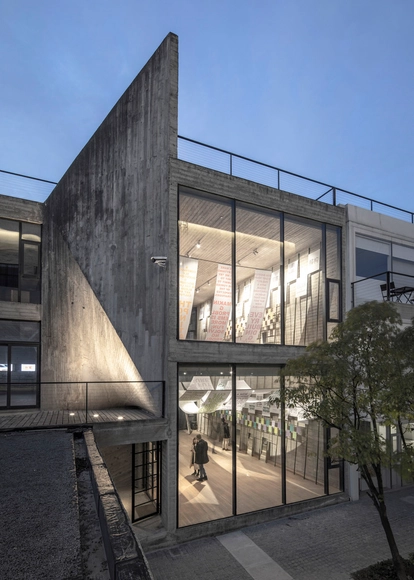
I Am Interested in Seeing the Future is an architectural exhibition, that, contrary to what you might expect, includes no models and no drawings. Instead, as soon as visitors arrive, they find themselves surrounded by text. The wall facing the entrance is covered by an installation of single words on posters, interview transcripts on colored paper, and mirrors that reflect the sentences on flimsy scrolls arcing down from the ceiling.
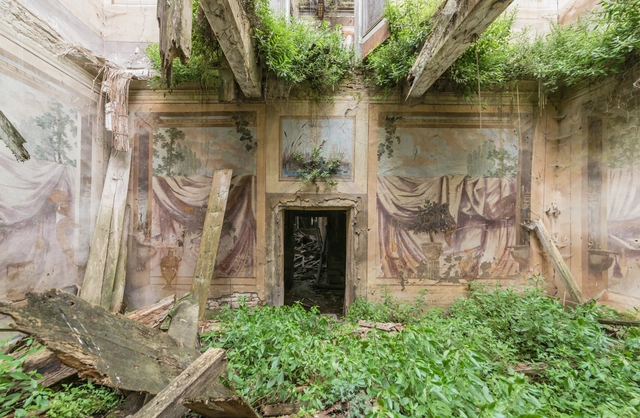
Magic lies in architectural ruins. Beneath the dirt and mold, fractured walls and deserted rooms still stand, preserving the remains that have lingered long after their owners' departure.
During his explorations of abandoned places across Europe, photographer Romain Veillon stumbled upon enchanting frescoes and paintings that were left to fade in the parlors of the aristocrats. Veillon became keen on finding more of these imaginary museums across the continent, and to his chance, managed to discover many in France, Germany, Italy, Ireland, and Portugal.
Before their art is forgotten and their houses quietly rust away, Veillon captured the murals found in these haute bourgeoisie family houses, which illustrate stories of the cities they lay in and the people they once belonged to.
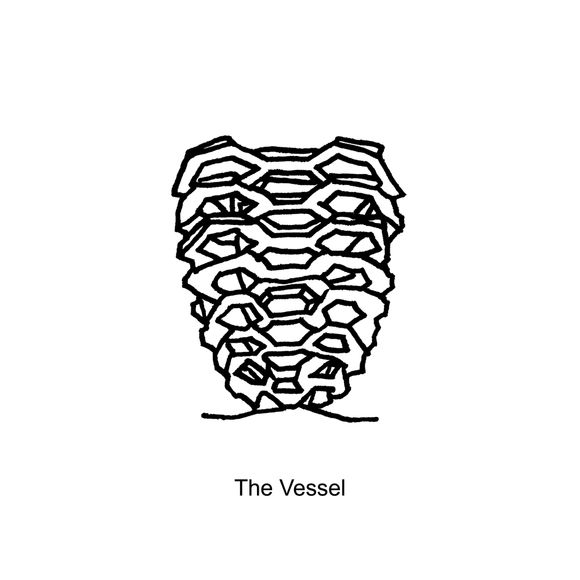
“Hudson Yards’ Large Honeycomb… Hudson Yards’ New Shawarma Sculpture…” Call it what you want, but the Vessel has created quite a buzz over the past couple of weeks, and it is not just because of its impressive architecture, or the panoramic view at the top (to which some claimed that getting there was an uncalled for work-out).
After coming across different nicknames of Hudson Yards’ now-famous point of attraction, architectural designer and illustratorChanel Dehond selected some of the most amusing ones and transformed them into sketches.
Tell us, ArchDaily readers, what do you call the Vessel?
This article was made in partnership with Design Indaba, a website and annual festival that uncovers innovation for good. Global Graduate Nicole Moyo presented her project Day 1 of the 2019 festival. Click here to learn more about the annual event.
Our planet is home to almost 7 billion people. Out of these 7 billion, more than 5 billion have access to mobile phones, but less have access to working toilets, and more than 1 billion still discharge waste in the open.
Home. Our shelter. Our private space. In an urbanized world with dense megalopolises like Tokyo, Shanghai, and São Paulo, homes are getting smaller and more expensive than ever. If you are claustrophobic, Marie Kondo is your best ally in the quest to earn some extra space. And even though private backyards have become a luxury for most, our data shows that single-family houses are still the most popular project type on ArchDaily. Why is this? (Especially when it seems incongruous given the reality of today’s crowded cities.) Why do some universities still insist on designing and building houses as academic exercises? Wouldn’t it be more creative—and more useful—to develop architecture in small-scale spaces? Would it be more rewarding to develop solutions on bigger scales?
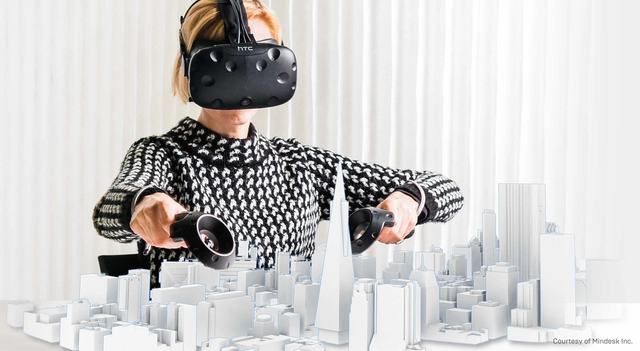
As more and more visualization professionals adopt real-time rendering for presentation and collaboration, we’re seeing yet another trend in this emerging field: the integration of various technologies to serve a wide variety of workflows.
Every firm has different needs for compatibility with their chosen CAD programs. No one wants to learn a new process from scratch when they've already spent countless months setting up a design-to-presentation process that works for them.
https://www.archdaily.com/913407/integration-the-latest-architectural-visualization-trend-of-2019Sponsored Post













_.jpg?1553955025&format=webp&width=640&height=580)
_.jpg?1553955147 "© Laurian Ghinitoiu")
_.jpg?1553955015 "© Laurian Ghinitoiu")
_.jpg?1553955174 "© Laurian Ghinitoiu")
_.jpg?1553955102 "© Laurian Ghinitoiu")
_.jpg?1553955025)


.jpg?1553867198 "Tea House. Image © Wang Ziling")







.jpg?1553680440&format=webp&width=640&height=580)


.jpg?1553680440)
.jpg?1553267060&format=webp&width=640&height=580)