Courtesy of UN-Habitat and Global Utmaning/ Edited by ArchDaily
The built environment destined for everyone is still, to this day, not envisioned by everyone. Last year on Women’s day, we stated that “the battle for equality is far from over”. Highlighting continuously women architects and gender-related topics, this year, ArchDaily is turning the tables and seeking guidance from our audience. We highly value our reader's opinions, and now more than ever, we are seeking your input, to reach more realms and shed light on unfamiliar female figures to the international scene.
In your opinion, who are the female architects missing from our platform? Help us put the spotlight on women implicated in the built environment and nominate major female characters from across the globe, so that we can adjust the narratives, feature their work, and share knowledge and tools for a more inclusive world. These women can belong to any part of history: from young upcoming forces to established individuals or firms to figurines that were part of architecture's history. They can also have diverse professional backgrounds, from architects, planners, designers, to builders and decision-makers, all profiles involved in shaping the environment that surrounds us are eligible.
The early 20th century saw the birth of Modernist architecture. It brought with it a central architectural movement that in turn birthed off-shoots of its own. A figure often seen as the defining face of this movement is Le Corbusier, whose 1923 treatise Toward an Architecturewas influential to his Modernist contemporaries – a manifesto including the phrase “a house is a machine for living in” where good architecture would have to be intrinsically linked to function and the demands of industry.
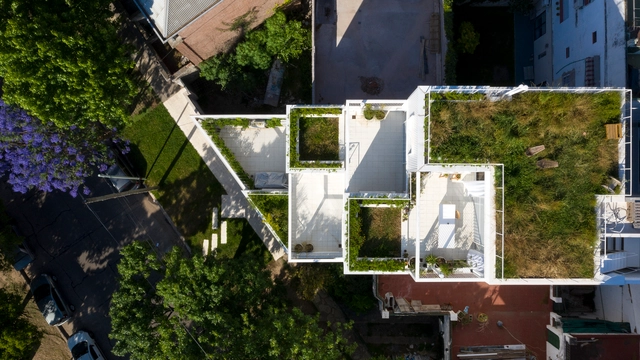
Over the last couple of years, terraces have become an important part of urban life, acting as a refuge, a space for enjoyment and gathering, for contemplation or as an outdoor workspace. As a result of periods of confinement around the beginning of the Covid-19 pandemic, these outdoor spaces where people can exercise, connect with nature, study or work, have become particularly popular with those living in large cities.
Scandinavian interiors and products have had an affinity with design excellence for the better part of a century. Although the local landscape is one of doubtless natural beauty, it remains frustratingly covered in darkness for a large portion of the year.
Tsz Yan Ng is a Michigan-based firm principal, professor, researcher, and artist whose interdisciplinary and collaborative work seeks to challenge and improve upon modern fabrication and manufacturing practices. “We haven’t changed the way we build in so long,” Ng said. “We need to think of it more productively—not just economically—but as a collection of different voices. Architecture is a global ecosystem of people, where the sum is greater than the parts.”
What is success to you might be different to how the architecture industry views success.
One thing is certain: Everyone wants and deserves more. And to have more, you have to learn how.
I am not here to discuss philosophical concepts behind our drive as architects to be better or have more. I am here to promote a better life for architects. More recognition, more clients, more awards, more money.
Maybe you are happy where you are, maybe you struggle, but either way all of us could benefit from knowing what to do to improve the state of our careers.
Nordic Structures. Image Courtesy of Quebec Wood Export Bureau
Offsite construction is a fast-growing sector within the global building construction industry. With that growth, many challenges lie ahead for all parties involved, especially architects, who have traditionally remained at arm’s length to the means and methods of construction. Cost challenges have led many firms to want to learn more about optimizing for offsite delivery methods. To help speed up industry transformation, a cooperative and open-source initiative led by the Quebec Wood Export Bureau has been developing a suite of nonprofit and collaborative tools for architects. At www.offsitewood.org, they offer a free Revit plugin, detailed content packs, and a BIM-integrated early-phase embodied carbon estimator called Carbon Fixers.
Fazlur Rahman Khan was a pioneer in the structural engineering of tall buildings. After buildings exceed sixty stories height, gravity loads account for a smaller proportion of structural weight than wind loads. Khan developed the tubed truss tower design to stiffen the building at taller heights without adding significant weight. The tube design had the added consequence of pushing the structure out to the exterior of the building to become part of its architectural expression. However, the acceptance of visible steel trusses was a slow process that parallels the acceptance of engineering infrastructure like bridges as aesthetic productions. This video traces a lineage of this process from Eiffel — who’s pylon designs look much like the Hancock Tower — to today.
This week’s curated selection of Best Unbuilt Architecture highlights competition-winning projects submitted by the ArchDaily Community. From large scale urban developments to interventions in the landscape, from housing projects to educational spaces and commercial buildings, this article showcases a variety of design approaches, programs and scales. The proposals featured are the results of local and international competitions, either creative concepts or projects currently in progress.
The competition-winning entries include a range of different projects, designed by both new practices and established firms. are a few of this week's highlights. A "city within a city" urban development in Ukraine, an EV station design in Canada that reinterprets the traditional typology of highway rest areas, a sustainable housing block in Finland and a clubhouse in the landscape of New Zealand are some of this week's highlights.
Capturing an image has become spontaneous and immediate. While mobile photography maintains quality, it loses the ritual of taking a picture, i.e. thinking about an image while walking through a new city or the framing possibilities for a building from your point of view. In short, each image is the result of focus, aperture, exposure and the characteristics of the space. Travelling with a 35mm camera sets your limits, some say it is the closest lens to the human eye, others say it is too narrow to capture a building from the outside, but no doubt it all depends on your judgement and the capabilities of the equipment at your disposal.
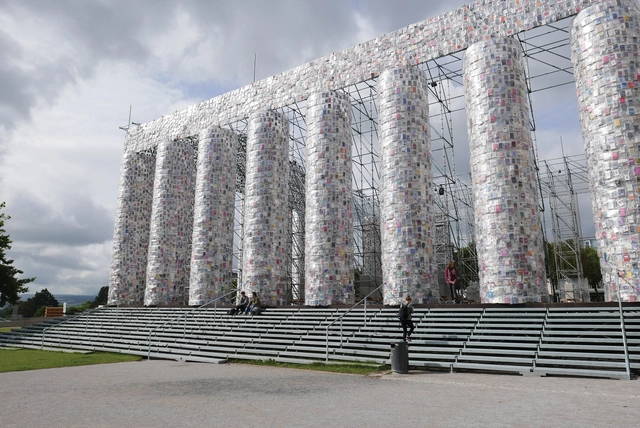
Marta Minujín, Parthenon of Books, Dokumenta 14, Kassel, Germany, 2017. Image by Anne-Catrin Schultz.. Image Courtesy of Real and Fake in Architecture–Close to the Original, Far from Authenticity?
The term “fake” has been in the media frequently in the early 21st century, referring to headlines and fictional statements that are perceived as real and are influencing public opinion and action. Replacing the historically more common term “propaganda,” fake news aims at misinformation and strives to “damage an agency, entity, or person, and/or gain financially or politically, often using sensationalist, dishonest, or outright fabricated headlines.” Tracing fake news and differentiating “real” information from personal opinions and identifying intentional (or unintentional) deceit can be complicated. It is similarly complex to trace the duality of fake and real in the built world. To explore the larger context of fake statements in architecture and environmental design, a look at the definition of fake and related terms might be necessary.
Recently, the Nobel laureate economist Paul Krugman wrote in the New York Times about the causes of unaffordable housing in New York City. He blamed the crisis on a few things, including a powerful financial “monoculture” in the city, NIMBYs, and the city itself blocking new construction. That last element, however—that the city blocks new construction—is an increasingly popular myth that needs examination.
The clothes used by nomadic peoples in the desert (Bedouins, Berbers, Tuareg, among others) are usually dark, long and made of heavy fabric. Contrary to common sense, which would recommend light, pale and short clothes for a hot climate; heavy and loose clothing favors air convection, creating a constant flow of air along the body, providing thermal comfort in arid climates. For buildings, the analogy works. When approaching energy efficiency and project performance, we will inevitably talk about its envelope, among other aspects of the project. A successful solution in one location, will not always be efficient in another.
During the last 2 years we have created a series of articles on wellness and sustainability focused on the construction industry. But how do projects, according to their demands and context, apply the solutions to make them, in fact, efficient and perform well?
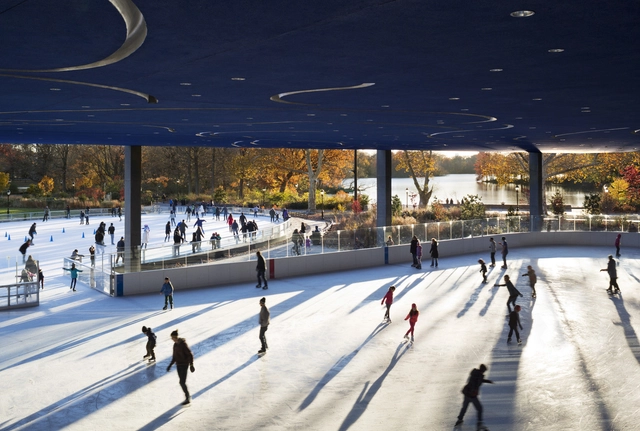
Skating and ice rinks combine temperature, atmosphere and structure together. Between sports and leisure, these spaces are designed around experience and time as some of the most interactive public spaces. As an architecture of recreation and play, skating centers also host a variety of sports. Today, the architecture of skating encompasses a range of programs and formal approaches that define some of the most iconic and social activities.
A corridor that is too narrow, a poorly located switch or a simple unevenness can go completely unnoticed to many, but they can also be insurmountable barriers for someone with a disability. We all have a family member or acquaintance with mobility difficulties and, possibly, we might also experience them at some point in our lives. Architecture has the power to create truly inclusive spaces so that people with disabilities can have the autonomy to perform all necessary daily tasks, without needing the help of others. Integrated into architecture, technology can play an important role in this context, making the spaces in which we live even more accessible to everyone.
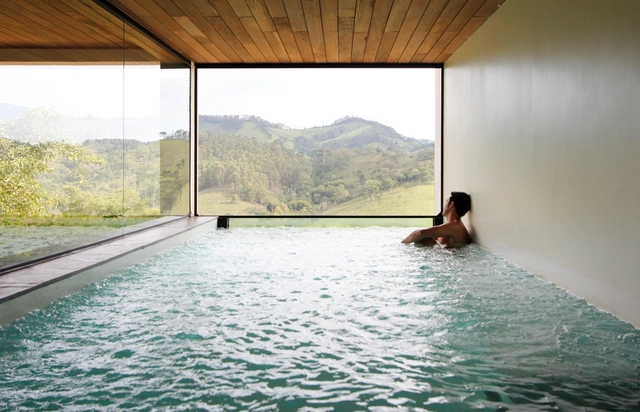
Big cities and the troubled routine of urban life increasingly reveal the need for moments of relaxation aimed at physical and mental health. This concern has become more evident after the long quarantine periods of the Covid-19 pandemic, when disconnecting from routine became even more difficult. Thus, in recent years, more and more people have been looking for activities and places that provide this rest.
For more than a century, a street market known as ‘The Blue’ was the beating heart of Bermondsey in Southeast London. On Saturdays gone by, hundreds flocked to the historic neighborhood, a site with roots reaching back to the 11th century when it was once a pilgrimage route to Bermondsey Abbey. Market punters used to sample goods from more than 200 stalls that famously sold everything under the sun. “You can buy anything down The Blue” was the phrase everyone went by.
Graduating with an architecture degree is often met with the expectations of working a 9-5 job at an office. However, the reality is that many fresh graduates are venturing into diversified careers and exploring fields such as architectural photography, writing, rendering, set design, and project management. In this Editor's Talk, ArchDaily's Founder and Editor in Chief, Director of Software Product Development, Managing Editors, and Social Media Editor share their experiences of graduating with a Bachelor's Degree in Architecture then finding themselves exploring different, yet very complimentary career paths post graduation, proving that there is a lot more to the architecture practice beyond designing built spaces.



.jpg?1645556927)

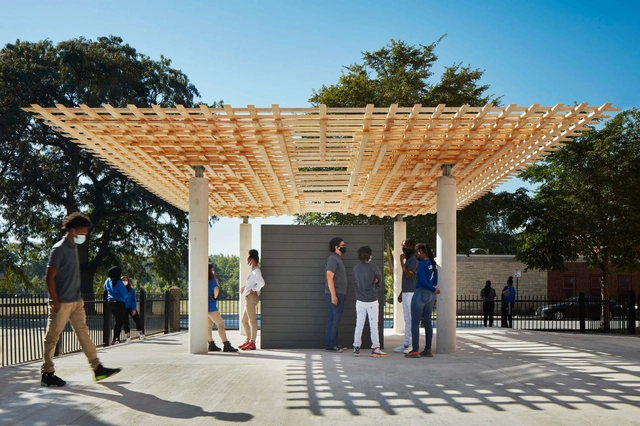


.jpg?1646040749 "SOM Explores Future Timber Construction Methods at the 2021 Chicago Biennial. Image © Kendall McCaugherty © Hall+Merrick Photographers")
.jpg?1646040755 "SOM Explores Future Timber Construction Methods at the 2021 Chicago Biennial. Image © Kendall McCaugherty © Hall+Merrick Photographers")












.jpg?1645602665 "ArchDaily Product Development Team. Image Courtesy of Soledad Sambiasi")