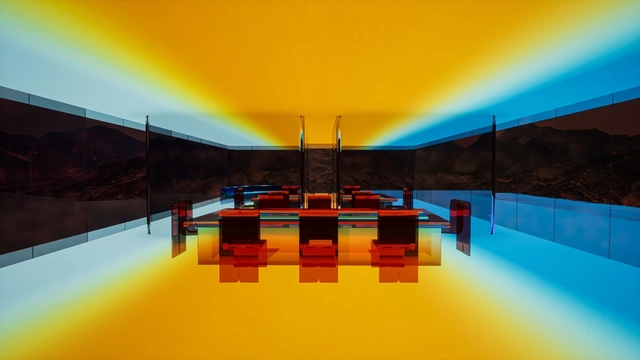
The digitisation of architecture and design projects has been going on for some time now and has increased even more, largely due to the global pandemic. To hear talk of the metaverse, the NFT or the digital twins seems to be commonplace at this time, when the digital economy is booming and where architects and designers who seek to move from the physical world to the virtual world are beginning to proliferate. But will virtuality be the future of architectural visualisation?
Equipo de Arquitectura was founded by Horacio Cherniavsky and Viviana Pozzoli in 2017. From Paraguay, their works such as Earth Box or Intermediate House translate the vision of an architecture that deals with the primitive and essential. One that constantly seeks to integrate the existing natural environment with the artifice, the built. In particular, bringing material sincerity as a design ethic.
Selected by ArchDaily as one of the Best New Practices of 2021, we conducted the following interview to tell us more in detail about all their inspirations, motivations and ways of working.
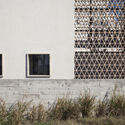
Visual permeability, ventilation and a strong identity appeal, the hollow elements have increasingly found their place in contemporary architecture. Whether in large buildings or small residences, they appear in different shapes, materials and compositions, helping to determine the degree of interaction between interior and exterior space. This artifice in a residential construction is an important tool to ensure privacy and intimacy, without losing the possibility of connections to the outside and natural ventilation.
In New Mexico, irrigation channels that have been in continuous operation for three centuries replenish and nourish the wetlands of the American Southwest. These channels are known as Acequias – communally managed water systems built on democratic tradition. Members of the community own water rights, who then elect a three-person team to oversee the channels. In Cairo and Barcelona, Tahrir Square and Plaza de Catalunya have acted as important sites for voicing political dissatisfaction. The Tahrir Square protests of 2011, for instance, resulted in the eventual toppling of an almost 30-year-old government.
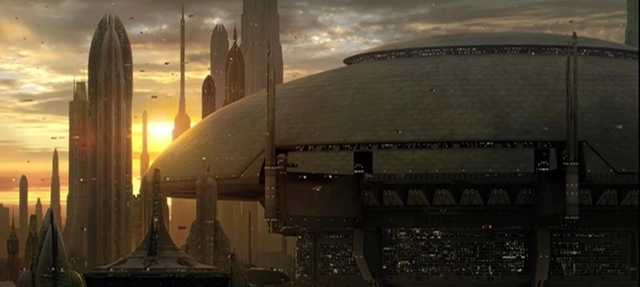
The Senate Building, Coruscant . Image via Star Wars, Revenge of the Sith / George Lucas
Depicting architectural visualizations of the future is no easy feat, so it makes much sense for designers to use aspects of our existing architecture as a foundation for these fictional worlds. Despite recent advancements in terms of animation technologies and CGI, there is still substantial use of existing architecture to provide tangible structural elements in film.
In terms of recycling architectural aesthetics, elements of the past and future are often integrated to create a hybridized style, an amalgamation of Retro, Dystopian, Modernist and Futuristic themes. From the resurgence of ancient pyramids and temples, to skylines reminiscent of the city of New York, visualizations vary depending on different notions of what our future may look like.
Architecture in its broadest sense concerns itself with the uprooting of structures that are permanent, cementing themselves within the greater cultural context and history of its humanity, however, where do we place the creation of structures that are designed with the intention to be disassembled. How much meaning and value can these structures hold, knowing they were never designed to last, but to simply take up space for a moment?
In preparation for the Disrupt Symposium, as the conference launch planned for the 1st of May approaches I sat down with Krista Kim a contemporary artist and founder of the Techism movement, whose work explores the concept of digital consciousness. Her interest in digital technology and it’s revolutionary effects on human perception, media, social structures, and communication have led her to work in both digital and physical realms.
All businesses, large or small, have faced unprecedented challenges in the last couple of years – but one of the positive outcomes of the global pandemic is the notion that work can be done wherever you are in the world. And while work has changed, expectations have not. Teams need to work with the same speed, efficiency and security as when they were all within the same four walls. It’s now up to IT to rise to this challenge with the right solutions to meet the new demands of the hybrid workforce. Remote working – and remote collaboration – is here to stay.
This week’s curated selection of Best Unbuilt Architecture highlights educational and cultural projects submitted by the ArchDaily community. Through examples from all around the world, the article explores how these spaces of knowledge and discovery are designed to inspire and inform.
Featuring a monolithic museum in Portugal, a digital heritage centre with a media facade in Korea and a mobility research centre in Turkey, the round-up spans various kinds of educational and cultural spaces, as well as different attitudes towards the built or natural environment. The following projects reveal the ideas that shape spaces of knowledge in different contexts, illustrating diverse approaches toward what constitutes an institution of culture.
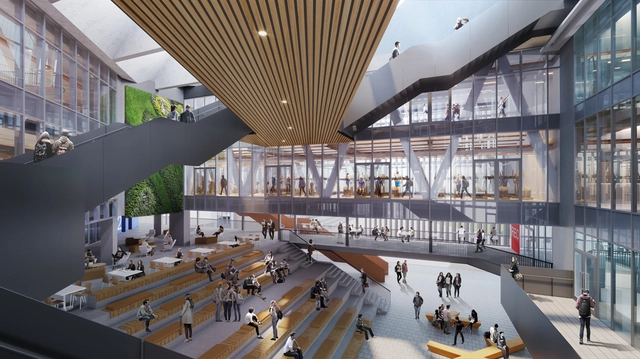
El centro recreacional, de bienestar y vida estudiantil de la Universidad de Lima. Image Cortesía de Sasaki
Over the past few years, educational campuses around the world have been confronted with various trends and challenges of change, such as pandemic adaptation, climate crisis, the responsibility for sustainable design and online teaching. SasakiArchitecture, with offices in Boston, Denver and Shanghai, specialises in planning educational campuses around the world. With a broad portfolio of projects at various scales of intervention, recent projects in the United States, China, Mexico and Peru stand out.
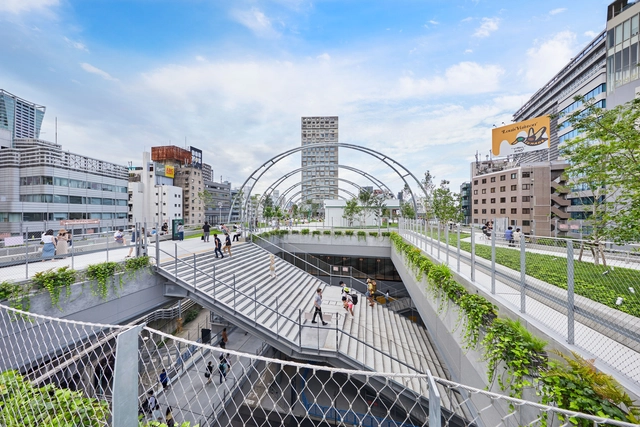
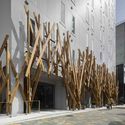
One of the world's leading metropolises, Tokyo is home to extraordinary architecture that fascinates through its blend of traditional values and high-tech expression. The 1923 earthquake and the bombardments of World War II dramatically influenced the image of the city and its architecture, giving rise to modern urban environments with complex infrastructure.
The Japanese capital constitutes the most populated metropolitan area in the world, housing 33 million inhabitants. Divided into 23 wards and numerous neighbourhoods, the city features a diverse blend of atmospheres and urban fabrics that support an amalgamation of architectural typologies.
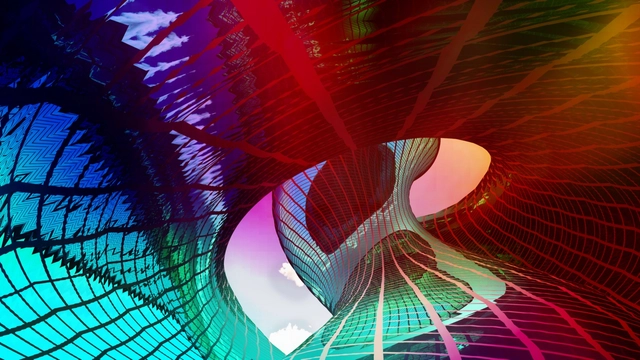
As Antoine Picon describes in Architecture and the Virtual Towards a new Materiality? : "An architectural project is indeed a virtual object. It is all the more virtual that it anticipates not a single built realization but an entire range of them. …Whereas the architect used to manipulate static forms, he can now play with geometric flows. Surface and volumes topological deformations acquire a kind of evidence that traditional means of representation did not allow.”
While Stephen Zacks’ new book, G.H. Hovagimyan: Situationist Funhouse, is ostensibly about the life and work of the artist, there’s an intriguing and seemingly topical subtext looming in the background: the role of art and culture on the development and redevelopment of cities. It’s a complicated and sometimes fraught issue, prone sometimes to simplistic, even binary thinking. Zacks, a friend and former colleague at Metropolis, has always had a more nuanced view of the issue. Last week I reached out to him to talk about the work of Hovagimyan, the historic lessons of 1970s New York, and why “gentrification” needs a new name.
After the first years of launching their architectural practice, Ben van Berkel and Caroline Bos renamed their practice to UNStudio. Short for United Network Studio, the change of name stands symbolic to the knowledge based, networked nature of the firm, which has grown to expand to 6 offices worldwide today.
They say you only really become aware of whether an architect has considered the acoustics of a space when she or he hasn't. Think archly Instagrammable, yet I-can't-hear-my-dining-partner-speak restaurant interiors.
For the longest time, the management of sound was given little, if no, thought in formal architectural training. Things might be changing, but – and luckily for companies like Swiss-based Impact Acoustic – there is still a need for architecturally minded solutions-providers who like nothing better than reducing noise.
Snøhetta was founded on the United Nations 1987 Brundtland Commission’s three main pillars of sustainable development: economic growth, environmental protection, and social equality. Their highly value and purpose-driven operations has since then expanded to 330 employees in 7 studios all over the world, from hometown Oslo to Adelaide, HongKong, Paris and Innsbrück, as well as their sister studios in New York and San Fransisco.
San Diego is a city tied to the ocean. In turn, its architecture responds to a variety of cultural influences and natural conditions. Home to diverse and distinct architectural styles, San Diego has everything from Queen Anne Victorian homes and craftsman bungalows to Spanish colonial revival structures. Besides monumental works like the Salk Institute and Geisel Library, San Diego is also home to a range of contemporary cultural and residential projects.
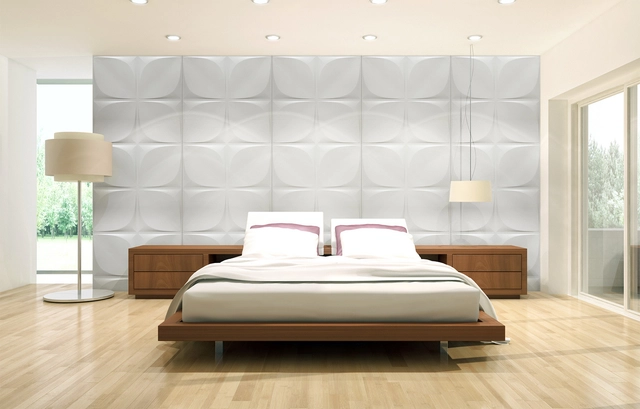
Textures can calm us, bring warmth or even guide us. They elicit our sense of touch and also affect us visually. This is because lights and shadows tend to form in relation to the irregularities and shapes that are present in some textures, which can in turn clearly differentiate these types of materials from other surfaces. For many, the idea of a space surrounded with white, smooth walls can be disturbing and monotonous. Embellishments such as paints, the inclusion of natural coatings or other elements can easily transform a space, emphasizing certain parts or creating new and attractive visuals. In interior design projects, textured walls have always been a popular way to add prominence to a space, either via the constructive system of building - such as brick or exposed concrete walls - or through different types of coatings that can be added later on.














.jpg?1582576434 "© Iwan Baan")
.jpg?1650190677 "© Daici Ano")