For U.S. architects, working abroad will now be easier than ever, as the National Council of Architectural Registration Boards (NCARB) has announced a new mutual recognition arrangement with the licensing authorities of Australia and New Zealand. Effective as of January 1, 2017, the agreement allows architects to earn reciprocal licenses that authorize architects to work in the two countries.
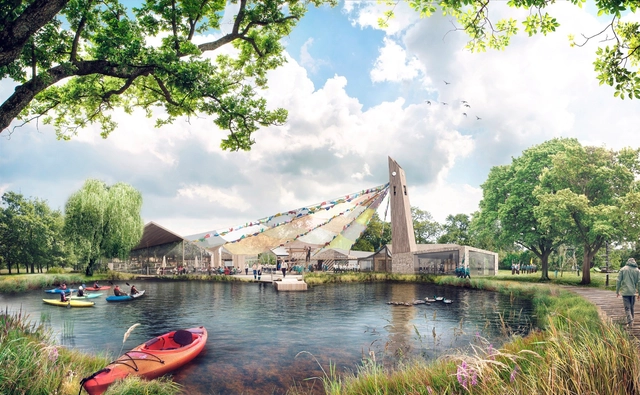
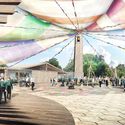
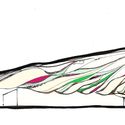
London-based firm Tate Harmer has won a competition to design a new £6 million ($7.4 million USD) museum for The Scout Association (TSA) at the group’s headquarters in Chingford, east London. Their proposal takes the form of a big, colorful tent that will tell the story of the Scouting movement within a fun, environmentally conscious structure.
Earlier this year, Chilean architects and professors Luis Pablo Barros and Gustavo Sarabia from the Federico Santa María University released a book (in Spanish) titled "Sistemas Constructivos Básicos" (Basic Construction Systems)." The book aims to be a tool to help architects translate their plan diagrams into tangible architectural works, as well as to help students learn the knowledge necessary to build what they plan.
https://www.archdaily.com/802593/17-templates-for-common-construction-systems-to-help-you-materialize-your-projectsPola Mora
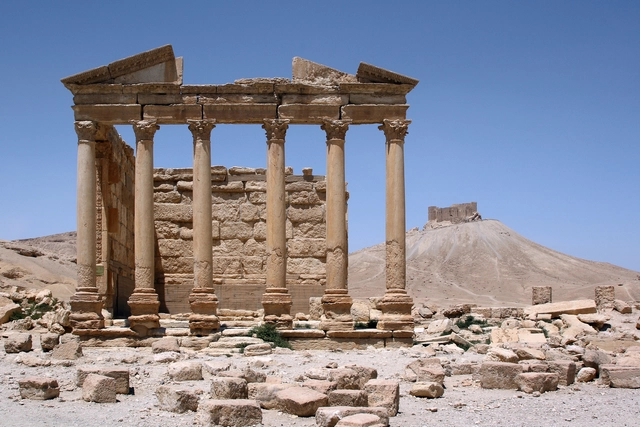
The Aggregate Architectural History Collaborative has organized a collection of essays, entitled The Destruction of Cultural Heritage: From Napoléon to ISIS, which examines several centuries of the demolition of monuments in the Middle East. With world events like ISIS and the protection of architectural heritage growing to be more and more topical, this collection is a useful tool in considering the role of violence, how ancient architecture is perceived as a cultural entity, what role the media has to play, and beyond.
In an exclusive half-hour episode focusing on the life and legacy of Jane Jacobs, "one of the most influential urban thinkers and city activists of our time." Featuring interviews with a carefully selected range of city planners, historians and activists, alongside recordings of Jacobs herself, this special episode of Monocle 24's The Urbanist examines why Jacobs was—and remains—so influential when considering the contemporary city.
https://www.archdaily.com/802951/cities-need-change-the-durability-of-jane-jacobs-legacyAD Editorial Team
Looking for a challenging new diversion that will keep your architectural mind humming? A new puzzle game from developers Dusty Road, Empty, may just fit the bill.
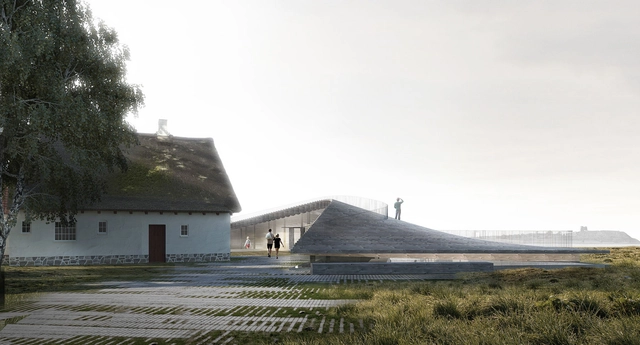
North Perspective. Image Courtesy of Arkitema Architects
Arkitema Architects has unveiled their winning proposal for a new visitors center at Mols Bjerge National Park in Denmark. To be located adjacent to the historic Kalø Castle Ruins, the design draws inspiration from the surrounding landscape, taking the form of a softly sloping hill.
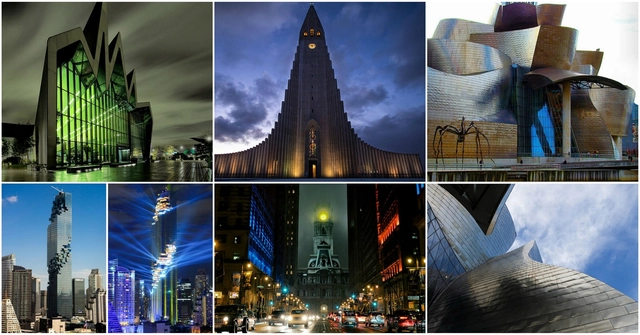
Compiled on sites such as Reddit and BoredPanda, lists of ‘Evil Buildings’ tend to feature structures that feel sterile to non-architects, photographed in dramatic lighting or surrounded in fog. Projects by Zaha Hadid Architects, Frank Gehry and Ole Scheeren are among those represented. But what exactly makes these buildings feel evil?
At its best, architecture has the power to confront the world’s most urgent social and environmental issues. The Los Angeles River sits at the center of many of these issues, thanks to the long-overdue plans to convert it from a concrete canal back into a social space and an ecological corridor; and thanks to its position as a symbol of the drought in California. In this serene video by filmmaker Chang Kim, the full length of the river is put on display, exploring a resource that is the topic of much debate in the Los Angeles area.
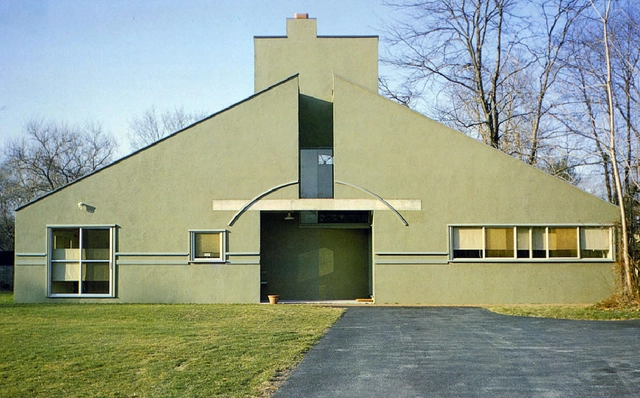
The Architectural Review has recently published an article celebrating the 50th anniversary of Robert Venturi’s book, Complexity and Contradiction in Architecture, which is regarded as one of the most important writings about architecture since Le Corbusier’s Vers une Architecture. In the article, Martino Stierli—Chief Curator of Architecture and Design at the Museum of Modern Art—delves into the significance of Venturi’s work, the motivation behind it, its continuing impact, and more. Read the full article at the Architectural Review, here.
I see it a bit as my mission to document things in Hong Kong which are vanishing, which are disappearing, primarily through urban renewal
In this short film from Yitiao Video, photographer Michael Wolf explains the vision behind his momentous photo series, “Architecture of Density,” in which he captures the immense scale and incredible intricacies of the city of Hong Kong.
After living in city for 9 years and travelling abroad to work, Wolf describes the somewhat unpleasant circumstances which led him to turn his attention to his own environment.
Much like snowflakes, the most beautiful architectural plans consist of complex relationships between geometries – and no two are exactly alike. In this spirit, KOSMOS Architects has created a series of planimetric graphics of some of the most notable architectural projects to have disappeared from our world in celebration of the New Year.
In the past 10 years, the Curry Stone Design Prize has grown to become one of the world’s preeminent awards honoring socially impactful design professionals and the influence of design as a force for improving lives and strengthening communities.
This year, in honor of the prize’s 10th anniversary, the Curry Stone Foundation will acknowledge the largest group of influential practices yet, recognizing 100 firms over the next twelve months as members of the “Social Design Circle.” Each firm will be profiled on the award website, as well as participate in the foundation’s new podcast, Social Design Insights, beginning on January 5th, 2017.
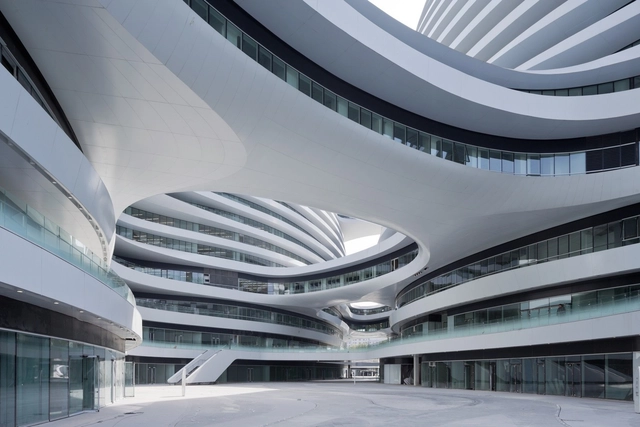
German magazine Der Spiegel has conducted an interview with Zhang Xin, billionaire real estate mogul and founder of SOHO China—the company behind such well-known buildings as Zaha Hadid Architects' Galaxy SOHO and Wangjing SOHO. In the interview, Xin discusses the Chinese economy, her changing business model, digitalization, the symbolic value of buildings, and more. Learn more about Xin’s take on success and change in China by reading the full interview here.
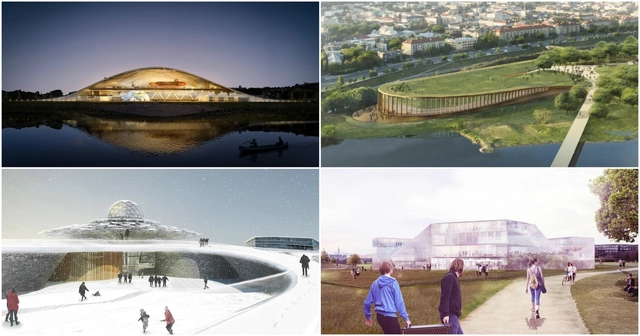
Earlier this year, Prime Minister Algirdas Butkevičius of Lithuania announced three winners and five runners-up of the Science Island international design contest. The competition drew 144 entries from 44 countries, and among the three winners selected by the international competition jury, Kaunas City Municipality will choose one to realize their proposal, which is scheduled to open in 2018.
Given the competition's high profile, ArchDaily has received a number of additional entries to the contest showing alternative possibilities for the site. Read on to learn about four of these entries from WAH Studio, Andrew Burns Architects, TheeAe Limited, and FARA-ON Union.
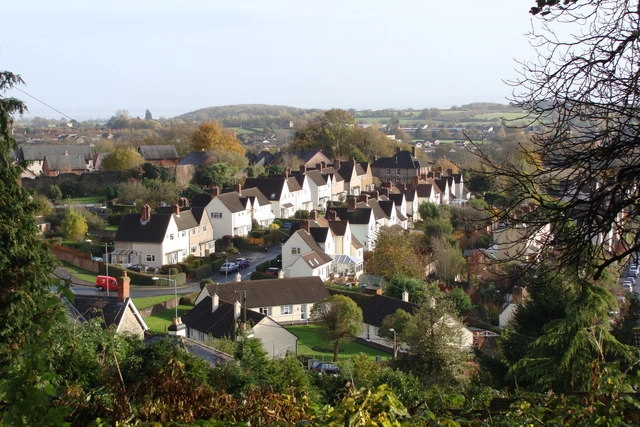
Yesterday, the UK Government announced plans for 3 new garden towns and 14 new "garden villages" across England, expanding a plan that already includes 7 previously announced garden towns. Explaining the concept of the garden villages, the Department for Communities and Local Government described settlements of 1,500 to 10,000 homes, saying that together the 14 locations have the potential to deliver 48,000 new houses. In order to expedite the creation of these new settlements, the government has set aside a fund of £6 million (US$7.4 million), which housebuilders will be permitted to use in order to accelerate development at the sites.
However, the architectural community in the UK has mocked the proposals and the government's use of language, highlighting what appears to be a poor understanding of Ebenezer Howard's Garden Cities concept. Many have also pointed out that the plans are relatively meager in a country that, by many estimates, is falling hundreds of thousands of new homes short of the number needed every year.
Martin Duplantier Architectes has won a competition organized by Chinese tour company ZTG with a design for a series of “illusionist” bridges and pavilions in western Zhangjiajie, China. Contrasting with the surrounding “baroque” landscape, which is a world heritage site, the project utilizes geometric forms and delicate placement to “create a physical relationship” with its neighboring rock faces.
The project features three footbridges: "the illusion of a mirror for one, the fear of the void for the next, and lastly the setting in abyss for the final.”
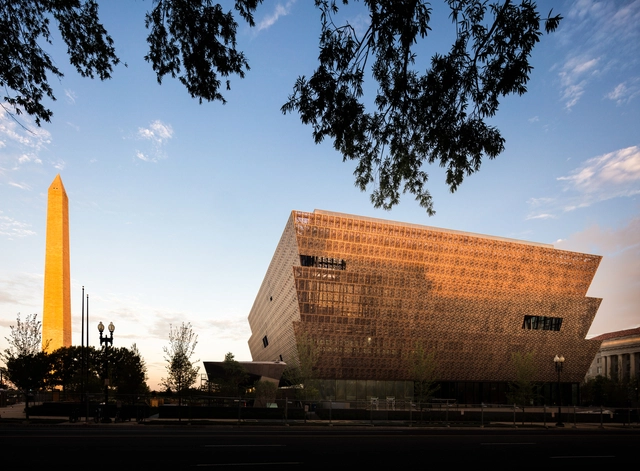
David Adjaye OBE, principal of Adjaye Associates, will be Knighted by Her Majesty Queen Elizabeth II for his services to architecture at an investiture in 2017. The Central Chancery of the Orders of Knighthood at St. James's Palace, who administer the Knight Batchelor awards that will be bestowed upon the architect, described Adjaye as "one of the leading architects of his generation and a global cultural ambassador for the UK."
https://www.archdaily.com/802706/david-adjaye-to-be-knighted-by-queen-elizabeth-iiAD Editorial Team