The German Design Awards 2020 have just released their awaited list of winners in different categories: excellent architecture, excellent communication design, excellent product design, and universal design. The program has also selected Jasper Morrison as the 2020 personality of the year.
Technical skills: check. Visually coherent content: check. Distinctive personal input on both the projects and portfolio design: double check.
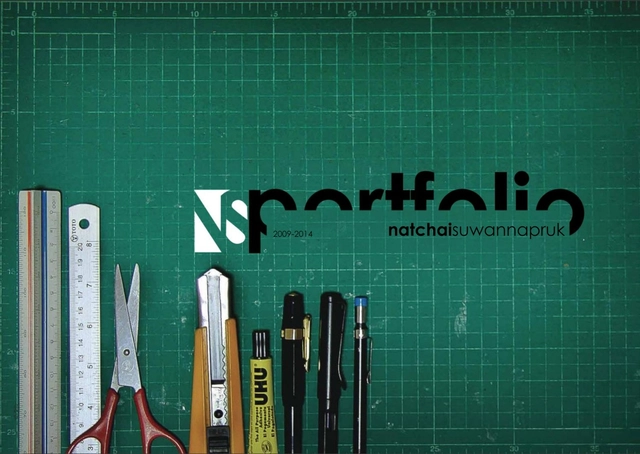
Although résumés and portfolios can be somewhat flat when it comes to informative content, it is their ability to present an applicant's unique sense of style that makes or breaks an application. Whether it’s a deliberate image selection, or a clear, consistent layout, some people manage to fulfill all the criteria needed in a successfulportfolio. Issuu, the world’s largest online digital publishing platform that allows anyone—from architects to global brands to fresh graduates—to publish their creative content online, has hand-picked their top 74 exceptional architecture portfolios. The selected architects have managed to showcase their impressive projects and technical skills in portfolios that reflect their creative mindset.
We’re not saying you should judge a book by its cover, but some "covers" can’t help but stand out from the rest, for all the right reasons. Take a look at Issuu’s list of top architecture portfolios here, and see a few of our personal favorites below.
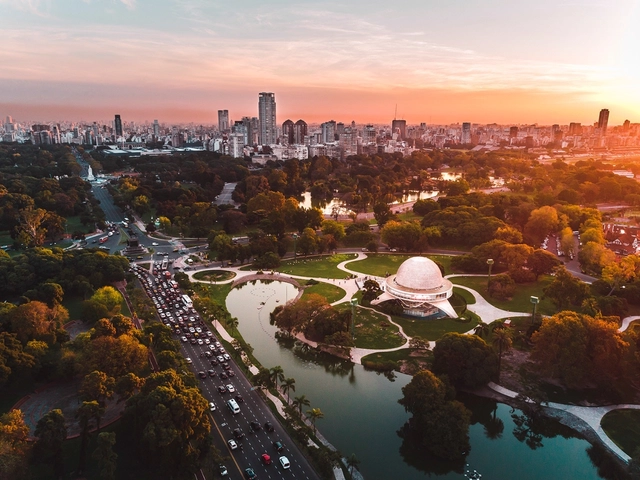
Buenos Aires, Argentina. Image via Gobierno de Ciudad Autónoma de Buenos Aires under CC BY 2.5 AR license
The Global Power City Index (GPCI) is an annual report that evaluates the conditions of the world's major cities and urban centers, ranking them according to their "magnetism," or their comprehensive power to attract people, capital, investors, and businesses from around the globe. In 2019, the index included three Latin American cities—Buenos Aires, Mexico City, and Sao Paulo—among the world's 50 most attractive for investment and talent.
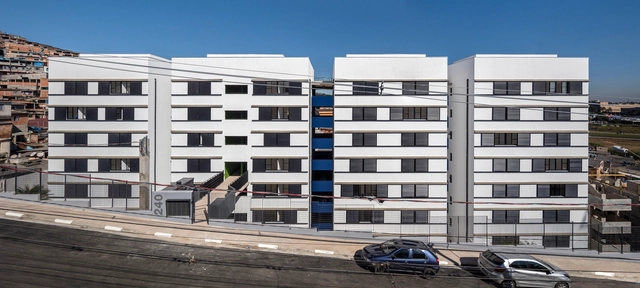
The Institute of Architects of Brazil - São Paulo Department has announced the winners of the IABsp 2019 Awards. Divided into 17 categories that cover social housing, commercial and cultural projects, urban design, and restoration—both built and unbuilt—as well as publications, photography, ephemeral architecture, and student projects, the IABsp 2019 Awards aim to identify the advancements and challenges in contemporary national architecture and urbanism. The initiative recognizes ingenious and significant proposals, particularly those that effectively contribute to the development of technique, knowledge, and the built environment in dialogue with nature, society, economy, and culture.
The magazine Solidarity Housing Production: An International Overview was launched on Monday, November 25, at the opening of the National Seminar on Technical Assistance for Social Interest Housing. The publication compiles the main contributions from the event of the same name, held in July 2018. Organized by architects and urban planners Luciana Ximenes and Thais Velasco, the magazine was produced by CAU/RJ and the Observatório das Metrópoles (Ippur/UFRJ).
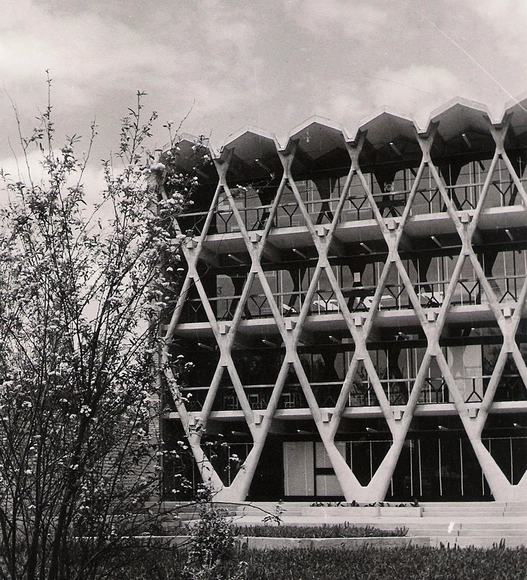
Facultad de Arquitectura de la Universidad de Mendoza / Enrico Tedeschi. Image Cortesía de Archivo Descotte. Facultad de Arquitectura Urbanismo y Diseño. Universidad de Mendoza
On November 27, four major works of brutalist architecture in Argentina were declared "National Historic Monuments" four: the Mariano Moreno National Library, the Manuel Belgrano School of Commerce, the 6 de Julio Municipal Palace, and the School of Architecture at the University of Mendoza. These buildings, considered outstanding examples of brutalist architecture, will be protected under Decree 791/2019, which establishes that they cannot be modified, sold, encumbered, or alienated, nor can their facades be altered without the prior intervention of the National Commission of Monuments, Museums, and Historic Places.
Architectural firm Tham & Videgård won the international competition to elaborate a new addition for the Swedish Exhibition and Congress Centre in Gothenburg. The selected proposal puts in place a new hotel tower and a main entrance for the venue.
Follow along during the twelfth edition of the World Architecture Festival through ArchDaily's Live Stream. As the world’s biggest architectural awards program, WAF brings together more than 2,000 architects and designers to Amsterdam for three days of conference programs, awards, and exhibition events from December 4-6. Tune in to our Facebook live streams for a selection of lectures.
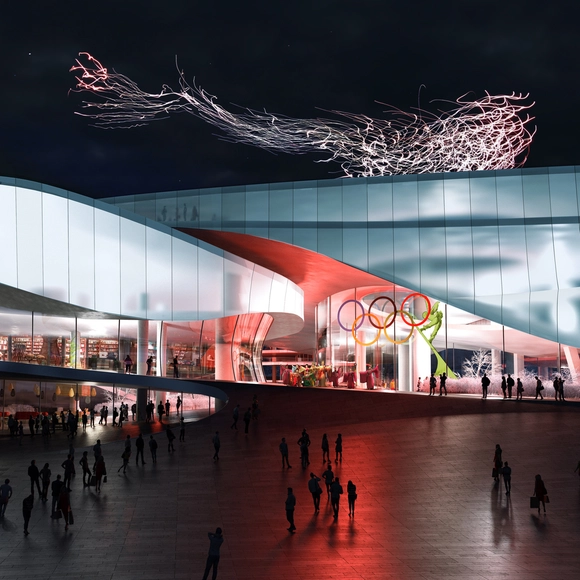
maison h has just completed the design for the world’s first Winter Olympics Museum for the Beijing 2022 Winter Olympics. This pivotal museum will extend the legacy of the 2008 Beijing Olympics into an enduring strategy for the Olympics to become a catalyst for sustainable social and economic development.
https://www.archdaily.com/929340/maison-h-unveils-beijing-2022-winter-olympic-museum韩爽 - HAN Shuang
Today, architecture is a fertile ground for experimentation—a laboratory for testing solutions and building theory. It offers an opportunity to question paradigms, rethink contemporary ways of living, and understand our inherent cultural heterogeneity. Ultimately, it provides a space to enhance the critical value of design and investigate the current place of local practices within a global context.
With a deep understanding of their territory and an exploratory spirit, these emerging firms approach the discipline in innovative ways. Many are defined by an open and evolving character, featuring a multidisciplinary makeup where architecture, urban planning, design, and art seamlessly merge. Below, we present six architecture firms based in Argentina whose work prompts us to reflect on contemporary needs, domesticity, objects, the city, and local production:
To mark World Architecture Day, the architects' collective efimerARQ, alongside the Association of Architects and the School of Architecture of Valladolid, developed a design exercise involving collaboration between students and professionals. The activity, titled “Ephemeral Architecture as a Pedagogical Device,” took place at the Patio Herreriano Museum of Contemporary Art in Valladolid, Spain, aiming to create an open-air classroom that allowed students to study current and past trends through fieldwork, viewing the discipline as a medium for exploration, research, discussion, and collaboration. The base structure used to build the three installations was a fundamental "auxiliary" construction material: scaffolding.
Paul Andersen and Paul Preissner were selected to curate the United States pavilion for the 17th edition of the Venice Biennale. With a proposal entitled “American Framing”, the architects will try to respond to the general theme of “How will we live together?”.
Isla Intersections. Image Courtesy of Lorcan O’Herlihy Architects
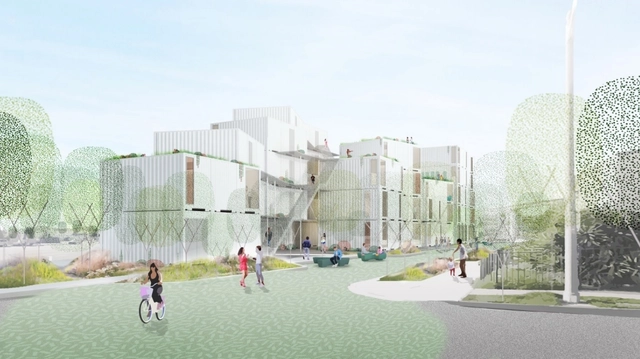
Lorcan O’Herlihy Architects have broken ground on a modular design for supportive housing in South Los Angeles. Dubbed Isla Intersections, the project is part of a triangular parcel of land next to the freeway being developed as LA’s first shared street. Designed with open public space and 54 homes for some of LA's most vulnerable residents, the project was made to explore the future of housing.
In November of this year, the latest edition of the Minsk International Biennale of Young Architects was held in Belarus. The event featured the Leonardo Awards, which recognize completed projects from around the world across six categories: urban planning, public buildings, multi-family housing, single-family homes, landscaping, and interior design.
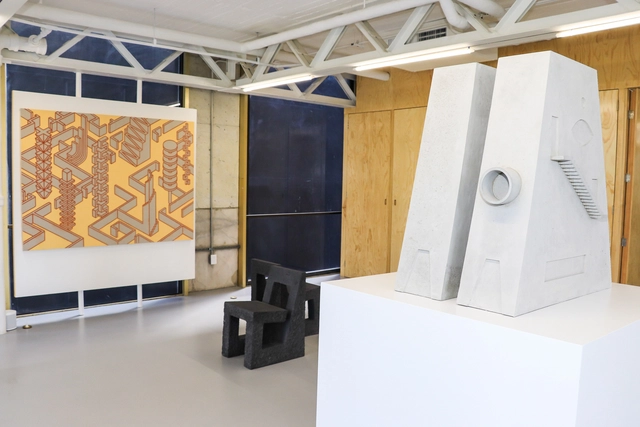
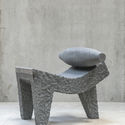
On November 23, Mexican artist Pedro Reyes presented projects from his architectural and design practice for the first time. The exhibition features chairs, tables, bedroom furniture, tiles, and small-scale architectural models that showcase a distinct architectural language that has evolved in recent years.
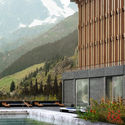
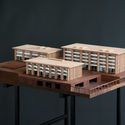
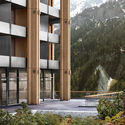
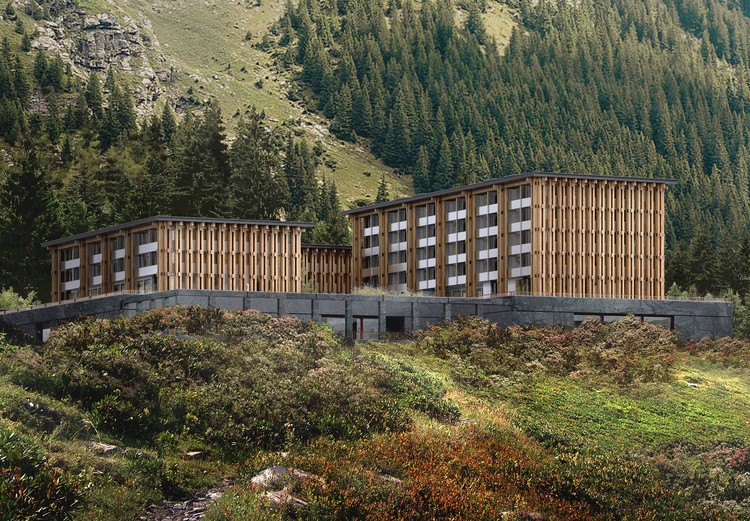
Hesselbrand Architects have revealed the design for Acquarossa Spa & Hotel in Switzerland, a 120 room hotel in the Swiss region of Ticino. Designed around well-being and experience-based tourism, the project utilizes a combination of traditional building materials and new construction technology to ground an environmentally sustainable approach in one of the most remote parts of Switzerland.
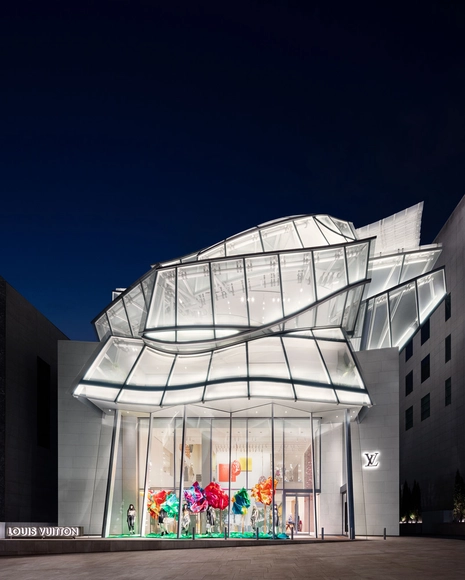
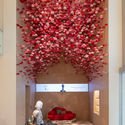
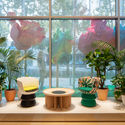
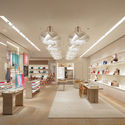
The Louis Vuitton Maison Seoul, imagined by architects Frank Gehry and Peter Marino has just opened in the South Korean capital. Celebrating Korean heritage and culture, the design puts in place a curved glass facade, perched atop a white cubic mass.
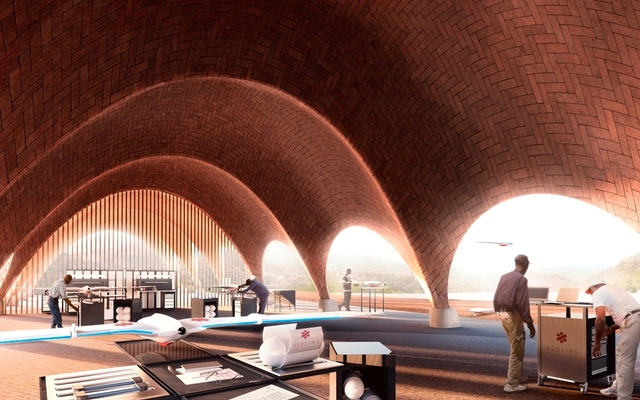
Rwanda is writing a new global story for itself. Over two decades after the end of the country’s civil war and the 1994 genocide, a series of progressive visions have been the catalyst for transformation throughout Rwanda. These economic and structural reforms have redefined the built environment, and in turn, are shaping contemporary architecture across the country.
With the current socio-economic conditions, effects of climate change, and the exponential growth of urban centers, the relationship between design and residential spaces has become the centerpiece of architecture today, so much so that The Future of Housing was the theme of this year's SkyCity Challenge.
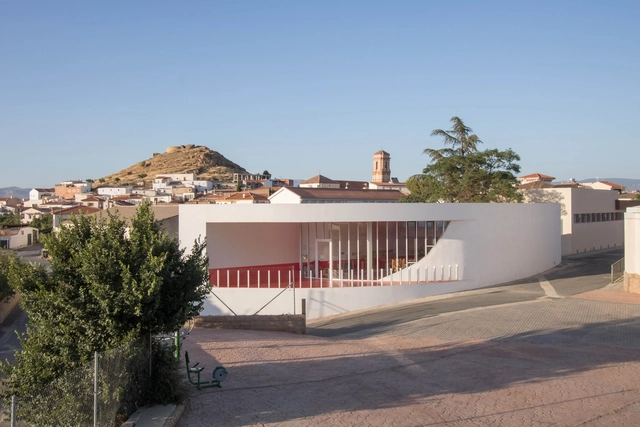
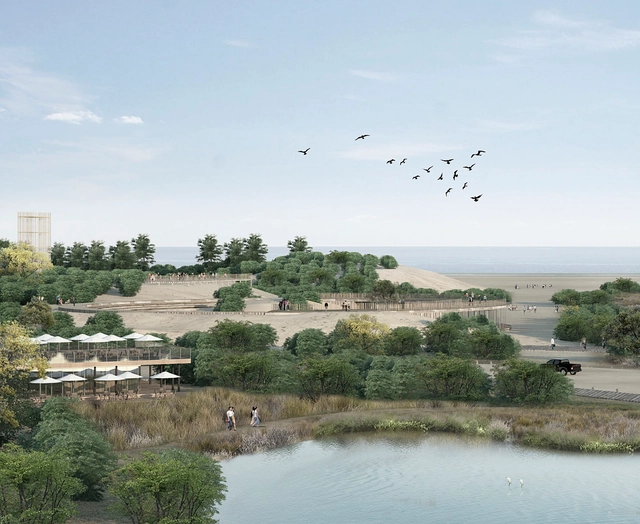
The Richard H. Driehaus Architecture Competition seeks to revitalize traditional architecture in overlooked areas of Spanish towns, while promoting the work of local artisans and builders. In this first phase, municipalities submitted proposals to rehabilitate or remodel various architectural spaces. Out of all the submissions, Alzira (Valencia), Santa Cruz de la Palma (Tenerife), Santiago de Compostela (La Coruña), and Guadix (Granada) were selected.
https://www.archdaily.com/1120993/4-rehabilitation-proposals-in-spanish-cities-for-the-richard-h-driehaus-architecture-competitionArchDaily Team
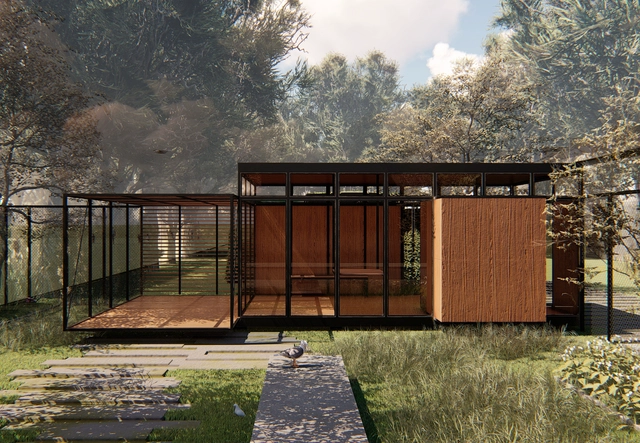
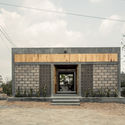
The School of Architecture, Design, Art, and Urbanism at the University of Morón (UM FADAU, Buenos Aires, Argentina) concludes its academic cycles with an Integrated Final Project (PFI). Through this project, since 2016, architecture students have designed full-scale community projects—designing, managing, building, and donating their work to non-profit organizations and local municipalities. The initiative is part of the Academic Program of Federal Assistance “PAAF!!”, created by the school, which allows students to graduate by building a fully operational building and donating it to a community in need in Argentina.
.jpg?1575311092 "© Marc Goodwin")
.jpg?1575310961 "© Marc Goodwin")

.jpg?1575310983 "© Marc Goodwin")

.jpg?1575054978 "SONATA / Arkham Projects. Image © Tamara Uribe")






.jpg?1574963619)