Over the past two decades, new master-planned cities have risen at a pace and scale rarely seen in modern history. Concentrated largely in Asia, the Middle East, Africa and Latin America, more than 150 such projects are currently underway. For some, these cities are promoted as fast tracks to modernization and a way to leapfrog from resource- or agriculture-dependent economies into knowledge-driven ones. For others, they are strategic showcases, designed to attract global attention, foreign capital, and prestige. By packaging urbanization itself as an investment opportunity, these projects promise to stimulate growth and reposition nations within the global economy—all through the act of building anew.
According to Forbes, "The new city building movement that we are currently in the middle of is one of the most under the radar and most misinterpreted social and economic developments happening in the world today". What often escapes scrutiny, however, is not only the architecture of these projects, but the governance model they advance.
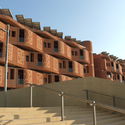
.jpg?1611288061 "The Line project in Saudi Arabia. Image © NEOM")


Dr. Sarah Moser, Professor at McGill University and Director of the New Cities Lab, defines new city projects as attempts to create "a new, relatively self-sufficient urban area that is geographically separate from existing cities" and governed independently. Unlike suburbs or satellite towns, they are purpose-built entities with their own administrative frameworks and carefully constructed identities. Marketed as clean states, they promise efficiency, innovation and environments calibrated for investment: attributes that reveal as much about their economic logic as their spatial ambition.
This orientation toward economic and symbolic value extends to how the cities present themselves. They are branded, curated, and pitched not unlike start-ups seeking venture capital, complete with mission statements, lifestyle imagery, and carefully crafted narratives of disruption. Saudi Arabia's King Abdullah Economic City (KAEC), for instance, promotes itself as both a manufacturing and logistics hub and as the city of choice for a rising economic elite. Its promotional material foregrounds "connected communities with access to the pristine waters of the Red Sea," an 18-hole golf course, and a luxury leisure club—language more suited to premium real estate than civic life.

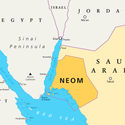
Alongside four other economic cities, the $100 billion privately run megaproject forms part of Saudi Vision 2030, the Kingdom's strategy to diversify beyond petroleum. NEOM, the most audacious of these ventures, is a $500 billion Silicon Valley-inspired megalopolis reportedly 33 times the size of New York City. Marketed as an "accelerator of human progress," it promises autonomous mobility, AI-driven logistics, and a fully renewable energy system. With sweeping rhetoric and immaculate renderings, it frames urban futurism as both a project of national reinvention and a lucrative investment opportunity.

To facilitate the creation and acceleration of these ventures, NEOM and KAEC operate within Special Economic Zones, where business and trade laws diverge from those governing the rest of the country. This regulatory flexibility, replicated across many new cities worldwide, is foundational rather than incidental to their appeal. Preferential legislation, tax incentives, and the strategic production of new real estate assets transform these territories into highly curated investment environments, designed first and foremost to attract foreign direct capital.
But how did city-building come to be so entwined with financial engineering and regulatory experimentation? Constructing cities from scratch is hardly new. From the great urban centers of antiquity to twentieth-century modernist capitals such as Brasília and Chandigarh, purpose-built cities have long served as instruments of political ambition and national projection. What distinguishes the current wave is less the act of building anew than the economic logic that drives it. As Moser notes, the boom reflects broader global shifts: the rise of real estate as a financial asset class, the consolidation of neoliberal policy frameworks, and the deregulation of markets that facilitate transnational capital flows. At the same time, technology corporations have moved decisively into the urban sphere, framing "smart" infrastructure not just as a solution to urban challenges, but as a marketable product embedded within the city itself.

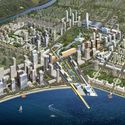
South Korea's $40-billion Songdo International Business District offers a telling example. Built on 600 hectares of reclaimed land, Songdo was conceived as a fully networked "smart" district, its streets and buildings embedded with sensors and fiber-optic systems designed to monitor and manage urban life in real time. Marketed as an optimized, data-driven environment, it also functions as a showroom for exportable technologies. In Songdo, the city is both a place to inhabit and a platform through which corporations can test, refine, and sell urban systems globally.

To some, the official rationale for these projects is compelling. They are framed as engines of growth, laboratories for sustainability, and opportunities for nations to rebrand themselves on the global stage. From Norman Foster's Masdar City in the UAE to Nigeria's Eko Atlantic, computer-generated renderings depict utopian visions of smart, "eco-cities" promising prosperity and modernization. Yet the gap between rhetoric and reality often reveals a vastly different set of priorities. Land is acquired, rezoned, and sold at significant profit immediately upon a project's announcement. Government officials and developers capitalize on these transactions, while construction companies secure their own slice during the build phase. In practice, vast sums are made long before anyone moves in, and with many units sold purely as investment properties, occupancy targets are rarely met. Putrajaya, Malaysia's "Intelligent Garden City", has attracted just over 90,000 residents of the 350,000 it originally projected.

The issue is not merely economic but also profoundly social. With their luxury condos, country clubs, and high-end shopping districts, the promotional narratives of new cities make clear that they are designed for an exclusive, affluent clientele. Mixed-income neighborhoods and public schools are largely absent from these plans. Even more alarming are the human costs associated with such developments. In the case of NEOM, at least 20,000 members of the Huwaitat Tribe, who trace their lineage back before the founding of the Saudi state, face forced displacement. This is a stark reminder that visionary urban futures are often built on profound social dislocation, dispelling the myth of the tabula rasa as a blank slate untouched by history or existing communities.
Considering this, can the purported role of new cities as living laboratories — spaces for experimenting with urban design, governance, and social organization — justify their creation? Proponents argue that starting from the ground up offers unique opportunities. As Moser and Cutts note in NewCities, building from the ground up allows planners to learn from past mistakes and 'hardwire' them with features that promote aspects such as walkability and social inclusion. Yet the entrepreneurial frameworks that govern most new cities constrain the types of experimentation prioritized, often channeling innovation toward efficiency, capital attraction, and competitiveness rather than democratic participation or social equity.

Some observers point to the potential of new cities as instruments of national branding. By creating Yachay City of Knowledge, Ecuador aims to transform itself from a commodity-based economy into a global hub for knowledge and innovation. Launched in 2012, the 4,500-hectare project combines a planned "green" city, a science park, and YachayTech, a research-focused public university. In the words of the city's General Manager, Héctor Rodríguez, "we hope that this city will have a big impact on national development and culture." Whether such ventures can truly deliver on these promises still remains uncertain.
Looking ahead, what might the post-COVID landscape look like for new cities? Considering the fiscal pressures the pandemic has placed on governments' budgets, Moser anticipates that "countries and different levels of government will be enthusiastic about outsourcing many aspects of city-building to the private sector", potentially triggering a wave of new city projects even larger than that which followed the 2008 financial crisis. At the same time, rising demand from affluent groups for gated and securitized enclaves, set apart from the urban poor and social unrest exacerbated by recession, creates openings for tech companies and developers to embed experimental digital infrastructures in urban life, raising urgent concerns around surveillance, privacy, and unequal governance where regulatory protections might be weak.
New master-planned cities are no longer peripheral experiments; they are becoming central instruments in national development strategies. Yet as these projects multiply, the model demands critical scrutiny. When cities are designed primarily as investment vehicles, branded commodities, or platforms for technological experimentation, their function as collective civic spaces is profoundly compromised. The contemporary new city boom, therefore, signals more than architectural ambition. It embodies a reorientation of urban governance around entrepreneurial logics, in which competitiveness, speculation, and corporate partnerships dictate planning and policy decisions. Within this framework, designing cities that genuinely serve diverse populations rather than functioning primarily as mechanisms for profit extraction emerges as perhaps the most difficult, and yet most urgent, challenge of all.
This article is part of the ArchDaily Topic: The Future of Cities. Every month we explore a topic in-depth through articles, interviews, news, and projects. Learn more about our monthly topics. As always, at ArchDaily we welcome the contributions of our readers; if you want to submit an article or project, contact us.

_(1).jpg?1611287788 "Why Are Countries Building Cities From Scratch?")