1. ArchDaily
  2. New City

New City: The Latest Architecture and News

Egypt’s New Administrative Capital Through the Lens of Manuel Álvarez Diestro

Audio available

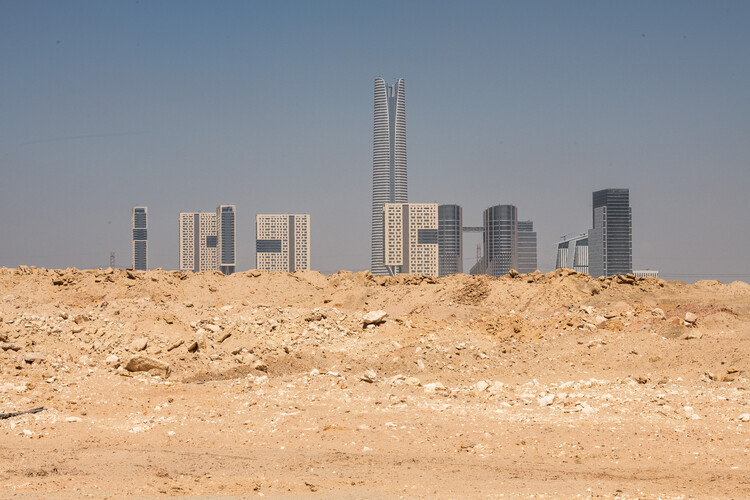
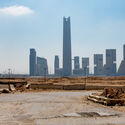
Egypt's New Administrative Capital (NAC), located about 45 kilometers east of Cairo, is one of two major urban development projects under construction near the Egyptian capital, along with New Cairo, a satellite city east of Cairo's Ring Road that dates back to the 2000s. To date, Cairo remains the official capital of the country, but various government functions have been moved to the purpose-built city. The new capital in Egypt's Eastern Desert recalls the iconic modernist initiative of Brasília and adds to similar recent projects in countries such as Equatorial Guinea, Indonesia and South Korea. Manuel Álvarez Diestro's photographic work offers a glimpse of this endeavor from the perspective of a pedestrian approaching the urban landscape.

Egypt’s New Administrative Capital Through the Lens of Manuel Álvarez Diestro - Image 1 of 4Egypt’s New Administrative Capital Through the Lens of Manuel Álvarez Diestro - Image 2 of 4Egypt’s New Administrative Capital Through the Lens of Manuel Álvarez Diestro - Image 3 of 4Egypt’s New Administrative Capital Through the Lens of Manuel Álvarez Diestro - Image 4 of 4Egypt’s New Administrative Capital Through the Lens of Manuel Álvarez Diestro - More Images+ 5

Benoy’s City Walk Masterplan in Abuja Introduces Mixed-Use District with Africa’s Tallest Tower

Audio available

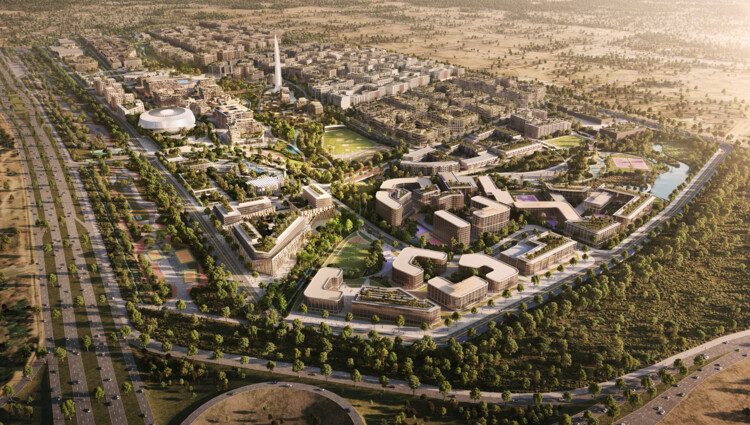
Abuja was named the capital city of Nigeria on December 12, 1991. Located in the central Federal Capital Territory (FCT), it replaced the most populous coastal city of Lagos in a process of structural reform aimed at national integration and more balanced regional development. Like other capital relocations, Nigeria's capital was moved for strategic reasons to transform Abuja into the country's new administrative center, often referred to as "the center of unity." It was envisioned as a planned city based on a master plan developed by the United States-based consortium International Planning Associates (IPA). More than three decades later, a new master plan titled "City Walk" has been developed by MAG International Links Limited and designed by Benoy as a mixed-use district integrating hotels, offices, residential, retail, cultural, educational, and healthcare facilities, alongside a 450-meter tower and a 13,000-seat indoor arena across 250 hectares.

Benoy’s City Walk Masterplan in Abuja Introduces Mixed-Use District with Africa’s Tallest Tower - Image 1 of 4Benoy’s City Walk Masterplan in Abuja Introduces Mixed-Use District with Africa’s Tallest Tower - Image 2 of 4Benoy’s City Walk Masterplan in Abuja Introduces Mixed-Use District with Africa’s Tallest Tower - Image 3 of 4Benoy’s City Walk Masterplan in Abuja Introduces Mixed-Use District with Africa’s Tallest Tower - Image 4 of 4Benoy’s City Walk Masterplan in Abuja Introduces Mixed-Use District with Africa’s Tallest Tower - More Images+ 1

Why Are Countries Building Cities From Scratch?

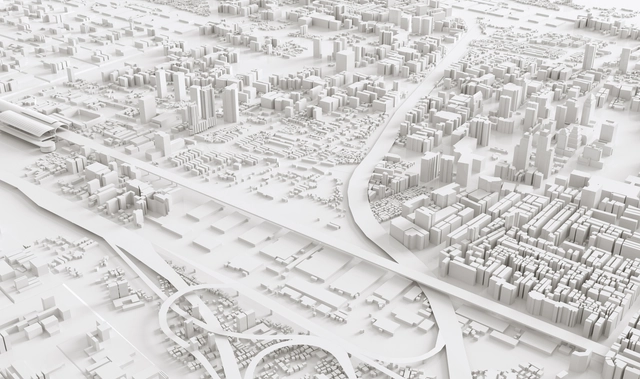
Over the past two decades, new master-planned cities have risen at a pace and scale rarely seen in modern history. Concentrated largely in Asia, the Middle East, Africa and Latin America, more than 150 such projects are currently underway. For some, these cities are promoted as fast tracks to modernization and a way to leapfrog from resource- or agriculture-dependent economies into knowledge-driven ones. For others, they are strategic showcases, designed to attract global attention, foreign capital, and prestige. By packaging urbanization itself as an investment opportunity, these projects promise to stimulate growth and reposition nations within the global economy—all through the act of building anew.

According to Forbes, "The new city building movement that we are currently in the middle of is one of the most under the radar and most misinterpreted social and economic developments happening in the world today". What often escapes scrutiny, however, is not only the architecture of these projects, but the governance model they advance.

Why Are Countries Building Cities From Scratch? - Image 1 of 4Why Are Countries Building Cities From Scratch? - Image 2 of 4Why Are Countries Building Cities From Scratch? - Image 3 of 4Why Are Countries Building Cities From Scratch? - Image 4 of 4Why Are Countries Building Cities From Scratch? - More Images+ 7

New, Innovation-Driven, "Smart City" Will be Built Just South of Boston

“Smart cities” are the latest urban phenomenon popping up across the globe. Among the newest being realized will be Union Point, a masterplan with a commitment to innovation located just south of Boston, USA.

What is a “smart city?” It is a city in which embeds multiple data collection technologies within the city in hopes of providing a supportive and competitive advantage to the city’s residents and business. Officials then use this data to make their cities safer, healthier, and more efficient. Cities are not geniuses quite yet, but the “smart city” is rethinking the way cities are run.

New, Innovation-Driven, "Smart City" Will be Built Just South of Boston - City PlanningNew, Innovation-Driven, "Smart City" Will be Built Just South of Boston - City PlanningNew, Innovation-Driven, "Smart City" Will be Built Just South of Boston - City PlanningNew, Innovation-Driven, "Smart City" Will be Built Just South of Boston - City PlanningNew, Innovation-Driven, Smart City Will be Built Just South of Boston - More Images+ 9