
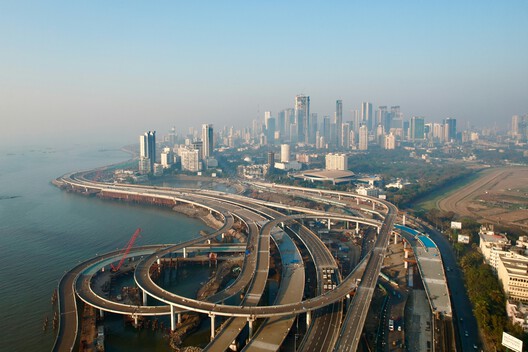
In 2025, India's most consequential design projects unfolded largely out of sight. While public attention gravitated toward museums, cultural landmarks, and visually arresting façades, the architecture that most decisively shaped daily life existed underground, at the city's edges, or inside secured compounds few citizens would ever enter. Sewage networks were rebuilt, flood tunnels bored beneath dense neighborhoods, substations lifted above floodplains, and data centers multiplied across peri-urban landscapes. These were not peripheral works of engineering; they were the spatial systems that allowed Indian cities to remain functional through record heatwaves, erratic monsoons, and accelerating urban growth.



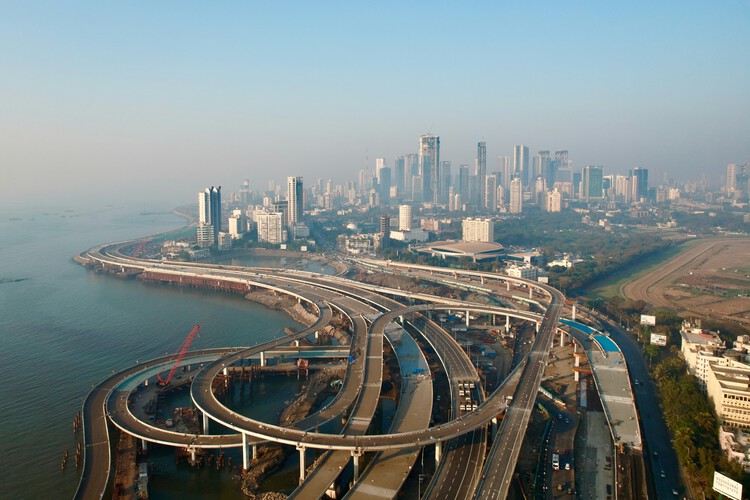
In this sense, infrastructure asserts itself as architecture, not as background support, but as the primary civic project of the contemporary Indian city. The most important "buildings" of 2025 were engineered voids, conduits, and nodes: spaces defined less by enclosure than by performance, resilience, and continuity. Together, they signal a shift in where architectural intelligence is now urgently needed. India's cities are confronting overlapping climate stresses at unprecedented speed. Urban flooding, water scarcity, grid instability, and air pollution are no longer episodic disruptions but structural conditions. In this context, traditional architectural responses, isolated buildings optimized for form or symbolism, appear increasingly insufficient.
Across many Indian cities, infrastructure systems have been designed with spatial logic, environmental intelligence, and long-term adaptability. These projects required the same design rigor as public buildings, yet they operate without the visibility or recognition typically afforded to architecture. What emerged was a recalibration of value. Performance began to outweigh spectacle. Redundancy replaced efficiency as a design virtue. And the boundary between architecture, landscape, and engineering blurred into a single, city-scale discipline.
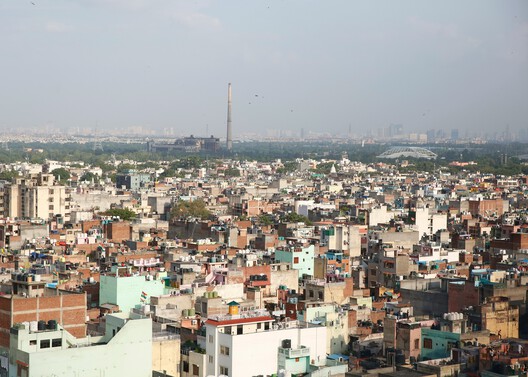
Rebuilding the Ground: Mumbai's Dharavi Sewer Overhaul
Completed in 2025, the Dharavi Sewer Overhaul represents one of the most ambitious sanitation upgrades undertaken in India's informal settlements. Rather than imposing a tabula rasa solution, the project worked within an intensely layered urban fabric, threading new trunk lines beneath active neighborhoods while maintaining surface life above.

The redesign addressed more than capacity. Slopes, maintenance access, flood backflow prevention, and decentralized treatment nodes were spatially coordinated to respond to both monsoon surges and long-term population density. In effect, the sewer became a parallel city, mapped, zoned, and designed with as much intentionality as any housing project. This kind of infrastructural precision challenges the assumption that architecture begins at ground level. Here, the most transformative spatial intervention lay beneath it.
Holding Back the Water: Bengaluru's Flood Relief Tunnels
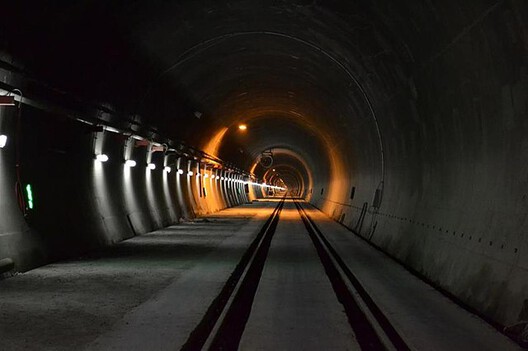
Bengaluru's Koramangala–Challaghatta Relief Tunnel, long discussed and finally operational in 2025, reframed flood mitigation as a form of subterranean urbanism. Stretching beneath some of the city's most densely developed zones, the tunnel diverts excess stormwater away from overburdened lakes and drains, reducing surface flooding that had become routine during monsoons.

The project demanded coordination across hydrology, geology, transport infrastructure, and land use planning. Its success lies not only in engineering execution but in its spatial foresight, anticipating future rainfall intensities rather than merely reacting to past data. In a city shaped by rapid, often unregulated growth, the tunnel represents an architectural act of restraint. Carving space not for occupation, but for flow.
Energy as Urban Form: Delhi's Net-Zero District Microgrid
In Delhi, a pilot net-zero district quietly tested a new relationship between energy infrastructure and urban form. Rather than relying solely on centralized power generation, the project integrated rooftop solar arrays, battery storage, demand-responsive buildings, and localized distribution networks.
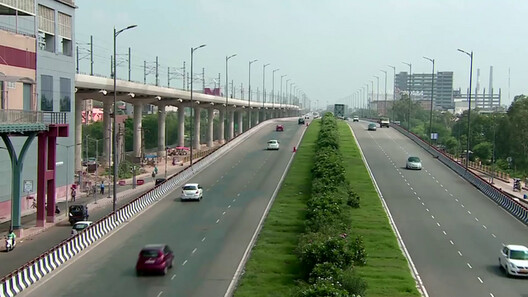
The microgrid transformed energy from an invisible utility into a spatial system embedded within the district's architecture. Roofs, basements, service corridors, and facades became active participants in power generation and storage. Energy planning, once an external constraint, became a driver of design decisions. This model signals a future in which architects must engage directly with grids, loads, and redundancy, not as technical afterthoughts, but as fundamental elements of spatial organization.
The New Mobility Spine: India's First Battery-Swap Expressway
The Delhi–Jaipur battery-swap expressway, operational in phases through 2025, marked a shift in how mobility infrastructure is conceived. Unlike traditional EV corridors focused solely on charging points, this 500-kilometer stretch introduced standardized battery-swapping stations integrated with logistics hubs, rest areas, and service architecture.
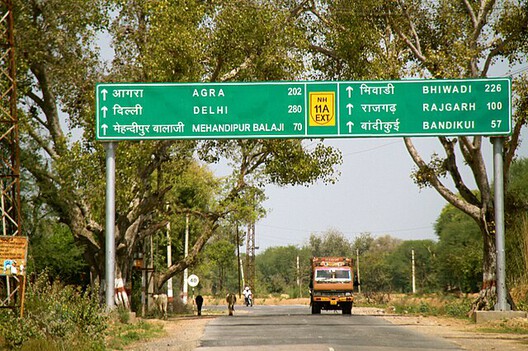
The expressway functions as a linear system rather than a series of isolated stops. Its architecture prioritizes speed, modularity, and scalability, qualities more commonly associated with industrial design than civic space. Yet its impact on regional connectivity and emissions reduction is profound. Here, architecture recedes visually but expands territorially, shaping movement patterns across entire regions.
Data Landscapes: Cooling-Optimized Campuses in Tamil Nadu
As India's digital economy expanded, so did its physical footprint. In Tamil Nadu, hyperscale data centers emerged as a new building typology defined by energy intensity, thermal management, and security. In 2025, several campuses adopted cooling-optimized designs that leveraged local climate conditions, alternative water systems, and waste heat recovery.
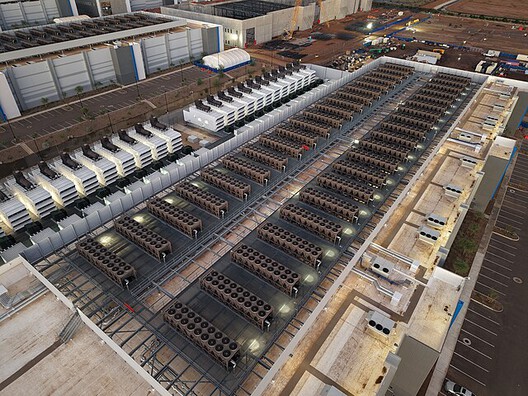
These facilities challenge conventional architectural metrics. Their success is measured not in footfall or facade articulation, but in PUE ratios, uptime, and thermal resilience. Yet they occupy vast tracts of land, shape regional power demand, and redefine industrial landscapes. Data, often perceived as immaterial, revealed itself as deeply architectural, anchored in concrete, air, water, and land.
Elevating the Grid: Kerala's Flood-Resilient Substations
In flood-prone regions of Kerala, elevated power substations became a critical adaptation strategy in 2025. Designed to remain operational during extreme weather events, these structures lifted transformers and control rooms above projected flood levels while maintaining accessibility for maintenance and rapid repair.
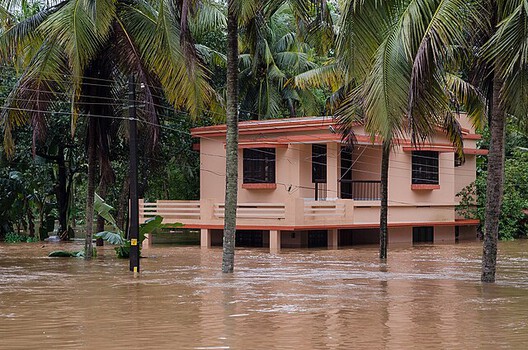
The substations combined structural pragmatism with landscape sensitivity, often integrating with embankments or existing infrastructure corridors. Their design acknowledged that resilience is not achieved through invisibility, but through deliberate exposure and preparedness. These projects underscored a broader truth: climate resilience is spatial, and infrastructure must be designed as permanent civic architecture rather than disposable hardware.
Infrastructure as the Next Architectural Frontier
Taken together, these projects suggest a profound redefinition of architectural relevance in India. As cities expand and climate volatility intensifies, the discipline's center of gravity is shifting away from isolated objects toward continuous systems.
Engaging with grey infrastructure demands new skills, new collaborations, and new metrics of success. It requires architects to think in terms of flows rather than forms, lifecycles rather than icons, and redundancy rather than optimization. Yet it also offers an opportunity to reclaim agency at the scale where design decisions are frequently overlooked. In 2025, India's invisible infrastructure did more than keep cities running: it revealed where architecture's future may lie. Below the surface, embedded in networks, and sustaining everything else.
This article is part of an ArchDaily series titled India: Building for Billions, where we discuss the effects of population rise, urbanization, and economic growth on India's built environment. Through the series, we explore local and international innovations responding to India's urban growth. We also talk to the architects, builders, and community, seeking to underline their personal experiences. As always, at ArchDaily, we highly appreciate the input of our readers. If you think we should feature a certain project, please submit your suggestions.
This article is part of the ArchDaily Topic: Year in Review, proudly presented by GIRA.
GIRA sets the standard where architectural design meets intelligence. From the defining moments of 2025 to the innovations shaping 2026, we create smart solutions that elevate living and working environments with timeless aesthetics. Join us in shaping the future of architecture and interior design — where vision becomes reality.
Every month we explore a topic in-depth through articles, interviews, news, and architecture projects. We invite you to learn more about our ArchDaily Topics. And, as always, at ArchDaily we welcome the contributions of our readers; if you want to submit an article or project, contact us.