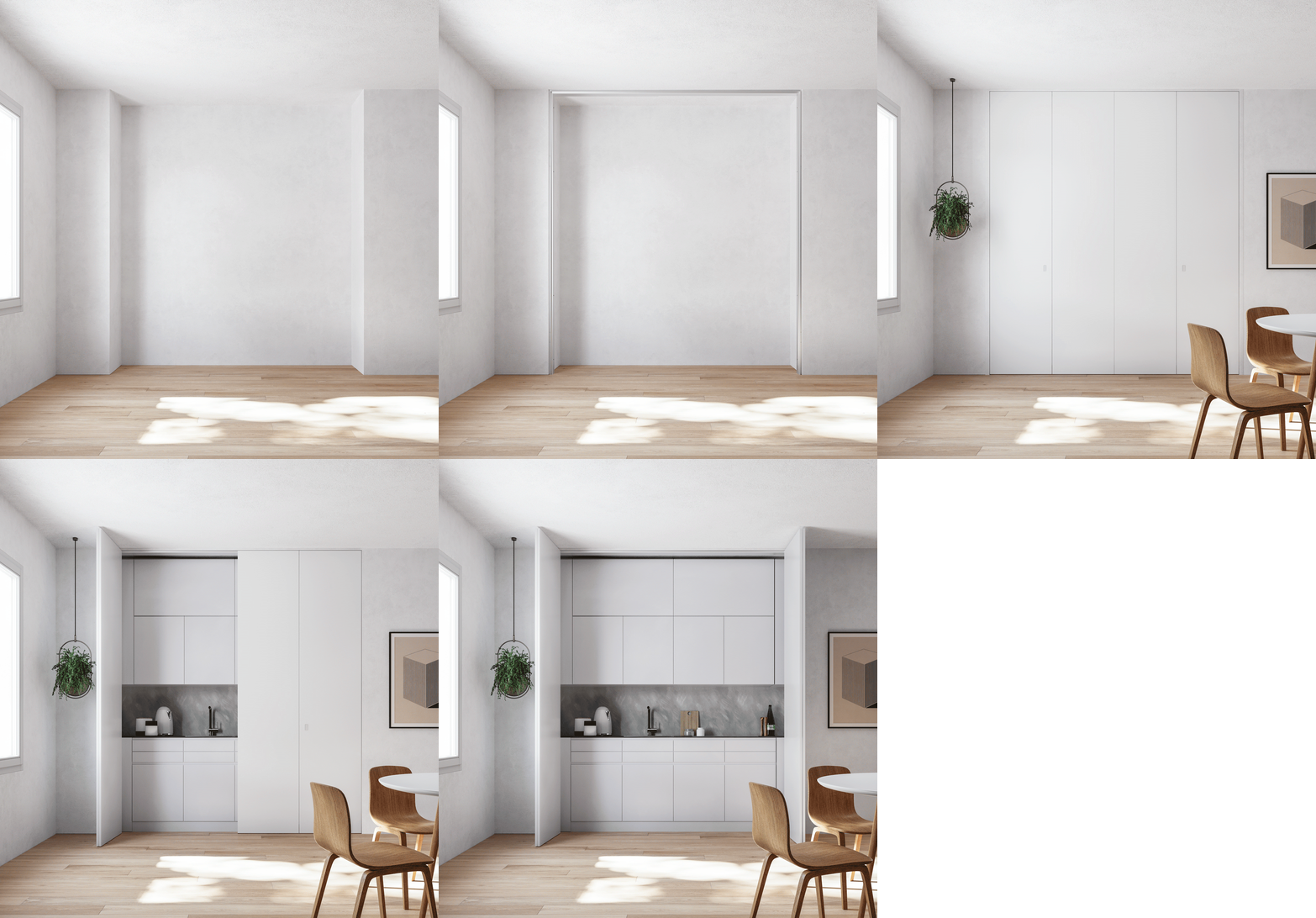
The niche has been a space of visible intention throughout the history of architecture. In ancient Roman architecture, it served as a formal device carved into masonry to display statues, vases, or other objects. These recesses animated the walls of temples, bath complexes, and civic buildings, adding rhythm, depth, and focal points to otherwise massive structures. The interior spaces of the Pantheon framed statues of gods, and the Baths of Caracalla used similar voids to structure expansive halls. By the Renaissance, the niche evolved into a refined architectural frame. In Florence, the external cavities of Orsanmichele held guild-commissioned statues, while the Uffizi Palace's recesses displayed sculptural works. Whether filled or intentionally left empty, these openings articulated internal and external walls and facades, introduced hierarchy, and provided visual interest, serving as deliberate gestures meant to be seen.
In contemporary architecture, however, the niche has shifted from display to concealment, hiding technical and everyday elements such as cables, panels, pipes, or appliances. This shift does not contradict architectural tradition: it reflects adaptation and effective spatial organization. The principles of Roman architect Marcus Vitruvius Pollio help explain why. In his work, De Architectura, he described good architecture through firmitas, utilitas, venustas—strength, usefulness, and beauty—showing how buildings respond to practical needs while maintaining aesthetic coherence. These spaces continue to serve utilitas, but the function they address has shifted from public display to private organization. As Vitruvius wrote:
A building should be made so that it possesses strength, usefulness, and beauty—haec autem ita fieri debent, ut habeatur ratio firmitatis, utilitatis, venustatis.
The Evolving Role of the Niche
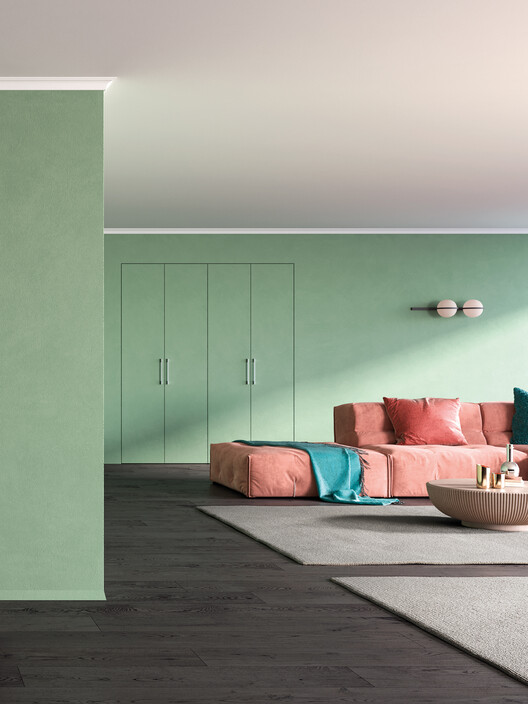
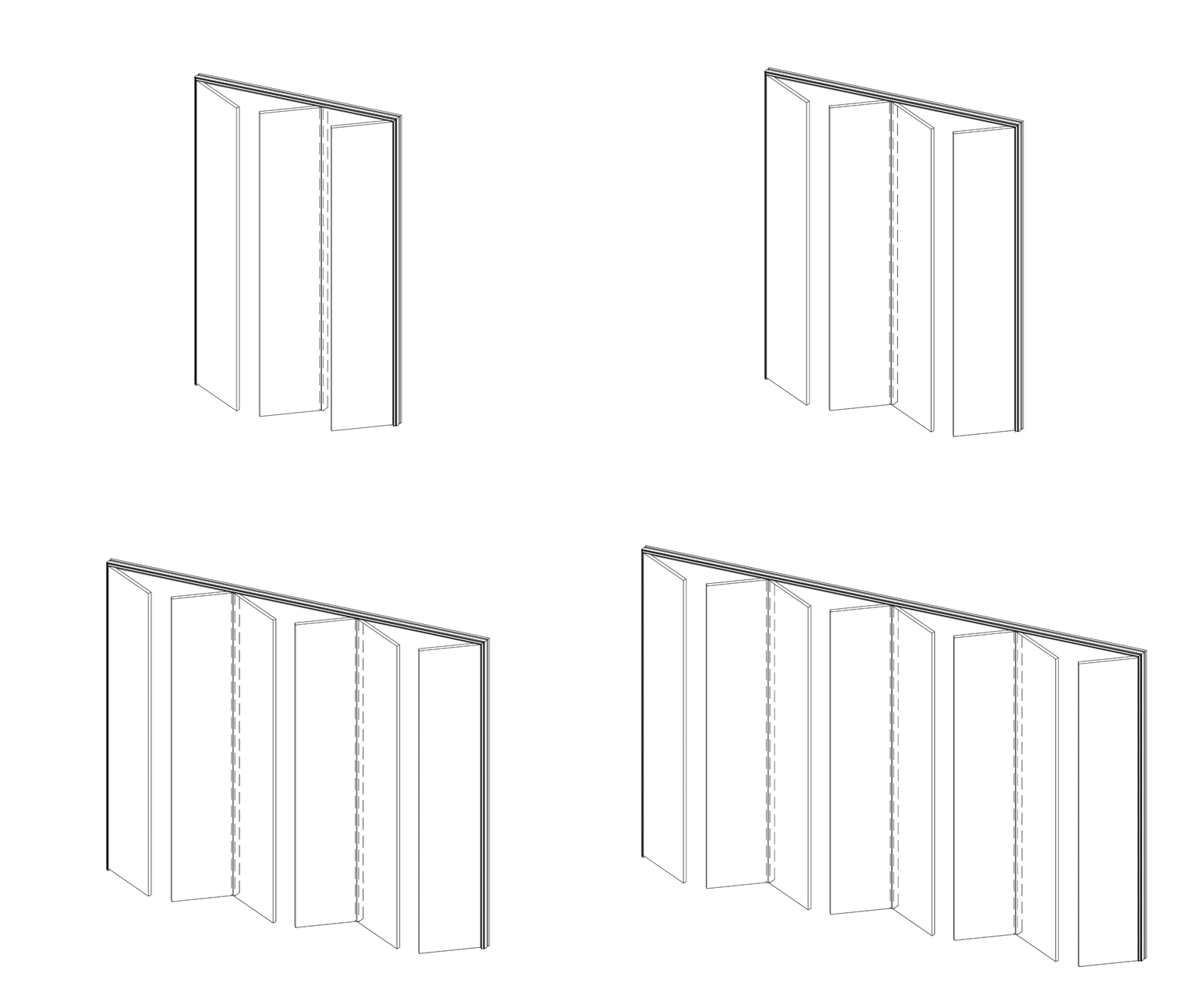
Today, the modern home is shaped by different pressures. Urban densification and shrinking interiors have made every centimeter significant, while design culture values visual calm, uninterrupted surfaces, and coherent material palettes. This shift has inverted the logic of the niche: rather than highlighting an object, the recess now often hides it. It accommodates the technical elements that are relied on but are preferred not to be seen. Systems like ECLISSE's Syntesis Areo illustrate this approach, allowing recesses to blend seamlessly into walls. Their 18 mm-thick, flush-to-wall, melamine-faced chipboard panels, paintable and weather-resistant, and a resin-coated anodised aluminum frame maintain continuous architectural surfaces indoors and out.
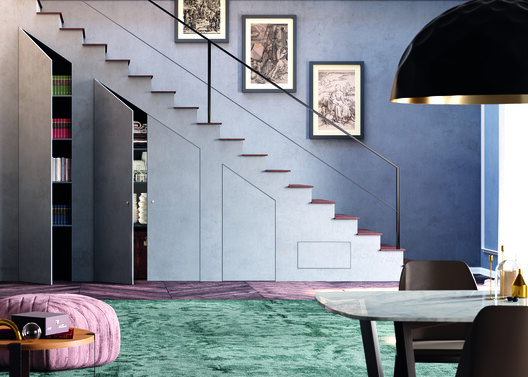
Such concealment often finds its expression in the spaces revealed during renovation or new construction. Openings that earlier builders treated as incidental—voids beside chimneys, pockets left by old plumbing stacks, or recesses under stairs. In new construction, similar opportunities emerge within thicker walls, service zones, and structural assemblies. These irregular spaces rarely match standard furniture dimensions, yet they hold substantial potential. By transforming them into purposeful recesses, otherwise unused volume can be reclaimed and integrated into the room's spatial logic. In small interiors, especially, such interventions can mean the difference between clutter and clarity.
Recesses that Hide Rather than Display
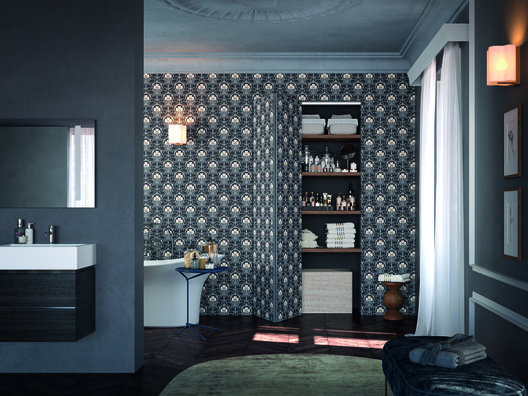
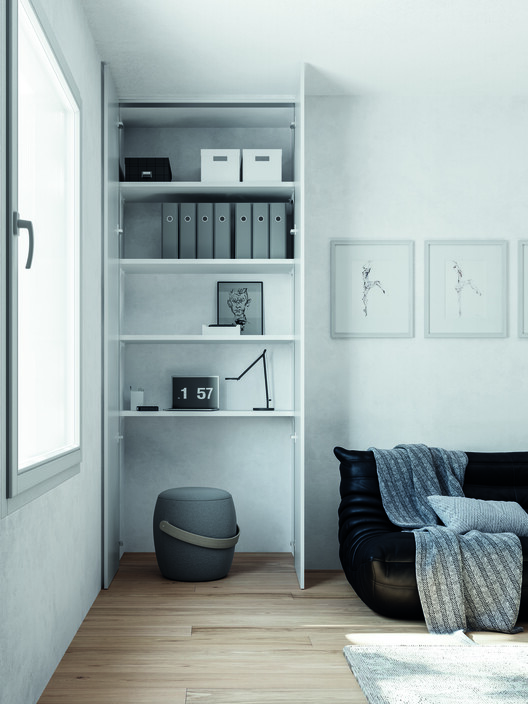
Concealing intentional or unplanned niches demands precision. To visually erase a recess, alignment must be flush, access points well designed, and panels harmonized with surrounding materials. A door or cover must open easily yet vanish when closed; frames must adapt to uneven walls; finishes must accept paint or wallpaper so the wall reads as a continuous plane. Here, technical systems such as the ECLISSE Syntesis Areo and fitting hardware for shelving become architectural tools. These solutions install without the need for masonry work, ensuring uniform aesthetic integration with the surrounding wall. Versatile in use, it can be applied in bathrooms, kitchens, study corners, and even outdoor spaces.
The bathroom offers a clear example of this transformation. Perhaps one of the most constrained rooms in the home, it often accumulates objects that rarely contribute to the desired sense of calm. Closing a recess behind a flush panel can instantly reorganize the space, eliminating the need for hanging cabinets and enhancing the perception of openness. Similar strategies apply to kitchens, where an opening can serve as a concealed pantry or appliance zone, and to living areas, where recesses can be adapted into discreet workspaces that support contemporary patterns of living and working.
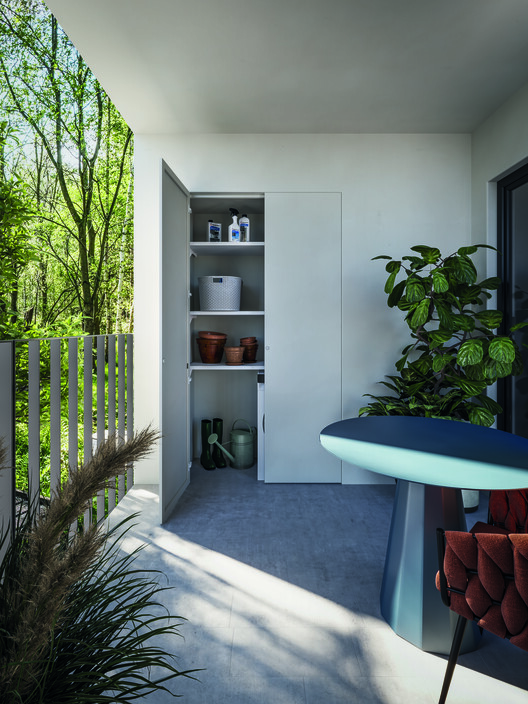
Exterior architecture follows the same logic. Terraces, courtyards, and facades must accommodate boilers, meters, storage, and outdoor kitchens. Weather-resistant, flush-to-wall panels allow these technical spaces to be concealed without disrupting the facade. A hidden compartment that once might have been a utilitarian cupboard becomes part of the architectural concept. Systems such as the ECLISSE Syntesis Areo help prioritize qualities that shape spatial experience, making a space appear larger, calmer, and more coherent yet remain easily accessible.
In this sense, the utilization of hidden niches in contemporary architecture continues to embody Vitruvius' triad, but in a modern interpretation. For Vitruvius, good architecture relied on utilitas: the effective use and organization of space. The same principle applies today. Strength, functionality, and beauty remain guiding values, but domestic needs have evolved. These spaces now mediate usefulness and beauty through subtraction rather than addition. Its purpose is no longer to highlight an object but to protect the clarity and efficiency of the environment around it.