


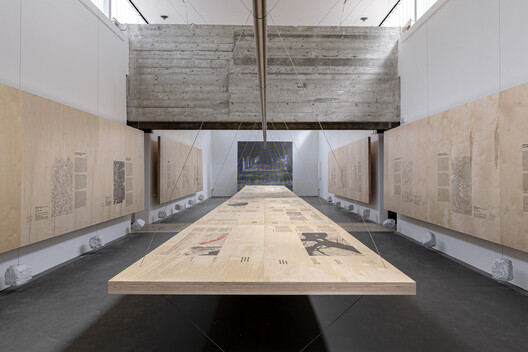
The Brazilian Pavilion at the 19th International Architecture Exhibition – La Biennale di Venezia, open since May 10, 2025, is curated by Plano Coletivo, a group formed by architects Luciana Saboia, Eder Alencar, and Matheus Seco. Titled "(RE)INVENTION," the exhibition represents Brazil through a multidisciplinary approach that connects architecture, nature, and social infrastructure. Presented at the Giardini pavilion, the project is organized by the Fundação Bienal de São Paulo in collaboration with Brazil's Ministry of Culture and Ministry of Foreign Affairs. The exhibition reflects on the recent archaeological discovery of ancestral infrastructure in the Amazon to examine the socio-environmental contradictions of contemporary cities. It invites visitors to learn from ancestral knowledge and explore the interdependence between humans, land, and nature as a foundation for more sustainable futures.
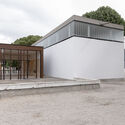
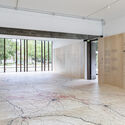
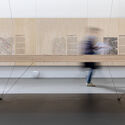
The Brazil Pavilion's exhibition design reflects a commitment to addressing socio-environmental challenges. Through a curatorial vision rooted in collaboration, the project brings together contributions from researchers, professors, architects, and artists across the country. Ultimately, the pavilion seeks to explore how architectural practices can mediate between natural and built environments, responding to the Biennale's theme, Intelligens. Natural. Artificial. Collective., proposed by general curator Carlo Ratti.
The curatorial team's proposal reflects deeply on Brazil's unique relationship with its natural and urban environments. Drawing inspiration from how, more than 10,000 years ago, Indigenous peoples shaped landscapes through sophisticated infrastructures that integrated technical knowledge with environmental adaptation, the exhibition questions how collective intelligence, both ancient and modern, can reshape our approach to habitation amid ongoing socio-environmental crises.
Related Article
CCA Releases Documentary on Carla Juaçaba’s Work to Support Forest Conservation in Brazil's Coffee RegionThe curators, Luciana Saboia, Eder Alencar, and Matheus Seco, bring expertise to the Brazil Pavilion. Saboia, a professor and researcher, is known for her critical work on landscape and metropolitan peripheries, emphasizing environmental and social transformation. Alencar, a founding partner of ARQBR Arquitetos, focuses on creating architecture that harmonizes with local contexts and landscapes. Seco, co-founder of BLOCO Arquitetos, has earned recognition for his thoughtful approach to design, which respects site-specific constraints while exploring innovative solutions. Together, they form a team committed to using architecture as a tool for socio-environmental action.
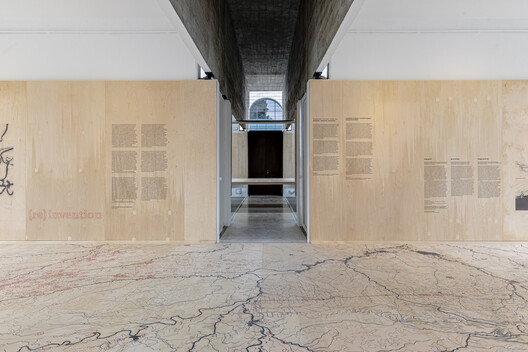
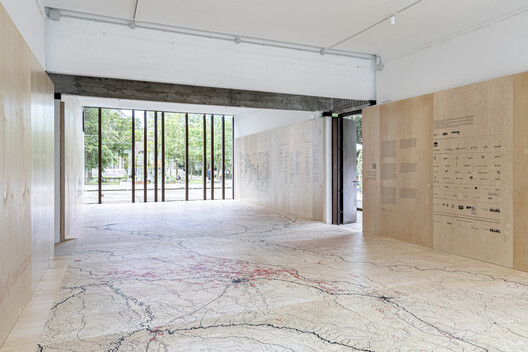
The exhibition is structured in two acts. The first act highlights the way ancestral Amazonian societies engaged in balanced environmental management, challenging previous notions of the region as untouched wilderness. The second act shifts to contemporary Brazil, showcasing how architecture and infrastructure can be reinterpreted through inherited and adapted design strategies.
One of the key exhibition elements, the "Garden-Platform," demonstrates how existing structures can be adapted with ecological sensitivity. A linear structure that once required constant irrigation has been transformed into a naturalistic garden of native and adaptive species that respond to the seasonal cycles of Central Brazil's biome. Other strategies showcased in the exhibition explore how architecture can appropriate existing spaces to create new identities, reinforcing the idea that urban landscapes can be sites of continuous reinvention.

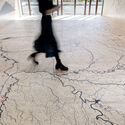
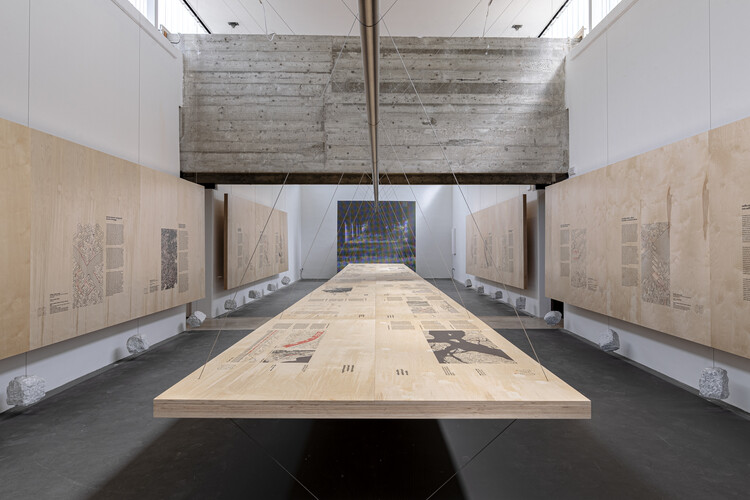
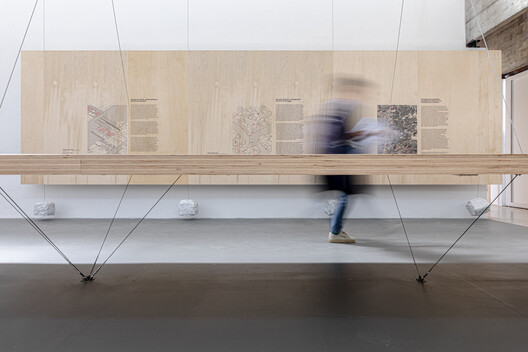
The exhibition design offers a nuanced dialogue on the role of architecture as both a cultural artifact and a tool for addressing global challenges. Minimal interventions define the spatial experience of the Brazil Pavilion, with installations resting on the floor in the first exhibition room, while the second room features suspended CLT panels, stone counterweights, and steel cables forming a delicate system of balance. This approach ensures that materials used in the exhibition can be disassembled, repurposed, or recycled after the event. The Brazil Pavilion invites visitors to consider how the convergence of local knowledge and global discourse can promote a vision of urban and environmental coexistence that is both innovative and inclusive. The exhibition contents are openly accessible via a digital publication.

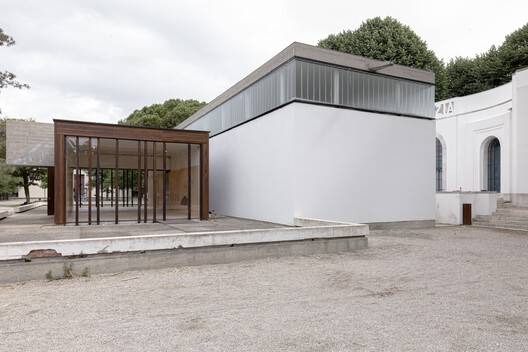
This year's participation reaffirms Fundação Bienal de São Paulo's long-standing commitment to elevating Brazilian architectural thought on an international stage. Since its creation in 1964, the Brazil Pavilion in Venice has been a platform for exploring the country's artistic and cultural identity, and this year's project continues that legacy, turning the spotlight on Brazil's response to critical global issues. In 2024, the foundation initiated the restoration of the Brazilian Pavilion in Venice, a building owned by Brazil's Ministry of Foreign Affairs. Following initial structural repairs, the recently completed second phase restored the original architectural design, including the glass side walls and façade. The final stage of the project is scheduled for early 2026.
Titled "Intelligens," the Venice Biennale Architecture exhibition is running from May 24th to November 23rd, 2025, in the Giardini, the Arsenale, and various landmark locations throughout Venice. Among other national participations, the Belgian pavilion building was transformed into a dynamic microclimate by an exhibition titled "Building Biospheres," curated by landscape architect Bas Smets and biologist Stefano Mancuso. Similarly, the Türkiye Pavilion presented an exhibition titled "Grounded," curated by Ceren Erdem and Bilge Kalfa, exploring soil as a medium that carries both ecological and cultural memory. Finally, Iceland is represented in the Biennale by "Lavaforming," a project led by architect Arnhildur Pálmadóttir envisioning a speculative future in which lava is no longer seen solely as a natural hazard but instead embraced as a generative, architectural medium.
We invite you to check out ArchDaily's comprehensive coverage of the 2025 Venice Biennale.
Editor's Note: This article was originally published on February 24, 2025, and updated on September 27, 2025, to include new photographs of the space and the video of its restoration.


