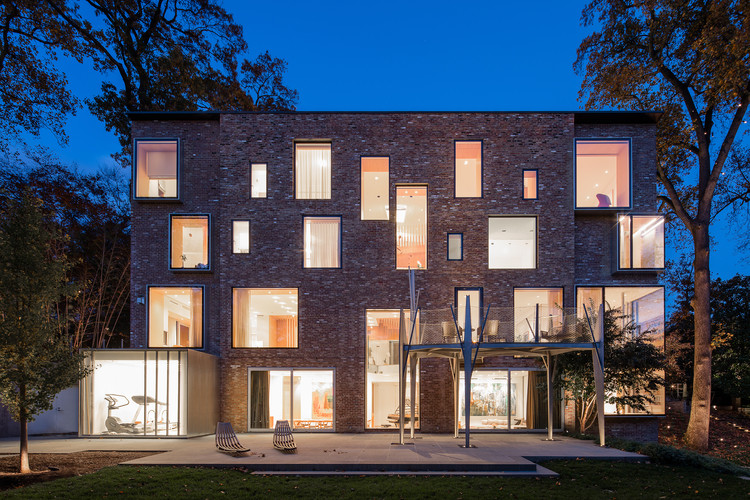
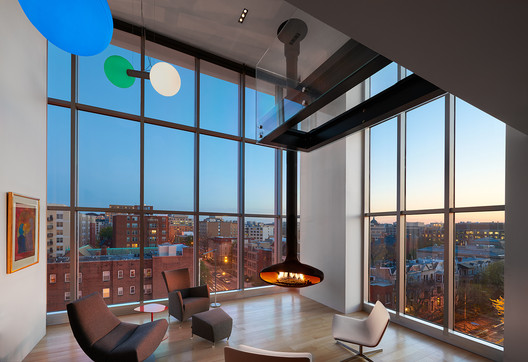
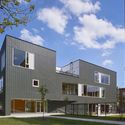
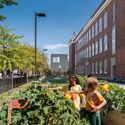
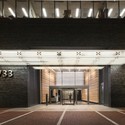
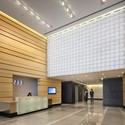
Zig Zag House / David Coleman Architecture

Architect: David Coleman Architecture
Location: Yarrow Point, Washington, USA
Project Area: 2400 sqf
Photographs: Courtesy of David Coleman Architecture
Panther Lake Elementary School / DLR Group

The design for Panther Lake Elementary School focuses on bringing together the school’s learning and common areas in order to enrich the students’ educational experiences. Long rows filled with formal learning spaces run parallel to each other, while a corridor containing the school’s major common areas runs through the rows at a diagonal, bisecting and connecting the separate learning areas. As a result, the various learning centers remain open to one another even though they appear to be separated by their different colors and structural elements.
Architect: DLR Group
Location: Federal Way, Washington, United States
Project Area: 45,000 sqf
Project Year: 2009
Photographs: Chris J. Roberts
Pine Forest Cabin / Balance Associates Architects

In order to meet the client’s budget goals, an efficient plan and cost effective selection of building materials reduced construction costs and led to the simple box design. The use of sheet materials both inside and out maximized material efficiency while emphasizing the simplicity of the cabin’s form.
Architect: Balance Associates Architects
Location: Winthrop, Washington, USA
Project Team: Tom Lenchek AIA, Principal; Lauren Tindall Crocco AIA, Project Architect
Structural Engineer: Harriott Smith Valentine Engineers
General Contractor: The Patterson Company
Project Year: 2007
Project Area: 850 sqf
Photographs: Steve Keating Photography
University of Washington Medicine Research Complex / Perkins+Will

Gustafson Guthrie Nichol (GGN) shared with us their role as landscape architects for the third phase of the University of Washington Medicine’s research hub, designed by Perkins+Will, in Seattle’s South Lake Union neighborhood, which broke ground earlier this month and is scheduled to be completed in the spring of 2013. More images and project description after the break.
Call for Entries: 2011 Honor Awards for Washington Architecture

Perspective provides us the vision to see our work and how we shape our surroundings with increasing clarity as we aspire to evolve and seek ever better answers to the challenges of our world. Our perspective begins with the most personal of the individual, to ever expanding rings of reference and community. This year’s 2011 AIA Honor Awards for Washington Architecture recognizes the transformative potential of vision in shaping our work and our communities.
We invite the design community to engage in the conversation of the Awards and submit your perspective whether realized, latent, or an idea in the pursuit of design excellence. This year’s esteemed jury and moderator will share their perspective in an engaging evening of dialogue at Benaroya Hall.
Wintergreen Cabin / Balance Associates Architects

Wintergreen Cabin is a 1,600 sqf cabin built into a steep hillside overlooking a stream with a view to the mountains in the distance. The cabin is anchored into the hill with a concrete base that contains the garage and other utility spaces. The upper floor houses all of the living areas. The south side of the cabin is a single space containing the living/dining/kitchen with large window walls on 3 sides. Decks cantilever off of the concrete base on three sides and allow views into the stream below. Facing east, the master suite opens out to the stream ravine with glass sliding pocket doors.
Architects: Balance Associates Architects
Location: Methow Valley, Washington, USA
Project Team: Tom Lencheck AIA, Principal; Timothy Posey, Project Architect
Project Area: 1,613 sqf
Project Year: 2005
Structural Engineers: Fred Cooley, F L Cooley & Associates
General Contractor: Bjornsen Construction
Photographs: Steve Keating Photography
Marysville Getchell High School / DLR Group

Architect: DLR Group
Location: Marysville, Washington, USA
Project Year: 2010
Photographs: DLR Group
Roundy Residence / The Miller Hull Partnership

Located in the San Juan Islands of Washington State, the 10 acre site contrasts between gently rolling fields that abruptly terminate in a 100-foot-high bluff that drops to the water’s edge below. The juxtaposition between these two conditions led to the architectural concept.
Architect: The Miller Hull Partnership
Location: Lopez Island, Washington, USA
Consultants: Ascent Construction, Quantum Consulting Engineers, Northwest Mechanical
Photographs: Benjamin Benschneider
Wolf Creek View Cabin / Balance Associates Architects

Wolf Creek View Cabin sits in a lightly treed meadow, surrounded by foothills and mountains in Eastern Washington. The home is designed as two interlocking “L’s”. A covered patio is located at the intersection of one “L,” offering a protected place to sit while enjoying sweeping views of the valley. A lighter screening “L” creates a courtyard that provides shelter from seasonal winds and an intimate space with privacy from neighboring houses.
Architect: Balance Associates Architects
Location: Eastern Washington, USA
Project Team: Tom Lencheck AIA, Principal; Kyle Zerbey AIA, Project Architect; Timothy Posey AIA, Project Architect
Structural Engineer: Harriott Smith Valentine Engineers
General Contractor: Bjornsen Construction
Project Year: 2007
Project Area: 1810 sqf (house), 528 sqf (garage)
Photographs: Steve Keating Photography
Vancouver Community Library / The Miller Hull Partnership

The new Vancouver Community Library in Vancouver, Washington, designed by The Miller Hull Partnership, recently opened to the public. With an almost 200-foot long, four-story atrium welcoming visitors to this new civic gathering space, the light-filled space features a sculptural concrete stair uniting the library’s five floors. A 50-foot high “Knowledge Wall” installation symbolizes the collection of information and ideas in the building. “The main goal was to create a new center for the community, ” said Adin Dunning, the lead architect for the library project who also grew up in Vancouver. “It was about bringing new users into the library and expanding what the library had to offer. The atrium space connects the program together and differentiates this building from any other building in the city.”
Architect: The Miller Hull Partnership
Location: Vancouver, Washington, USA
Project Area: 80,000 sqf
Project Year: 2011
Photographs: Benjamin Benschneider
Flowing Lake Residence / David Vandervort Architects

The small and narrow lot extends dramatically down a steep slope to beautiful Flowing Lake in Snohomish County, Washington. Giant fir trees occupy the western half; the eastern half was marred by the previous removal of a fire damaged cabin. David Vandervort Architects’ challenge was to create a home for an active, young couple which preserved the trees and the remaining native landscape while extending toward and maximizing views of and access to the lake.
Architect: David Vandervort Architects
Location: Snohomish, Washington, USA
Interior Design: Robin Chell Design
Builder: Dovetail
Project Area: 2,500 sqf
Photographs: Mark Woods Photography
Video: The Race to Zero
Released just this week, this video highlights the first ever high-performance district in the USA. Motivated by the Architecture 2030 challenge, Seattle 2030 District has applied these ideas to a larger area creating a collaborative model between public and private sectors. This ground breaking district in downtown Seattle is aiming to ‘develop realistic, measurable, and innovative strategies to assist district property owners, managers, and tenants in meeting aggressive goals that reduce environmental impacts of facility construction and operations’.
zHome / David Vandervort Architects

Situated in the Issaquah Highlands just east of Seattle, zHome is envisioned as a ten unit, net zero energy and net zero carbon town home community. The 0.4-acre site is part of a larger parcel located at the entrance to the Highlands neighborhood. The larger parcel was planned as a combined project including the zHome site along with a mixed-use project that is being constructed by the YWCA.
Lopez Island Residence / David Vandervort Architects

This 1,800 sqf home is located on a heavily wooded, medium-bank waterfront property on Lopez Island, Washington. The house is carefully sited amidst the existing trees and the existing land form which slopes up to the bank and view. Connections to the outdoors and other features of the property informed the arrangement of space and form. The angle of the living wing corresponds to the bank and creates an embraced outdoor deck area. The house reaches out to the southeast path to the beach, to the gardens further to the east and most importantly to the west and northwest views of the water.
Architect: David Vandervort Architects
Location: Lopez Island, Washington, USA
Project Area: 1,800 sqf
Builder: Ascent Building Company
Photographs: Michael Shopenn Photography
NEXTHouse / David Vandervort Architects

NEXTHouse is a 2,700 square foot, custom-designed home fusing the northwest modern tradition with the highest quality environmentally sustainable building techniques, features, and finishes. It is a speculative venture on the part of the architect, created to demonstrate cutting edge “green” features and modern design in a “for sale” residence.
Architect: David Vandervort Architects
Location: Seattle, Washington, USA
Project Area: 2,700 sqf
Builder: Paulsen Construction
Photographs: Michael Jensen Photography
West Seattle Residence / David Vandervort Architects

This custom residence is situated on a 3,450 sqf urban infill lot in an established neighborhood in West Seattle. The house was oriented east and west to take advantage of its southern exposure and reduce heating and cooling loads. A compact stacked floor plan containing 1,523 square feet was developed and organized into 3 major zones—living, working and sleeping. The vaulted ceiling living zone, located on the upper floor is situated to encourage views of the city and Cascades, as well as provide an efficient natural ventilation system.
Architect: David Vandervort Architects
Location: Seattle, Washington, USA
Project Area: 1,523 sqf
Builder: Stonewood Builders
Photography: Michael Shopenn Photography
City of Bothell Public Works Operations Center Administration Building / Hutchison & Maul Architecture

Architects: Hutchison & Maul Architecture – Robert Hutchison, Tom Maul, Mike Campbell, Greg Hale
Location: Bothell, Washington, USA
Structural Engineer: DCI Engineers
Civil Engineer: Coughlin Porter Lundeen
Landscape Architect: Talasaea Consultants
M/E Engineer: Tres West Engineers
Shops Building Consultant: Wagner Architects
General Contractor: JTM Construction
Project year: 2010
Photographs: Hutchison & Maul Architecture
Green Concept Home / Modus V Studio Architects

The “Green Concept Home” is a two-story single-family residence located in Bellevue, Washington. This 2,840 sqf house has a contemporary design and is owned, designed and built by husband and wife team David Huang and Millie Leung. Designed by Modus V Studio Architects, the house broke ground in September 2009 and was completed the following year in September 2010.
Architects: Modus V Studio Architects, David Huang
Location: Bellevue, Washington, USA
General Contractor: David Huang
Interior Designer: Millie Leung
Green Verifier: O’Brien & Company
Mechanical Engineer: Mitchell Engineering, Inc.
Landscape Designer: Studio 342 Landscape Architecture
Energy Consultant: Bushnell Energy Consulting
Project Year: 2010
Photographs: Millie Leung
Cascadia Center for Sustainable Design and Construction / Miller Hull Partnership

Slated to be one of the most ambitious green buildings in North America, the Cascadia Center for Sustainable Design and Construction will be the world’s most energy-efficient commercial building reinforcing the city of Seattle’s commitment to be at the forefront the green building movement. This exciting new building is planning to achieve the Living Building Challenge (version 2.0), as described by the International Living Building Institute.
The mixed-use building will serve as the future headquarters of the Bullitt Foundation as well as provide office and commercial space for leaders in the green building industry. Thursday, May 4th, at the Illsley Ball Nordstrom Recital Hall at Benaroya Hall, a free community event will present the Cascadia Center. Further details can be found here.
Architects: Miller Hull Partnership
Location: Seattle, Washington, USA
Project Team: PAE Consulting Engineers, Point32, Schuchart Construction
Urban Design Forum to Discuss Seattle’s Civic Square Development

This coming Monday, April 25th the Urban Design Forum presents the opportunity to hear discussion about the stalled Civic Square development and other “interim use” sites in downtown Seattle. Sean Canady from GGLO, Robert Smith from Foster + Partners and City of Seattle representatives will be present. The Seattle Civic Square project, which completes the final phase of a ten-year civic masterplan, provides a vital new focus for Seattle’s civic life, reinvigorating the south downtown area for the whole city’s benefit.
The Urban Design Committee Forum serves the AIA Seattle membership and the community by bringing forward critical issues facing Puget Sound neighborhoods and cities, in order to inform, engage, and support advocacy by AIA Seattle Members and others who share concern for the quality of the built environment. More information about the upcoming event can be found here.
Struggling Cities, Exhibit of Japanese Urban Projects in the 1960s

The internationally touring exhibit ‘Struggling Cities’ focuses on the proposals of urbanization by Japanese architects in the 1960s including:
- Kenzo Tange’s “A Plan for Tokyo-1960;”
- the Metabolist schemes of Kiyonori Kikutake, Kisho Kurokawa, Masato Ohtaka, Fumihiko Maki, and Noboru Kawazoe; and
- Arata Isozaki’s “Cities in the Air”
Currently on display the exhibit runs through Friday, April 29th (excluding Sundays) from 10am to 4pm at MulvannyG2. ‘Struggling Cities’ was also featured at the Shanghai Expo in 2010 and at the Japan Cultural Institute in Cologne, Germany.
Further details can be found here.
The Japan Foundation Exhibit is co-sponsored by Consulate-General of Japan in Seattle and Seattle Cherry Blossom and Japanese Cultural Festival Committee, King County 4Culture, City of Seattle Office of Arts and Cultural Affairs.
In collaboration with University of Washington College of Built Environments, American Institute of Architects Seattle, Hamilton International School – Future Cities, MulvannyG2, Japan-America Society of the State of Washington, Seattle Center, Nippon Express, and Yuri Kinoshita.