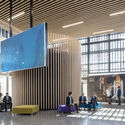
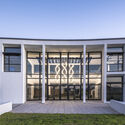
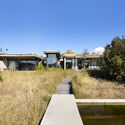
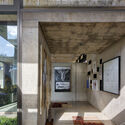
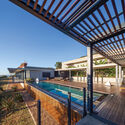
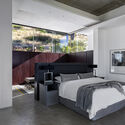
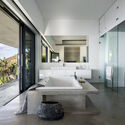
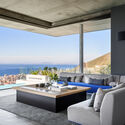
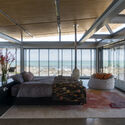
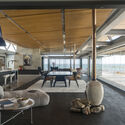
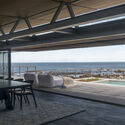
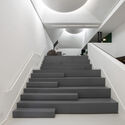
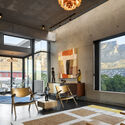
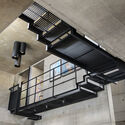
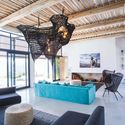
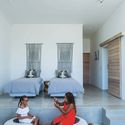
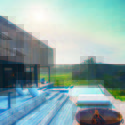
First Crescent / SAOTA

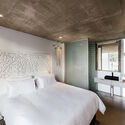
Architects: SAOTA (Stefan Antoni Olmesdahl Truen Architects) – Stefan Antoni, Philip Olmesdahl, Tamaryn Hammond
Location: Camps Bay, South Africa
Interior design: Antoni Associates – Mark Rielly, Ashleigh Gilmour
Project area: 676 sqm
Project year: 2007
Photographs: Wieland Gleich & Karl Beath
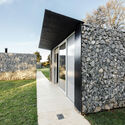
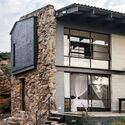
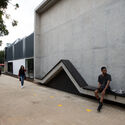
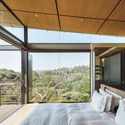
Maison / Van Der Merwe Miszewski Architects

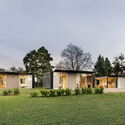
Architects: Van Der Merwe Miszewski Architects
Location: Cape Winelands, South Africa
Structural Engineer: Henry Fagan Associates
Quantity Surveyor: Bernard James and Partners
Project year: 2009
Photographs: Van Der Merwe Miszewski Architects
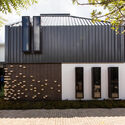
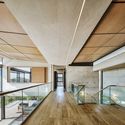
Cohen Residence / KUBE Architecture

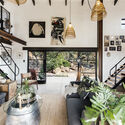
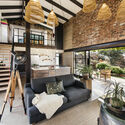
Architects: KUBE Architecture – Stefan Rademan, Simon Mountford
Location: Tamboerskloof, Cape Town, South Africa
General Contractor & Project Manager: Venture Projects
Structural Engineer: Gadomsky Structural Engineers
Solar Installation: Solarzone in conjunction with Florad
Project area: 360 sqm
Project year: 2009
Photographs: Stefan Rademan
OYES Chair / Hofman Dujardin

The German magazine AIT invited 100 selected architecture and interior design offices across Europe to redesign the ‘ONO’ chair produced by the Dietiker company. The newly designed chairs will be exhibited in the context of a road show in the AIT-Architektur Salons Hamburg, Munich, North Rhine-Westphalia, and Stuttgart. The main auction of the chairs will talk place in spring 2010. The revenues generated through this auction will support the Langa Township in Cape Town, South Africa. Hofman Dujardin shared with us their entry into the competition, their OYES chair, as an urban charity for city. More images and architect’s description after the break.
Football Training Centre Soweto / RUFproject

Architects: RUFproject
Lead Architect & Designer: Sean Pearson
Location: Soweto, Gauteng, South Africa
Client: Nike South Africa
Local Project Manager: SIP Project Managers Ltd.
Project area: 54,800 sqm
Photographs: Allan James, Julian Abrams
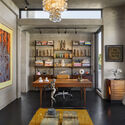
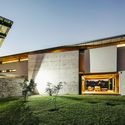
Bridle Road House / Antonio Zaninovic Architecture Studio

Architect: Antonio Zaninovic Architecture Studio
Location: Cape Town, South Africa
Project Architect: Antonio Zaninovic
Interior Design: Rees Roberts + Partners LLC
Landscape Design: Rees Roberts + Partners LLC
Project Area: 4,500 sqm
Project Year: 2009
Photographs: Antonio Zaninovic, Nikolas Michael
Optic Garden / 26’10 south Architects and Maja Marx

The Optic Garden functions as a sculpture on a traffic island celebrating the 2010 World Cup and marking one of the major routes to the inner-city match venues. The project was commissioned by the Johannesburg Development Agency as part of a citywide public art program leading up to the 2010 World Cup.
Be sure to take a look at the video, drawings, and photographs following the break.
Architects: 26’10 south Architects
Project Team: Anne Graupner, Thorsten Deckler, Stephen Reid, Carl Jacobs, Sue Groenewald
Artist: Maja Marx
Photographs: John Hodgkiss
The Ecomo Home / Pietro Russo

Architect: Pietro Russo – Ecomo
Location: Franschhoek, South Africa
Client: Acacia
Contractor: Tim Wolf – Ecomo
Project year: 2010
Photographs: Pietro Russo
Crystal Towers / Vivid Architects

South Africa-based Vivid Architects shared with us their project “Crystal Towers”. The development comprises a 5 star hotel, 90 luxury residences, a standalone office building, and a 80m steel suspension foot bridge. More images after the break.
Architecture ZA 2010

Architecture ZA 2010 is set to become Africa’s premier urban culture festival as it brings together leading-edge architectural thinkers and multidisciplinary practitioners from around the globe. It takes place in Johannesburg’s Newtown precinct from September 21 to 27 2010 and will open debate about our post-event cities and urban futures.
Keynote speakers include Spanish architects Fernando Menis, Anton García Abril and Débora Mesa Molina as well as South African heavyweights Peter Rich and Andrew Makin. Included in the festival are a variety of events and exhibitions across Johannesburg including poetry readings, film screenings, city tours, live music and dance performances and photography and urban design exhibitions. The event also features a series of CPD-accredited master classes, led by leading local and international architects.
Visit www.aza2010.org for the full programme and to register your attendance.
Fixing a Road in Johannesburg: 26’10 South Architects on Informal Architecture

This interview first appeared in Assembly, a new magazine that ArchDaily contributor Sarah Wesseler is working on.
According to the United Nations, 1 billion people currently live in slums. Over the next two decades, this figure is expected to double. In recent years, slums (also known, more neutrally, as informal settlements) have increasingly attracted positive attention from academics and design professionals impressed by their efficient deployment of scarce resources, community-based orientation, and entrepreneurial vitality. Architect Rem Koolhaas celebrated the slums of Nigeria in his 2008 book Lagos: How It Works, while Teddy Cruz has become well known for his work with shantytowns on the U.S.-Mexico border. And no less a traditionalist than design enthusiast Prince Charles, prone to harsh public attacks on contemporary architecture, has championed Dharavi, the Mumbai neighborhood portrayed in Slumdog Millionaire, praising its “underlying, intuitive ‘grammar of design’” in a 2009 speech.
Detractors claim that these and similar attempts to examine the slums through the lens of design romanticize poverty and ignore the sociopolitical forces responsible for their creation and proliferation. However, although some projects involving informal design are doubtless better conceived than others, in general there can be no real question that it is appropriate for architects and planners to concern themselves with a phenomenon fundamentally tied to design-related issues such as land use, infrastructure, and materials. And given the failure of so many top-down modernist schemes for housing the poor over the past century, it is logical for the profession to turn its attention to a housing model which continues to mushroom organically around the globe: the shantytown.
An ongoing research project being carried out by 26’10 South Architects, a young South African firm headed by husband-and-wife architects Thorsten Deckler and Anne Graupner, provides an interesting look into this type of work. The couple have spent the past year and a half studying the spatial dynamics of Diepsloot, a Johannesburg suburb created in 1994 to house the poor. Today, approximately three-quarters of Diepsloot’s residents live in slums.
The interview after the break.
Alexandra Interpretation Centre / Peter Rich Architects

Through Iwan Baan’s website we discovered the Alexandra Interpretation Centre in Johannesburg, South Africa, designed by Peter Rich Architects.
The Interpretation Center celebrates Nelson Mandela in the township that was his first home in Johannesburg, when he moved to the city from the Eastern Cape in the 1940s. In the heart of Alexandra, settlement established as early as 1912 and currently one of the poorest urban areas in the country, the one room house and yard are diagonally across the street from Peter Rich’s new design on Hofmeyer Street and 7th Avenue.
Old Mutual Central Campus / Perry + Anderson Architecture

Architects: Perry + Anderson Architecture / Glen Loudon Architect
Location: Cape Town, South Africa
Architectural Technical Documentation: Trifactor
Project Team: Stuart Anderson, Victoria Perry, Anthony Stricker, Glen Loudon, Mfusi Ngayi, Mahlubodwa Noah, Sivuyile Mcilongo
Structural Engineers: KFD Wilkinson
Client: OMIGPI
Project Area: 2,230 sqm
Project Year: 2007-2008
Photographs: Mike Wesson, Anthony Stricker
Mapungubwe Interpretation Centre / Peter Rich Architects

Last year, architectural photographer Iwan Baan took a trip to South Africa to visit the Mapungubwe Interpretation Center designed by Peter Rich Architects.
Mapungubwe, located on South Africa’s northern border with Botswana and Zimbabwe, prospered between 1200 and 1300 AD by being one of the first places that produced gold, but after its fall it remained uninhabited for over 700 years, until it’s discovery in 1933. The society living in what today is Unesco World Heritage Site, is thought to have been the most complex in the region, implementing the first class-based social system in southern Africa. And besides the cultural heritage, Mapungubwe is also home to an immensely rich flora and fauna, including over 1000 years old Baobab trees and a big variety of animal life, including elephant, giraffe, white rhino, antelopes and 400 bird species.
You can see the complete photoset over Iwan Baan’s website
Forest Town Long House / StudioMAS

Architects: studioMAS architects + urban designers
Location: Forest Town, Johannesburg, South Africa
Landscape Architect: African Environmental Design
Project Year: 2005
Photographs: Tristan McLaren & studioMAS
Courtyards on Oxford / studioMAS
Architects: studioMAS architects + urban designers
Location: Forest Town, Johannesburg, South Africa
Landscape Architect: Sonja Swanepoel, from African Environmental Design
Project Year: 2005
Photographs: Mario Todeschini & studioMAS
South Africa World Cup 2010: Nelson Mandela Bay Stadium / gmp architekten

The Nelson Mandela Bay Multi-Purpose Stadium located in Port Elizabeth is the third stadium designed by gmp architekten for South Africa’s World Cup. It will host eight games, including the 3rd and 4th place match. Check our recently featured stadiums by gmp architekten (Moses Mabhida Stadium / Greenpoint Stadium), and decide which one you like the most!
More images and architect’s description after the break.
South Africa World Cup 2010: Moses Mabhida Stadium / gmp architekten

Almost six months till the 2010 South Africa World Cup kicks off. A while ago, we told you we’ll be featuring the stadiums that will host this huge competition. We started with Soccer City Stadium, designed by Boogertman Urban Edge and Partners in partnership with Populous. This week, we’ll be featuring three stadiums designed by gmp architekten. We’ll start with the Moses Mabhida Stadium, in the city of Durban. The stadium was also designed by Theunissen Jankowitz Durban, Ambro-Afrique Consultants, Osmond Lange Architects & Planners, NSM Designs, and Mthulisi Msimang.
More images and architect’s description after the break.
South Africa World Cup 2010: Greenpoint Stadium / gmp architekten

Greenpoint Stadium was the name of the previously stadium located in Cape Town which hosted a maximum capacity of 18,000 spectators. Designed by gmp architekten, the new Cape Town Stadium will host more than 65,000 soccer fans that will enjoy eight World Cup matches.
As a reader told us, several architects were involved in the design of the stadium. Stadium Architects JV, a joint venture comprising: gmp architekten, Louis Karol architecture, and Point Architects (a joint venture of Jakupa Architects, Munnik Visser Architects, Comrie Wilkinson Architects & urban designers, and Paragon Architects).
More images and architect’s description after the break.