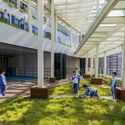
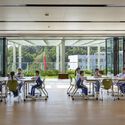
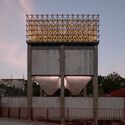
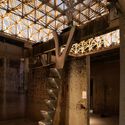
Universiade Sports Center and Bao’an Stadium / gmp architekten

© Christian Gahl

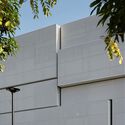
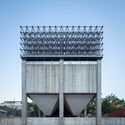
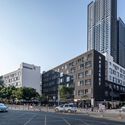
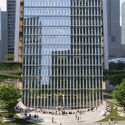
To mark the occasion of the Universiade, which will take place from 12th to 23rd August 2011, the Universiade sports center and Bao’an stadium will be opened tomorrow in , southern . The international competitions to come up with a design for the buildings were won in 2006 and 2007 by the designs of Architects von Gerkan Marg and Partners (gmp). The Universiade sports center consists of a stadium, a multifunctional hall and a swimming pool. The stadium in the Bao’an district is designed as an athletics stadium. However, during the 2011 Universiade, it is being used for football matches.

Architect: Architects von Gerkan Marg and Partners (gmp)
Location: Shenzhen, China
Photographs: Christian Gahl, Stephan Schütz, gmp

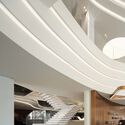
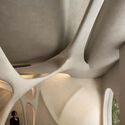
Shenzhen Cultural Complex / Mecanoo

© Doug & Wolf

Architects: Mecanoo
Location: Shezhen, China
Client: Vanke Real Estate
Project Area: 90,000 sqm
Artistic Impressions: Doug & Wolf

Guosen Securities Tower / MVRDV

Courtesy of + Zhubo

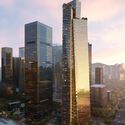
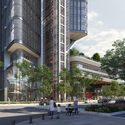
The new headquarters building for the Guosen Securities Corporation in Shenzhen, China, is to be the new symbol for the dynamic corporation that needs to be energy efficient and a pleasurable working environment in the new century. The by MVRDV is a project driven by the creation of good views and direct daylight for every worker in a compact floor plan of 1849m2 where no workplace is further than 11 meters away from the façade. Stacking these floors leads to a 204 meter tall tower with a square floor plan and an elegant, slender volume.

More on this project by MVRDV after the break.

Interchange Tower / WORKac

©

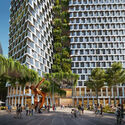
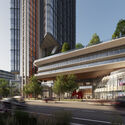
For WORKac’s skyscraper design for the Metro Tower, the architects created a new a new kind of mixed density to promote a sustainable and a diverse stacked city.  This vertical city holds places places of intense urban interchange that combine infrastructure, mixed uses, and public space.  Located at an  intersection with a horizontal crossroads of major boulevards, this vertical interchange between the underground metro, ground-level bus station, shopping podium and the offices and hotel above will essentially be linking the metro with the sky.  ”We call this tower the Interchange – a vertical city that twists together natural green space with ecological systems, structural and functional efficiency with dramatic new forms and technology, while linking the underground to the sky,” added the architects.

More about the project after the break.

2011 AIA Honor Award / Horizontal Skyscraper / Steven Holl Architects

© Iwan Baan

There are some buildings that have the power to make one step back and simply enjoy being part of our profession.   For us, Steven Holl’s Horizontal Skyscraper does just that.  As we’ve been sharing with you, it is a project that gracefully hovers above the landscape, allowing both the ground and the elevated ground plane to be occupied.  The project balances the built with the natural as reflecting pools and lush greenery are interspersed with small restaurants and cafes, and as the “sunken cubes” of the main wings of the center – glass volumes offering 360 degree views – strengthen the connection with the landscape.

The building has recently been awarded a 2011 AIA Institute Honor Award for its architectural creativity and contextual thoughtfulness.    The jury commented, “This project skips along from mound to mound and manipulates the landscape – it builds it up and shapes it into a powerful form above the land with inventive manipulation. The building is shading the landscape and letting it breath – integrated sustainability. A reinvented building type with the building floating over the landscape – dancing on the landscape.”

More information, with more photographs from Iwan Baan, after the break.

Guosen Securities Tower / Massimiliano + Doriana Fuksas

© Fuksas

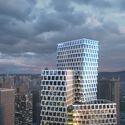
The latest project from Italian architects Massimiliano and Doriana Fuksas features a dramatic tower shaped by bold diagonal cuts.   The proposal was awarded first prized for the competition to design ’s  , and, typical of the Fuksas pair, the schematic design carries a strong presence with the shear mass of the volume broken down into a more manageable scale thanks to the three-dimensional voids.  The  tower will be the first ecological tall building to be built in Shenzhen.

More images and more about the tower after the break.

NFU and SZU Advanced Technology Park / Jaeger and Partner Architects + sa_i

Courtesy of Jaeger and Partner Architects, +

Shenzhen based Jaeger and Partner Architects, Ltd. and Chicago based saltans architects intl, ltd have collaborated on the winning design solution for the NanFanG University of Science & Technology and New Shenzhen University Technology Park.

The site for the competition is in the rapidly developing Nanshan Dashahe Innovation Corridor in Shenzhen, PRC and directly adjacent to the New Shenzhen University Campus and will comprise of R&D office and light manufacturing, IT incubator space, outsourcing facilities, and business support services. The concept for the master plan is an integral environment for entrepreneurs, researchers and students within an environment for technological innovation and discovery in an above ground building area of 528,000 m2.

More images and descriptions after the break.

Horizontal Skyscraper / Steven Holl / Matthias Wolff

© d.teil

In June, we featured Steven Holl’s latest Horizontal Skyscraper which hovers above a landscaped park in , China. Matthias Wolff, an ArchDaily reader and also a contributor to our Flickr roundups, shared some of his photographs of Holl’s building with us.  Wolff, aka d.teil, shot these images at the complex’s opening this past December, when some of the complex’s components – such as the hotel – were still under construction.  Since the grounds are open to the public, the project will truly affect a large scope of people, both natives and visitors of the area.  Wolff’s photos provide a clear understanding of the building’s varying materiality, as well as its situation within the designed terrain. What do you think of Holl’s project?

Check out more photos after the break.

Straddling Bus / Shenzhen Huashi Future Parking Equipment

© Shenzhen Huashi Future Parking Equipment

There are few things that are more annoying than sitting in bummer to bummer traffic.  Yet, as cities are expanding at rapid rates, our infrastructure simply cannot support the number of people, and so congestion becomes an every day obstacle we have to face.   As Bettina Wassener reported for the New York Times, for one -based company, Shenzhen Huashi Future Parking Equipment,  the vicious cycle of a growing population which leads to more vehicles – and hence, more traffic – needed to be addressed.   And, along came their  super functional, extra-wide (20 ft) and extra-tall ‘’.  The vehicle runs along fixed tracks and its main compartment is elevated to leave the street clear for cars driving underneath.   Plus, the vehicle is partially powered by the sun via panels on the roof and at bus stops.

More about the Straddling Bus after the break.

SBF Tower / Atelier Hollein

© Atelier Hollein

Atelier Hollein shared with us their latest project in , . It’s a high-rise office building for which they received one of first prizes in the 4in1 Tower Competition in 2009. You can see more images and architect’s description after the break.

In Progress: Shenzhen Stock Exchange by OMA tops out

© OMA

We first heard about the new Stock Exchange (SSE) building by OMA during the peak of the new chinese construction revolution. Then we saw Rem Koolhaas breaking ground together with the Chinese government, and capitalism in China started to have a tangible representation.

The new building for the NASDAQ equivalent (730 high tech companies & startups, moving over US$500 billion) has now topped out at 246m.

“For millennia, the solid building stands on a solid base; it is an image that has survived modernity. Typically, the base anchors a structure and connects it emphatically to the ground. The essence of the stock market is speculation: it is based on capital, not gravity. In the case of Shenzhen’s almost virtual stock market, the role of symbolism exceeds that of the program – it is a building that has to represent the stock market, more than physically accommodate it. It is not a trading arena with offices, but an office with virtual organs that suggest and illustrate the process of the market.”

- OMA

The project is based on pure volumes, a combination of a tower and a podium suspended 36m high. The podium is one of the biggest cantilevers in the world, an operation that liberates the ground to create a public plaza which is visually connected (representing the new economic openness) to the lower part of the tower and the podium itself, the places were the stock exchange operations take place. Above the podium, there is a series of office space for internal operations of the SSE, totaling 200,000sqm for the entire building.

The tower’s structure is a robust exoskeletal grid overlayed with a patterned glass skin – the first time such glass has been used for an exterior at this scale. The patterned glass reveals the detail and complexity of construction while creating a mysterious crystalline effect as the tower responds to light: sparkling during bright sunshine, mute on an overcast day, enigmatic at dusk, glimmering during rain and glowing at night.

- OMA

The building is expected to be completed by August, 2011.

Renderings afte the break:

Horizontal Skyscraper / Steven Holl

© Iwan Baan

Our friend and architecture photographer, Iwan Baan , just published on his website some of his recently shot images of Steven Holl’s Horizontal Skyscraper in Shenzhen, China .  The project is a long mixed-use complex which includes office spaces, apartments, a hotel and even a public landscape.  Baan’s photos illustrate Holl’s idea that the “building appears as if it were once floating on a higher sea that has now subsided; leaving the structure propped up high on eight legs.”

Complete photoset at Iwan’s website, more images and more about the project after the break.

Biennale Pavilion / Shigeru Ban Architects

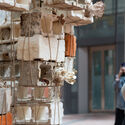
The HZ SZ Bi-City Biennale is in full swing (we just featured the Bug Pavilion a few days ago) and the festival’s catchy “‘Bring Your Own ” (BYOB) slogan aims to stimulate “our collective role in the creation of an innovative Bi-City between Hong Kong and Shenzhen.”  Conversations around the area are focusing on how Hong Kong’s society can make an active imprint on their city’s future.  The BYOB is “at once contextual but also reflective, a unique opportunity to speculate on what our impact on the metropolis could be.”  For the ’s main , designed by Shiegeru Ban Architects, a paper tube structure provides a semi-open space for events such as forums, workshops and events.

More about the main pavilion after the break.

Hua Qiang Bei Road / Work AC

©

WORKac‘s design for a 1-kilometer section of Hua Qiang Bei Road in Shenzhen was awarded first prize.  The design responds to the area’s growing commercial character which has unfortunately created traffic problems. For the proposal, the road becomes a series of “strategic interventions” where “five iconic lanterns”, (twisting bands of required program) create unique, visible destinations through a process of “urban acupuncture”.

More images and more about the design after the break.

Bug Dome / the WEAK!

Inspired by insects, the Bug Dome is a small sheltered area used during the for underground bands, poetry reading, and discussions, and after the Biennale as an un-official gathering place for illegal workers from the Chinese countryside.  Built on a wasteland of a ruined building site in-between the Shenzhen City Hall and an illegal workers camp, the structure is intended to reveal the connection we share with nature:  ”In large scale, if we learn to understand the connection what the hundreds of millions of hands that are now migrating from the rural China to the modern cities might bring along them, we might be able to ruin the industrial city. We might be able to make the city to be part of nature.”

More about the dome after the break.

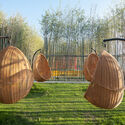
Honeycomb / SAKO Architects

sako_shenzhen_14

Architects: SAKO Architects / Keiichiro SAKO, Takeshi ISHIZAKA , Keigo MIYAICHI
Location: Shenzhen,
Lighting Design: Masahide Kakudate Lighting Architect & Associates,Inc.
Structure: Plusone
Building area: 1,300 sqm
Total floor space: US $18,650
Project Year: 2007-2008
Photographs: Courtesy of

sako_shenzhen_03 sako_shenzhen_07 sako_shenzhen_09 sako_shenzhen_11

Monster Footprints / MAD

image008

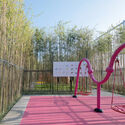
MAD Architects’ latest contribution to came in the form of two huge .  The design, made for the Urbanism\Architecture & Hongkong Bi-city Biennale, is a sunken space that functions as a playground.  Paved in pink EPDM material, the Monster’s Footprint attempts to enter a very “surreal reality”, and offer a possibility for city dwellers to find their own freedom and joy in the Citizen Square.  The playful space illustrates MAD ‘s ability to bring their design attitude to smaller scale projects.

More images after the break.

Shenzhen International Energy Mansion / BIG

Exterior render
Exterior render

The skylines of the world´s most important cities (except for Dubai I guess) are shaped by the typical office tower. The reason is simple: it provides a flexible floor plan, with an economical structural system. “Bang for the buck” if you want to call it. To address lighting and cooling issues that these tower traditionally have, electric lighting and air conditioning were the solution.

But in times when energy is a issue, we can no longer design buildings that depend on high consumption to provide a comfortable working environment, specially in tropical weathers. And this is what BIG had as a design principle for the International Energy Mansion competition they just won, proposing a tower based on an efficient and well-proven floor plan, enclosed in a skin specifically modified and optimized for the local climate.

Exterior render
Exterior render

We propose to enhance the sustainable performance of the building drastically by only focusing on its envelope, the façade.

We propose to make the Shenzhen Energy Mansion the first specimen of a new species of office buildings that exploit the buildings interface with the external elements – sun, daylight, air humidity, wind – as a source to create a maximum comfort and quality inside.

The Shenzhen Energy Mansion will appear as a subtle mutation of the classic skyscraper – a natural evolution rather than a desperate revolution.

More details on how this facade works, along with more information after the break:

Four Towers in One Competition / Steven Holl Architects

steven_holl_shenzhen_02

Chaired by Arata Isozaki, the jury unanimously chose Steven Holl Architects as the winning firm for the design of the master plan (We recently shared Morphosis’ proposal earlier on AD).  Holl’s concept is based on tropical skyscrapers as “Shade Machines with a Social Bracket” which connect the towers and the street level using a horizontal structure containing public programs and a rooftop water garden.

More about the winning proposal after the break.

Four Towers in One Competition / Morphosis

ccbtowerrendering-l1
Morphosis Architects

Morphosis just shared with us their proposal for the Four Towers in One Competition.  The competition (which Steven Holl Architects ultimately won) asked participants to design an office tower complex for the new Shenzhen Stock Exchange Headquarters in the Futian commercial business district.  The area was in need of a unified urban plan that would include the Headquarters for the new office towers of Shenzhen Media Group, China Construction Bank, China Insurance Group, and Southern & Bosera Funds.  For Morphosis’ proposal, rather than creating various disconnected vertical skyscrapers, the project aims to create one “cohesive, interwoven district.”  By conceiving the sites as 3-dimensional envelopes rather than flat 2-dimensional footprints, the buildings can be interwoven to “facilitate a network of interlocking forms reminiscent of the venerated Chinese puzzle.”

More images and further project description after the break.

OMA´s new landmark for Shenzhen: Crystal Island competition


Crystal Island @ / Ole Scheeren

Shenzhen is one of the most active cities in China, and was recently appointed “City of Design” by the UNESCO (2008).  A recent competition for Crystal Island, located in the center of the city, envisions the envisions the Shenzhen Creative Center, an iconic project in front of the city hall.

The project, won by OMA in collaboration with chinese firm Urbanus, includes  a major new cultural center, transport hub, and public landmark. The Shenzhen Creative Center takes advantage of such a central location, and disaggregate the program over a 20-hectare landscape of parks and gardens, on which clusters of pavilions and small buildings form “Design Villages” creating a micro urban system which includes buildings for Design Administration, Tourism Center, buildings for design retail and expo and a design campus. It also includes a big open space, the Ceremonial Plaza.

All these buildings and open spaces are connected by an elevated pedestrian system, the “Ring Connector”, which also connects to existing and future train and subway stations.

At the center of this circular project, a spherical void becomes a landmark for the city: the Shenzhen Eye.

The disaggregation of the program on such an active area has the potential to mix the creative industry with the rest of the city’s activities, potentiating  multiplicity, permeability, and openness towards creative activity.

The project collaboration between OMA and Urbanus includes the young Ole Scheeren and Rem Koolhaas, and Urbanus partner Meng Yan, with a team lead by OMA Associates Dongmei Yao and Anu Leinonen.

After the break, a schematic model of the program relations and another rendering.