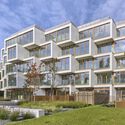
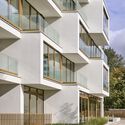
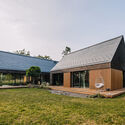
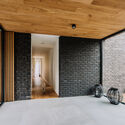
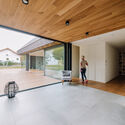
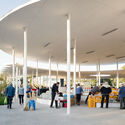
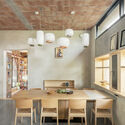
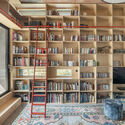
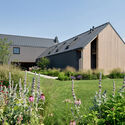
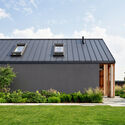
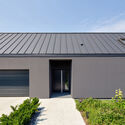
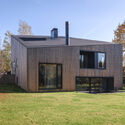
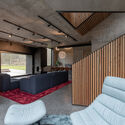
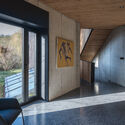
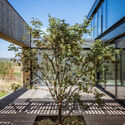
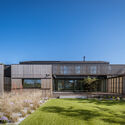
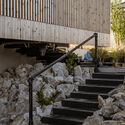
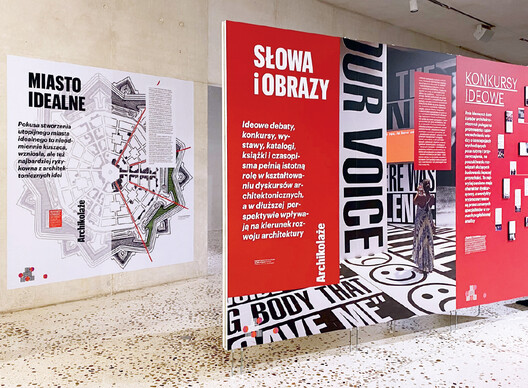
Bularnia / BudCud + Maria Schoen

Architects: BudCud + Maria Schoen
Location: Kraków, Poland
Architect In Charge: Mateusz Adamczyk, Agata Woźniczka
Client: ASPEN S.A.
Area: 175 sqm
Year: 2012
Photographs: Kamila Kozińska, Agata Kadenacy
Clae Pop-up Shop / mode:lina architekci

Completed just last month, the Clae Pop-up Shop, designed by mode:lina architekci, is a shop for Clae footwear. Located at the Galeria Malta in Poznań, Poland, their challenge was to maximize the shopping experience using the lowest budget possible due to the shop’s temporality. To create this space, they picked worn out euro pallets used during KontenerART 2012. More images of the project can be viewed after the break.
Freedom Square And Zdunski Market Place Second Prize Winning Proposal / Mado Architekci

The aim of the competition for the Freedom Square And Zdunski Market Place was to select the best urban and architectural design in Kutno, Poland. Such features as spatial development, functionality and practicability were taken into consideration. In the second prize winning proposal by Mado Architekci, they combine the current appearance with the original to create a hybrid square. The hybrid would combine the features of a pro-community, commonly accessible square without any motor traffic, with a square that would satisfy the needs of a modern city. More images and architects’ description after the break.
Tube Tank – TRIWA Pop-Up Store / mode:lina architekci

Located at the Poznań Plaza mall in Poland, mode:lina architekci accepted a challenge to create a temporary store for Swedish watch brand TRIWA. Their goals included using renewable materials, low cost, speed of constructing, and most importantly, to further increase global brand awareness. More images and architects’ description after the break.
Inside The Keret House – the World’s Skinniest House – by Jakub Szczesny

Earlier this week, we announced the completion of the world’s narrowest house in Warsaw, Poland. The Keret House was first conceived as a seemingly impossible vision of the Polish architect Jakub Szczesny of Centrala, who first presented the idea as an artistic concept during the WolaArt festival in 2009. Now, three years later, the vision has become a reality and is drawing a significant amount of international attention to the city of Warsaw.
Built between two existing structures from two historical epochs, the narrow infill is more of an art installation that reacts to the past and present of Warsaw. Although the semi-transparent, windowless structure’s widest point measures only 122 centimeters, it’s naturally lit interior doesn’t seem nearly as claustrophobic as one would think.
The Keret House will serve indefinitely as a temporary home for traveling writers, starting with Israeli writer Etgar Keret.
Images and the architects’ description after the break…
Public Toilet Unit / Schleifer & Milczanowski Architekci

The Schleifer & Milczanowski Architekci team was asked to prepare several conceptual designs of a prefabricated public convenience unit and to develop a feasibility study for the project. In the future, the project deliverables were supposed to serve as the basis for developing a technical design of a reproducible Gdańsk-specific public convenience. The aim was to create a prefabricated construction that requires minimum earthworks. The public toilet was to be semiautomatic, for use all year round and easy to operate. In architectural terms, they were required to do something seemingly impossible – to create an exceptional building that would suit not only the historical surroundings but also modern city districts. The building should thus suit everywhere. More images and architects’ description after the break.
Małopolska Garden of Arts / Ingarden & Ewý Architects

Architects: Ingarden & Ewý Architects
Location: Krakow, Poland
Collaboration: Jacek Ewý
Cooperation: K3 Architekci
Interior Design: IEA & Pracownia
Structure: GSBK Biuro Konstrukcyjne
Floor Usable Area: 4330.76 sqm
Area: 1579.3 sqm
Photographs: Krzysztof Ingarden
CINiBA / HS99

Architects: HS99
Location: Bankowa, Katowice, Poland
Design Team: Dariusz Herman, Piotr Smierzewski, Wojciech Subalski
Year: 2011
Area: 2,910 sqm
Structural Design: Jan Filipkowski, Joanna Jacoszek, Jerzy Rawski, Mariusz Staszewski
Collaborators: Rafal Sobieraj, Adam Kulesza, Jacek Moczała, Wojciech Słupczyński
Client: Consortium of the University of Silesia and University of Economics in Katowice
Photographs: Jakub Certowicz, Tomasz Zakrzewski
Three Metro Stations of the Second Metro Line Competition Winning Proposal / KiR Biuro Projektowe + group of independent architects

The competition winning proposal for the three metro stations of the second metro line at Wola district in Warsaw focuses on showing a clear connection between designed stations and the context of the surroundings. Designed by a collaboration between KiR Biuro Projektowe and a group of independent architects, one can interpret the stations as a specific indication and an invitation to interesting, though perhaps a bit forgotten places “on the surface” corresponding to the stations. The context of the place gave a separate, unique character to each of the stations. More images and architects’ description after the break.
ZAJC Showroom and Production Hall / IPNOTIC Architecture

Architects: IPNOTIC Architecture
Location: Poznań, Poland
Design Team: Ewelina Jankowska, Katarzyna Pucek, Wojciech Gruszczynski
Project Year: 2012
Project Area: 1175.4 sqm
Photographs: fotoarchitektura, Norbert Banaszyk
Elementary School near Warsaw / Grupa 5 Architekci

Architects: Grupa 5 Architekci (Dziedziejko, Kadłubowski, Leszczyński, Mycielski, Zelent)
Location: Podkowa Leśna, Poland
Architect In Charge: Marcin Zatoński
Project Year: 2011
Project Area: 3500.0 sqm
Photographs: Marcin Czechowicz
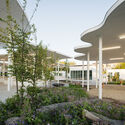
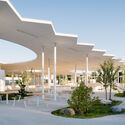
Fala Park / PL Architekci

Architects: PL Architekci
Location: Gmina Wolsztyn, Poland
Design Team: Bartłomiej Bajon, Katarzyna Cynka, Marcin Kozierowski
Project Year: 2012
Photographs: Bartosz Makowski
Venice Biennale 2012: Poland Pavilion

Yes, it could begin this way, right here, just like that, in a rather slow and ponderous way, in this neutral place that belongs to all and to none, where people pass by almost without seeing each other, where the life of building regularly and distantly resounds. What happens behind the flats’ heavy doors can most often be perceived only through those fragmented echoes, those splinters, remnants, shadows, those first moves or incidents or accidents that happen in what are called “common areas,” soft little sounds damped by the red woolen carpet, embryos of communal life which never go further than the landing. The inhabitants of a single building live a few inches from each other, they are separated by a mere partition wall, they share the same spaces repeated along each corridor, they perform the same movements at the same times, turning on a tap, flushing the water closet, switching on a light, laying the table, a few dozen simultaneous existences repeated from storey to storey, from building to building, from street to street. They entrench themselves in their domestic dwelling space—since that is what it is called—and they would prefer nothing to emerge from it; but the little that they do let out…
- Georges Perec
In Progress: Auto-Family House / KWK PROMES

Architects: KWK PROMES
Location: Poland
Project Year: 2012
Photographs: Courtesy of KWK PROMES
Nowa Huta of the Future Proposal / Basic City A+U

The design for the Nowa Huta of the Future focused on the exploitation of the close relation to the nature and the nearby river landscape, fresh food supply from the local agriculture production fields, and a variety of recreational activities to add to the distinctive quality to the plan. Designed by Basic City A+U, in collaboration with Felixx landscape architects, and Ania Molenda & Magdalena Szczypka (mo.st), they believed Nowa Huta should become a city where the entrepreneurial spirit and optimism are combined with an active and healthy lifestyle in close relation to the nature. More images and architects’ description after the break.
Voivodeship Police Headquarters / mode:lina Architekci + Pracownia Architektoniczna Poznań Projekt

Pracownia Architektoniczna Poznań Projekt, in collaboration with mode:lina Architekci, shared with us their design for the main entrance to the Voivodeship Police Headquarters in Poznań, Poland. The building, which is part of a historic urban structure, aims to adjust the entrance for disabled users as well as set a new standard for Police interiors. More images and architects’ description after the break.
Venice Biennale 2012: Poland Pavilion
The Poland Pavilion at the 2012 Venice Biennale will feature a design exploration into the interaction between sound and architecture in creating our environment. The project, by Katarzyna Krakowiak, is a sound sculpture that presents architecture as a primary system of listening. The sculpture collaborates with neighboring pavilions and echos the sounds that reach the Polish Pavilion, highlighting its acoustic qualities. The exhibit will be on view from August 29th through November 29th.
More on the exhibit after the break.
Nowa Huta of the Future Proposal / BudCud + Centrala + ARUP

Nowa Huta of The Future, designed by BudCud, Centrala, and ARUP, is aimed at being a brand new direction of touristic experiences and a recreational map of Krakow. Their strategy has a potential of engaging new groups of potential investors and the residents of whole region. Nowa Huta of The Future is what the city needs to become world class metropolis. More images and architects’ description after the break.
“Reunite the River with Our City” / 4am Architekci

The “Reunite the River with our City” project, an public initiative by 4am Architekci, aims at creating a new approach in Poland for introducing changes to the shape and character of Warsaw and to propose solutions to the topic of planning the city’s sensitive areas. Concerning the master plan of Warsaw’s waterfront in the city’s downtown area, they feel an obligation to use their knowledge and experience for public benefit by distributing their work between paid and non-profit conceptual projects according to the 80/20 rule. Their goal is to materialize the “bottom up” rule, where the society is giving a proposal and solutions and thus relieves the administrative apparatus. More images and architects’ description after the break.
Frivole Prestige / Theza Architects

Architects: Theza Architects
Location: Wrocław, Poland
Design Team: Ludwik Kaizerbrecht, Bartlomiej Zaboj
Project Year: 2012
Project Area: 240.0 sqm
Photographs: Ludwik Kaizerbrecht, Bartlomiej Zaboj
Science and Technology Park / idcode

Designed by idcode, the Science and Technology Park, located in Opole, Poland, is a combination of the horizontal character of the building with the existing landscape of suburban fields. By creating a landscape project in which the field and discussion form a functional space of fields, the modules arranged on site create a space of integration and communication between office modules. The objective and main goal of the strategy is to create a typology of offices to promote human interaction and communication to promote creative work. More images and architects’ description after the break.