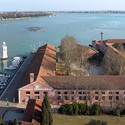
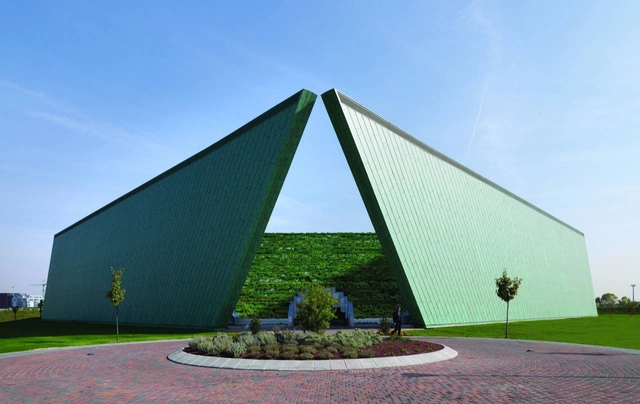
Taking place November 11-18, the ‘Emerging Realities’ international student workshop will take place in Venice as part of the Biennale to feature international guest speakers. The event, put on by the Institute for Architecture and Landscape, LANDLAB ia&l, envisions the Venice lagoon archipelago as a prototype for a future metropolitan regional system. The new productive landscape proposes that it is capable of supporting such community while establishing an integrated and environmentally stable system that builds upon existing biodiversity, cultural practice, and production. For more information on the event, please visit here.
For over a century, the VeniceBiennale (La BiennalediVenezia) has been one of the most prestigious cultural institutions in the world. The avant-garde institution has remained at the forefront in the research and promotion of new artistic trends, while leading international events in the field of contemporary arts that are amongst the most important of their kind. Over the past thirty years, the Biennale has given growing importance to the Architecture Exhibition, which is still a young component of the Biennale considering that its first exhibition was held in 1975. Today, the Venice Biennale captures a multitude of interest from around the globe and attracts over 370,000 international visitors.
Before the festivities of the 13th Venice Architecture Biennale begin tomorrow, read up on the origin of this highly acclaimed international exhibition.
A timeline history of the Venice Architecture Biennale:
Invited by David Chipperfield, director of the 2012 Venice Architecture Biennale, FAT has contributed an exhibition to the Arsenale titled The Museum of Copying. Responding to the curator’s theme of “Common Ground”, The Museum of Copying explores the idea of the copy in architecture as an important, positive and often surreal phenomenon. The exhibit will be centered around FAT’s installation, “The Villa Rotunda Redux” – a five meter high facsimile of Palladio’s Villa Rotunda that explores the Villa as both a subject and object of architectural copying.
Sam Jacob, a director of FAT said: “There is a history of copies of the Villa Rotunda that have been important staging posts for architectural culture. We hope to extend this history and explore how copying something is, strangely, a way of inventing new forms of architecture. It also seems sweet to return a bastardised form of the Villa to its original home in the Venito.”
Alongside this, the London-based practice will also present San Rocco’s “The Book of Copies”, an investigative look into four architectural doppelgängers (remember this fake Austrian village in China?) , and Ines Weizman’s “Repeat Yourself”. Continue after the break to learn more.
Join the authors and editors of Lars Müller Publishers for a rare book signing opportunity with architects Wang Shu, Sou Fujimoto, and Steven Hollon August 28th at the 2012 Venice Architecture Biennale! This event will kick off the exhibition Lars Müller Publishers – Book Fever, which will feature sixty publications – new releases, bestsellers, milestones from the past, and rare treasures – for the public to explore.
Founded thirty years ago, Lars Müller Publishers’ carefully edited and designed publications on architecture, design, and contemporary art has lead them to become a renowned international publisher. One milestone you may remember was their release of Peter Zumthor’s Works (1998), which was the first survey of the oeuvre of the architect now known worldwide that set new standards for the monograph as a book genre.
Continue after the break for more details on the book signing and exhibition.
By invitation of Director David Chipperfield, MVRDV and The Why Factorywill participate in the 2012 Venice Biennale. The main contribution consists of the collaborative project ‘Freeland’ forming part of the single exhibition in the Central Pavilion at the Giardini. Further contribution is made by Winy Maas and The Why Factory with ‘Porous City’ to the EU CITY Program, initiated by the European Forum for Architectural Policies (EFAP) representing Europe for the first time at the Venice Architecture Biennale.
More details on the two exhibitions after the break.
The Danish Pavilion for the 2012 Venice Biennale will feature a collaboration between Greenlandic and Danish Architects called “Possible Greenland”. The exhibition will address the current development of the Arctic Region as Greenland undergoes a shift towards political independence and business development in the midst of dramatic climate changes. “Possible Greenland” attempts to look optimistically at the climate changes that are causing ice melts throughout Greenland. The shifting planes result in the exposure of vast mineral resources that can kickstart new industries and allow new urban cultures to emerge. The team of architects that designed “Possible Greenland” were led by internationally renowned Professor in geology at the University of Copenhagen, Minik Rosing and the young Danish architect firm NORD Architectsof Copenhagen.
Explore the possibilities with us after the break.
Representing Brazil at the 2012 Venice Biennale will be StudioMK27 and Lúcio Costa‘s 1964 installation “Riposatevi”. The exhibit takes an intimate look at the lives of multi-generational households in modern Brazilian architecture. Curated by Lauro Cavalcanti, the Brazilian pavilion will investigate the intersections between traditional and contemporary artistic tendencies and will feature the movie installation, “Peep”, by Lea Van Steen and Marcio Kogan, with photography by Cleisson Vidal. The event will take place between August 29th and November 25th in the Giardini and Arsenale buildings in Venice.
The Poland Pavilion at the 2012 Venice Biennale will feature a design exploration into the interaction between sound and architecture in creating our environment. The project, by Katarzyna Krakowiak, is a sound sculpture that presents architecture as a primary system of listening. The sculpture collaborates with neighboring pavilions and echos the sounds that reach the Polish Pavilion, highlighting its acoustic qualities. The exhibit will be on view from August 29th through November 29th.
For Taiwan’s seventh year at the Venice Biennale, the Taiwanese team will present Architect/Geographer – Le Foyer de Taiwan. The exhibition will embody the main theme of the 2012 Venice Architecture Biennale which is “Common Ground”. The aspects of Taiwanese culture and architecture will be presented through the perspective of a geographer as mapping that can uncover a new understanding of Taiwan through international eyes. The team is supervised by the Ministry of Culture, organized by the National Taiwan Museum of Fine Arts, and curated by Ke-Fung Liou. The exhibit will be displayed at Palazzo delle Prigioni.
Follow us after the break for more on the exhibit.
Anupama Kundoo‘s Wall House, originally built in Auroville, India in 2000, will be partially reconstructed at a 1:1 scale at the Venice Biennale this year for the theme of “Common Ground” by director David Chipperfield. This portion of the exhibition is supported by the University of Queensland, whose students and staff will assist with the construction of the replica alongside Indian craftspeople and Italian builders. The house has been described as a testing ground for spatial and technological innovation. In its debut at the Venice Biennale, it will afford Kundoo the opportunity to further explore these experiments.
Follow us after the break to see the innovations behind this widely acknowledged piece of architecture.
This year’s Venice Biennale will kick off on August 29th and run through November 25th and will feature a pavilion from Israel called “Aircraft Carrier”. The collected work confronts the dramatic changes in Israeli architecture since 1973, and the American influences that made them possible. The curators of the exhibit, Erez Ella, Milana Gitzin-Adiram and Dan Handel defined four major architectural phenomena that epitomize these changes: Signals, Emporiums, Allies and Flotillas. The curators invited five leading Israeli and international artists and architectural photographers to reflect on these ideas. Participants include Assaf Evron, Fernando Guerra, Florian Holzherr, Nira Pereg, and Jan Tichy and product designer Tal Erez.
Stop by after the break to see some of the work to be featured as part of “Aircraft Carrier”.
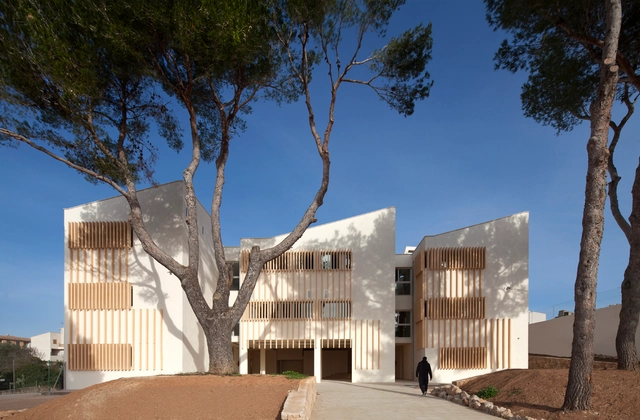
This year’s Venice Biennale will kick off on August 29th and run through November 25th and for the first time, the Institut Ramon Llull will be presenting an exhibition dedicated to Catalan and Balearic architecture entitled “Vogadors”, featuring nine projects from nine different architects that epitomize the contemporary and avant-garde works from the regions. The exhibition is inspired by the Mediterranean Sea, which is the main geographical feature of the regions, and by the words of Jorge Oteiza, “He who forges ahead creating something new does so like an oarsman, moving forward but back-paddling, looking behind him, towards the past, towards what exists, so as to be able to reinvent its underpinnings.”
Follow us after the break to see the projects to be featured at the exhibit.
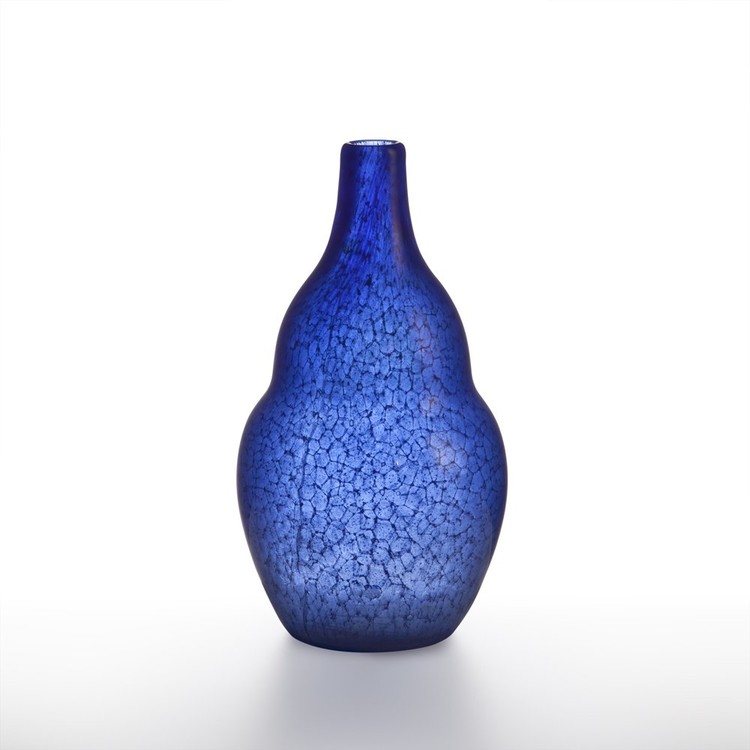
The new exhibition space Rooms for Glass (Le Stanze del Vetro) in Italy, designed by Selldorf Architects, will open this summer in August 2012. The first exhibit to inaugurate the space will be Carlo Scarpa. Venini 1932–1947, a collection of over 300 glassworks by architect Carlo Scarpa. The exhibit will run until November 29, 2012, after which Rooms for Glass will continue showcasing the art of Venetian glassmaking in the 20th century with other exhibits.
Today, the President of the Biennale di Venezia, Paolo Baratta, and the 13th International Architecture Exhibition Director, David Chipperfield, met at Ca’Giustinian with the representatives of the 41 countries participating in the exhibition, including representatives of Kosovo, Kuwait and Peru for the first time. David Chipperfield announced the theme of this year’s Biennale is to be Common Ground. Continue reading for more information.
David Chipperfield states, “I want this Biennale to celebrate a vital, interconnected architectural culture, and pose questions about the intellectual and physical territories that it shares. In the methods of selection of participants, my Biennale will encourage the collaboration and dialogue that I believe is at the heart of architecture, and the title will also serve as a metaphor for architecture’s field of activity.”
Photo by artinberlin - http://www.flickr.com/photos/artinberlin/. Used under Creative Commons
British architect, David Chipperfield, will curate the 2012 Venice Architecture Biennale. Chipperfield will have only eight months to decide on a theme and prepare to curate the world’s largest architecture exhibition. He will become the first British architect to curate the event.