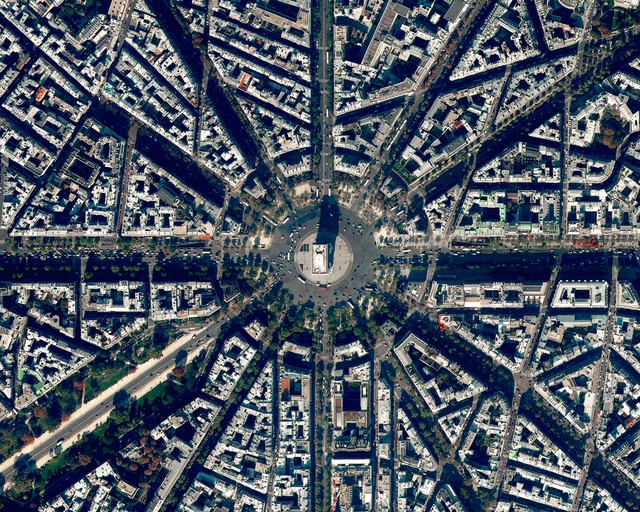
Arch of Triumph. Created by @benjaminrgrant, source imagery: @digitalglobe
In theory, urban planning is a process of elaborating solutions that aim both to improve or requalify an existing urban area, as well as to create a new urbanization in a given region. As a discipline and as a method of action, urban planning deals with the processes of production, structuring and appropriation of urban space. In this sense, its main objective is to point out what measures should be taken to improve the quality of life of the inhabitants, including matters such as transport, security, access opportunities and even interaction with the natural environment.
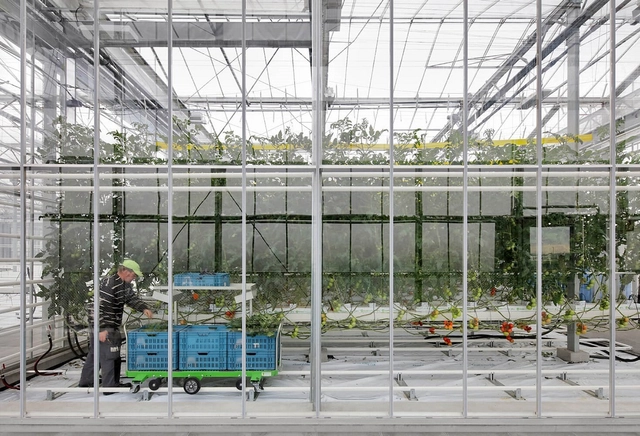
Do you know what urban farms are? Have you ever thought about growing your own food at home in your garden or in specialized freezers? Transporting food for consumption in cities is one of the major environmental (and financial) pollution problems in the world today.
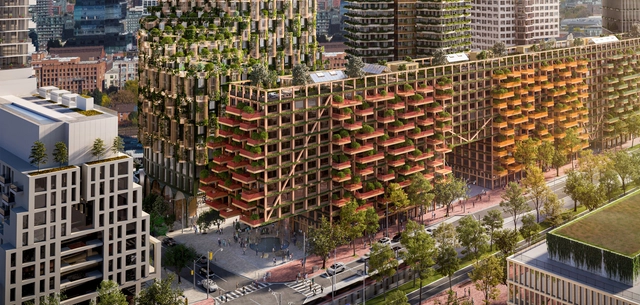
Alison Brooks Architects, Adjaye Associates, Henning Larsen and SLA to Develop Toronto's Waterfront. Image Courtesy of Waterfront Toronto
As more smart cities make their way across the globe, whether it being in countries of the Far East, Latin America, or the Middle East, Toronto is stepping back from the smart city bandwagon, and reassessing its substantial contribution to the community. The Canadian city, which ranked 15th on Global Finance's ranking of the world's best cities to live in for the year 2022, plans on "killing the smart city forever", especially after Quayside's controversial cancellation reasons, questioning its lack of privacy, necessity on an urban scale, and whether people truly want to live in a tech-driven environment.
El proceso de HerCity usando la herramienta MethodKit en GoDown, Nairobi, Kenia. Image Cortesía de ONU-Habitat
Many of us agree that design is still not considered for everyone. That is why we must ask ourselves what is truly democratic in the matters of design - in order to define our vision toward a more just society. From the perspective of architecture and urbanism, we can look at this democratization from different angles, including citizens in participatory processes, in order to find answers to our constant search to improve habitability and accessibility.
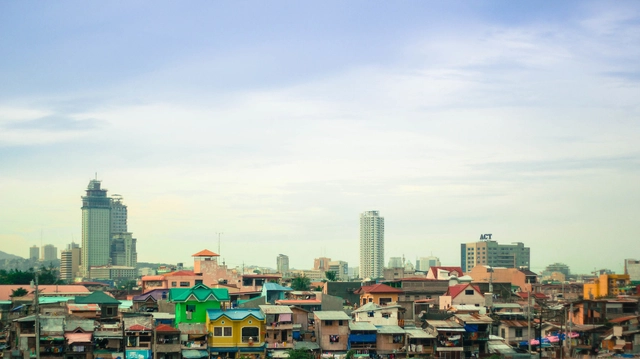
The history and culture of the Philippines are reflected in its architectural heritage, with numerous influences from other nations paving the way for the contemporary designs we see today, a mixité of cultural influences amongst Western-style buildings. Philippine architecture has grown along with the progress of the nation and its people, but memories of a glorious past are still embedded within the nation’s history.
Social responsibility and the desire to improve society has long been influenced by the built environment. Looking at city centers, architecture has contributed to the improvement of the urban fabric, whether it being through planning and zoning strategies, integration of public spaces, or small interventions. In some cases however, these interventions are in fact used as tools to keep the homeless off the streets, disguised as art or conceptual designs. Several public urban policies have all implicitly prohibited the homeless and other marginalized social groups from city centers, claiming that their presence and “irregular” use of public space could compromise the reputation, security, and desirability of the city.
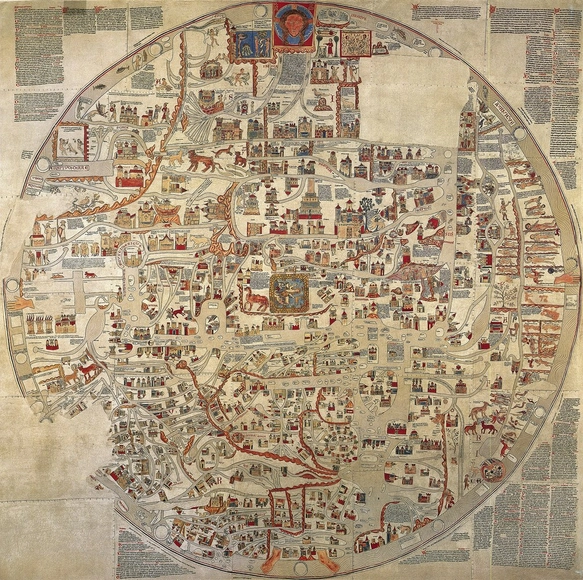
World map of 1300. Image via Wikicommons, under domain
Cartography consists of the flat, simplified and conventional geometric representation of the earth's surface, presented in the form of maps, charts or blueprints. Because it is a two-dimensional representation of something that is three-dimensional, all representations undergo some kind of deformation, so that the choice of a method takes into account not only technical aspects, but also political ones.
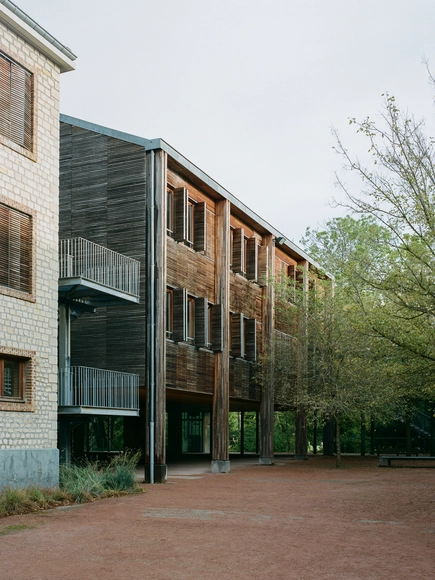
To wholly document a survey on the state of French forests, the wood industry, and forestry R&D, François Leclercq and Paul Laigle, from the architecture and urban planning practice Leclercq Associés, are in collaboration with architecture editor Michèle Leloup and photographer Cyrille Weiner.
The Wood That Makes Our Cities explores the environmental, economic, industrial, and technical challenges involved in the use of wood for large structures and urban architecture and assesses the future of wood construction. The book retraces the practice’s twenty years of experience with wood construction through five of its projects, featuring contributions by historians, researchers, manufacturers, timber producers, and forestry specialists.
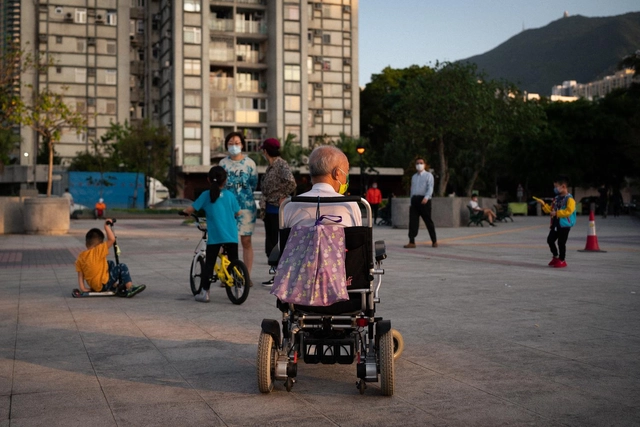
Cities with disabilities are those that present spaces and environments that impede or make it difficult for citizens to access, participate and interact, regardless of any loss or abnormality related to their psychological, physiological or anatomical structure or function. I invite readers to, with me, change the focus of the approach on disabilities, transferring to cities and built environments the inability to meet in a dignified and effective way the diversity of abilities and capacities inherent to human beings.
"Growing up queer means experiencing the destabilizing absence of a broad and accessible queer history, most notably, in our case, in relation to spatial design". This account is what intrigued artist Adam Nathaniel Furman and architectural historian Joshua Mardell to bring together a community of contributors who bring new perspectives to the field of architecture and share stories of spaces that challenge cis-heteronormative morals, sheltering lives that seek to live their own truths. The result of this quest is a book titled Queer Spaces: An Atlas of LGBTQIA+ Places and Stories, which explores stories about distinct social, political, and geographical contexts within the community.
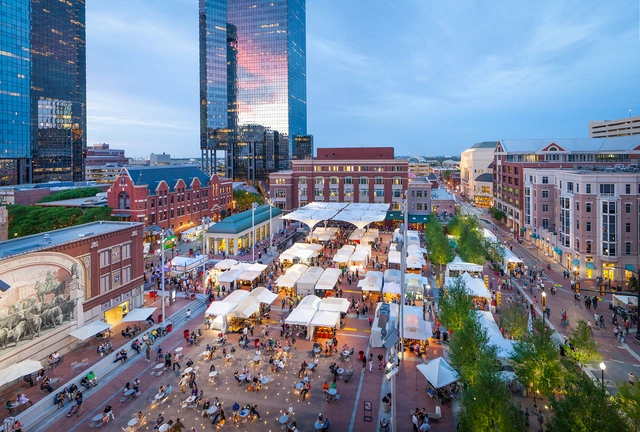
Sundance Square, a new central place for the city of Fort Worth, TX, USA. Image Courtesy of PPS
Public spaces play a significant role in organizing the life of every community but defining what differentiates them from other spaces within the city is not an easy task. Once these spaces start to settle into the collective memory of the local communities, they become key elements that concentrate the mental image of a city. While this process usually happens with urban spaces, monuments and isolated architectural elements can also become markers for the urban life of an area. So, what happens when dramatic events like fires, war, or even the pandemic alter that image?
Looking ahead to the future of our built environment, a one-size-fits-all approach simply won’t do. Issues like rising sea levels, temperatures, and water scarcity in urban communities need localized solutions that take into account questions of sustainability, culture, and public health. Having investigated vernacular infrastructure across indigenous communities for her book Lo-TEK. Design by Radical Indigenism, designer Julia Watson is an expert in local, nature-based technologies that are inherently adaptable and resilient. We talk to her about the future of our cities, building materials, and her latest project for Our Time on Earth – a five year, world-touring exhibition that just opened at London's Barbican Centre to investigate how radical, collaborative ideas for the way we live can get us to a much improved place by 2040.
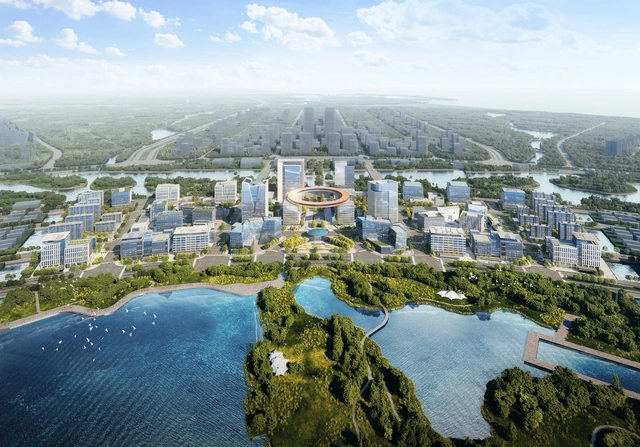
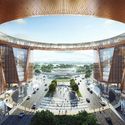
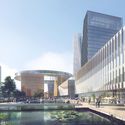
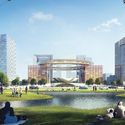
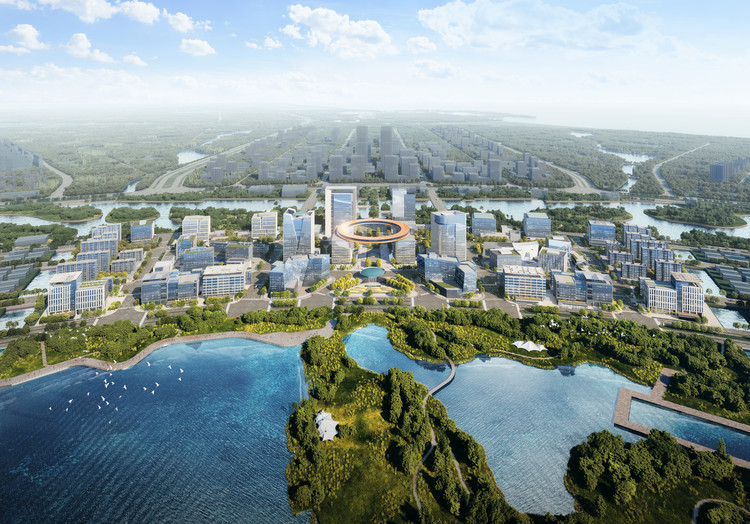
Ennead Architects has unveiled the Shanghai Lingang Special Area master plan, a new hub for global commerce. Designed around the central axis that defines the Dishui Lake district in Shanghai, the master plan establishes the identity of a new business district. Designed as a free trade zone, this is planned to attract prominent international companies. The site's design proposes functional areas where multinational corporations can optimize business operations while creating open spaces for the surrounding communities. Ennead’s large-scale plan includes four commercial buildings, retail, civic and open spaces.
Improving people's quality of life is one of the biggest goals of professionals in Architecture and Urbanism. When planning cities, creating housing or carrying out a simple refurbishment, we seek to improve the built space regardless of scale. The Urban Rehabilitation of Alto de Bomba, carried out in the city of Mindelo, Cape Verde, arose from the need to combat the precariousness found previously in the place. A project that required the immersion of the team in the daily life of the city and resulted in an inspiring proof of how much architecture can reveal better ways of living the city and acting directly in society. No wonder it received the Work of the Year Award in 2022, chosen by our readers as the winner among hundreds of competing projects.
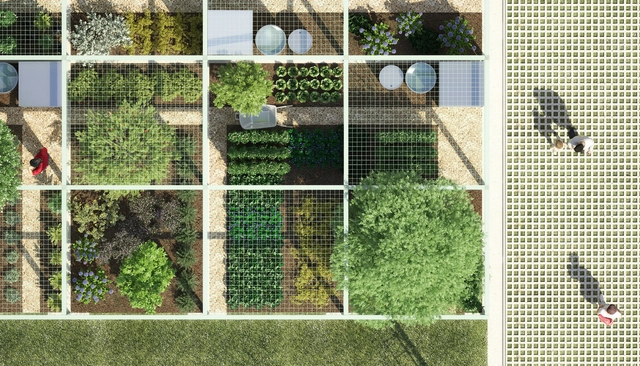
Transformação de Estacionamentos em Fazendas Urbanas. Image via Studio NAB
On March 31st, the Health and Nutrition Day is celebrated in Brazil, factors that are gaining more and more notoriety in the society in which we live. After more than two years living through the ups and downs of the Covid-19 pandemic and facing the evident need for a healthier, more active and community reality, it is important to reflect on how architecture and urbanism can become tools for accessing healthier daily lives.
A new kind of architecture distinguished by unique regional characteristics emerged in the mid-1990s when in China, architects started practicing independently from government-run design institutes. The leading Chinese architects of this time succeeded collectively in producing a unique architectural body of work when so many buildings built around the world were no longer rooted in their place and culture.
In China Dialogues, Vladimir Belogolovsky charts a panorama of Chinese architecture through the words of its main participants, lifting the veil on a prolific new generation of designers, each sharing a highly intellectualized and conceptual understanding of architecture. Following the course of 21 interviews accompanied by over 120 photographs and drawings of beautifully executed projects uprooted throughout the country since the early 2000s, China Dialogues opens up the thinking process of the country's top architects, providing an insight into their ideas, intentions, and visions in unusually revealing and candid ways.
In 1854, the American writer Henry David Thoreau wrote the classic work “Walden”, recounting his experience of life in the woods and extolling the advantages of simple and self-sufficient life. Right at the beginning of the book, the author comments that, if someone wants to travel 48 km to visit the countryside, it would be faster to walk than to opt for a locomotive.
The climate crisis has accentuated changes in the amount of rainfall, causing droughts or storms with large volumes of water, which result in floods that can cause great damage to urban infrastructure. To combat this, the sponge city is a solution that has a green infrastructure to operate the infiltration, absorption, storage and even purification of these surface waters.







.jpg?1655403902&format=webp&width=640&height=580)











._Image_by_Zupagrafika.jpg?1653259487 "Orła Białego prefab panel estate in Poznań (Brutal Poland). . Image © Zupagrafika")






.jpg?1650549341&format=webp&width=640&height=580)
Adam_Mork.jpg?1650549635 "MAD Architects, Harbin Opera House, Harbin, China, 2015. Image © Adam Mørk")


_schranimage.jpg?1650549533 "Studio Zhu Pei, Jingdezhen Imperial Kiln Museum, Jingdezhen, Jiangxi Province, China, 2020. Image © schranimage")
.jpg?1650549341)