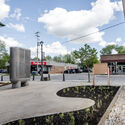
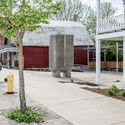
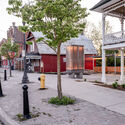
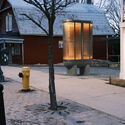
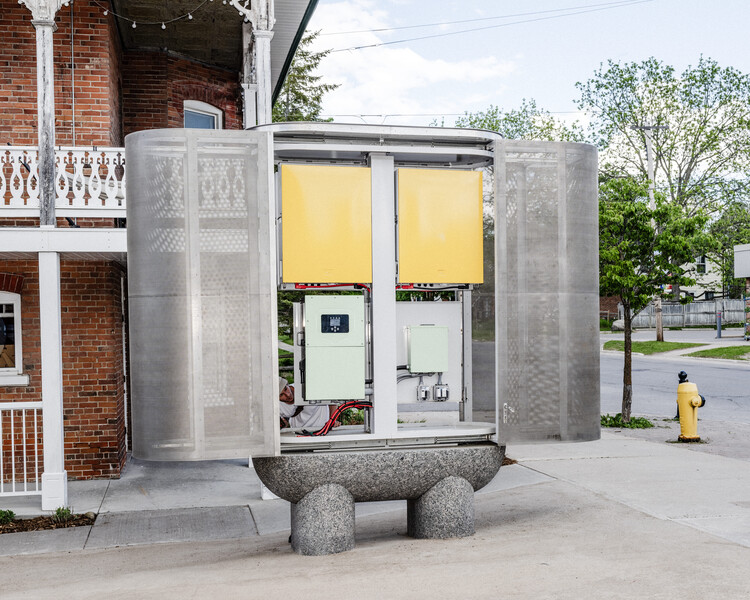
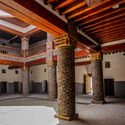
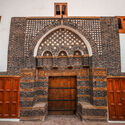
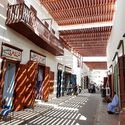
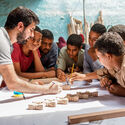
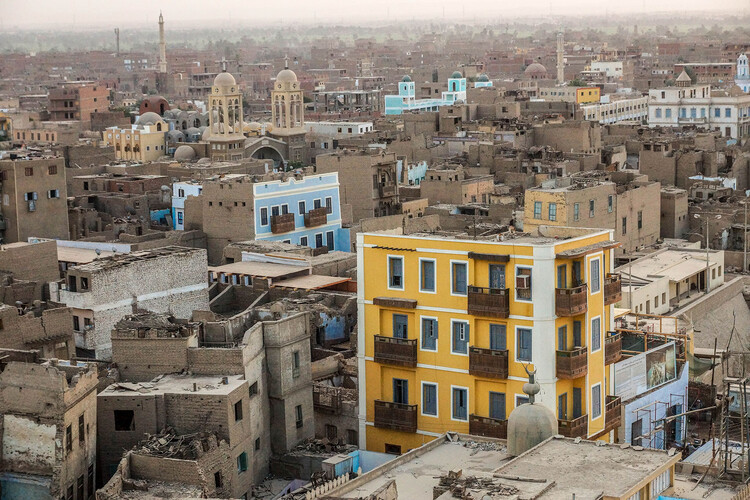
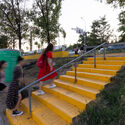
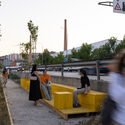
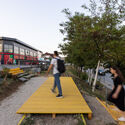
Revitalisation of Historic Esna, Egypt. Image Courtesy of Takween ICD
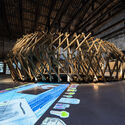
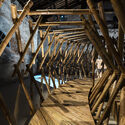
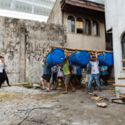
Among the seven winners of this year's 16th Aga Khan Award for Architecture was theRevitalisation of Historic Esna in southern Egypt. Led by the Cairo-based firm Takween, the project was far more than a simple restoration. It was a comprehensive renewal effort that combined deep community engagement with the preservation of both tangible and intangible heritage. By creating thousands of jobs and restoring the historic center, the initiative offered a powerful alternative to demolition. The Aga Khan Trust lauded it as a 'replicable model for sustainable development'.
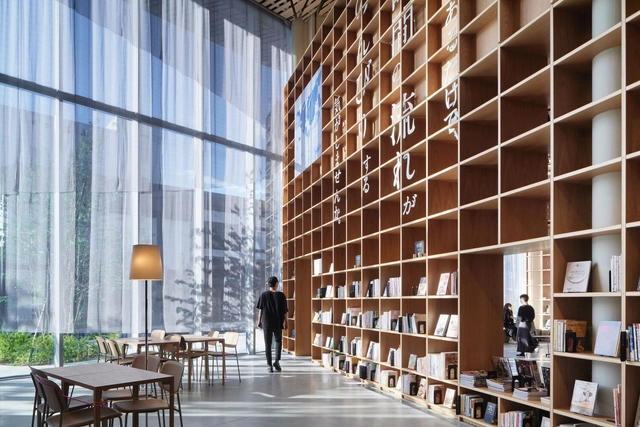
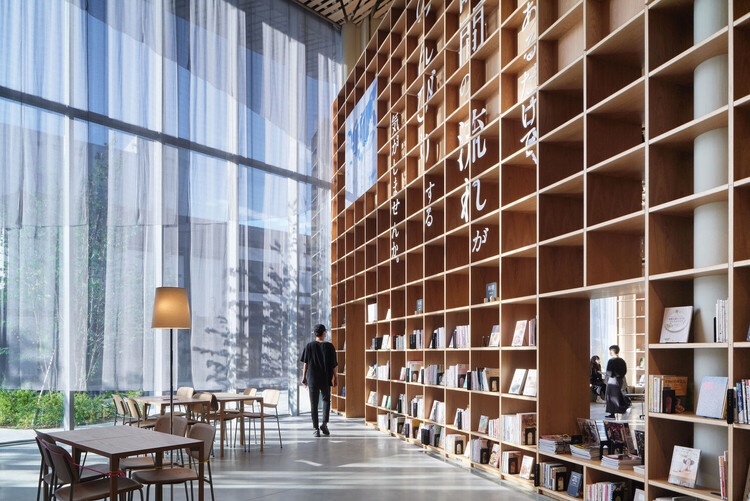
In traditional Chinese medicine, acupuncture works through strategically placed needles that trigger healing throughout the entire body. Urban planner Jaime Lerner's concept around targeted architectural interventions find success in China as well as neighboring countries in Asia, where localities are revitalized through simple interventions. Libraries, specifically, are bringing in social, cultural, and economic transformation to the continent.
CityMakers, The Global Community of Architects Who Learn from Exemplary Cities and Their Makers, is working with Archdaily to publish a series of articles about Barcelona, Medellin, and Rotterdam. The authors are the architects, urban planners, and/or strategists behind the projects that have transformed these three cities and are studied in the "Schools of Cities" and "Documentary Courses" made by CityMakers. On this occasion, Jaume Barnada, coordinator of the award-winning Climate Shelters project in Barcelona schools and speaker at the "Schools of Cities", presents his article "Barcelona, the public place as a synonym for the adaptation of the built city."
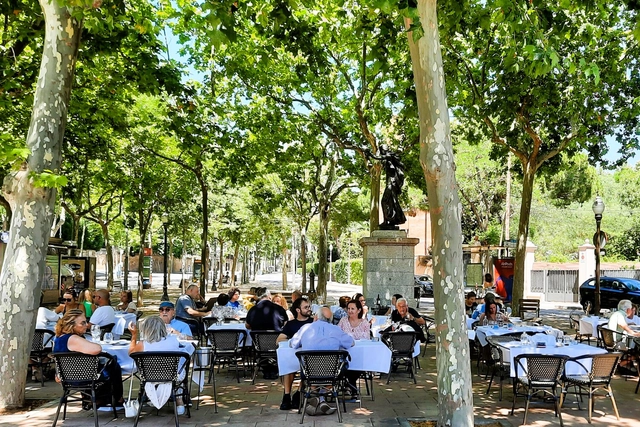
Cities are dense, built spaces in which pavements have been efficiently imposed on the natural soil. Cities like Barcelona have almost 75% of the land paved and waterproof. Without a doubt, it is an excess to reverse at a time of climate emergency, where we must reconnect with nature. Oriol Bohigas [1] told us that good urbanization had paved the squares of Mediterranean cities and that no one wanted to live in a mudhole. I'm sure he was right. Also, he taught us that the green and, consequently, the natural soil had to have dimension and especially an urban position. Squares are squares and parks are parks, and each space has a type of project. Today, concepts are too frequently confused when urbanizing public places and consequently, we find projects that blur the model.
At the 18th International Architecture Exhibition of La Biennale di Venezia, The PhilippinesPavilion presents an exhibition that investigates the ecology and social implication of the Tripa de Gallina estuary in Manila. The body of water, once a mechanism for flood mitigation, has now become congested and polluted, affecting the lives of the nearby communities. The Pavilion aims to present the initiative that set out to gather and investigate the guts of the estuary and to work with the residents to find adequate and sustainable architectural solutions. Titled “Tripa de Gallina: Guts of Estuary,” the exhibition in Venice is co-curated by Architect Choie Funk and Sam Domingo and presents the work of the Architecture Collective, represented by Bien Alvarez, Matthew Gan, Ar. Lyle La Madrid, Noel Narciso and Arnold Rañada.
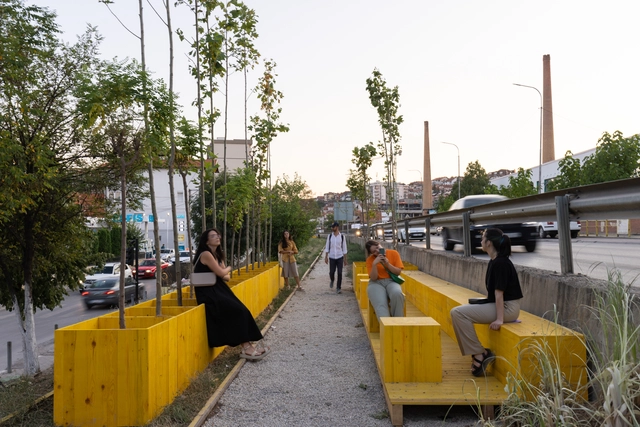
Design and innovation office CRA - Carlo Ratti Associati unveils the result of its Urban Vision and Urban Program for Manifesta 14, the European Nomadic Biennial in Prishtina, Kosovo, between July 22 and October 30, 2022. CRA’s project proposes a new methodology for reclaiming public space in the city. It starts with a series of open-ended design interventions to encourage citizen participation and foster feedback loops to create long-term effects on the built environment. During the 20th century, regime changes and political clashes brought considerable turbulence to Kosovo and its cities. As a result, Prishtina currently suffers from a substantial shortage of public space, but a large group of disenfranchised residents is eager to reverse this situation.
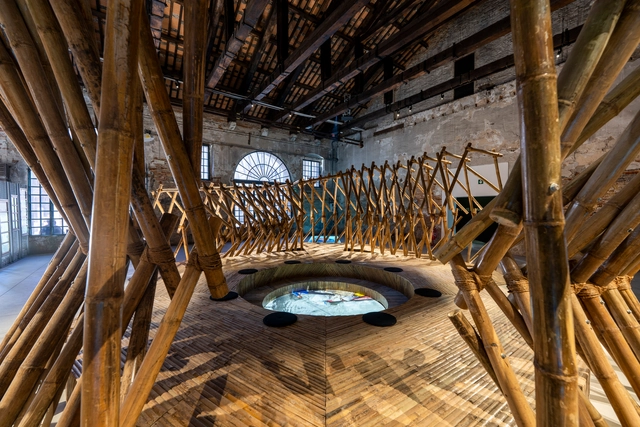
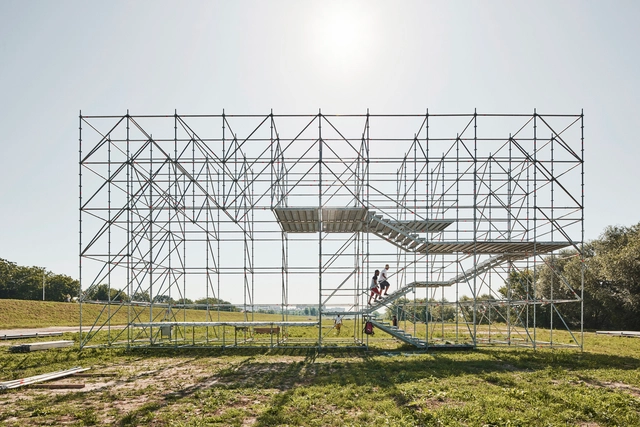
Beyond "experience tourism" and light entertainment, temporary architecture is a fertile ground for testing ideas, examining places, popularizing new concepts and technologies. Taking a wide array of forms, from disaster relief projects and utilitarian structures to design experiments, architectural statements and playful installations, transient structures showcase alternative visions for the built environment, opening up new possibilities and questioning established norms. As temporary architecture now seems at odds with sustainability imperatives, the following discusses the value of temporary architecture as a vehicle of experimentation, advancing design and engaging communities.
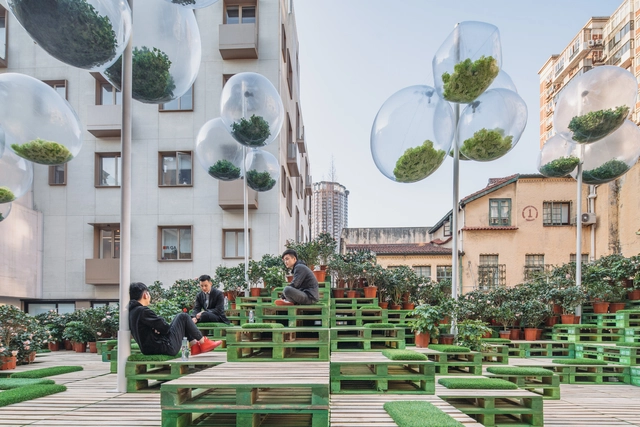
Urban acupuncture is a design tactic promoting urban regeneration at a local level, supporting the idea that interventions in public space don’t need to be ample and expensive to have a transformative impact. An alternative to conventional development processes, urban acupuncture represents an adaptable framework for urban renewal, where highly focused and targeted initiatives help regenerate neglected spaces, incrementally deploy urban strategies, or consolidate the social infrastructure of a city.
Jaime Lerner defines urban acupuncture as a series of small-scale, highly focused interventions that have the capacity to regenerate or to begin a regeneration process in dead or damaged spaces and their surroundings.
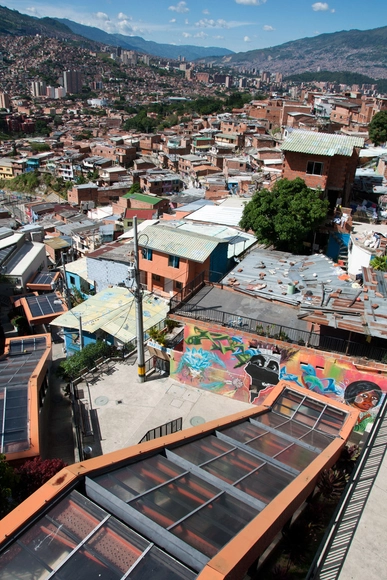
Rather than urban acupuncture, the intervention that took place in the rugged geography of Medellin’s Comuna 13 was like an open-heart surgery, a large-scale action aimed at bringing about physical and social change of what was once one of the most dangerous neighbourhoods in the world’s most dangerous city.
The bilingual guides take us through the neighbourhood, showing us the escalators that gave the intervention worldwide fame. At the same time, in one of the many refurbished squares, a CNN team records interviews with locals and foreigners who visit by the hundreds what was, until recently, an unlikely tourist destination. A drone flies over the scene, we do not know if it is operated by the omnipresent police, CNN or tourists.
However, there are currents of change afoot. Many who have been marginalized are now working to defeat the stigma and legitimize their communities, and they are enlisting architects to the fray. From an organization in Capetown that aims to transform the role of the South African designer, to another in Johannesburg that uses design to legitimize informal architecture, to a project in one of the most violent townships in South Africa that has transformed a community, the following three projects are making a difference for the users who have the most to gain from their designs and design-thinking. All three represent not only the power of design to defeat stigma and instill dignity, but also the power of communities to incite these projects, make them their own, and enable them to thrive.
Earlier this month, The New York Times’ Michael Kimmelman tackled a common narrative in the architecture and urban planning community. It goes like this: once upon a time, in the 1990s, Medellín, Colombia, was the “murder of the capital of the world.” Then thoughtful architectural planning connected the slums to the city. Crime rates plummeted and, against the odds, the city was transformed.
Well, yes and no.
What happened in Medellín is often called “Urban Acupuncture,” a way of planning that pinpoints vulnerable sectors of a city and re-energizes them through design intervention. But Kimmelman reports that while the city has made considerable strides in its commitment to long-term, urban renewal, it has prioritized huge, infrastructural change over smaller solutions that could truly address community needs.
Urban Acupuncture needn’t be expensive, wieldy, or time-consuming. But it does require a detailed understanding of the city – its points of vulnerability, ‘deserts’ of services, potential connection points – and a keen sensitivity to the community it serves.
So what does this have to do with food? Our food system presents seemingly unsurmountable difficulties. In Part II, I suggested that design could, at the very least, better our alienated relationship with food. But what if we used the principles of Urban Acupuncture to bring Agriculture to the fore of urban planning? What if we used pinpointed, productive landscapes to revitalize abandoned communities and help them access healthy foods? What if we design our cities as points of Urban “Agripuncture”?
What would our cities look like with Urban Agripuncture? Read more after the break…