Following the death of Zaha Hadid on March 31st of this year Section D, Monocle 24's weekly review of design, architecture and craft, hones in on the role of women in architecture and design. They discuss why, despite an almost 50:50 gender split in undergraduate architecture courses, women are still grossly underrepresented at senior levels within the profession by featuring conversations with two leading female architects, Angela Brady OBE and Amanda Levete. The episode also looks back over the lives of some of architecture's overlooked heroines.
In the latest installation of NOWNESS’In Residence series, British architect Ian Simpson describes how was told by his careers teacher "not to set [his] sights too high" when he decided that he wanted to become an Architect. Here, he discusses the design intentions behind his home – the tallest residence in the United Kingdom's second city: Manchester. For Simpson, "home is [only] forty seconds away by lift."
The Iraqi-born British Architect Dame Zaha Hadid, DBE (1950-2016) has died aged 65, in Miami, Florida. According to reports from the BBC, Hadid was being treated in hospital for bronchitis when she suffered a heart attack. Earlier this year she became the first sole woman to receive the RIBA Royal Gold Medal at a ceremony in London.
Read on for the official statement from Zaha Hadid Architects:
London's Central Hill housing estate, located in Brockwell Park (South London) and designed by Edward ('Ted') Hollamby is, like many 1960s schemes of its ilk, under threat of demolition. In this short film by British filmmaker Joe Gilbert, the estate is viewed through the narration of a long-term resident, Clifford Grant, who discusses its history and argues for its future security.
Scotland, a country within the United Kingdom, will be showcasing a projected entitled Prospect North at the forthcoming Venice Biennale. Curated collaboratively between the Scottish Government, Architecture and Design Scotland, Creative Scotland,and the British Council Scotland, the installation will be designed by Lateral North, Dualchas Architects, and Soluis. As reported by the Architects' Journal, the show is set to examine "Scotland’s relationship with its northern neighbours" by focusing "on people and place, [and] looking at how communities from the Northern Isles of Orkney to the central belt of Scotland are using grassroot action."
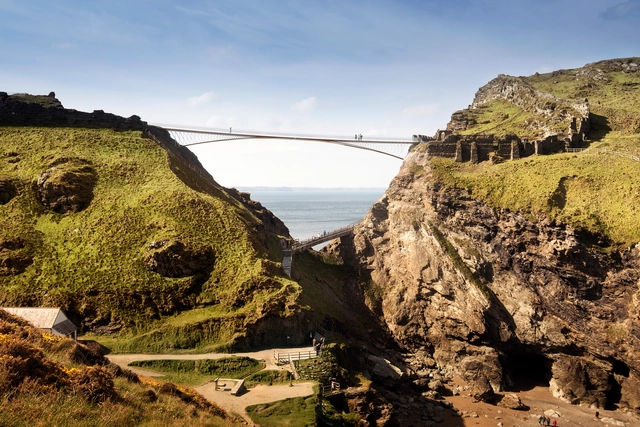
English Heritage has announced that a team of Ney & Partners and UK-based William Matthews Associates has won the Tintagel Castle Bridge Design Competition. Chosen from a shortlist of 6 proposals, from among 136 entries, the winning design was selected by the majority of the jury.
The site of Tintagel Castle is one of English Heritage’s most spectacular, attracting over 200,000 visitors annually. It is “inextricably linked to the legend of King Arthur and has been prized throughout history for its elemental qualities and spirit of place within this area of outstanding natural beauty.” The new bridge is commissioned for approximately £4 million and will stand 28m higher than the current crossing.
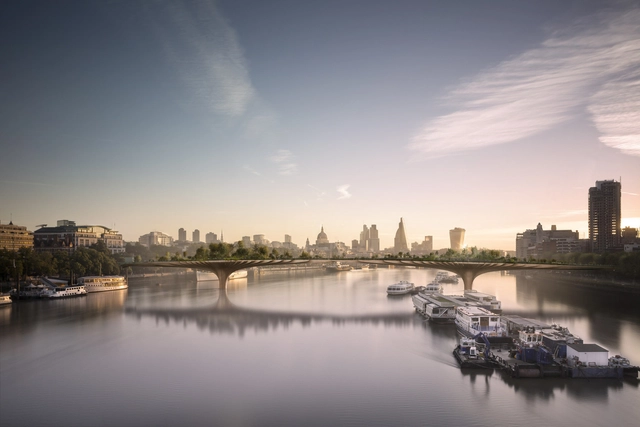
Heatherwick Studio's proposed Garden Bridge scheme across the River Thames, London. Image Courtesy of Arup
This edition ofSection D, Monocle 24's weekly review of design, architecture and craft, is dedicated to plants and gardens and specifically their role in architecture, urban life, and the design of the workplace. The episode considers the history of London’s urban greenery and the role of plants in landscape architecture touching upon, in conversation with Sam Jacob, the latest in London's green infrastructure: Heatherwick Studio's proposed Garden Bridge across the River Thames. It also traces the lineage of semi-private squares in Georgian London to Ebenezer Howard's Garden City movement in the late 19th and early 20th centuries – all approaches discussing how best to unite the built environment with the natural world.
https://www.archdaily.com/784385/monocle-24-investigates-gardens-and-the-public-life-of-plantsAD Editorial Team
Temporary architecture is often misrepresented as a flimsy trend or photo-ready quick fix: easy, entertaining and often, mistakenly, cheap. This is Temporary concerns itself with a group of young, emerging, socially minded group of architects and designers who are taking the city back into their own hands and creating experimental sites for interaction and engagement. These architects, collectives, students and artists are designing transient structures, situations and events that invest and embed themselves in a community, public space or set of ideas.
Read an excerpt from the book This is Temporary after the break.
For over 20 years the American Institute of Architects UK Chapter 'Excellence in Design Awards' programme has proven highly valued by architects as they confer trans-Atlantic recognition for design excellence. Professional entries are sought from architects, industrial designers, urban planners, landscape architects and interior designers based in Britain, and from around the world for completed projects in the UK.
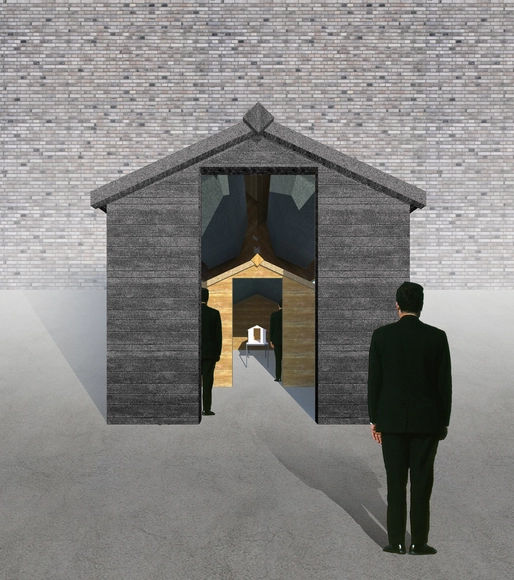
Sto Werkstatt have announced that Sam Jacob Studio will be creating "a unique installation" for their London gallery space that will "explore the exchange of information between digital and physical worlds." Entitled One Thing After Another, the project has its origins with what Jacob considers the most mundane, yet essential form, of architecture: the garden shed. The structure will be 3D-scanned to create a digital copy which will then be processed and scaled to fabricate a new CNC’d version from Verolith, a lightweight type of volcanic stone made of 90% perlite.
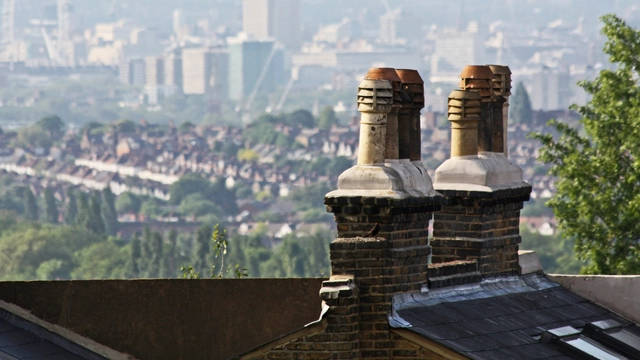
For this edition of The Urbanist, Monocle 24's weekly "guide to making better cities," the team head back in time to explore London in 1891, examining some of the city’s achievements to get a glimpse of what life was like in the British capital. They investigate the architectural legacy of Victorian London, see how the introduction of the railway changed the city, and chat about Charles Booth’s pioneering study into Victorian Londoners’ quality of life. They also take a tour around the country’s first council estate.
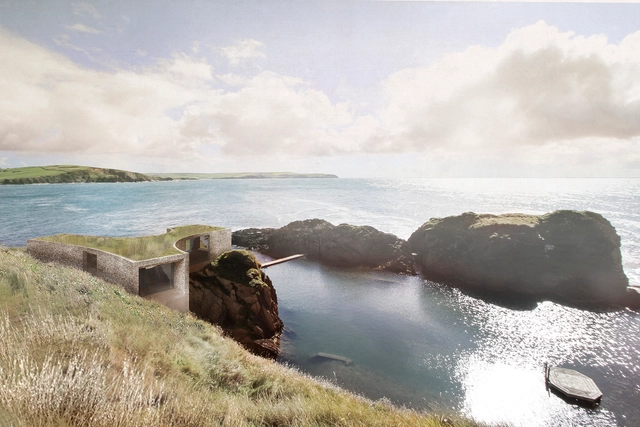
London-based firm Carmody Groarke has been selected to design a standalone hotel suite on Burgh Island, a tidal island on the South Devon coast. Commissioned by Burgh Island Ltd, the owners of the site's eponymous Grade-II listed art deco hotel, the new standalone "Pool House" suite sits atop the island's cliffs offering customers generous views of the Bantham Estuary and the hotel’s Mermaid Pool, an outdoor seawater pool and private beach for hotel guests.
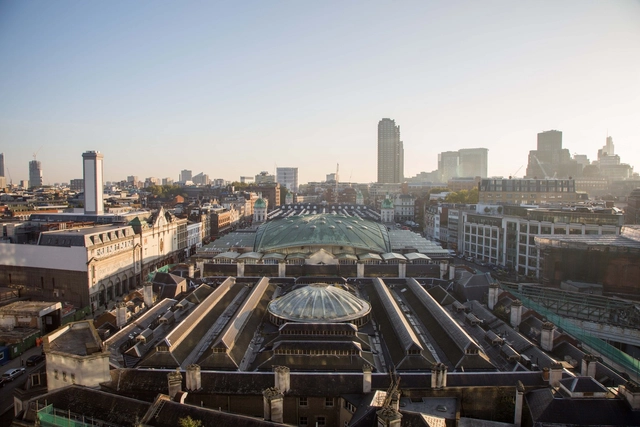
The Museum of London and Malcolm Reading Consultants have launched an international search for an outstanding architect or team of architects to create a new building for the museum at West Smithfield in the City of London. The project at the heart of the two-stage design competition has a £130-150m construction budget, and is focused on regenerating a nationally-significant landmark and creating new contemporary galleries within a group of historic buildings on the West Smithfield site. The Museum of London is one of the top ten museums and galleries in the UK capital and responsible for the world’s largest archaeological archive, which currently holds six million artefacts.
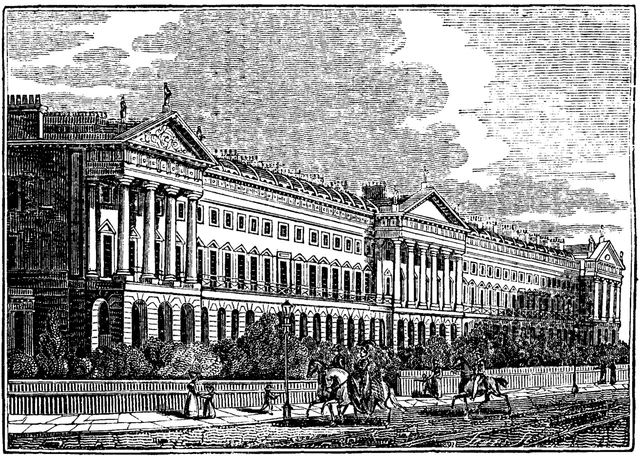
Hanover Terrace, London (designed by Sir John Nash) of which Hirst owns a portion
Damien Hirst has outgrown his 14-bedroom, nineteenth century London home. As reported by Hyperallergic, Hirst is in the process of enlarging his villa – downwards. In the spirit of the London 'super-basement' trend, for which the Royal Boroughs of Kensington and Chelsea first took opposition to in 2014, the Turner Prize-winning artist's plans appear to be some of the most ambitious yet. The proposed subterranean warren of rooms—including a sauna, a steam room, a cargo elevator leading to a double height "art room", and an 82-foot long swimming pool—will all be excavated from his half-acre back garden. Although the plans have faced local opposition the artist's "lair", designed by Purcell, is now set for construction.
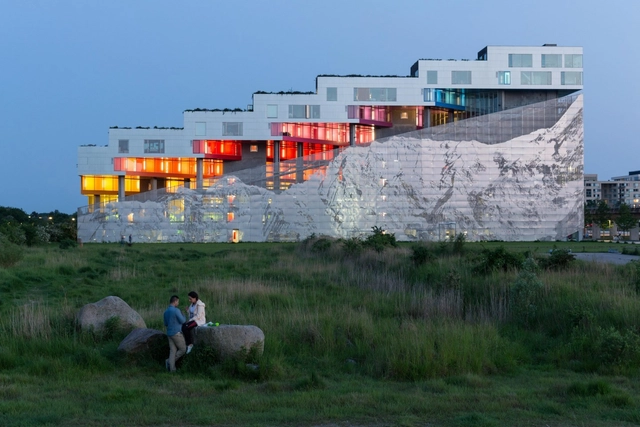
The Mountain, Copenhagen / BIG. Image Courtesy of Serpentine Galleries
The Serpentine Galleries have revealed that the 2016 Serpentine Pavilion will be designed by Bjarke Ingels Group (BIG), alongside a surprise announcement that four "Summer Houses" will also be built by internationally acclaimed practices. Kunlé Adeyemi – NLÉ (Amsterdam/Lagos), Barkow Leibinger (Berlin/New York), Yona Friedman (Paris), and Asif Khan (London) will each design a 25sqm structure inspired by the nearby Queen Caroline’s Temple, a neo-Classical summer house built in 1734 and "a stone’s throw from the Serpentine Gallery." In line with the criteria for the selection of the Serpentine Pavilion architect, each chosen to design a Summer House has yet to realise a permanent building in England.
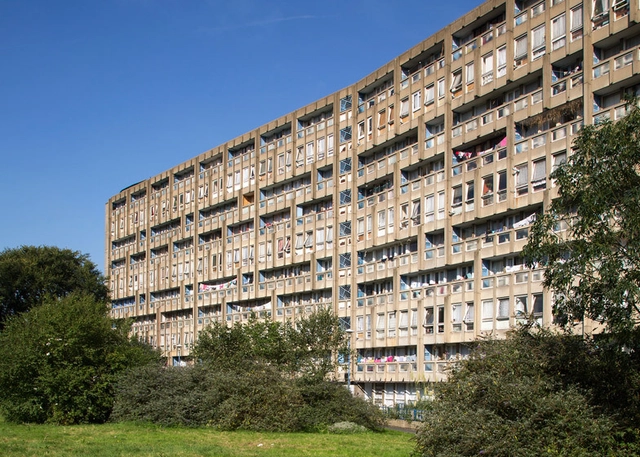
Following the news in 2015 that Alison and Peter Smithson's Robin Hood Gardens was committed to demolition, Stirling-Prize winning practice Haworth Tompkins have been selected to work on the buildings' replacement. Alongside Metropolitan Workshop Architects existing master plan—entitled the Blackwall Reach Regeneration Project—the second phase of the regeneration will see the west block razed to make way for approximately 200 homes. The east wing will not be demolished until the third phase of the regeneration begins.
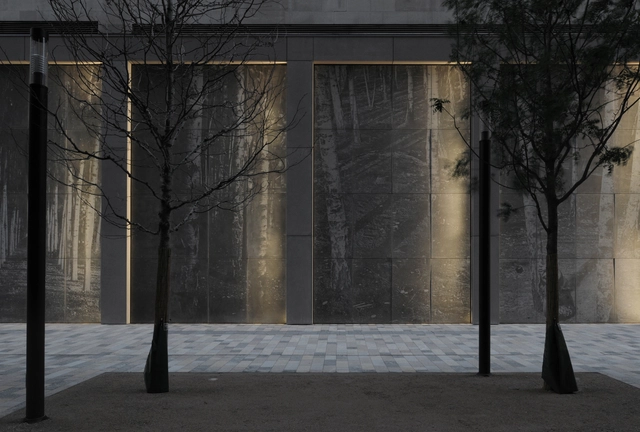
The textured surface of the frieze changes according to ambient light, creating a perplexing effect in the image from day to night. Image Courtesy of Lynch Architects
A new type of greenery has arrived in central London. Placed along the western façade of Westminster City Hall (known as Kingsgate Walk), a sprawling concrete frieze in relief depicts shimmering nocturnal birch trees photographed in forests from Beijing to London. Created using emerging technology, the relief was rendered through the concrete casting of a photograph by artist Rut Blees Luxemburg, a photographic artist and a reader in Urban Aesthetics at London's Royal College of Art. The textured surface of the frieze changes according to ambient light, creating a perplexing effect in the image from day to night.
Realized through a unique collaboration between artist Blees Luxemburg, London-based Lynch Architects and developer Land Securities as a part of Kingsgate, Silver Forest completes the major urban regeneration project for London Victoria in its new home in a public square adjacent to Westminster City Hall.
Find out more about the interdisciplinary partnership formed for Silver Forest after the break.

.jpg?1459371467 "© Nowness")
.jpg?1459371483 "© Nowness")
.jpg?1459371408 "© Nowness")
.jpg?1459371440 "© Nowness")
.jpg?1459371518)