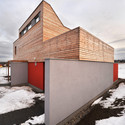
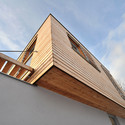
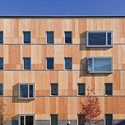
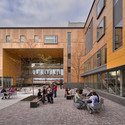
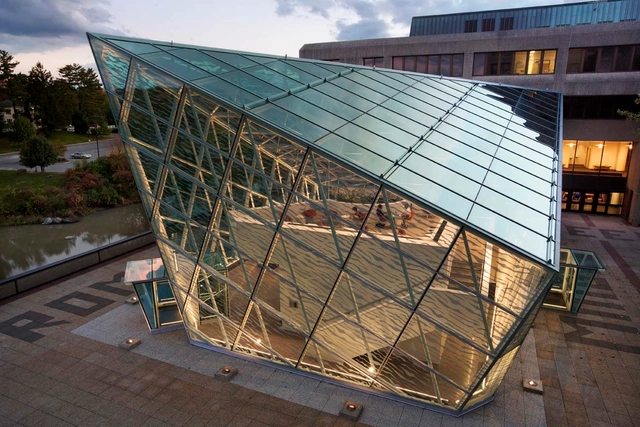
Driven by the hyper-density of the city-state from which they operate, WOHA have emerged as Singapore's quintessential architects. Combining a locally-specific approach to climate control and spatial planning with an international approach to form and materials, their work holds lessons that can be instructive to architects in all climates. In this interview, the latest in his “City of Ideas” column, Vladimir Belogolovsky speaks to WOHA founders Wong Mun Summ and Richard Hassell about their environmental approach and the future of our global cities.
A recent article published in Nature makes a bold claim: we're analyzing our cities completely wrong. Professors David Wachsmuth, Aldana Cohen, and Hillary Angelo argue that, for too long, we have defined sustainability too narrowly, only looking at environmental impact on a neighborhood or city scale rather than a regional or global scale. As a result, we have measured our cities in ways that are inherently biased towards wealthy cities, and completely ignored the negative impacts our so-called "sustainable," post-industrial cities have on the rest of the world.Metropolis editor Vanessa Quirk spoke with Professor Wachsmuth to learn more about the unintended knock-on effects of going "green," the importance of consumption-based carbon counting, and why policy-makers should be more attentive to the effects of "environmental gentrification."
The result is a compelling report. It reveals that these high-performing projects skew small. That performance gains and metrics, particularly real-time performance metrics, are improving each year. That the leading projects tend to be expensive. On average, they come in at $537 per square foot. “The cost data shows us that we need more compelling examples of lower-cost, higher performance projects,” Hosey says. Clearly, more exemplars at greater scale, type, and cost variation would be beneficial to both the profession and the market.
Is there a designer who does not dream of the perfect lighting concept, which conveys a feeling of well-being and shows the architecture at its best? Unfortunately, however, it is often the case that the brief received from the client causes difficulties. All too often discussions are peppered with such terms as LEDs and lux levels,causing an unconscious shift in thinking in the direction of norms and technology instead of placing questions about requirements and lighting quality at the centre of discussion. But what exactly is quality lighting design?
MuuM has unveiled the design for the LOSEV Natural Life Center & Drugless Therapy Institute in Çankiri, Turkey. Located in the central Anatolian plains, the project will be built on a site that has a series of artificial ponds from its former function as a fish farm. Due to the presence of the ponds, vegetation in the surrounding landscape has thrived in recent years, creating a lush oasis in land usually deprived of water. Learn more about the project, which is shortlisted for the World Architecture Festival Awards in the Health category, after the break.
Sustainable lighting design offers various well-being and environmental benefits in addition to economic advantages for clients and users. Although daylight provides a free lighting source, for most spaces the amount and time of daylight is not sufficient and electrical lighting is necessary. A focus on sustainability becomes essential for minimizing energy consumption and improving the quality of life. Even though efficiency has significantly increased with LED technology, electrical lighting is still more widely used. Often the ambition for renovations or new applications goes along with a higher quantity of lighting instead of finding a better lighting quality with an adequate amount of energy.
Read on after the break for Light Matters’ 7 fundamental steps to achieve sustainable lighting.
Kaap Skil, Maritime and Beachcombers’ Museum, Winner of the Daylight Award 2012. Image Courtesy of Mecanoo Architecten
Daylight is a highly cost-effective means of reducing the energy for electrical lighting and cooling. But architectural education often reduces the aspect of daylight to eye-catching effects on facades and scarcely discusses its potential effects - not just on cost, but on health, well-being and energy.
This Light Matters will explore the often unexplored aspects of daylight and introduce key strategies for you to better incorporate daylight into design: from optimizing building orientations to choosing interior surface qualities that achieve the right reflectance. These steps can significantly reduce your investment as well as operating costs. And while these strategies will certainly catch the interest of economically orientated clients, you will soon discover that daylight can do so much more.
The advent of electrical lighting has allowed us to colonise the night. Not only have kilometres of street lighting ensured higher levels of safety, but signs, advertisements, etc. continue to draw us into nocturnal landscapes. As Rem Koolhaas explored in Delirious New York, Manhattan and Coney Island were the early luminous prototypes for today’s continuously vibrant metropolises: cities that establish new rhythms, a new balance between work and life.
But what happens when lighting upsets our natural balance? When we lose the beauty of the dark sky, the stars? What happens when lighting turns into pollution?
This article, which originally appeared on GreenBiz, is by Lance Hosey, the chief sustainability officer of the global design leader RTKL.
Sustainability leader Hunter Lovins once called the building industry "dynamically conservative — it works hard to stay in the same place."
But old habits cannot fully address new challenges. According to 350.org, fossil fuel corporations currently have in their reserves five times the amount of carbon that, if burned too quickly, may raise atmospheric temperatures to a catastrophic level where Hurricane Sandy-scale storms could become the norm. Quicker, deeper progress is imperative.
Architecture is an essential arena for sustainable innovation. Buildings represent about half the annual energy and emissions in the U.S. and three-quarters of its electricity. With the built environment growing — the U.S. building stock increases by about 3 billion square feet every year — architects have a historic opportunity to transform its impact for the better.
Keep reading to find out the 6 Steps architects can take to transform the profession, after the break...
NASA Sustainability Base / William McDonough + Partners and AECOM
William McDonoughof William McDonough + Partners has decided to become Stanford University's first "living archive" in an effort to change the way we as humans remember and record our daily lives. Although technologies such as Facebook, Twitter, Instagram, and Vimeo have made verbal and visual documentation a much larger part of our lives, McDonough has decided to record nearly every moment of his day - every day - for the greater, intellectual good.
From October 22-26, Cannon Design will host a prominent and diverse group of speakers to present at the Chicago firm’s 11th Annual EnvironmentalAwareness Week.
Everyday, Americans all over the country go to work. They get in their cars, arrive at the office, and sit inside. Then, they go home, maybe watch some TV, and go to bed. 5 days a week. About 50 weeks a year.
Our built environment is where we now spend about 90% of our time. Unluckily for us, however, a recent Forbes article suggests that, most of the time, indoor air quality is actually worse than outdoor, to the point where it’s potentially hazardous: “paint, carpet, countertops, dry wall, you name it and chances are it’s got some sort of toxic ingredient.”
And yet we have little way of knowing just how bad our building’s “ingredients” are for us. Until now.
The forward-thinking firm is on the cutting-edge of a movement, instigated by clients and fast taking over the architecture world – towards “healthy” buildings (inside and out).
Read more about Perkins+Will’s revolutionary Transparency Project, after the break…
Creating an anchor to the urban development of Edmonton, Canada, the collaboration of architects Group2 Architecture Engineering Ltd. and Shore Tilbe Perkins + Will created a harmonious synthesis with the site, its natural landscape and the needs of the community with their Meadows Community Recreation Centre & Edmonton Public Library. Their project is to begin construction in January of 2011. More images and architect’s description after the break.





.jpg?1436507562&format=webp&width=640&height=580)
.jpg?1436507619 "Courtesy of MuuM")
.jpg?1436507629 "Courtesy of MuuM")
.jpg?1436507596 "Courtesy of MuuM")
.jpg?1436507641 "Courtesy of MuuM")
.jpg?1436507562)