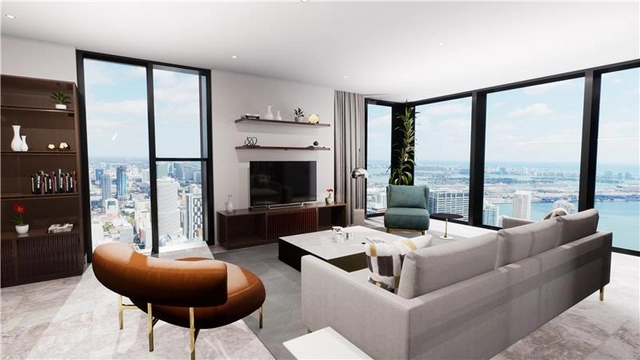
Now recall the last time you meet a client. Preparing a whole bunch of presentation materials including renderings, diagrams, floor plans, elevation plans and section plans is simply not enough. The hard part starts when the client got stuck with one or two renderings and simply wouldn’t let go.
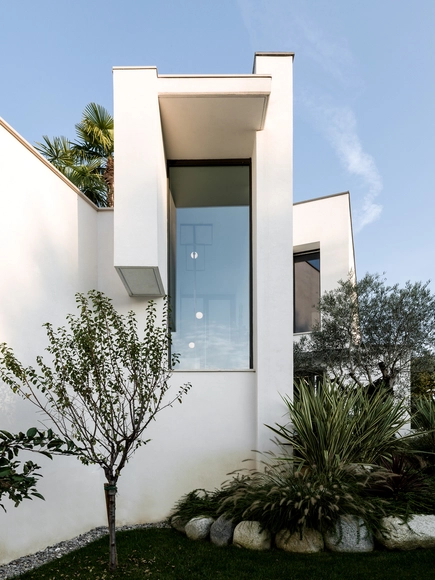
The interlacing of sleek, sharp lines contrast with the delicate beauty of the lake and the softly rolling hills of Brianza. Image Courtesy of Flexform
Along the waters of Lago di Alserio, in Como, Italy is a contemporary private residence designed by architect Annalisa Mauri which contrasts the interlacing of sleek, sharp lines with the delicate beauty of the lake and the softly rolling hills of Brianza which surround it. The geography of the site has undoubtedly influenced the flow of the building, which is expressed through well-defined geometric spaces featuring large sliding glass windows and glass spandrels that offer seamless visual continuity between indoor and outdoor.
There’s a bright world just beyond the COVID-19 pandemic, and Waterfront Toronto, the organization tasked with revitalizing the city’s waterfront, is working to deliver on that future with its vision for the Quayside Project—a 12-acre mixed-use development poised to transform the industrial lands at the foot of Parliament Street.
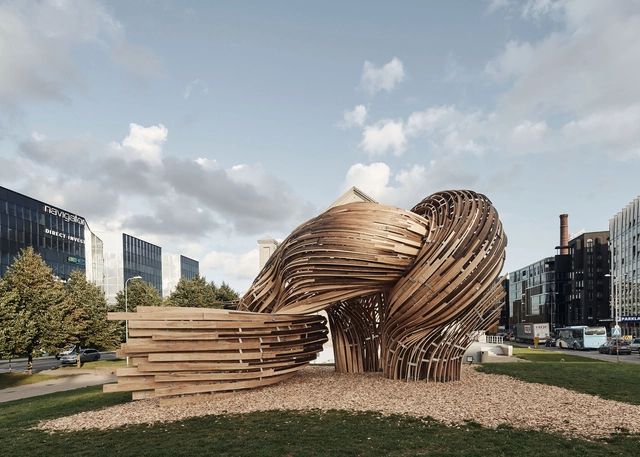
2020 Edition Winner: Steampunk Installation by SoomeenHahm Design Ltd. Igor Pantic Fologram. Image Courtesy of German Design Council
Today marks the start of the registration phase for the international ICONIC AWARDS 2021: Innovative Architecture. The awards recognise the best achievements in architecture, innovative interior and product design, as well as outstanding communication concepts and singularly innovative materials. The winners will be honoured at the awards ceremony on 11 October 2021 at the Pinakothek der Moderne, Munich, where they will have ample opportunity to network with other players on both the national and international scene.
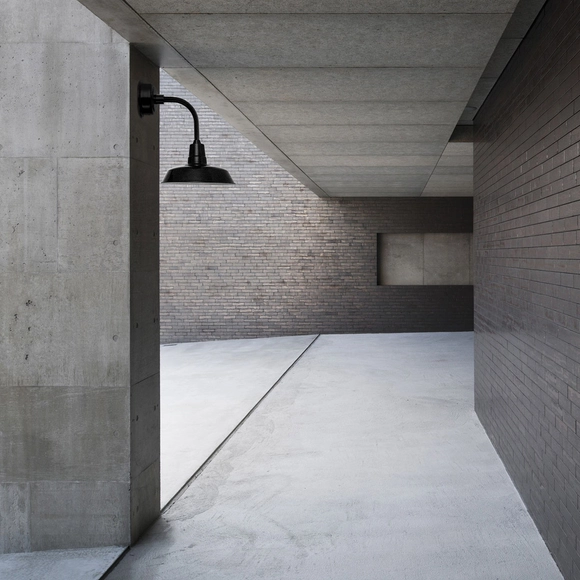
Because of their aesthetic forms, robust materials, and the nostalgic memories to which they refer, old objects often please many people and, from time to time, end up returning to fashion. In the construction industry this is no different. One object that has remained popular forever is the shed light, more specifically the Gooseneck Lamp. Its combination of a traditional look with newer technologies creates an extremely attractive product.
Nestled at the base of Vail Mountain, along the banks of Gore Creek, Grand Hyatt Vail is located in the heart of Vail Valley within the Cascade Village neighborhood. The hotel features bold, vibrant architecture inspired by its scenic locale, as well as welcoming service with exclusive amenities ideal for both leisure travelers and conference attendees alike. When they were due for repairs to their current water heating system, Grand Hyatt Vail knew they needed a solution that could be implemented quickly, plus handle the hotel’s demand for years to come. Grand Hyatt Vail turned to Intellihot for tankless water heating reliability, cost savings, and cutting OPEX, and ended up saving on both upfront and installation costs.
The construction industry is traditionally one of the most resource-intensive sectors, but with rigorous planning and digital tools, the construction process can instead make an active contribution to environmental protection. Energy, resources, and materials can be intentionally saved during the construction process to widen the conversation from simply sustainable buildings as an end product, but sustainable construction as a process. Digital solutions can play a decisive role, yet the industry has so far made too little use of the numerous possibilities that are available. Below, the experts from the Nemetschek Group present some of the opportunities they provide.
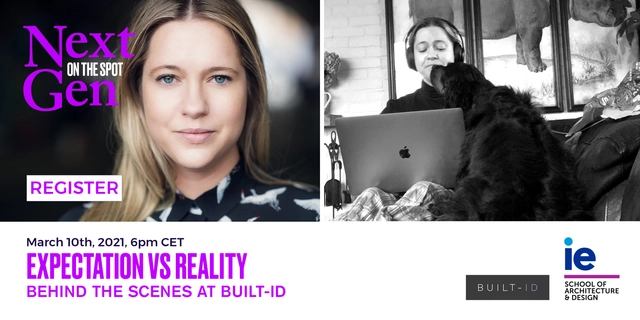
IE School of Architecture and Designis launching its new IE Next-Gen program, an international forum that gives young professionals from the world of real estate and the built environment the opportunity to make their voices heard, increase their knowledge about the cities of tomorrow and grow their professional network.
https://www.archdaily.com/958094/ie-nextgen-forum-launch-masterclass-expectations-vs-reality-by-savannah-de-savaryArchDaily Team
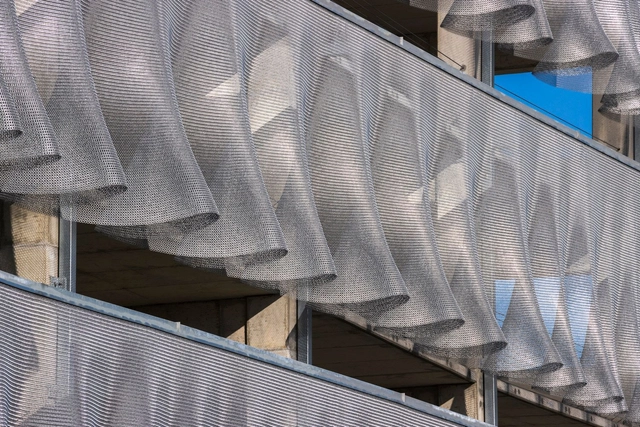
Parking garages present an aesthetic challenge to even the most creative design minds. Their vast scale and monotonous appearance are necessitated by function, but result in the difficulty of making the garages visually interesting instead of simply overbearing. Cladding a parking garage in a unique material can add visual interest and texture to achieve a more human connection. However, this in turn creates concerns about still bringing light and air into the garage.
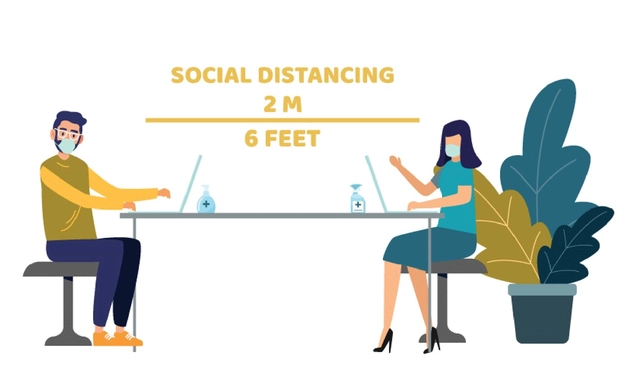
The 2020 COVID-19 outbreak has deeply redefined our relationship to public spaces. Fear of transmission (both direct and indirect) has closed schools, restaurants, office buildings, and transportation hubs, and has limited access to other densely populated locations and shared spaces. We have also learned that COVID-19 primarily transmits through the spread of water droplets from infected individuals, especially in scenarios of close contact, such as prolonged indoor activities. As a result, new building regulations have been put in place that reduce the circumstances in which the disease can spread. These safety precautions include mask mandates, redesign of ventilation systems, and social distancing policies. In this article, we will focus on social distancing.
Multifamily housing in urban environments provides social, economic, and environmental benefits to both individual residents and cities as a whole. Kicked into overdrive after the 2008 financial crisis, demand for multifamily housing has since continued to rise and remains strong today. Generations Y and Z are the youngest urbanized group of adults and these young professionals are fueling much of the demand for compact living in city centers. Though the younger generations are the ones driving the changes, the result is expected to be more secure, convenient living for everyone.
Florian Schaffner has had a passion for architecture ever since his childhood. After he finished his bachelor’s degree in business at IE University, he went straight on to pursue the Master in Real Estate Development. We spoke to Florian to find out more about his experience in the MRED and to learn about Triadic Labs, a real-estate startup project founded during the pandemic.
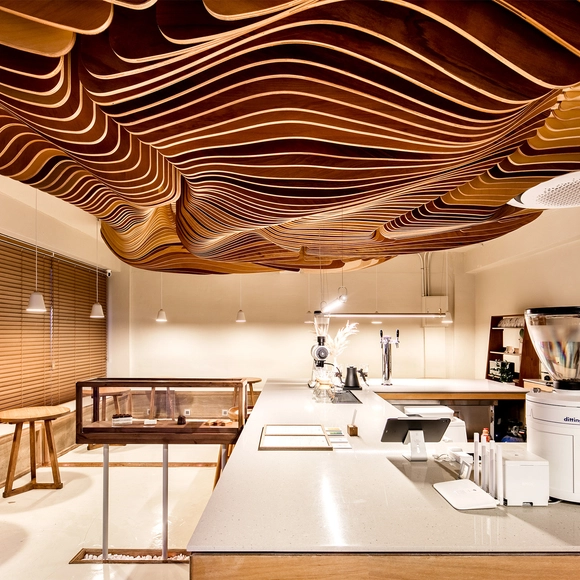
Perception Cafe / Haejun Jung - Feelament. Image Courtesy of A' Design Awards
If you've been debating whether to submit your work to the 2021 A’ Design Award Competition, now is the time! This is your last chance to enter your design, because the final call for entries ends February 28th, 2021. The international A' Design Awards give designers an opportunity to showcase their work to a global audience, whether you're a designer, architect, or an innovator from any other design field. Among other design competitions and awards, the A' Design Award stands out for its exceptional scale with over 100 design categories.
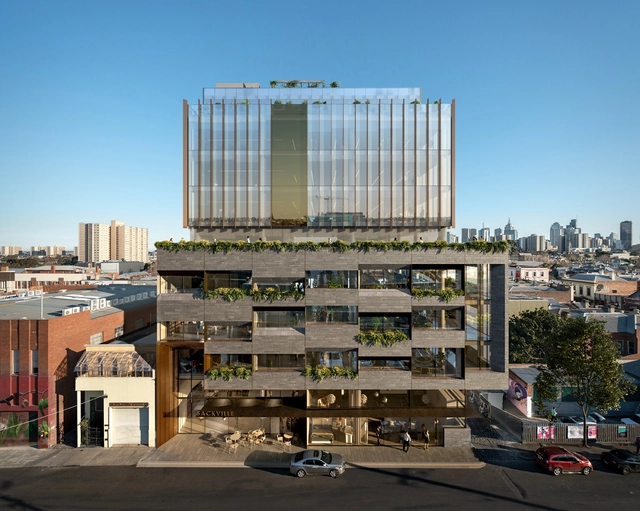
Sackville St. Image Courtesy of Idle Architecture Studio and Biwyan Studios
Vectorworks Architect is well-known for its BIM capabilities, allowing firms around the world to maintain the integrity of their internal design and documentation strategies with an all-in-one solution. The ability to collaborate between firms and share files with ease lets users shift their focus to their designs and all but forget the stress of document sharing. This was the case for Idle Architecture, a Melbourne-based firm that got into Big BIM completely by accident.
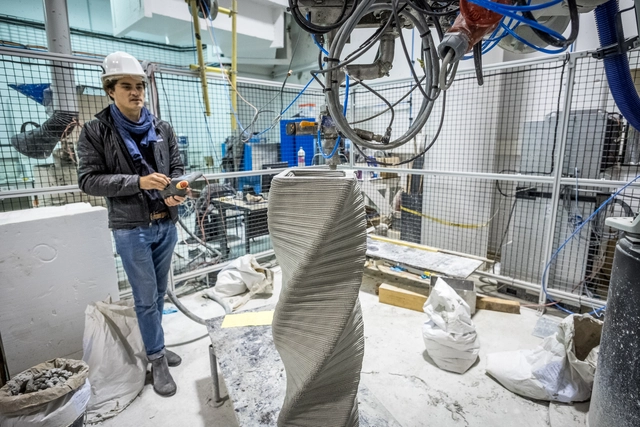
Paul Carneau, Design by Data alumni working with the 3d printing facilities at Ecole des Ponts ParisTech - Photo by Stefano Borghi
The Advanced Master[1] “Design by Data” in Computation Design & Robotics for Architecture and Construction was launched in 2016 and is one of the latest programs in innovative professional education at l'École des Ponts ParisTech. The program was designed to meet the increasing need of the professional sectors of architecture and engineering for combining architectural awareness and skills in creative engineering. Design by Data trains professionals to master advanced design tools (coding, generative design, machine learning) as well as digital manufacturing and design processes (robotics, 3D printing, and mechatronics) applied to architectural and construction projects.
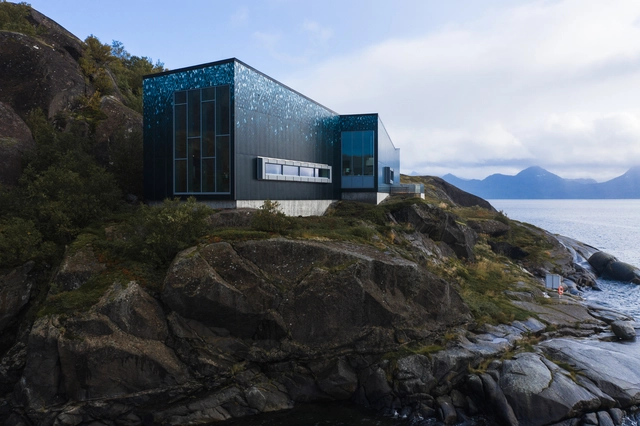
The building rises from a rock face jutting up from the ocean at Skutvik in Nordland, Norway. Steni Vision façade panels give the Arctic Salmon Center a unique and notable appearance. “It has been unbelievably exciting to work with such a special building in such a special place. This is a quite extraordinary building, that has been greeted with astonishment by my colleagues,” comments architect Peter W. Söderman at Norconsult AS. “We chose Vision panels from Steni due to the printing possibilities – we could project an exciting and quite subtle print onto a large surface." The client wanted to have an expressive building that reflected their purpose as an experience center for the fishing industry.
Coast Whale Chapel / Jinyu Zhang. Image Courtesy of A' Design Awards
If you’ve been procrastinating, now is your last chance to enter your design for an A’ Design Award before the deadline on February 28. The international competition was "born out of the desire to underline the best designs and well-designed products" of designers, architects, and innovators from all design fields. Among other design competitions and awards, the A' Design Award stands out for its exceptional scale with over 100 design categories.
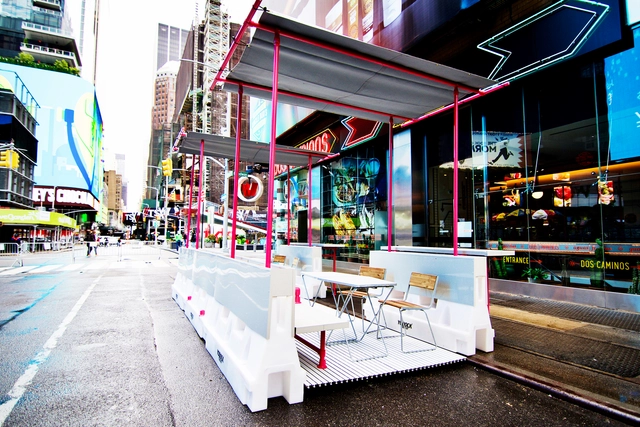
Restaurant/retail expansion structure in NYC. Image Courtesy of Fantastica & Hollaender Mfg. Co.
The global COVID-19 pandemic has forced us all to adapt quickly to new ways of living: new ways of working, communicating, buying groceries, and so much more. That adaptability is the key to navigating our changing world. Modular and flexible building systems can help us adapt our physical spaces to the new realities of social distancing or even to the need for rapidly deploying field hospitals.



.jpg?1614803567&format=webp&width=640&height=580)



.jpg?1612319093&format=webp&width=640&height=580)


.jpg?1612319093)