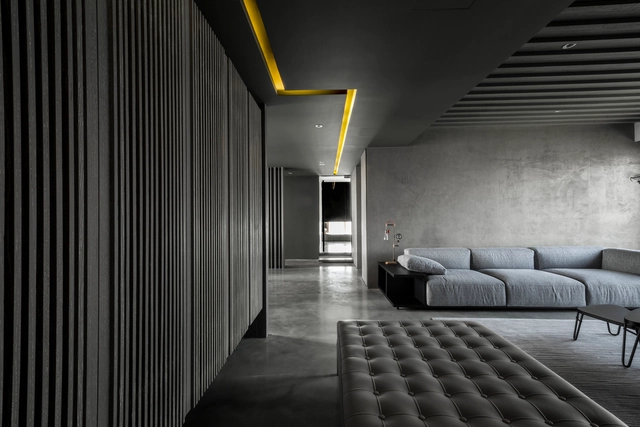
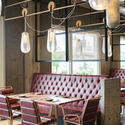
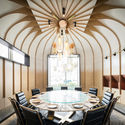
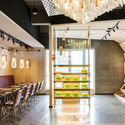
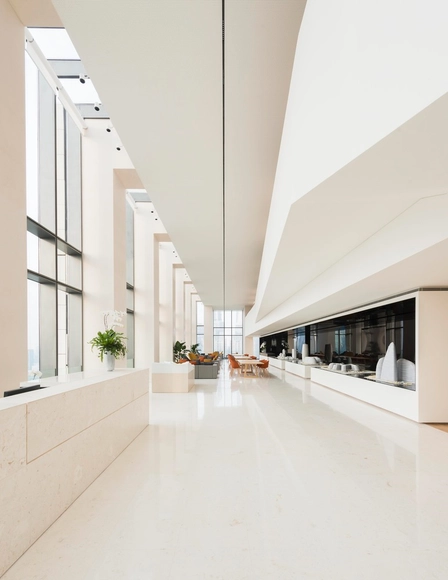
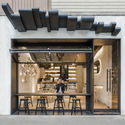
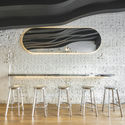
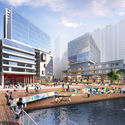
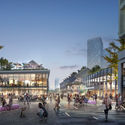
Design firm Benoy has just revealed its design for “Gala Avenue Westside,” a future mixed-use structure set within the iconic Lujiazui HARBOUR City development of Shanghai. Benoy (who recently created a green architectural design for Taiwan’s High-Speed Rail’s Hsin Chu Station Mall) have been appointed as the Masterplanner, Architect and Interior Designer of the Gala Avenue, set for completion in 2018.
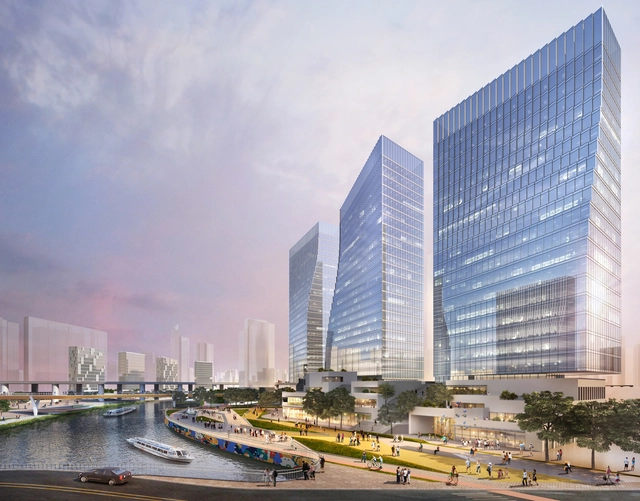
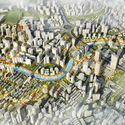
U.S.-based firm Sasaki has won the international competition to redesign Suzhou Creek—also known as the Wusong River—in Shanghai, China, which was historically one of the city’s most vital water routes, but which, in recent decades, suffered severe pollution and neglect. After receiving a grant from the Asian Development Bank, the waterway has been cleaned and is now in the process of becoming a new centerpiece for Shanghai.
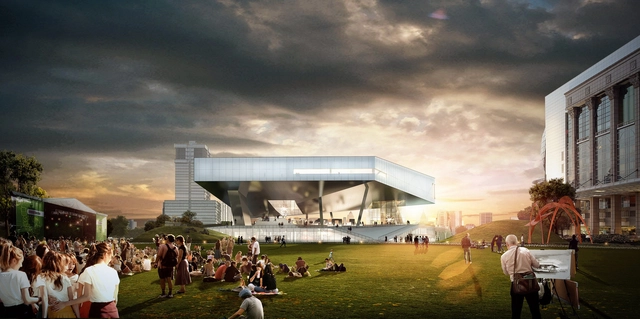
Recently, Shanghai organized an international competition for the new Art Museum of Pudong. The site of the project is located at a prominent spot on the tip of Pudong’s Lujiazui CBD area directly below the Oriental Pearl Tower. Looking across Huangpu River from the Bund, the iconic skyline of Lujiazui has been such a symbolic image of modern Shanghai that any addition or alteration to this image is extremely sensitive. So the site has been deliberately left vacant for years, awaiting a significant cultural institute and meaningful contribution to the urban life at the megapolis.
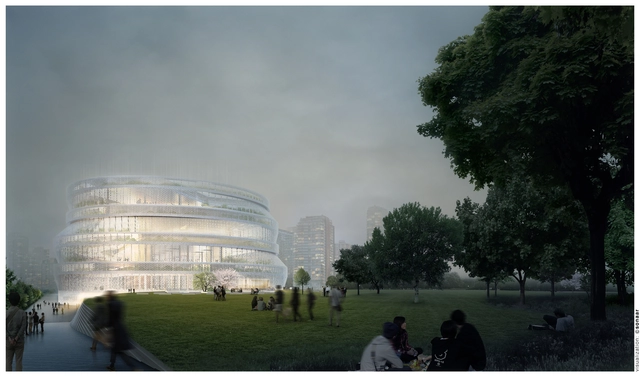
nArchitects’Library as Home has won first place in the 2016 International Young Architects Design Competition for the 110,000 square meter Shanghai Library East Hall in China. Hosted by the Shanghai Pudong New Area People’s Government, the competition sought out designs that enhance Shanghai’s distinct cultural influence and promote community life.
Library as Home reflects these goals in its design as “a large house for all, with a rich variety of environments that Shanghai’s citizens could appropriate as their own.”
.jpg?1474948068&format=webp&width=640&height=580)
.jpg?1474948040 "Courtesy of Benoy")
.jpg?1474948014 "Courtesy of Benoy")
.jpg?1474948114 "Courtesy of Benoy")
.jpg?1474948091 "Courtesy of Benoy")
.jpg?1474948068)

.jpg?1474441160&format=webp&width=640&height=580)
.jpg?1474444507 "© Peter Dixie")
.jpg?1474440899 "© Peter Dixie")
.jpg?1474441571 "© Peter Dixie")
.jpg?1474440915 "© Peter Dixie")
.jpg?1474441160)












_photo_by_Dirk_Weiblen.jpg?1472437668&format=webp&width=640&height=580)


_photo_by_Dirk_Weiblen.jpg?1472437968 "© Dirk Weiblen")
_photo_by_Dirk_Weiblen.jpg?1472437668)